









Was this page helpful?

| Opening hours: |
|
|---|
| Power Grid: |
230 V, 50 Hz Plug: Type A , Type C
Type A:
  Read about power adapters |
|---|---|
| Currency: |
Lao Kip (LAK) £1 ≈ LAK 29,949 |
| Cashless info: |
Rating 3/5
Cashless payments are available in larger cities and tourist areas, but cash is still the dominant payment method. Credit cards are accepted in some places, though mobile payments are not as widespread.
Save with a travel credit card |
| eSIM providers: |
Best value: Saily Flexibility: Airalo Read our in-depth comparison |
| Tipping: | Tipping is not common in Laos, but it is appreciated for good service. In restaurants, a small tip of around 5-10% may be given, especially in tourist areas. Taxi drivers may appreciate rounding up the fare. |
|---|---|
| Public drinking: | Public drinking is not widely accepted in Laos, and alcohol consumption is generally restricted to licensed venues like bars and restaurants. Drinking in public spaces can be considered disrespectful. |
| Public smoking: | Smoking is prohibited in many indoor public places, including restaurants and shops. Designated smoking areas are available in certain locations. |
| Lao New Year (13–16 April) |
The biggest holiday in Laos with water fights, festivals, and family celebrations |
|---|---|
| That Luang Festival (November) |
A religious festival with processions, prayers, and cultural performances |
| Emergency contact: | Emergency Numbers: 191 (Police), 195 (Ambulance), 190 (Fire) |
|---|---|
| Taxi apps: | Tuk Tuk, Lao Taxi |
| Other: | Laos is a peaceful and beautiful destination with many outdoor activities, including trekking, visiting Buddhist temples, and cruising along the Mekong River. Travellers should be prepared for basic amenities outside of tourist areas. |
The best times to travel section shows how the months compare for a visit, so you can find the time of year that fits what you want to do.
Background colours of the months:
The colour shows the typical temperature: yellow (hot), green (mild) and blue (cold). How strong the colour is shows the travel season: full colour means high season, soft colour means shoulder season and soft-striped means off season.
Weather symbols:
Each month has one symbol showing what the weather is typically like, such as hot and sunny, freezing or a rainy or snowy season. Use them to quickly spot months that match the weather you want, or to avoid the ones that don't.
Crowdedness:
The people icon shows how busy the place usually is. The more people, the more crowded it gets.
Additional notes:
The grey info boxes point out special things worth knowing, like recurring weather issues or seasonal events.
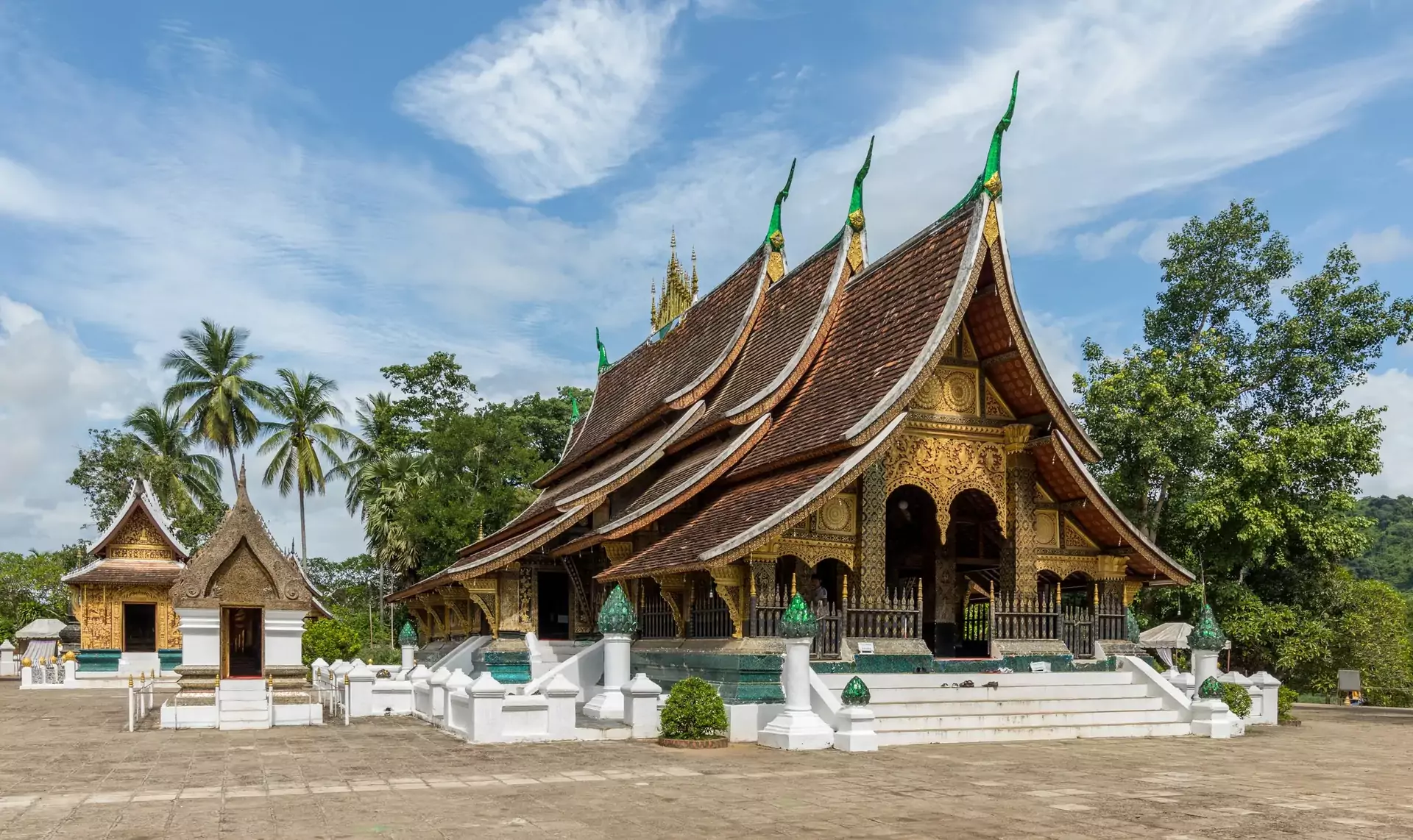
Built between 1559 and 1560 under King Setthathirath, Wat Xieng Thong stands as a symbol of Laos' deep-rooted religious and royal traditions. This temple exemplifies classic Laotian temple architecture with its sweeping, multi-tiered roofs adorned with golden stenciling and a striking 'tree of life' mosaic on the rear wall. The temple’s central shrine, the Sim, is known for its elaborate nine-tiered roof and richly decorated interiors filled with mythological and Buddhist motifs rendered in gold on deep red and black backgrounds.
Wat Xieng Thong also houses a rare Reclining Buddha statue dating back to its founding era, which was once exhibited in Paris and famously returned to Luang Prabang. The temple grounds are expansive and peaceful, featuring several smaller shrines and stupas, alongside the royal funerary carriage house displaying ornate funeral carriages and urns used for royal ceremonies, emphasizing its historical importance.
While beautiful and spiritually enriching, visitors should note that respectful dress and behavior are expected when visiting Wat Xieng Thong, as it remains an active place of worship. The temple can get crowded during major festivals and peak tourist season and photography restrictions apply to certain interior areas. The tropical climate means hot, humid weather much of the year, so planning visits during cooler times and staying hydrated is advisable.
Despite minor practical cautions, Wat Xieng Thong offers an immersive cultural experience, blending astonishing visual artistry with serene ambiance – one of the welcoming doors into the heart of Laotian spirituality and history.
Wat Xieng Thong is in Luang Prabang, accessible by air via Luang Prabang International Airport, receiving flights from major Southeast Asian hubs like Bangkok and Hanoi. From the airport, it's a short tuk-tuk or taxi ride into town. Overland travelers can come by bus or slow boat via the Mekong River, both offering scenic routes to this UNESCO World Heritage town known for its well-preserved temples.
Luang Prabang offers a variety of accommodations near Wat Xieng Thong, from budget guesthouses to boutique hotels and mid-range resorts. Most options are within walking distance of the temple, allowing easy access to the primary attractions and riverfront.
Log in to add this place to a travel list and get a summary of all recommended items for your whole trip.
We calculate the average costs when travelling to destinations and compare those with the living costs at your home. With this you can get an estimate of how expensive or cheap the destination is for you.
To customise this, you can set up which location and price level are used for the calculations in your account settings.
The exchange rate price factor shows how expensive or cheap a currency currently is compared to its historical average. It's a quick way to see if a country is currently more or less affordable due to exchange rate changes.
