









Was this page helpful?

These place ratings give you a quick overview of how well a destination matches different types of trips.
‘Best for’ scores:
The specific interest scores show where this place really shines – whether it's ideal for hiking, food & drink experiences, museums or other activities. These highlights help you understand what makes the destination special at a glance.
‘Your personal’ scores:
This reflects how well a place matches your personal preferences. You can adjust the importances of travel topics or other personal requirements categories in your account settings.
‘Suited for’ badges:
These give you a quick overview of how well a destination suits specific types of travellers, to help you find the places that match your lifestyle, preferences or travel situation.
| Power Grid: |
100 V, 50 Hz Plug: Type A
Type A:
 Read about power adapters |
|---|---|
| Currency: |
Japanese Yen (JPY) £1 ≈ JP¥210 |
| Cashless info: |
Rating 4/5
Cashless payments are becoming more common, especially in cities, with some shops still preferring cash. Be prepared for occasional cash-only situations in rural areas.
Save with a travel credit card |
| eSIM providers: |
Best value: Saily Flexibility: Airalo Read our in-depth comparison |
| Tipping: | Tipping is not customary in Japan and can be considered rude. Excellent service is the norm, and tipping is unnecessary in most places. |
|---|---|
| Public drinking: | Public drinking is legal and commonly accepted, particularly during festivals and events. |
| Public smoking: | Smoking is prohibited in indoor public places but allowed in designated outdoor areas. Some restaurants may have smoking sections. |
| New Year (January) |
One of the most important holidays, expect crowded temples and high prices. Plan ahead. |
|---|---|
| Golden Week (April-May) |
The busiest travel time, expect high demand for accommodation and transport. |
| Obon (August) |
A time to honour ancestors, many businesses close, and transport can be crowded. |
| Emergency contact: | Emergency Number: 110 (Police), 119 (Fire & Ambulance) |
|---|---|
| Taxi apps: | Uber, JapanTaxi, DiDi |
| Other: | Japan is a country of respect, so understanding local customs and etiquette is important. Public transport is efficient, but can be crowded during peak hours. |
The best times to travel section shows how the months compare for a visit, so you can find the time of year that fits what you want to do.
Background colours of the months:
The colour shows the typical temperature: yellow (hot), green (mild) and blue (cold). How strong the colour is shows the travel season: full colour means high season, soft colour means shoulder season and soft-striped means off season.
Weather symbols:
Each month has one symbol showing what the weather is typically like, such as hot and sunny, freezing or a rainy or snowy season. Use them to quickly spot months that match the weather you want, or to avoid the ones that don't.
Crowdedness:
The people icon shows how busy the place usually is. The more people, the more crowded it gets.
Additional notes:
The grey info boxes point out special things worth knowing, like recurring weather issues or seasonal events.
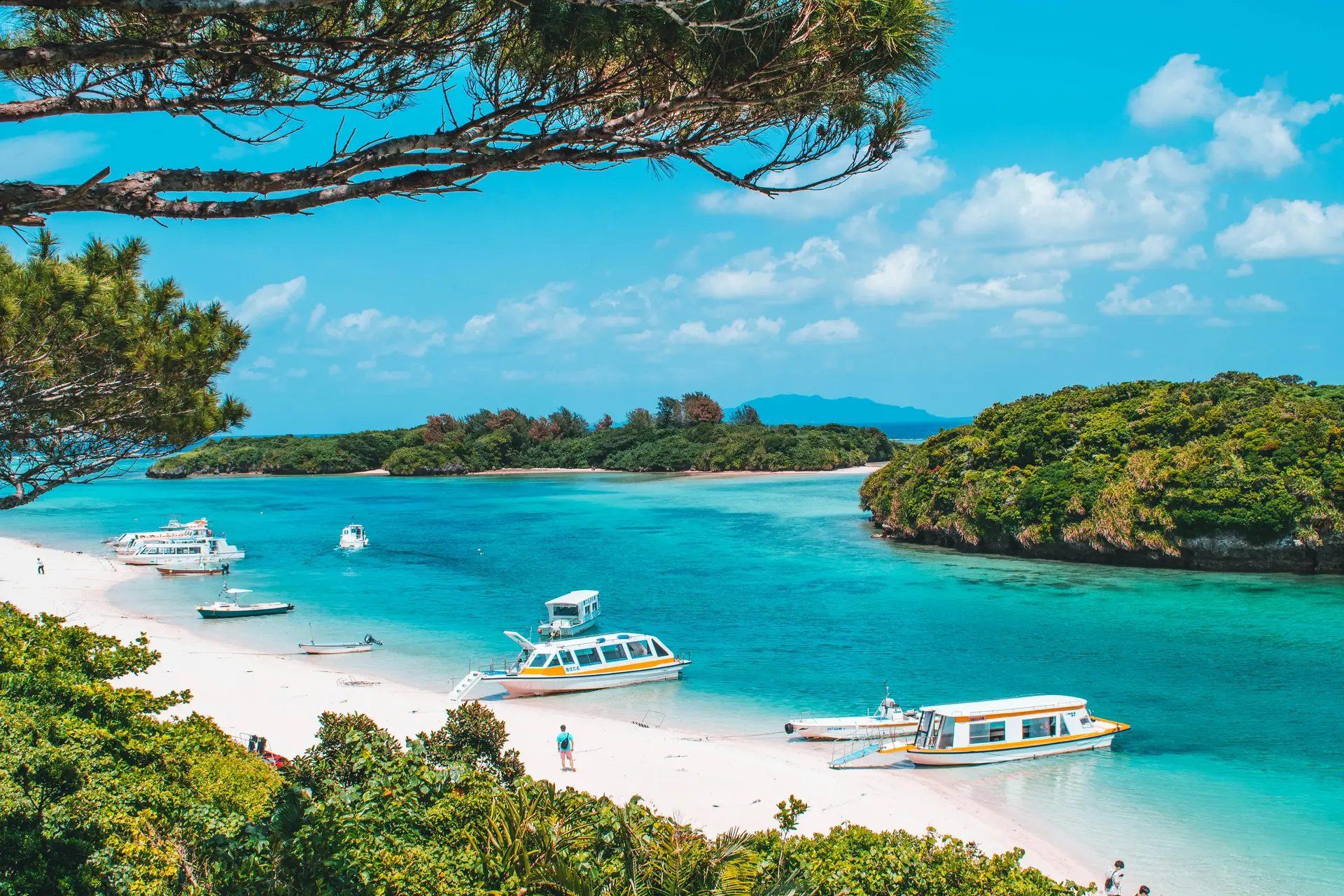
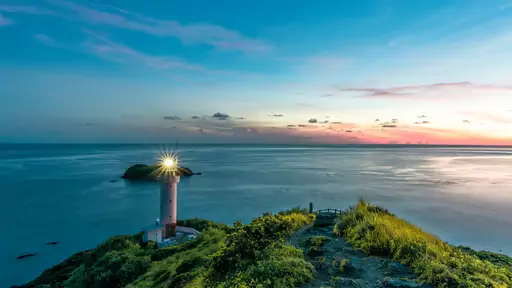
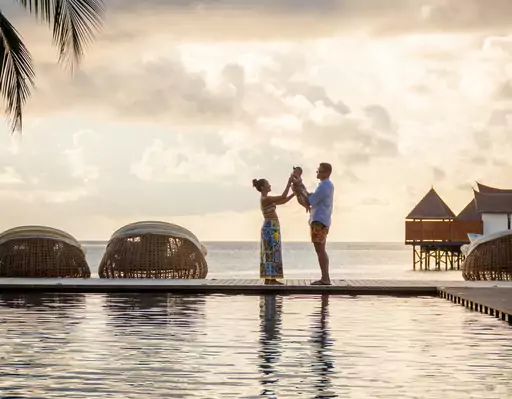
Okinawa gives you tropical reef water and a culture that differs from the rest of Japan. The island was the centre of the Ryukyu Kingdom until 1879. That past shows in the UNESCO-listed castle sites such as Nakijin and Zakimi, in the royal tombs near Shuri and in the red-tiled houses with shisa lion-dogs on the roofs. Karate started here and the sanshin, a three-string instrument, is still a staple of Okinawan folk music. The water is the other big reason to come. Beyond the resort beaches on the west coast, the reefs around the Kerama Islands are good for snorkelling and diving. Humpback whales pass the Keramas in winter. In the north the Yanbaru forest, a World Natural Heritage area since 2021, is home to the flightless Okinawa rail and can be explored on short walks or by kayak through mangroves. The Churaumi Aquarium near Motobu is known for its whale sharks and manta rays. Five to seven days is enough for a trip that stays on the main island. A Kerama day trip or a flight to the Miyako or Yaeyama islands extends it. Military bases occupy a large share of the central island so the coastline there is less scenic. Typhoons between June and October can also cancel flights and boats. If you only have a few days and no car, you can base yourself in Naha and take day trips by bus and boat.
Naha Airport (OKA) is the main hub for flights to Okinawa. Direct flights run from across Japan, taking about 2.5 to 3 hours from Tokyo and around 2 hours from Osaka. Fukuoka is under 2 hours. International flights arrive from major cities around Asia. The airports on Ishigaki and Miyako also handle international traffic. Some visitors reach the main island by a connection from those islands. The Yui Rail monorail starts at the airport and runs through central Naha, so most hotels in the city are a short ride away. Airport limousine buses serve the resort hotels on the west coast. Taxis wait outside arrivals. Passenger ferries from the Japanese mainland take a day or more, so flying is the practical choice. Cruise ships also call at Naha. If you plan to hire a car, collect it at or near the airport and expect the first drive on the left to be easier on the expressway than in Naha traffic.
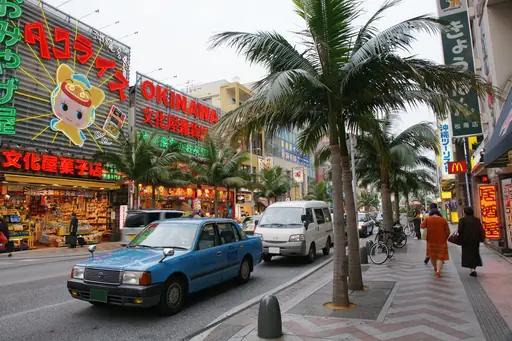
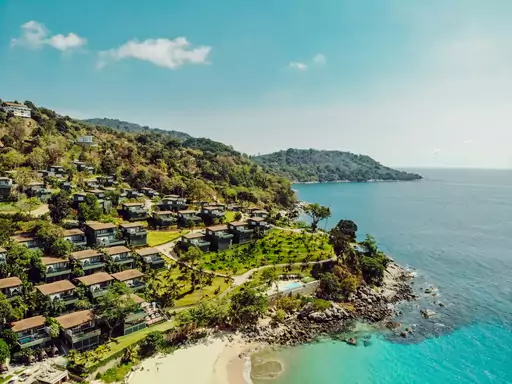
Most visitors choose between Naha and the resort coast. Naha has the widest choice from business hotels to guesthouses, with the Yui Rail for getting around and Kokusai Street for evenings. It suits short stays, trips without a car and anyone who wants to combine city sights with day trips to the Kerama Islands. The west coast between Chatan and Onna has the large beach resorts, many with pools and private beach areas. Further north around Nago and Motobu the hotels are fewer and quieter and put you close to the aquarium and the forest. Self-catering apartments and holiday houses are common outside Naha and work well for families. Book early for Golden Week and the summer school holidays in July and August when the resorts fill up. A car makes the north much more practical, but Naha is the better base if you'd rather rely on the monorail and buses.
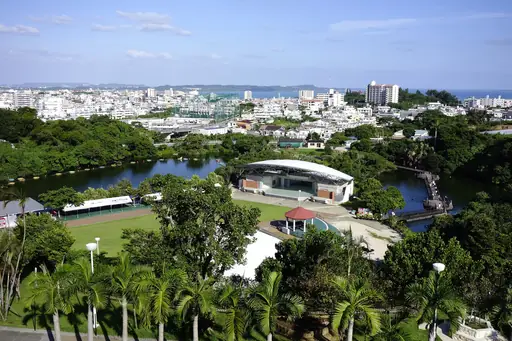
Okinawa Island is long and narrow, with Naha and the airport in the south. The resort beaches are along the west coast further north and the aquarium and the Yanbaru forest are at the northern end, so the sights are spread out. Central Naha is the one part of the island that works well without a car. A hire car is the practical choice for everywhere else.
Monorail:
The Yui Rail links Naha Airport with the city centre and Shuri through 19 stations in about 40 minutes. Day passes allow unlimited rides.
Buses:
Buses fill the gaps and the Naha Bus Terminal at Asahibashi is the main hub. Fares outside central Naha depend on distance and are paid when you get off. The system can be hard to read at first.
Car:
Driving is on the left. The Okinawa Expressway goes north to Nago and the Churaumi Aquarium is roughly two hours from Naha by road, which makes the north a long day trip from the city.
Taxis and bikes:
Taxis are common in Naha and at the resorts and work for short trips that the monorail and buses don't cover. Bicycle sharing and hire motorbikes are available too.
Boats and flights:
Fast boats to the Kerama Islands leave from Tomari Port in Naha and take about 35 minutes to Tokashiki and 50 minutes to Zamami. Weather can cancel them. Flights from Naha serve Miyako, Ishigaki and Kume for longer trips.
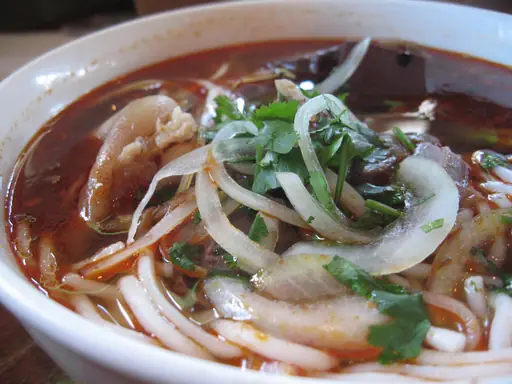
Okinawan food differs from mainland Japanese cooking and leans on pork, tofu, seaweed and bitter melon. Izakaya serve small dishes in the evening and the larger resorts have international restaurants.
Okinawa soba:
Okinawa soba is made of wheat noodles in a pork broth and usually comes with braised pork on top. It's an everyday lunch dish across the island.
Goya champuru:
A stir-fry of bitter melon with tofu and egg, often with pork or Spam as well. Champuru means something mixed together. The bitter melon gives the dish its distinct taste.
Rafute:
Pork belly braised in sugar and awamori until it's soft. It's served as a side dish or as part of a set meal.
Umi-budo:
Small green sea grapes are a seaweed with tiny beads that burst when you bite them. They're served cold, usually as a side dish.
Taco rice:
Rice topped with spiced taco meat, lettuce, cheese and tomato. It's an everyday local favourite found in many casual restaurants.
Sata andagi are fried doughnut-like sweets. Awamori is a spirit made from rice and Orion beer is sold almost everywhere. A public market in Naha sells fresh fish and pork cuts, which you can have cooked upstairs. Vegetarians will find the choice thin since many dishes use pork or fish stock. Convenience stores and supermarkets are common and sell ready meals, which helps in the north where restaurants are further apart.
We calculate the average costs when travelling to destinations and compare those with the living costs at your home. With this you can get an estimate of how expensive or cheap the destination is for you.
To customise this, you can set up which location and price level are used for the calculations in your account settings.
The exchange rate price factor shows how expensive or cheap a currency currently is compared to its historical average. It's a quick way to see if a country is currently more or less affordable due to exchange rate changes.
To help you plan your trip, we provide estimated daily costs per person (when travelling as a pair) for different travel styles. These numbers give you an idea of what you might spend each day at this destination, including accommodation, food, transport and activities.
Additionally, we also provide average hotel costs for different travel styles to give you an estimate for the accommodation only.
Please note that these are only estimates. The real costs depend on booking times, season and other factors.
Travel style categories explained:
Backpacker:
Staying in hostels or budget hotels, cooking your own meals or eating cheap and choosing low-cost activities.
Mid-range:
Staying in mid-range hotels, eating at a mix of restaurants and casual spots and enjoying a variety of activities.
Luxury:
Staying in luxury hotels, dining out at high-end restaurants and enjoying premium experiences without worrying about the price.
| Backpacker | Mid-range | Luxury | |
|---|---|---|---|
| 💵 Total costs per day, including accommodation | |||
| 🏨 Accommodation per night, per person | |||
| 🍝 Food per day | |||
| 🚕 Transportation per day |
| 🍽️ Restaurant Dinner, per person | |
|---|---|
| 🍛 Lunch Set, per person | |
| 🍟 Fast food combo | |
| 🍝 Preparing your own food, per day | |
| ☕ Cappuccino | |
| 🍺 Beer in a restaurant, 0.5 l |
| 🚌 Public transport ticket | |
|---|---|
| 🚕 Taxi Ride, 10 km / 6 mi | |
| ⛽ Petrol, 1 l |
| 🎞️ Cinema ticket | |
|---|---|
| 👩⚕️ Doctor's consult | |
| 🤧 Cold medication | |
| 💇 Basic haircut |
Log in to add this place to a travel list and get a summary of all recommended items for your whole trip.
