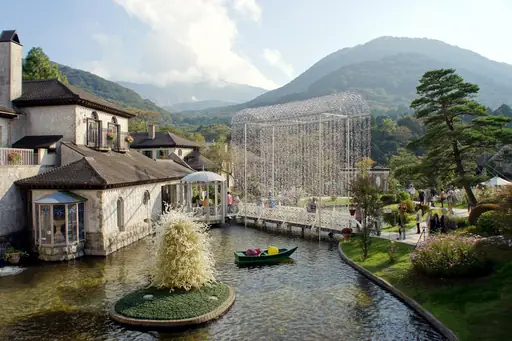
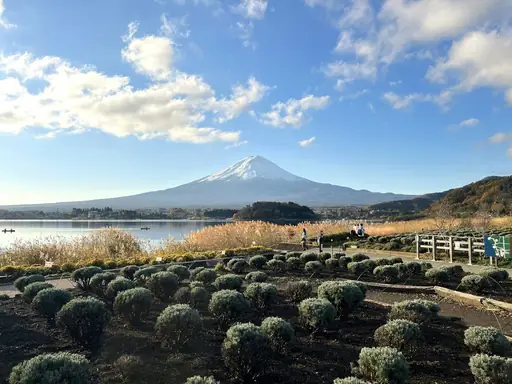
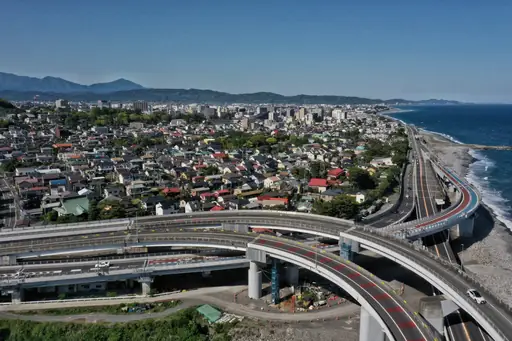
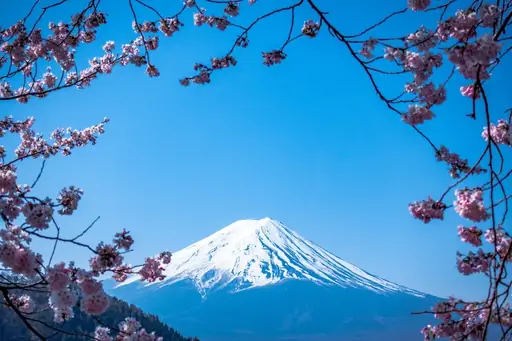



Suicasmo, CC BY-SA 4.0, via Wikimedia Commons
Asia › Japan › Izu Peninsula › Atami

Atami

Scroll
Seaside onsen resort with fireworks nights

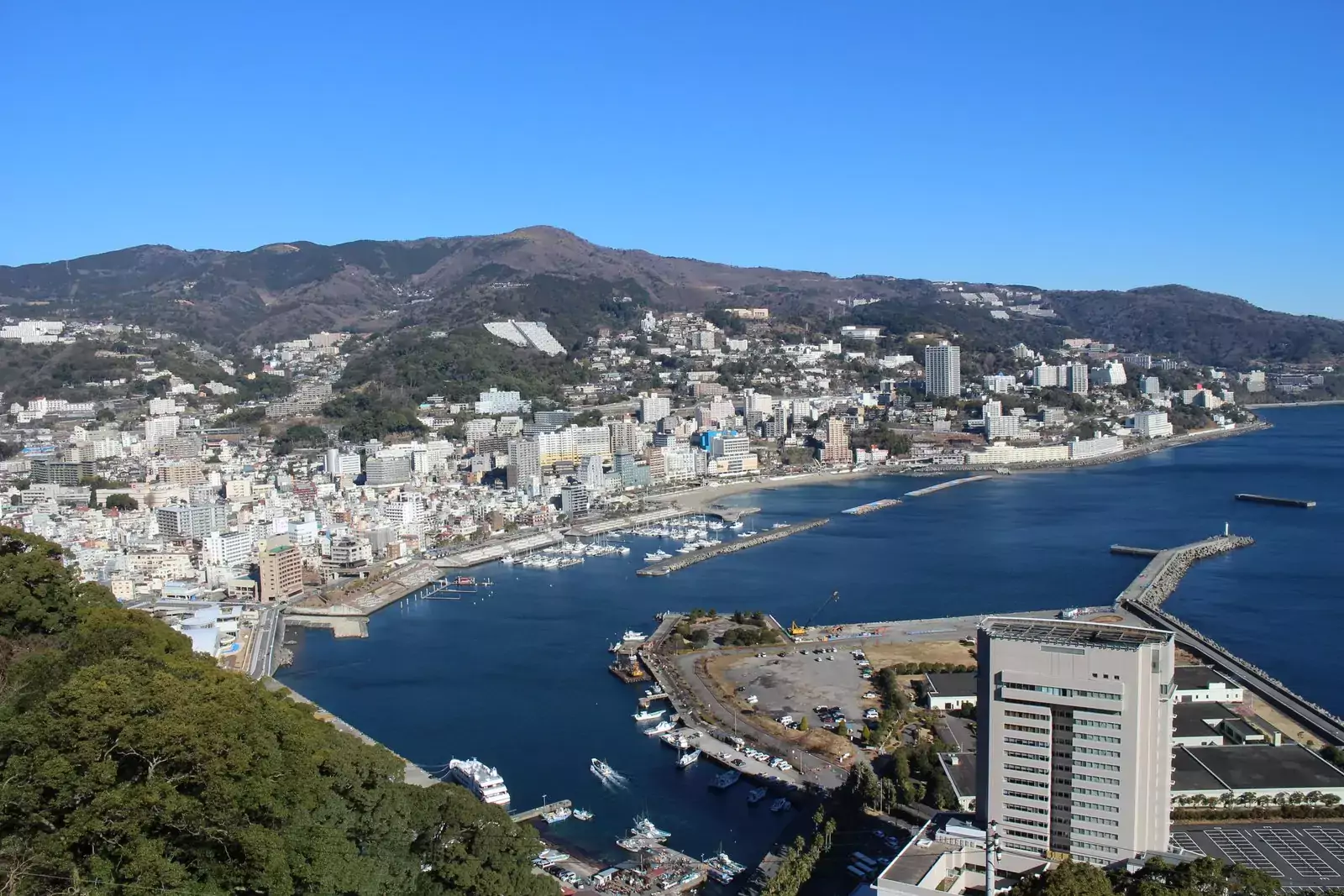
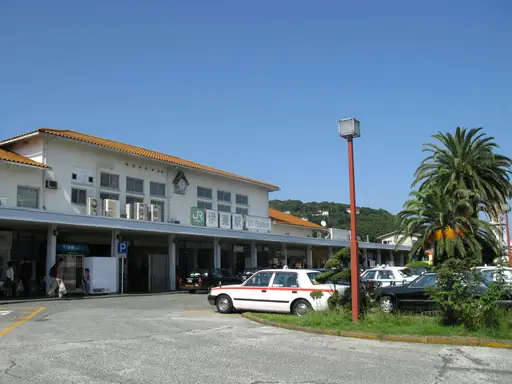
Atami is a hot spring resort city in Shizuoka Prefecture on a steep hillside above Sagami Bay and has long been a spa town. It's the first stop on the Izu Peninsula by train and about 45 minutes from Tokyo on the Shinkansen. Visitors can see the MOA Museum of Art on the hilltop, visit Kinomiya Shrine and its huge ancient tree or relax on Sun Beach. Fireworks light up the bay on many nights through the year. The area around the station is easy on foot, though the hillsides are steep. It works as a day trip or as a relaxed overnight stop with an onsen.

City in Japan
Climate zone: Humid subtropical

Humid subtropical: Warm temperate climates with hot, humid summers, mild winters and evenly distributed rainfall, common on eastern continental margins.

See climate table
Price level: $$$
$Cheap
$$Medium
$$$Expensive, upscale
$$$+Very expensive, luxury
See price details
Safety: 8.4
General Safety:9
Health & medical:8
Accessibility:5
Tap water:9
Read details
Tourist English: 3/5
English is moderately available at hotels, tourist spots and major restaurants. Many signs and menus are bilingual, but smaller shops and local bathhouses may have limited English – translation apps are helpful.
Last update: 20 Oct 2026
* We earn a commission from some links on this page.
Atami Summary

These place ratings give you a quick overview of how well a destination matches different types of trips.

‘Best for’ scores:
The specific interest scores show where this place really shines – whether it's ideal for hiking, food & drink experiences, museums or other activities. These highlights help you understand what makes the destination special at a glance.

‘Your personal’ scores:
This reflects how well a place matches your personal preferences. You can adjust the importances of travel topics or other personal requirements categories in your account settings.

‘Suited for’ badges:
These give you a quick overview of how well a destination suits specific types of travellers, to help you find the places that match your lifestyle, preferences or travel situation.

Read how our scores work
Great for seaside hot springs and relaxation. Bathe in ocean-view onsens, stroll coastal promenades, visit gardens and enjoy fresh seafood.
Place score
7.4
Best at:
Hot springs
9
Sea
8
Cosy towns
7
Spotless
7
Art
7
Personal score
?
Log in to see how this place matches your personal travel interests.
Suited for
👶 6
Families
🧓 6
Seniors
🛡️ 9
Travel Beginners
❤️ 8
Couples
Japan – Quick facts
Power Grid: 100 V, 50 Hz
Plug: Type A
Type A:
Diagram of a Type A power plug

Read about power adapters
Currency: Japanese Yen (JPY)
£1 ≈ JP¥210
Cashless info: Rating 4/5
Cashless payments are becoming more common, especially in cities, with some shops still preferring cash. Be prepared for occasional cash-only situations in rural areas.

Save with a travel credit card
eSIM providers: Best value: Saily
Flexibility: Airalo
Read our in-depth comparison
Tipping: Tipping is not customary in Japan and can be considered rude. Excellent service is the norm, and tipping is unnecessary in most places.
Public drinking: Public drinking is legal and commonly accepted, particularly during festivals and events.
Public smoking: Smoking is prohibited in indoor public places but allowed in designated outdoor areas. Some restaurants may have smoking sections.
New Year
(January)
One of the most important holidays, expect crowded temples and high prices. Plan ahead.
Golden Week
(April-May)
The busiest travel time, expect high demand for accommodation and transport.
Obon
(August)
A time to honour ancestors, many businesses close, and transport can be crowded.
Emergency contact: Emergency Number: 110 (Police), 119 (Fire & Ambulance)
Taxi apps: Uber, JapanTaxi, DiDi
Other: Japan is a country of respect, so understanding local customs and etiquette is important. Public transport is efficient, but can be crowded during peak hours.
Best times to travel

The best times to travel section shows how the months compare for a visit, so you can find the time of year that fits what you want to do.

Background colours of the months:
The colour shows the typical temperature: yellow (hot), green (mild) and blue (cold). How strong the colour is shows the travel season: full colour means high season, soft colour means shoulder season and soft-striped means off season.

Weather symbols:
Each month has one symbol showing what the weather is typically like, such as hot and sunny, freezing or a rainy or snowy season. Use them to quickly spot months that match the weather you want, or to avoid the ones that don't.

Crowdedness:
The people icon shows how busy the place usually is. The more people, the more crowded it gets.

Additional notes:
The grey info boxes point out special things worth knowing, like recurring weather issues or seasonal events.

for Atami, Japan
☀️
Jan
🌤️
Feb
🌦️
Mar
🌦️
Apr
🌤️
May
🌦️
Jun
⛈️
Jul
🔥
Aug
🌦️
Sep
🌦️
Oct
🌤️
Nov
☀️
Dec
High season: Feb. - March, July - Aug.
Shoulder season: Jan., April - May, Sep. - Dec.
Crowdedness: 6 (Many tourists)
Tap on a month for more info Hover over a month for more info
Atami Plum Garden festival, Japan's earliest plum blossoms, runs January to early March
Frequent fireworks displays year-round, most often in summer, one of Japan's top fireworks towns
Rainy season early June to mid July, typhoon risk June to October

Why travel to Atami?

Atami is one of the easiest hot spring escapes from Tokyo. The Shinkansen takes about 45 minutes and the town has a bay, steep streets and onsen hotels within a short ride of the station. A free foot bath right outside the station lets you start soaking on arrival. The MOA Museum of Art is on the hilltop with views over Sagami Bay. It holds more than 3,500 East Asian and Japanese works including National Treasures as well as a reconstructed golden tea room. Kinomiya Shrine has a sacred tree said to be over 2,000 years old and a walk once around the tree is said to add a year to your life. The Atami Plum Garden blooms from January to early March with around 470 trees. The castle on the hill is a reconstruction with an observation deck reached by a short ropeway. Sun Beach is a promenade beach of about 400 m a few minutes on foot from the station. Swimming season runs from roughly mid-July to late August and the sand is lit in changing colours in the evening. Fireworks over the bay are held on many evenings through the year and last about 20 to 25 minutes. With a longer stay you can add Hakone or the rest of Izu.

🏯Places worth seeing
  • 1 Atami Trick Art Meikyu-kan
  • 2 Izu-San Shrine Head Shrine Building
  • 3 Atami plum garden entrance
🎡Places for activities
  • 1 MOA Museum of Art
  • 2 Atami Onsen Hotel Yumeiroha
  • 3 Atami Ropeway
  • 4 Atami Jyo Castle
  • 5 Kinomiya Shrine
🏞️Natural landmarks
  • 1 Sagami Bay
  • 2 Atami Sun Beach
  • 3 Hot Spring (Foot bath)
  • 4 Hatsushima
  • 5 Plum Garden
  • 6 Sun Beach
  • 7 Jukkoku Pass
🛍️Shopping
  • 1 Nakamise Shopping Street
🍽️Eat & Drink
  • 1 Atami Osakana-don-ya
    Atami Osakana-don-ya specialises in generous seafood rice bowls featuring seasonal fish from the Atami and Izu coast, including local horse mackerel and cherry salmon when available. It is on the shopping streets immediately outside Atami Station.
  • 2 Himono Dining Kamanari
    Himono Dining Kamanari is operated by the long-established dried-fish maker Kamatsuru and serves grilled himono set meals, including local horse mackerel and seasonal fish. It is in central Atami, near the Ginza shopping street and about a 10-minute walk from Atami Station.
  • 3 Uotoya
    Uotoya sells and grills its own sun-dried fish, including horse mackerel, mackerel, sardines, kinki and seasonal catches. It is midway along Heiwadori Shopping Street directly outside Atami Station.
  • 4 Toku-zou Atami Honten
    Toku-zou focuses on kinmedai, or splendid alfonsino, in seafood bowls, grilled dishes and takeaway snacks. It is at 4-8 Tawarahoncho, a few minutes on foot from Atami Station in the station-front shopping area.
  • 5 Atami Pudding
    Atami Pudding sells retro-style custard pudding in small milk-bottle-like jars, with seasonal and café variations. Its main shop is on Nakamise-dori, just outside Atami Station.
  • 6 Enmeido
    Enmeido is a long-running maker of onsen manju, steamed buns filled with sweet bean paste that are a classic hot-spring-town snack. It is at 3-28 Kamijukucho, about a 10-minute walk from Atami Station towards Atami Ginza.
  • 7 Tannaya
    Tannaya makes handmade onsen manju marked with an onsen symbol, following a recipe passed down since its 1934 founding. It is on Nakamise-dori Shopping Street beside Atami Station.
  • 8 Kimi no Hamayaki
    Kimi no Hamayaki is a casual seafood grill where diners cook shellfish, fish and other local catches at the table. It is in the Atami Station area, convenient for a relaxed seafood meal near the shopping streets.
  • 9 Washokudokoro Tensho
    Tensho serves seasonal seafood, sashimi and balanced Japanese set meals using fish from Sagami Bay and the Izu coast. It is in central Atami, between the station area and the seafront.
  • 10 Ajiro Fish Market Shokudo
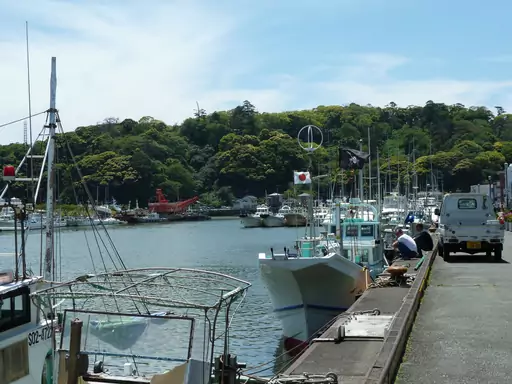
    Ajiro Fish Market Shokudo serves simple meals built around locally landed fish, especially horse mackerel and seasonal seafood from Ajiro Port. It is at Ajiro Fishing Port south of central Atami, close to Ajiro Station on the JR Ito Line.
🎈Events
  • Atami Fireworks (multiple times throughout the year)
  • Atami Plum Festival (January-March)
  • Kinomiya Shrine Festival
  • Atami Geigi (Geisha) Performances
  • Atami Kaijo Hanabi Taikai (Sea Fireworks)
  • Atami Castle Illumination
  • Momiji Festival (Nov–Dec)
  • Atami Sea Festival (July)
  • Atami Art Festival
  • Retro Car Show

Knowledge before you go

  • The free Ieyasu no Yu foot bath is right outside Atami Station.
  • The MOA Museum of Art is usually closed on Thursdays unless it falls on a holiday.
  • The YuYu Bus one-day ticket costs about JP¥800 (£3.79) and covers unlimited rides on its two sightseeing loops.
  • Fireworks run more than ten times a year in the evening and Sun Beach is the main viewing spot.

How to travel to Atami

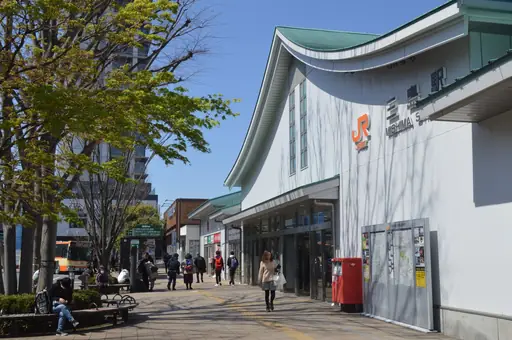
Atami is a Shinkansen stop on the Tokaido line. From Tokyo Station a Kodama train takes about 45 minutes and some Hikari trains take about 35. The fastest Nozomi trains don't stop here. The Odoriko limited express takes about 80 minutes and the local JR Tokaido Line about an hour and 40 minutes at the lowest fare. From Kyoto and Osaka it's a Shinkansen ride with a change at a larger station if your train doesn't stop. The JR Ito Line continues from Atami into the Izu Peninsula and the Izukyu Line runs on to Shimoda. Hakone is reached by changing at Odawara and Haneda and Narita airports connect through Tokyo. Highway buses and cars are a slower option with weekend traffic.

Access summary

  • From Haneda (HND): Train via Shinagawa to Atami, about 1.5 hours.
  • From central Tokyo: Tokaido Shinkansen from Tokyo/Shinagawa, roughly 40–60 minutes.
  • From Narita (NRT): Narita Express to Tokyo then Shinkansen, around 2–2.5 hours.

Where to stay in Atami

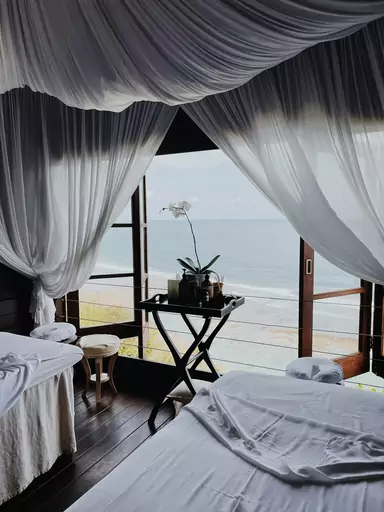
Most visitors stay at an onsen hotel or ryokan on the hillside or along the bay. Many have baths with a sea view and serve dinner and breakfast with local seafood. The streets around the station suit travellers who want a short walk to the train and the beach. Sun Beach hotels face the water and the evening fireworks. Prices rise on weekends and in summer and on fireworks nights. A weekday night is cheaper and quieter. Public baths often restrict visible tattoos so ask before booking and check if your hotel has private baths. Some hotels and spas sell day-use bath tickets if you only have an afternoon. Atami also works as a base for Hakone and Izu since trains run in both directions.

How to get around Atami

Atami is built on a steep hillside above the bay, with the station and Sun Beach near the bottom and the MOA Museum and Atami Castle higher up. The tourist information office beside the station has an English map. IC cards work on JR trains and local buses.

Walking:
The station area and the beach promenade are easy to cover on foot.
The town is steep, so buses and taxis help for the sights on the hillsides.

Buses and ropeway:
The YuYu Bus runs two sightseeing loops from the station about every 35 minutes with a one-day ticket on sale.
Buses to the MOA Museum leave from the station and take around 8 minutes. Atami Castle has a ropeway that takes about 3 minutes.

Trains:
Kinomiya Shrine is reached by a short bus ride or a walk from Kinomiya Station on the Ito Line, one stop south of Atami.

Car:
Cars are awkward since the streets are narrow and parking is limited.
A car adds little for a day in town.

Food in Atami

Seafood is the main reason to eat out in Atami. The bay and the Izu coast supply fresh fish served as sashimi bowls and set meals. Izakaya in the evening serve local fish with sake. Vegetarians should ask about the stock since fish broth is common in soups and set meals.

Himono:
Himono is the local dried fish.
It's sold on the shopping streets near the station and grilled at many restaurants.

Kinmedai:
Kinmedai is a red fish from nearby Shimoda.
It's served grilled or simmered and is one of the local fish to look for on menus.

Sweets and snacks:
Custard pudding is a common souvenir, while steamed manju and eggs cooked in hot spring heat make easy snacks.

Budget snapshot
Costs compared to home

We calculate the average costs when travelling to destinations and compare those with the living costs at your home. With this you can get an estimate of how expensive or cheap the destination is for you.

To customise this, you can set up which location and price level are used for the calculations in your account settings.

-45 %
Daily expenses in Atami are around 45% lower than the average across United States. That means you'll spend a lot less on meals and getting around.
Exchange rate trend

The exchange rate price factor shows how expensive or cheap a currency currently is compared to its historical average. It's a quick way to see if a country is currently more or less affordable due to exchange rate changes.

-20 %
Your exchange rate (GBP to JPY) is 20% better than in recent years. That means travelling now is considerably cheaper compared to the past.

Travel costs

To help you plan your trip, we provide estimated daily costs per person (when travelling as a pair) for different travel styles. These numbers give you an idea of what you might spend each day at this destination, including accommodation, food, transport and activities.

Additionally, we also provide average hotel costs for different travel styles to give you an estimate for the accommodation only.

Please note that these are only estimates. The real costs depend on booking times, season and other factors.

Daily cost summary

Travel style categories explained:

Backpacker:
Staying in hostels or budget hotels, cooking your own meals or eating cheap and choosing low-cost activities.

Mid-range:
Staying in mid-range hotels, eating at a mix of restaurants and casual spots and enjoying a variety of activities.

Luxury:
Staying in luxury hotels, dining out at high-end restaurants and enjoying premium experiences without worrying about the price.

Backpacker Mid-range Luxury
💵 Total costs per day, including accommodation
£68
£108
£270
🏨 Accommodation per night, per person
£45
£68
£135
🍝 Food per day
£17
£32
£97
🚕 Transportation per day
£6
£8
£38
Food & Drink
🍽️ Restaurant Dinner, per person
£12
🍛 Lunch Set, per person
£4.80
🍟 Fast food combo
£3.80
🍝 Preparing your own food, per day
£7
☕ Cappuccino
£2.20
🍺 Beer in a restaurant, 0.5 l
£2.20
Transportation
🚌 Public transport ticket
£1.40
🚕 Taxi Ride, 10 km / 6 mi
£23
⛽ Petrol, 1 l
£0.85
Other
🎞️ Cinema ticket
£9
👩‍⚕️ Doctor's consult
£32
🤧 Cold medication
£8
💇 Basic haircut
£9.50

Safety information overview

General safety
9
Atami is very safe with low crime and quiet streets in the evening. Fireworks nights draw crowds on the beach promenade so keep an eye on your belongings. Typhoons in late summer and autumn can disrupt trains and steep streets get slippery in rain.
Health & Medical
8
Medical care is good with hospitals and clinics in the city though English is limited at smaller practices. Pharmacies are easy to find. Hot baths can be risky with heart conditions or low blood pressure so limit soaks and drink water.
Accessi­bility
5
Atami is built on a steep hillside so many streets and paths have slopes and stairs. The beach promenade is flat. Buses reach the MOA Museum and the ropeway for the castle but the shrine paths include steps.
Tap water
9
Tap water in Atami is safe to drink like in the rest of Japan. Vending machines and convenience stores sell bottled water and cold drinks near the station. Summer is hot and humid and the hills are steep so carry a refillable bottle.

Looking for inspiration?

Discover
Most beautiful beaches and coastal escapes
For a lot of people, a beach is the whole point of a holiday, but what makes a beach day perfect really depends on personal taste. Some travellers want isolation and the feeling…
Read more
Discover
Best couple vacation destinations in Asia
Asia is perfect for couples who want their holiday to feel like a shared adventure rather than just a change of scenery. Few continents offer so many ways to be amazed together.…
Read more
Discover
Best wellness destinations in Asia
Asia's wellness offer is rooted in some of the world's most ancient and sophisticated therapeutic traditions, with Ayurvedic medicine, traditional Chinese medicine, Thai massage,…
Read more
Discover
Best destinations for first-time travelers in Asia
Asia has one of the best established beginner travel routes anywhere, largely because so many first time travelers have worn the path before you. Southeast Asia in particular…
Read more
Discover
Top luxury destinations and exclusive getaways
Luxury travel is defined less by price than by the quality of attention, access and experience that money can unlock at the top end of the market. The most rewarding luxury…
Read more
Discover
Best solo travel destinations in Asia
Asia is where most solo travelers figure out they can actually do this. The backpacker trails through Southeast Asia have been running for decades, and the infrastructure along…
Read more
Discover
Top solo travel destinations and safe hubs
Travelling alone sounds like a bigger deal than it is. The first day feels strange – eating dinner by yourself, navigating without someone to double-check the map with, making…
Read more
Discover
Best couple holiday destinations
Travelling as a couple sounds simple enough, yet the best couple holiday destinations mean something different to almost every pair. What feels romantic to one couple can feel like…
Read more
Discover
Best travel destinations for seniors in Asia
Asia offers some of the most senior friendly infrastructure anywhere, alongside destinations that still call for a bit more independence and stamina. Japan in particular stands…
Read more
Discover
Best luxury destinations in Asia
Asia's luxury travel offer spans an extraordinary range, from the refined ryokan traditions of Japan and the palace hotels of the Indian subcontinent to the ultra-modern resort…
Read more
Discover
Asia's best beach destinations and coastal escapes
Asia's beaches range from some of the most visited in the world to stretches of coast that see almost no tourism at all. The region has enough variety that generalisations don't…
Read more
Discover
Best destinations for first-time travellers
A first trip abroad works best somewhere that eases you in, rather than throwing every possible culture shock and logistical headache at you at once. Some first-time travellers…
Read more
Discover
Best travel destinations for seniors
Senior travel covers a wide range, from slow, low effort trips built around comfort to more independent trips for travellers who still want to cover plenty of ground. Some…
Read more
Discover
Top wellness destinations and holistic retreats
Wellness travel has matured from a niche pursuit into a mainstream category built around the world's most significant spa destinations, retreat centres and therapeutic landscape…
Read more
Discover
Stunning national parks and wilderness areas
National parks exist because someone decided that certain landscapes were too important to lose. The best of them protect ecosystems, wildlife and natural processes that would…
Read more
Feedback