







Was this page helpful?

These place ratings give you a quick overview of how well a destination matches different types of trips.
‘Best for’ scores:
The specific interest scores show where this place really shines – whether it's ideal for hiking, food & drink experiences, museums or other activities. These highlights help you understand what makes the destination special at a glance.
‘Your personal’ scores:
This reflects how well a place matches your personal preferences. You can adjust the importances of travel topics or other personal requirements categories in your account settings.
‘Suited for’ badges:
These give you a quick overview of how well a destination suits specific types of travellers, to help you find the places that match your lifestyle, preferences or travel situation.
| Power Grid: |
230 V, 50 Hz Plug: Type C , Type D
Type C:
  Read about power adapters |
|---|---|
| Currency: |
Iraqi Dinar (IQD) £1 ≈ IQD 2,017 |
| Cashless info: |
Rating 2/5
Cashless payment options are limited in Iraq. Most transactions are done in cash, and credit cards are only accepted in some larger hotels and businesses.
Save with a travel credit card |
| eSIM providers: |
Best value: Saily Flexibility: Airalo Read our in-depth comparison |
| Tipping: | Tipping is not mandatory in Iraq but appreciated for good service. A small tip of 5-10% in restaurants is common. Taxi drivers may expect a small tip or rounding up of the fare. |
|---|---|
| Public drinking: | Public drinking is illegal in Iraq, and alcohol consumption is restricted to private settings. Alcoholic beverages are generally not available in public spaces or restaurants. |
| Public smoking: | Smoking is officially banned in indoor public places, including public buildings, but the ban is poorly enforced and smoking remains very common. |
| Republic Day (14 July) |
A national holiday with parades and celebrations |
|---|---|
| Ashura (Varies) |
A religious holiday observed with mourning ceremonies, especially in Shia communities |
| Emergency contact: | Emergency Numbers: 104 (Police), 122 (Ambulance), 115 (Fire) |
|---|---|
| Taxi apps: | Karwa |
| Other: | Travel to Iraq is not recommended at this time due to security risks. It's essential to stay informed about the political and safety situation before making travel plans. |
The best times to travel section shows how the months compare for a visit, so you can find the time of year that fits what you want to do.
Background colours of the months:
The colour shows the typical temperature: yellow (hot), green (mild) and blue (cold). How strong the colour is shows the travel season: full colour means high season, soft colour means shoulder season and soft-striped means off season.
Weather symbols:
Each month has one symbol showing what the weather is typically like, such as hot and sunny, freezing or a rainy or snowy season. Use them to quickly spot months that match the weather you want, or to avoid the ones that don't.
Crowdedness:
The people icon shows how busy the place usually is. The more people, the more crowded it gets.
Additional notes:
The grey info boxes point out special things worth knowing, like recurring weather issues or seasonal events.
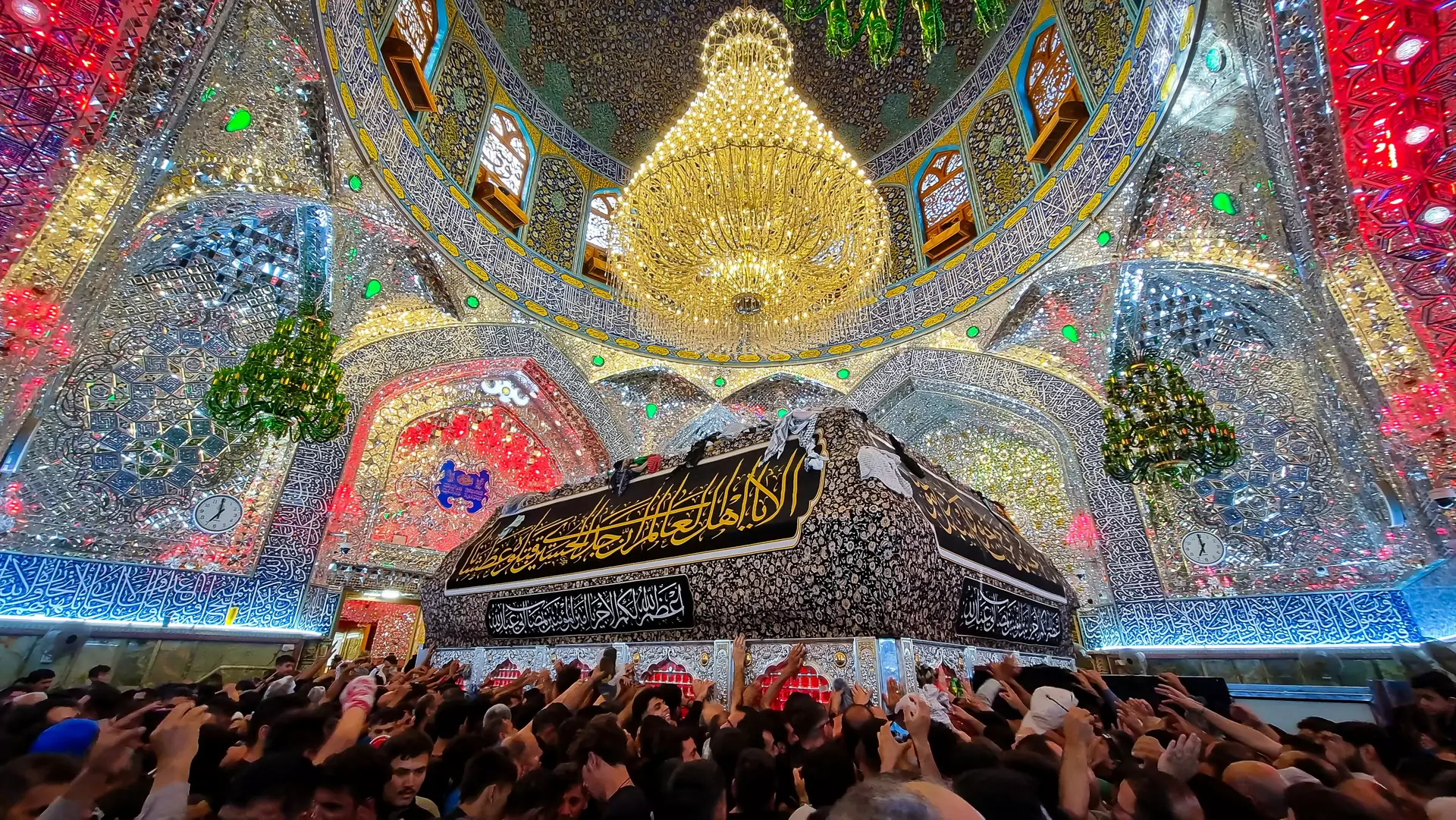
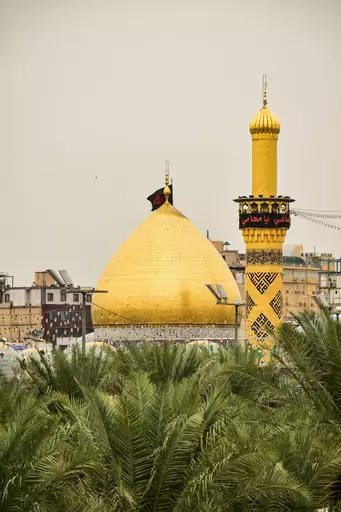
Najaf is a city of profound historical and cultural significance in central Iraq, attracting visitors who seek an authentic experience of the region’s heritage. The city’s most prominent landmark is the Imam Ali Shrine, one of the holiest sites for Shia Muslims worldwide. The shrine complex, with its intricate mosaics, marble columns and serene courtyard, offers a glimpse into centuries of Islamic art and architecture. Pilgrims and tourists alike can observe daily rituals, listen to sermons and explore the surrounding bazaars that sell traditional crafts, spices and textiles. Beyond religious tourism, Najaf’s urban fabric reflects a blend of modernity and tradition. The streets are lined with historic mosques, such as the Al-Askari Mosque and contemporary cafés where locals gather for tea and conversation. Visitors can stroll along the banks of the Euphrates River, enjoying views of the city’s skyline and the occasional boat traffic. For those interested in history, Najaf hosts several museums that chronicle Iraq’s ancient past, including artifacts from the Sumerian and Babylonian eras. The city also serves as a gateway to nearby attractions like the archaeological site of Al-Mada'in, where visitors can explore ruins dating back to the Roman period. Travelers to Najaf gain insight into Iraqi culture through its religious traditions, architectural heritage and everyday life, making it a meaningful destination for those seeking depth rather than spectacle.
Najaf, located approximately 160 kilometers south of Baghdad, Iraq, is accessible primarily by road. The city is connected to major highways including Highway 1, which links it to Baghdad and other key urban centers like Basra. Public transportation options include buses operating between Najaf and Baghdad, with travel time ranging from 3 to 4 hours depending on traffic and route conditions. Private vehicles can utilize well-maintained roads for direct access. The nearest international gateway is Baghdad International Airport (BIA), about 160 km away, reachable via road or domestic flights. Seasonal factors such as extreme summer heat may affect travel logistics, while winter months generally offer more stable driving conditions.
Najaf offers a mix of modest guesthouses and mid‑range boutique inns that cater to pilgrims and business travelers alike. Traditional “khalwa” accommodations – small family-run rooms with basic amenities – are plentiful along the banks of the Karbala River, often priced between US$20 – 35 (£15.03 – 26.30) per night. For those seeking more comfort, contemporary hotels provide air‑conditioned suites, Wi‑Fi and on‑site dining, ranging from US$60 – 120 (£45.09 – 90.18) nightly. Many lodgings emphasize local hospitality, offering complimentary tea and a quiet courtyard for reflection. The city’s proximity to the Imam Ali shrine means that many establishments offer special rates during religious festivals, ensuring ample options without compromising quality.
We calculate the average costs when travelling to destinations and compare those with the living costs at your home. With this you can get an estimate of how expensive or cheap the destination is for you.
To customise this, you can set up which location and price level are used for the calculations in your account settings.
The exchange rate price factor shows how expensive or cheap a currency currently is compared to its historical average. It's a quick way to see if a country is currently more or less affordable due to exchange rate changes.
To help you plan your trip, we provide estimated daily costs per person (when travelling as a pair) for different travel styles. These numbers give you an idea of what you might spend each day at this destination, including accommodation, food, transport and activities.
Additionally, we also provide average hotel costs for different travel styles to give you an estimate for the accommodation only.
Please note that these are only estimates. The real costs depend on booking times, season and other factors.
Travel style categories explained:
Backpacker:
Staying in hostels or budget hotels, cooking your own meals or eating cheap and choosing low-cost activities.
Mid-range:
Staying in mid-range hotels, eating at a mix of restaurants and casual spots and enjoying a variety of activities.
Luxury:
Staying in luxury hotels, dining out at high-end restaurants and enjoying premium experiences without worrying about the price.
| Backpacker | Mid-range | Luxury | |
|---|---|---|---|
| 💵 Total costs per day, including accommodation | |||
| 🏨 Accommodation per night, per person | |||
| 🍝 Food per day | |||
| 🚕 Transportation per day |
| 🍽️ Restaurant Dinner, per person | |
|---|---|
| 🍛 Lunch Set, per person | |
| 🍟 Fast food combo | |
| 🍝 Preparing your own food, per day | |
| ☕ Cappuccino | |
| 🍺 Beer in a restaurant, 0.5 l |
| 🚌 Public transport ticket | |
|---|---|
| 🚕 Taxi Ride, 10 km / 6 mi | |
| ⛽ Petrol, 1 l |
| 🎞️ Cinema ticket | |
|---|---|
| 👩⚕️ Doctor's consult | |
| 🤧 Cold medication | |
| 💇 Basic haircut |
Log in to add this place to a travel list and get a summary of all recommended items for your whole trip.
