






Was this page helpful?

| Opening hours: |
|
||
|---|---|---|---|
| Public website: | www.potalapalace.cn |
| Power Grid: |
220 V, 50 Hz Plug: Type A , Type I
Type A:
  Read about power adapters |
|---|---|
| Currency: |
Chinese Yuan Renminbi (CNY) £1 ≈ CN¥8.88 |
| Cashless info: |
Rating 5/5
Cashless payments are widely accepted in China, particularly in urban areas. Mobile payment services like Alipay and WeChat Pay are commonly used.
Save with a travel credit card |
| eSIM providers: |
Best value: Saily Flexibility: Airalo Read our in-depth comparison |
| Tipping: | Tipping is not customary in China and is not expected, although it may be appreciated in high-end restaurants or by hotel staff for exceptional service. |
|---|---|
| Public drinking: | Public drinking is generally not allowed in many places in China, but it is common in restaurants and bars. |
| Public smoking: | Smoking is prohibited in many indoor public spaces, such as restaurants and public transport, but enforcement can vary. |
| Chinese New Year (January/February) |
Major holiday with family gatherings and public celebrations |
|---|---|
| National Day (1 October) |
National holiday with parades and festivities |
| Emergency contact: | Emergency Numbers: 110 (Police), 120 (Ambulance), 119 (Fire) |
|---|---|
| Taxi apps: | DiDi, Uber |
| Other: | China is known for its vast cultural heritage, including historical landmarks like the Great Wall, the Forbidden City, and the Terracotta Army. It offers diverse landscapes ranging from mountains to beaches. |
The best times to travel section shows how the months compare for a visit, so you can find the time of year that fits what you want to do.
Background colours of the months:
The colour shows the typical temperature: yellow (hot), green (mild) and blue (cold). How strong the colour is shows the travel season: full colour means high season, soft colour means shoulder season and soft-striped means off season.
Weather symbols:
Each month has one symbol showing what the weather is typically like, such as hot and sunny, freezing or a rainy or snowy season. Use them to quickly spot months that match the weather you want, or to avoid the ones that don't.
Crowdedness:
The people icon shows how busy the place usually is. The more people, the more crowded it gets.
Additional notes:
The grey info boxes point out special things worth knowing, like recurring weather issues or seasonal events.
The Potala Palace stands as a remarkable structure in Lhasa. Built on Red Hill its white walls contrast with the surrounding brown earth and bright blue sky. The palace was once home to Tibetan leaders and now serves as a museum showing history and culture. Visitors see halls filled with murals thangkas and statues that tell stories of faith and power.
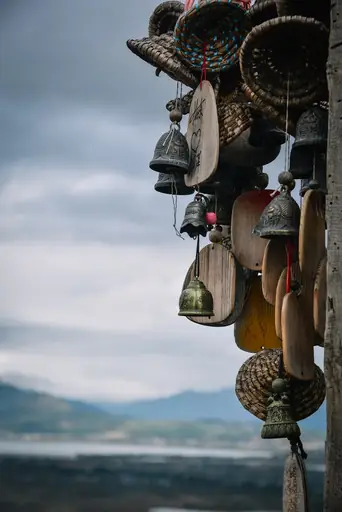
Walking up the stone steps reveals details in woodwork and tile patterns that have lasted centuries. Inside are rooms once used for ceremonies and living spaces arranged around courtyards. The site includes chapels with prayer wheels and bells creating a calm atmosphere despite crowds. Each section shows how art and architecture worked together to support daily life and rituals.
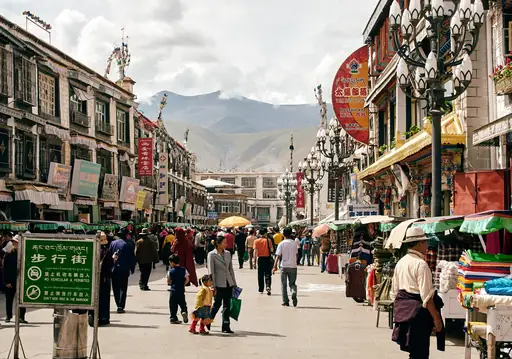
Surrounding the palace is a network of narrow streets where local shops sell woolen goods and tea. Monks walk between homes and cafes while guides share facts about history without loud promotion. The area feels steady with routines that have continued for generations. People here value quiet moments as much as busy markets.
Travelers should plan time early in the day to avoid heat and crowds. Entry requires tickets which can be bought at official counters. Photography rules are strict inside certain rooms so cameras must stay off or set to silent mode. The palace remains a place where past and present meet without losing their distinct roles.
The Potala Palace in Lhasa, Tibet, is accessible via several routes. The primary entry point is from Lhasa city center, reachable by taxi or bus within the city. For international visitors, Lhasa’s Ngari Airport (LXA) offers limited direct flights to nearby regions like Kathmandu or Delhi, followed by overland travel to Tibet. Road access includes the Srinan Highway connecting Lhasa to Shigatse and other Tibetan cities. The palace sits atop Marpori Hill, with walking paths from central Lhasa. Visitors require a permit for entry, obtainable through authorized agencies. Travelers must adhere to local regulations regarding photography and behavior within the palace complex.
In Lhasa’s historic district, accommodations range from modest guesthouses offering basic comforts for budget travelers to boutique hotels that blend traditional Tibetan décor with modern amenities. Many lodgings are within walking distance of the Potala Palace, allowing easy access to the site’s morning and evening tours. The area is renowned for its heritage inns, often housed in restored 19th‑century buildings featuring stone walls, wooden beams and prayer flags. For those seeking higher-end stays, luxury resorts provide panoramic views of the Himalayas, spa services and private tea rooms. Seasonal peak periods see a surge in boutique options, while off‑peak times offer discounted rates at family-run hostels that emphasize local hospitality.


Log in to add this place to a travel list and get a summary of all recommended items for your whole trip.
We calculate the average costs when travelling to destinations and compare those with the living costs at your home. With this you can get an estimate of how expensive or cheap the destination is for you.
To customise this, you can set up which location and price level are used for the calculations in your account settings.
The exchange rate price factor shows how expensive or cheap a currency currently is compared to its historical average. It's a quick way to see if a country is currently more or less affordable due to exchange rate changes.
