









Was this page helpful?

| Public website: | www.namuseum.gr |
|---|
| Power Grid: |
220 V, 50 Hz Plug: Type A , Type I
Type A:
  Read about power adapters |
|---|---|
| Currency: |
Chinese Yuan Renminbi (CNY) £1 ≈ CN¥8.87 |
| Cashless info: |
Rating 5/5
Cashless payments are widely accepted in China, particularly in urban areas. Mobile payment services like Alipay and WeChat Pay are commonly used.
Save with a travel credit card |
| eSIM providers: |
Best value: Saily Flexibility: Airalo Read our in-depth comparison |
| Tipping: | Tipping is not customary in China and is not expected, although it may be appreciated in high-end restaurants or by hotel staff for exceptional service. |
|---|---|
| Public drinking: | Public drinking is generally not allowed in many places in China, but it is common in restaurants and bars. |
| Public smoking: | Smoking is prohibited in many indoor public spaces, such as restaurants and public transport, but enforcement can vary. |
| Chinese New Year (January/February) |
Major holiday with family gatherings and public celebrations |
|---|---|
| National Day (1 October) |
National holiday with parades and festivities |
| Emergency contact: | Emergency Numbers: 110 (Police), 120 (Ambulance), 119 (Fire) |
|---|---|
| Taxi apps: | DiDi, Uber |
| Other: | China is known for its vast cultural heritage, including historical landmarks like the Great Wall, the Forbidden City, and the Terracotta Army. It offers diverse landscapes ranging from mountains to beaches. |
The best times to travel section shows how the months compare for a visit, so you can find the time of year that fits what you want to do.
Background colours of the months:
The colour shows the typical temperature: yellow (hot), green (mild) and blue (cold). How strong the colour is shows the travel season: full colour means high season, soft colour means shoulder season and soft-striped means off season.
Weather symbols:
Each month has one symbol showing what the weather is typically like, such as hot and sunny, freezing or a rainy or snowy season. Use them to quickly spot months that match the weather you want, or to avoid the ones that don't.
Crowdedness:
The people icon shows how busy the place usually is. The more people, the more crowded it gets.
Additional notes:
The grey info boxes point out special things worth knowing, like recurring weather issues or seasonal events.
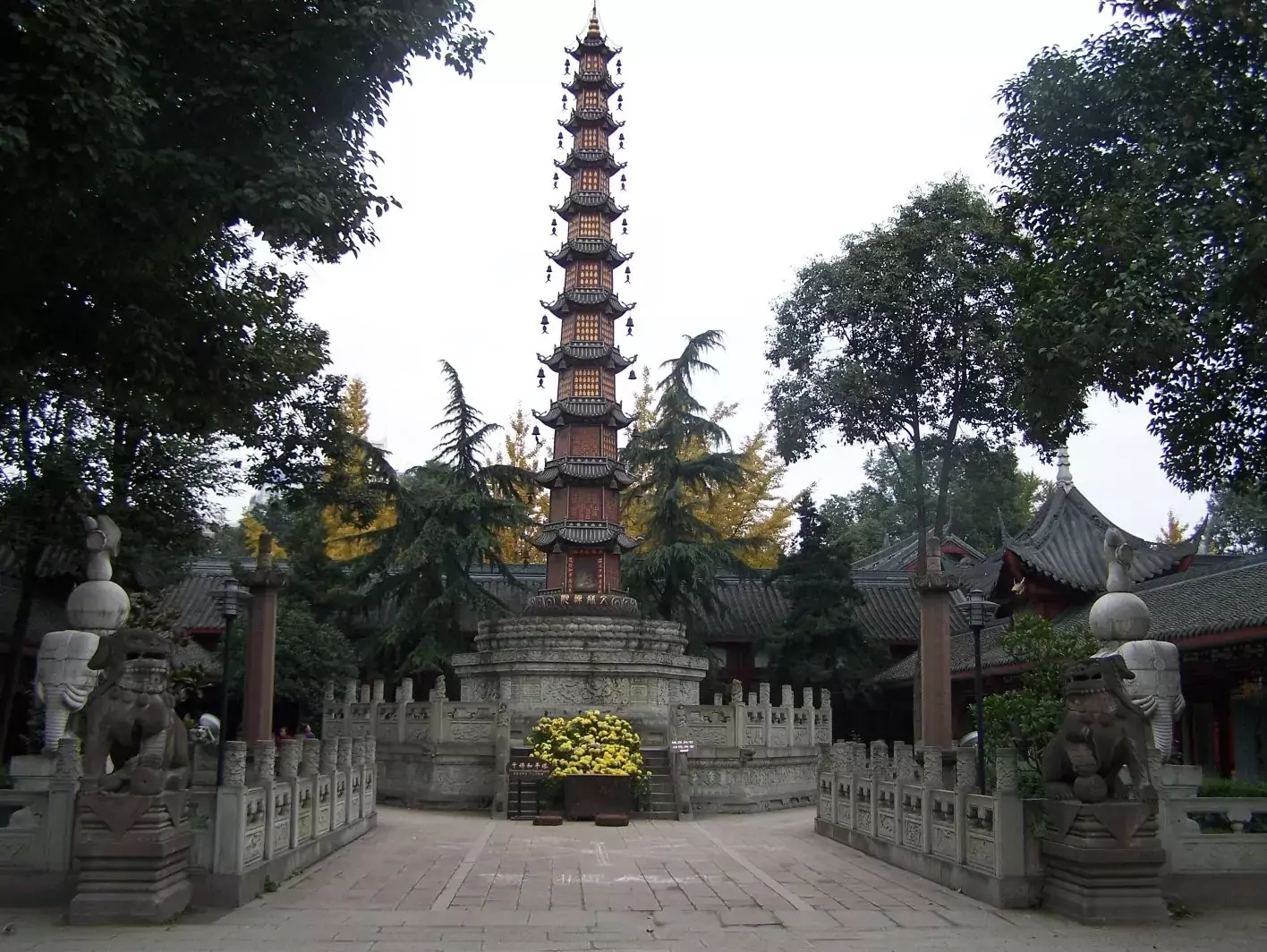
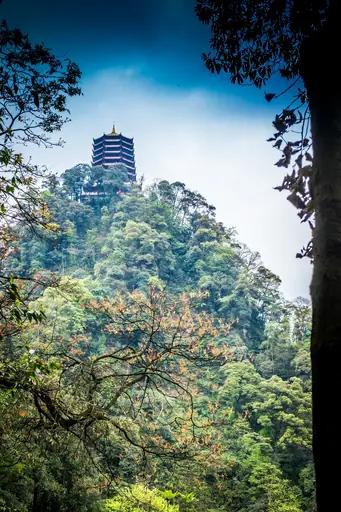
Wenshu Monastery dates back over 1,400 years and is one of the best-preserved Buddhist temples in Chengdu. It features a series of halls aligned along a north-south axis, including the Hall of Celestial Kings, Three Great Bodhisattvas Hall and the Great Hall of the Buddha where magnificent statues and artworks reside.
The monastery is rich in cultural relics, comprising over 500 pieces of paintings and calligraphy from renowned Chinese artists alongside about 300 Buddha statues crafted from various materials. The Sutra Library holds precious Buddhist scriptures including rare and ancient texts.
Visitors can also enjoy the tranquil monastery gardens and famous teahouse where traditional Chinese tea ceremonies are held. Vegetarian restaurants near the monastery serve delicious and authentic meals, making a full sensory cultural experience.
Visitors should be mindful of local etiquette such as modest dress and respectful behavior. Although photography is generally allowed, it is polite to avoid photographing monks or religious ceremonies without permission. Watch out for street vendors outside the monastery who may overcharge or sell counterfeit items.
Wenshu Monastery is located in the Qingyang District of Chengdu, Sichuan Province. Visitors typically fly into Chengdu Shuangliu International Airport, which connects internationally. From downtown Chengdu, the monastery is accessible via Metro Line 1 to Wen Shu Yuan Station, followed by a short walk or bus ride. Taxis are also a convenient option.
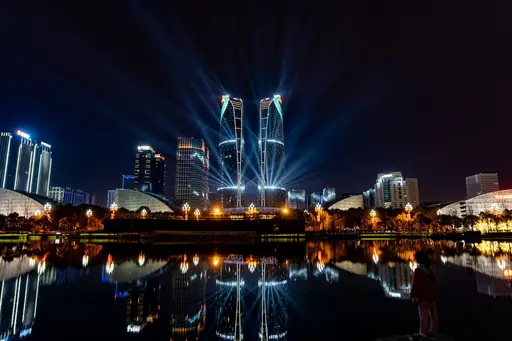
Chengdu offers a wide range of accommodation options, from budget hotels to luxury resorts, many located near the city center and easily accessible to Wenshu Monastery and other cultural attractions.
Log in to add this place to a travel list and get a summary of all recommended items for your whole trip.
We calculate the average costs when travelling to destinations and compare those with the living costs at your home. With this you can get an estimate of how expensive or cheap the destination is for you.
To customise this, you can set up which location and price level are used for the calculations in your account settings.
The exchange rate price factor shows how expensive or cheap a currency currently is compared to its historical average. It's a quick way to see if a country is currently more or less affordable due to exchange rate changes.
