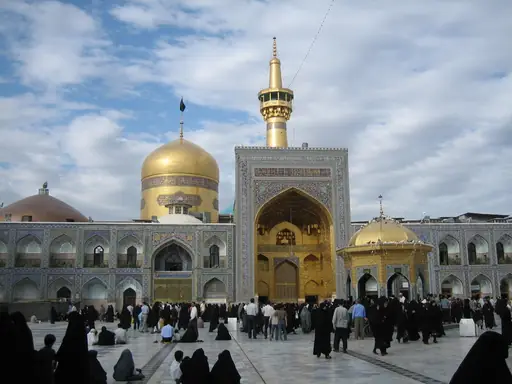
Alimosavisam, CC BY-SA 4.0, via Wikimedia Commons
Asia › Afghanistan › Herat › Climate

Herat climate data

Herat, located in western Afghanistan, features a cold semi-arid climate with dramatic seasonal contrasts. Summers are long, intensely hot, and dry, while winters are cold with occasional rain or snow. The city enjoys abundant sunshine, low humidity in summer, and a pronounced dry season, making Herat a destination of stark beauty and extreme weather variation.

Best times to travel

The best times to travel section shows how the months compare for a visit, so you can find the time of year that fits what you want to do.

Background colours of the months:
The colour shows the typical temperature: yellow (hot), green (mild) and blue (cold). How strong the colour is shows the travel season: full colour means high season, soft colour means shoulder season and soft-striped means off season.

Weather symbols:
Each month has one symbol showing what the weather is typically like, such as hot and sunny, freezing or a rainy or snowy season. Use them to quickly spot months that match the weather you want, or to avoid the ones that don't.

Crowdedness:
The people icon shows how busy the place usually is. The more people, the more crowded it gets.

Additional notes:
The grey info boxes point out special things worth knowing, like recurring weather issues or seasonal events.

for Herat, Afghanistan
☀️
Jan
☀️
Feb
☀️
Mar
☀️
Apr
🔥
May
🌬️
Jun
🌬️
Jul
🌬️
Aug
🔥
Sep
☀️
Oct
☀️
Nov
☀️
Dec
High season: April - May, Oct.
Shoulder season: March, June, Sep., Nov.
Crowdedness: 3 (Few tourists)
Tap on a month for more info Hover over a month for more info
Security situation and entry rules can change at short notice; most governments advise against travel to Afghanistan, check official travel advisories before planning
Ramadan: daytime food options limited, many restaurants closed until sunset
Summer 120-day wind (bad-e sad-o bist roz), June to September: strong dusty winds make outdoor sightseeing unpleasant

The climate of Herat

Herat’s climate is shaped by its elevation (around 930 metres) and its position on the Iranian plateau, resulting in a cold semi-arid (BSk) climate. Summers (June–September) are long, hot, and extremely dry, with average highs of 34–37°C in July and August, and nighttime lows around 17–22°C. Rainfall is virtually nonexistent during these months, humidity drops to as low as 16%, and the air feels parched. Sunshine is abundant, with up to 14 hours of daylight and 13 hours of sunshine per day in midsummer. Winds can be strong, especially in the afternoon, adding to the arid feel.

Winters (December–February) are cold, with average highs of 8–12°C and lows near 0°C, though temperatures can plunge below –10°C during cold spells. Rain and occasional snow are possible, but precipitation remains low, peaking in February and March (up to 50–67 mm monthly). Spring (March–May) and autumn (September–November) are transitional, featuring mild to warm days (15–30°C), cool nights, and the year’s brief wet season. Spring is the greenest time, with wildflowers blooming after winter rains. Annual precipitation averages just 240 mm, with nearly all rain falling from November to April. Herat enjoys over 4,000 hours of sunshine per year, with daylight ranging from 10 hours in winter to 14.5 hours in summer. UV levels are very high in late spring and summer, requiring sun protection.

Herat’s climate is defined by its sharp temperature shifts, arid summers, and crisp, sunny winters. The city’s weather supports a unique blend of Persian-influenced architecture, lush spring landscapes, and a vibrant local culture adapted to the region’s extremes.

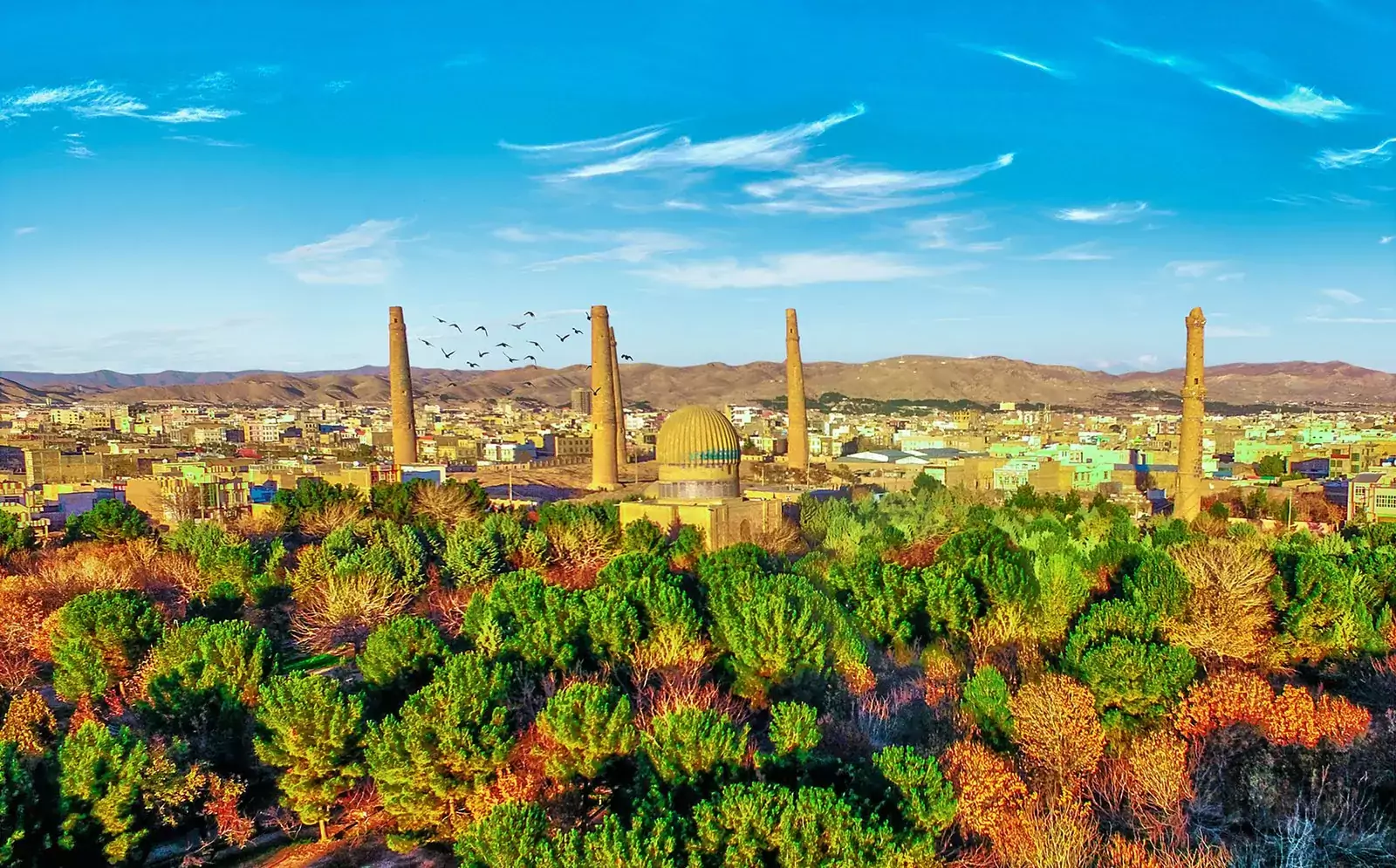
Average climate data for Herat, Afghanistan
Month Jan Feb Mar Apr May Jun Jul Aug Sep Oct Nov Dec Year
Average maximum temperature (°C) 9 10 17 22 28 32 33 32 28 22 14 11 33
Average minimum temperature (°C) 1 2 8 12 17 20 21 19 16 11 6 2 1
Average precipitation (mm) 25 30 32 24 5 0 0 0 0 8 11 9 144
Average rainfall days (days) 7 8 10 9 3 0 0 0 0 2 6 4 50
Average snowfall (mm) 42 12 3 0 0 0 0 0 0 0 1 6 64
Average snowfall days (days) 1 1 0 0 0 0 0 0 0 0 0 0 4
Average relative humidity (%) 48 51 44 39 29 20 17 17 20 28 42 40 33
Average wind speed (km/h) 12 14 14 13 16 24 30 27 19 13 10 10 17
Average daily daylight hours (h) 10 11 12 13 14 14 14 13 12 11 10 9 12
Average daily sunshine hours (h) 6 8 9 11 12 12 12 12 10 7 7 7 9
Average cloud coverage (%) 21 22 22 16 8 1 1 0 0 6 16 16 11
Average UV index 3 3 4 5 7 7 7 6 6 4 3 3 5

Travel info

  • Winter (Dec–Feb): Cold, with highs of 8–12°C and lows near 0°C. Occasional rain or snow. Dress in warm layers and bring a waterproof jacket.
  • Spring (Mar–May): Mild and pleasant, with highs from 15–30°C. This is the greenest and most comfortable season, with wildflowers and moderate rainfall. Pack layers and sun protection.
  • Summer (Jun–Sep): Very hot, dry, and sunny, with highs of 34–37°C and almost no rain. Strong afternoon winds are common. Wear light, breathable clothing, a hat, and sun cream.
  • Autumn (Oct–Nov): Warm to cool, with highs from 30°C in September to 17°C in November. Little rain, comfortable for sightseeing. Bring layers for cooler evenings.
  • Travel tip: The best weather is in spring (March–May) and autumn (September–November). In summer, avoid outdoor activities during midday heat. Always check local travel advisories before planning your trip.

The best time to visit Herat

The best time to visit Herat is in spring (March–May) and autumn (September–November), when temperatures are mild to warm, skies are clear, and the landscape is at its most vibrant. These seasons offer comfortable weather for exploring the city’s historic sites and enjoying local festivals without the extremes of summer heat or winter cold.

The worst time to visit Herat

The least favourable time to visit Herat is from June to August, when temperatures regularly exceed 35°C, humidity is extremely low, and rain is virtually absent. The intense heat and strong winds make outdoor activities uncomfortable. Winter (December–February) can also be harsh, with cold nights and occasional rain or snow.

Frequently asked questions

What is the climate like in Herat year-round?

Herat has a cold semi-arid climate with hot, dry summers and cold winters. Summer highs reach 34–37°C, while winter highs are 8–12°C. Rain is scarce, falling mainly from November to April, and sunshine is abundant year-round.

When is the best time to visit Herat?

The best time to visit Herat is during spring (March–May) and autumn (September–November), when temperatures are mild, rainfall is moderate, and the city is at its most comfortable for sightseeing and cultural experiences.

Does it rain or snow in Herat?

Rain is scarce in Herat, with nearly all precipitation falling from November to April. Snow is possible in winter, but accumulations are usually light and short-lived. Summers are virtually rainless.

How hot does it get in Herat during summer?

Summers in Herat are extremely hot and dry, with average highs of 34–37°C from June to August. Temperatures can occasionally exceed 40°C, and humidity drops to very low levels, making the air feel parched.

How cold does it get in Herat during winter?

Winter temperatures in Herat range from highs of 8–12°C to lows near 0°C, but can drop below –10°C during cold spells. Occasional rain or snow is possible, especially in February and March.

Is Herat sunny year-round?

Yes, Herat enjoys over 4,000 hours of sunshine annually. Summers are especially sunny, with up to 14 hours of daylight and 13 hours of sunshine per day. Winters are also bright, though days are shorter.

What should I pack for a trip to Herat?

In summer, pack light, breathable clothing, a hat, sunglasses, and sun cream. For winter, bring warm layers, a waterproof jacket, and sturdy shoes. In spring and autumn, pack layers for changing temperatures and sun protection.

Minimum and maximum temperatures in Herat

The warmest month, with the highest average maximum temperature, is July (33.4 °C). The month with the lowest average maximum temperature is January (8.8 °C). Overall, the average maximum temperature over the whole year is 21.5 °C.

The month with the highest average minimum temperature is July (21.2 °C). The coldest month, with the lowest average minimum temperature, is January (1 °C). Overall, the average minimum temperature over the whole year is 11.2 °C.

Rainfall amount in Herat

The wettest month, with the highest amount of precipitation, is March (32.1 mm). The driest months, with the least amount of precipitation, are June, July, August and September (0 mm). Over the whole year there are 144 mm of rainfall on average.

Rainfall days in Herat

The month with the most days of rain is March (9.7 days). The months with the fewest days of rain are July and August (0 days). Over the whole year there are 50 days of rain on average.

Snowfall amount in Herat

The month with the most snowfall is January (41.7 mm). The months with the least snowfall are April, May, June, July, August, September and October (0 mm). Over the whole year there are 63.7 mm of snowfall on average.

Snowfall days in Herat

The month with the most days of snowfall is January (1.5 days). The months with the fewest days of snowfall are April, August and September (0 days). Over the whole year there are 3.5 days of snowfall on average.

Relative humidity in Herat

The month with the highest average relative humidity is February (51.1 %). The month with the lowest average relative humidity is July (16.8 %). The overall average relative humidity over the whole year is 32.9 %.

Wind speed in Herat

The windiest month, with the highest average wind speed, is July (29.5 km/h). The calmest month, with the lowest average wind speed, is November (9.8 km/h). The overall average wind speed over the whole year is 16.8 km/h.

Cloud coverage in Herat

The month with the cloudiest skies, so the highest cloud coverage, is March (22.3 %). The month with the clearest skies, so the lowest cloud coverage, is September (0.1 %). Over the whole year there is an average cloud coverage of 10.9 %.

Daylight hours and sunshine hours in Herat

The month with the longest days, so the most daylight, is June (Average daylight: 14 h). The month with the shortest days, so the least daylight, is December (Average daylight: 9.1 h). Over the whole year there are 11.9 h of daylight per day on average.

The month with the most sunshine per day is July (Average sunshine: 12.2 h). The month with the least sunshine per day is January (Average sunshine: 6.1 h). Over the whole year there are 9.5 h of sunlight per day on average.

UV index in Herat

The months with the highest average UV index are May, June and July (UV index: 7). The months with the lowest average UV index are January, February, November and December (UV index: 3). Over the whole year the average UV index is 4.8.

Was this page helpful?
Feedback