We use cookies and external services: MapTiler for interactive maps and Google Maps to show route duration/distance. Both may process personal data such as your IP address, including transfers outside the EU/EEA. See our privacy policy for details. By clicking ‘Accept all’, you consent to this.
Marechal Lourenço Coelho Airport in Curitiba, Brazil serves as a major gateway to the southern region. Opened in 1945 and expanded over decades, it handles both domestic flights and international routes connecting Brazil to South America and beyond. The terminal provides basic amenities including check-in counters, baggage claim areas and public restrooms. A dedicated cargo facility supports regional trade. Located about twelve kilometers from downtown Curitiba, the airport links travelers to city attractions such as museums, parks and historic neighborhoods via bus or taxi services.
| Power Grid: |
127 V, 60 Hz Plug: Type C , Type N
Type C:
Read about power adapters |
|---|---|
| Currency: |
Brazilian Real (BRL) £1 ≈ R$7.11 |
| Cashless info: |
Rating 4/5
Cashless payment is widely accepted in urban areas but less so in remote regions.
Save with a travel credit card |
| eSIM providers: |
Best value: Saily Flexibility: Airalo Read our in-depth comparison |
| Tipping: | Tipping is not customary in Brazil. Restaurants often include a 10% service charge. Additional tips are optional. |
|---|---|
| Public drinking: | Public drinking is generally allowed in Brazil, and it is common in social settings. |
| Public smoking: | Smoking is banned in enclosed public spaces, with designated outdoor areas. |
| Carnival (February/March) |
Expect parades and heavy crowds. |
|---|---|
| Independence Day (September) |
National celebrations occur. |
| Christmas (December) |
Family gatherings and public celebrations are common. |
| Emergency contact: | Emergency Numbers: 190 (Police), 192 (Ambulance), 193 (Fire) |
|---|---|
| Taxi apps: | 99, Uber, Cabify |
| Other: | Brazil is known for its natural beauty, vibrant culture, and Carnival celebrations. Avoid travelling alone in remote areas for safety. |
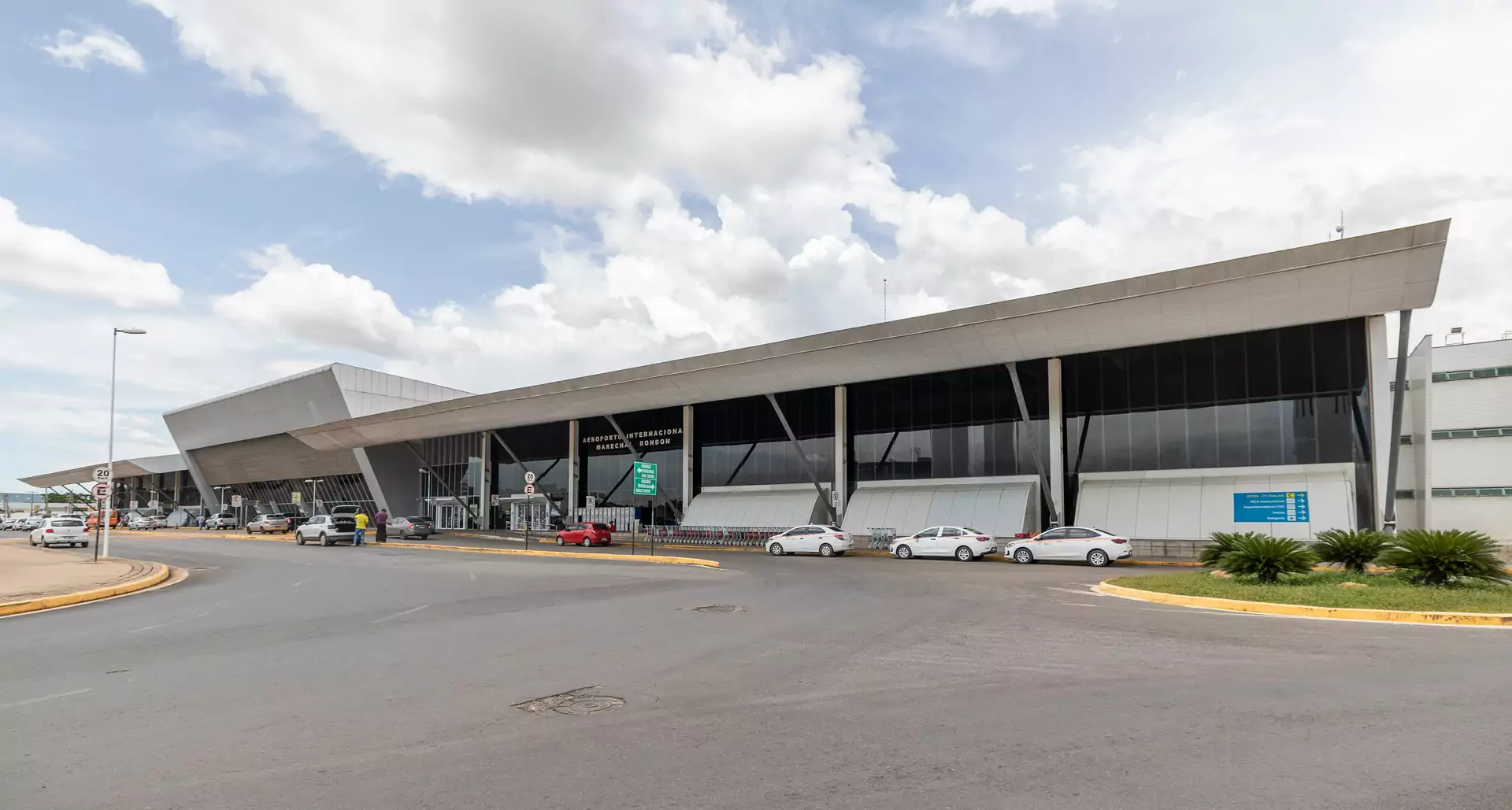
Marechal Rondon International Airport serves as a key entry point in Brazil’s Mato Grosso region. The facility handles both domestic and international flights connecting remote areas to major cities like Brasília and São Paulo. Its layout prioritizes practicality over flashy design with clear signage guiding travelers through security checkpoints and baggage claim zones. The terminal includes basic amenities such as ATMs food vendors and seating areas designed for short layovers or longer connections.
Travelers arriving here often notice the airport’s role in supporting regional industries like agriculture and mining. Cargo facilities handle shipments of soybeans and minerals reflecting the area’s economic focus. The terminal staff includes multilingual personnel who assist with customs procedures ensuring smooth transitions for those entering or leaving Brazil. Early morning flights tend to be busier as business travelers head to nearby industrial hubs while weekend arrivals include families visiting relatives in surrounding towns.
Transport options outside the airport connect passengers to Cuiabá via taxi services or rental cars. Public transit links require planning due to limited direct routes but buses provide affordable access to nearby neighborhoods. The area around the airport has seen gradual development with new hotels and service centers emerging over recent years. These changes aim to accommodate growing demand while maintaining functionality for frequent cargo operations.
For visitors prioritizing efficiency Marechal Rondon balances necessity with comfort. The environment remains straightforward avoiding unnecessary complexity in navigation or services. Those passing through can expect reliable infrastructure without extravagant features focusing instead on meeting essential needs for travelers and local communities alike. Its location makes it a practical gateway for exploring the broader Mato Grosso region’s natural landscapes and cultural sites beyond urban centers.
Helpful tips for Maréchal Rondon International Airport
- Arrive at least two hours early for security and customs clearance.
- Check visa requirements beforehand; Brazil requires a tourist visa or e-visa for many nationalities.
- Use the airport's free Wi‑Fi to download local maps, bus schedules and emergency contact numbers before departure.
- Marechal Rondon International Airport serves Porto Velho; consider renting a car at the terminal for easier access to remote Amazon destinations.
How to get from Cuiaba Airport to popular destinations
To Porto Velho City Center:
From CGB you can reach downtown Porto Velho by taxi or rideshare in about 10–12 minutes, paying roughly R$25 – 30 (£3.73 – 4.48). Buses (lines 1 and 2) depart every 15–20 min from the airport’s bus stop, taking 20–25 min for a 3‑km ride. Taxis run 24/7; always confirm fare.
To Porto Velho Bus Terminal:
The main bus terminal (Terminal Rodoviário) is about 5 km from CGB. A taxi takes 10–12 minutes for R$20 – 25 (£2.98 – 3.73), while local buses (line 3) leave every 30 min and reach the terminal in 15–18 minutes. Buses run until midnight; keep an eye on luggage.