







Was this page helpful?

| Power Grid: |
230 V, 50 Hz Plug: Type C , Type E
Type C:
  Read about power adapters |
|---|---|
| Currency: |
Tunisian Dinar (TND) £1 ≈ TND 4.011 |
| Cashless info: |
Rating 3/5
Cashless payments are accepted in most tourist areas and larger businesses, though cash is still widely used, particularly in rural areas.
Save with a travel credit card |
| eSIM providers: |
Best value: Saily Flexibility: Airalo Read our in-depth comparison |
| Tipping: | Tipping is expected in Tunisia, with 5-10% in restaurants, rounding up taxi fares, and small tips in hotels. However, it is not mandatory. |
|---|---|
| Public drinking: | Public drinking is allowed in Tunisia, but it is generally consumed in licensed venues such as bars and restaurants. Public consumption of alcohol may be frowned upon in some areas. |
| Public smoking: | Smoking is allowed in outdoor public spaces and designated indoor areas in Tunisia. |
| Revolution Day (17 December) |
Marks the 2011 revolution |
|---|---|
| Independence Day (20 March) |
Celebrates Tunisia’s independence from France |
| Emergency contact: | Emergency Numbers: 197 (Police), 190 (Ambulance), 198 (Fire) |
|---|---|
| Taxi apps: | Yango |
| Other: | Tunisia is known for its Mediterranean beaches, ancient ruins, and cultural heritage. Visitors can explore the ruins of Carthage, the Medina of Tunis, and enjoy the diverse landscapes of the country. |
The best times to travel section shows how the months compare for a visit, so you can find the time of year that fits what you want to do.
Background colours of the months:
The colour shows the typical temperature: yellow (hot), green (mild) and blue (cold). How strong the colour is shows the travel season: full colour means high season, soft colour means shoulder season and soft-striped means off season.
Weather symbols:
Each month has one symbol showing what the weather is typically like, such as hot and sunny, freezing or a rainy or snowy season. Use them to quickly spot months that match the weather you want, or to avoid the ones that don't.
Crowdedness:
The people icon shows how busy the place usually is. The more people, the more crowded it gets.
Additional notes:
The grey info boxes point out special things worth knowing, like recurring weather issues or seasonal events.
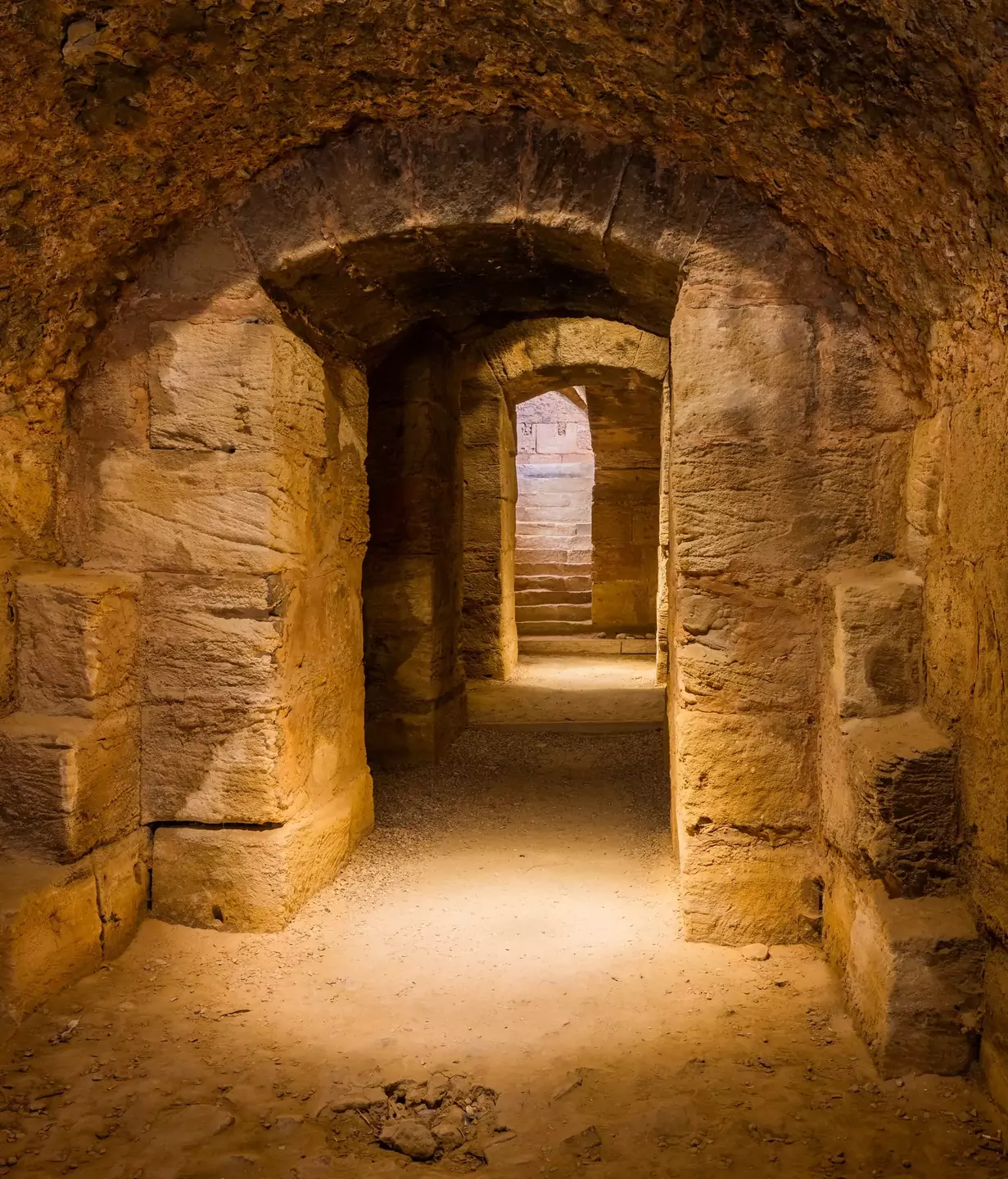
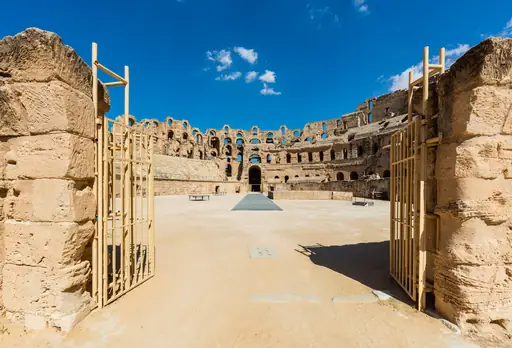
El Jem stands as a remarkable example of ancient Roman engineering in North Africa. The site centers on an amphitheater built around the second century AD. Its stone arches and tiered seating still show signs of durability despite centuries of exposure. Visitors walk through gateways that once welcomed crowds to spectacles such as gladiatorial contests and public performances.
The structure’s design reflects careful planning. The arena floor was originally covered with wood and sand to absorb blood during events. Underground passages allowed animals and performers to move unseen before entering the space above. Today, the outer walls rise high enough to give a clear view of the surrounding landscape. Sunlight highlights the texture of the limestone blocks that make up the bulk of the building.
Beyond the amphitheater lies the broader archaeological zone. Scattered ruins include parts of a Roman city with streets laid out in a grid pattern. Remains of baths, shops and residential quarters show how people lived here long ago. Inscriptions on stone slabs provide clues about local governance and daily life. The site also features a museum displaying artifacts recovered from the area.
Travelers interested in history will find El Jem both educational and thought provoking. Guides explain how this place connected to wider trade routes across the Mediterranean. Walking among the stones offers insight into cultural exchange between Roman settlers and indigenous communities. The site’s preservation allows visitors to see layers of history without heavy reconstruction, making each visit feel grounded in reality.
El Jem, home to the UNESCO-listed archaeological site of the Amphitheatre of El Jem, is accessible via Tunis-Carthage International Airport (TUN), located approximately 230 km south of the city. Travelers can reach the site by taxi, rental car or organized tours departing from Tunis. The nearest major town, Sousse, offers additional transport links including buses and shared shuttles to El Jem. Public transportation within Tunisia includes trains connecting Tunis to Sousse (2 hours), with a short taxi ride required for the final leg to El Jem. Private transfers or guided tours are recommended for flexibility, as rural roads may vary in condition. The site’s remote location emphasizes the need for pre-arranged transport.
El Jem offers a mix of budget-friendly guesthouses and mid‑range boutique inns that cater to history enthusiasts. Most lodging is located within walking distance of the amphitheatre, with rooms ranging from modest, locally furnished suites at TND 30 – 45 (£7.51 – 11.27) per night to more upscale accommodations featuring private balconies overlooking the ruins for TND 70 – 90 (£17.53 – 22.54). Many establishments emphasize traditional Tunisian décor and homemade couscous breakfasts, while a few offer guided tours of the site included in the stay. For travelers seeking a quieter retreat, small family‑run riads provide authentic charm at slightly higher rates (TND 60 – 80 (£15.03 – 20.04)). Overall, El Jem’s accommodation scene balances affordability with cultural immersion, making it ideal for visitors focused on archaeological exploration.
Log in to add this place to a travel list and get a summary of all recommended items for your whole trip.
We calculate the average costs when travelling to destinations and compare those with the living costs at your home. With this you can get an estimate of how expensive or cheap the destination is for you.
To customise this, you can set up which location and price level are used for the calculations in your account settings.
The exchange rate price factor shows how expensive or cheap a currency currently is compared to its historical average. It's a quick way to see if a country is currently more or less affordable due to exchange rate changes.
