



Africa › Tanzania › Ruaha National Park

Ruaha National Park

Scroll
Untamed savannahs echo with ancient rhythms

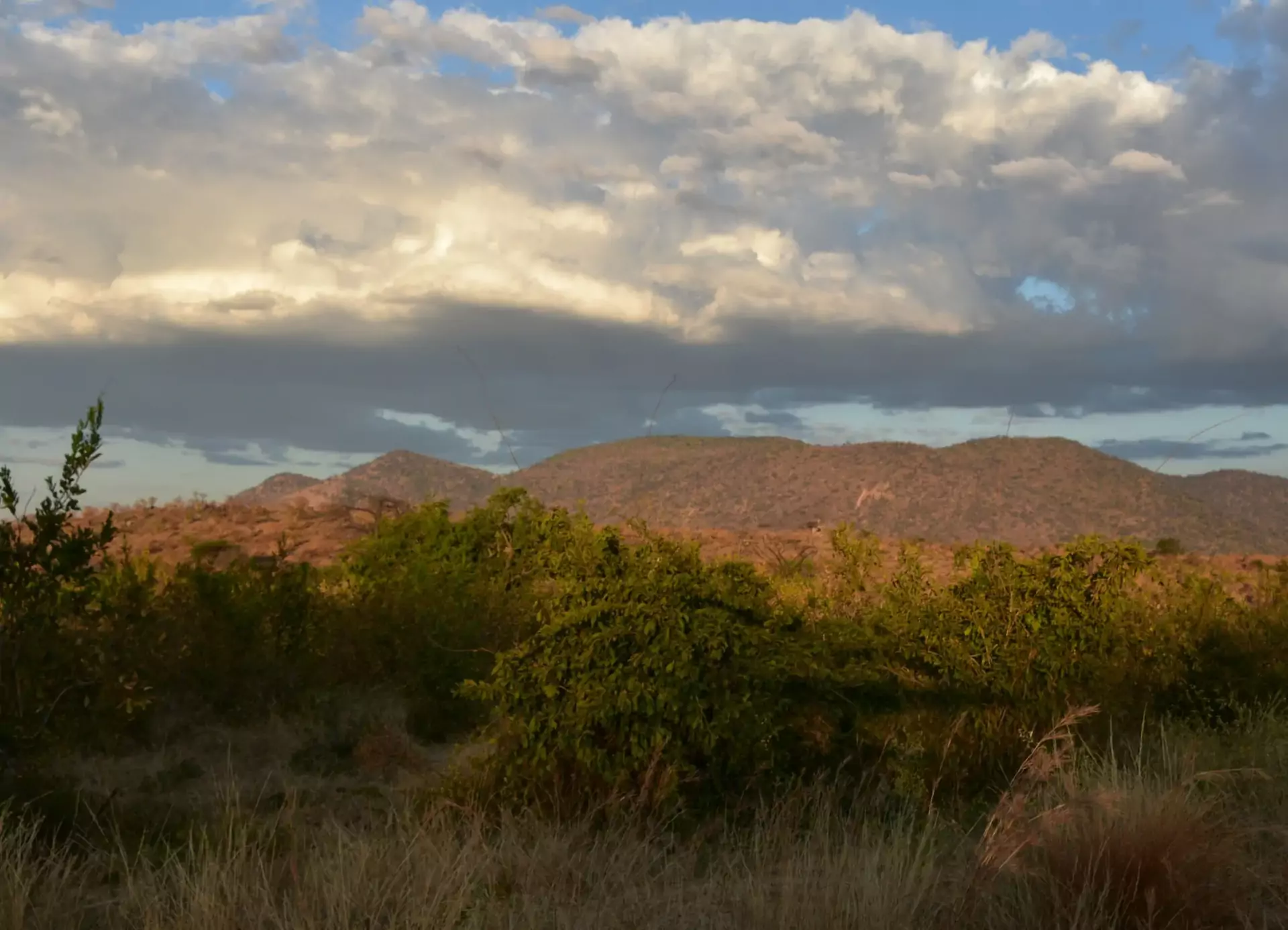
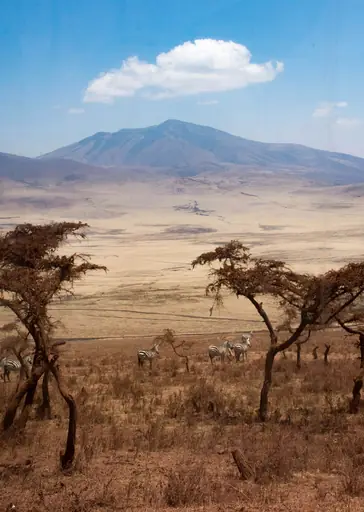
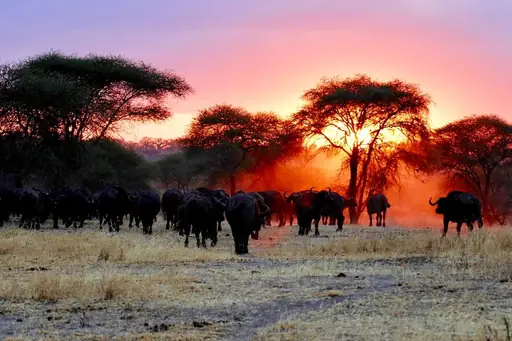
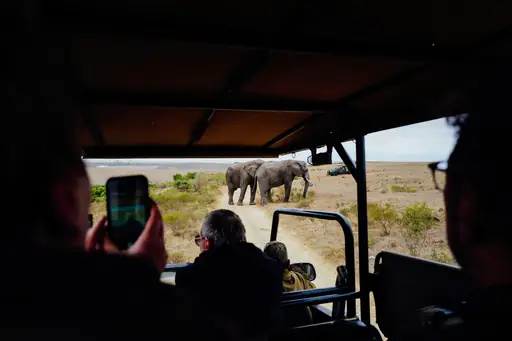
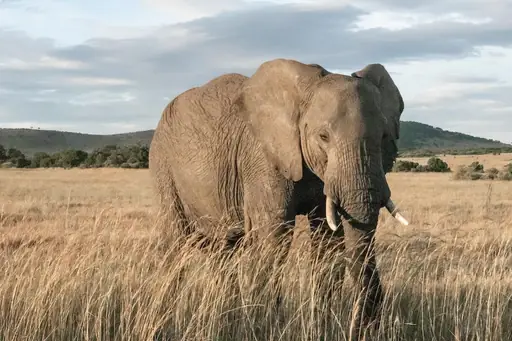
Ruaha National Park stretches across Tanzania’s vast southern plains, covering over 20,000 square kilometers of savanna and river valleys. The landscape features acacia woodlands, rocky outcrops and the winding Great Ruaha River that supports diverse wildlife year-round. Visitors encounter elephants, lions, giraffes and rare species like wild dogs in their natural habitat. The park remains less crowded than others in Tanzania, allowing for quiet safari experiences. Early mornings reveal mist over grasslands while travelers witness animals gathering at waterholes during dry seasons.

National Park in Tanzania
Climate zone: Tropical rainforest

Tropical rainforest: Equatorial climates with year-round high temperatures and heavy rainfall, supporting dense evergreen forests and rich biodiversity.

See climate table
Price level: $$$
$Cheap
$$Medium
$$$Expensive, upscale
$$$+Very expensive, luxury
See price details
Safety: 4.8
General Safety:7
Health & medical:2
Accessibility:1
Tap water:1
Read details
Tourist English: 4/5
In Ruaha National Park, most guides and park staff speak conversational English, especially those working with international visitors. Local communities around the park also use basic English, making communication smooth for travelers.
Last update: 16 Oct 2026
* We earn a commission from some links on this page.
Ruaha National Park Summary

These place ratings give you a quick overview of how well a destination matches different types of trips.

‘Best for’ scores:
The specific interest scores show where this place really shines – whether it's ideal for hiking, food & drink experiences, museums or other activities. These highlights help you understand what makes the destination special at a glance.

‘Your personal’ scores:
This reflects how well a place matches your personal preferences. You can adjust the importances of travel topics or other personal requirements categories in your account settings.

‘Suited for’ badges:
These give you a quick overview of how well a destination suits specific types of travellers, to help you find the places that match your lifestyle, preferences or travel situation.

Read how our scores work
Great at showcasing untamed savannahs and diverse wildlife, Ruaha National Park offers unforgettable encounters with lions, elephants and rare antelopes. Its vast plains also delight avid birdwatchers.
Place score
7.6
Best at:
Secluded
10
Wildlife
10
Less touristy
9
Natural sites
9
Guided tours
9
Personal score
?
Log in to see how this place matches your personal travel interests.
Suited for
👶 4
Families
🧓 3
Seniors
❤️ 7
Couples
♻️ 6
Sustainability
Tanzania – Quick facts
Power Grid: 230 V, 50 Hz
Plug: Type D , Type G
Type D:
Diagram of a Type D power plug
Type G:
Diagram of a Type G power plug

Read about power adapters
Currency: Tanzanian Shilling (TZS)
£1 ≈ TZS 3,520.45
Cashless info: Rating 3/5
Cashless payments are becoming more common in Tanzania’s larger cities, but cash is still the most widely accepted form of payment. Credit cards are accepted in some establishments.

Save with a travel credit card
eSIM providers: Best value: Saily
Flexibility: Airalo
Read our in-depth comparison
Tipping: Tipping is appreciated in Tanzania, typically around 5-10% in restaurants. Taxi fares should be rounded up, and small tips for hotel staff are common.
Public drinking: Public drinking is not common in Tanzania, and alcohol is typically consumed in licensed venues like restaurants and bars.
Public smoking: Smoking is allowed in outdoor public spaces and designated indoor areas. Many restaurants and public spaces have non-smoking sections.
Independence Day
(9 December)
Celebrates Tanzania’s independence from British colonial rule
Saba Saba
(7 July)
Industry Day
Emergency contact: Emergency Number: 112
Taxi apps: Uber, Bolt
Other: Tanzania is famous for its stunning wildlife, including safaris and Mount Kilimanjaro. The coast also offers beautiful beaches, particularly around Zanzibar.
Best times to travel

The best times to travel section shows how the months compare for a visit, so you can find the time of year that fits what you want to do.

Background colours of the months:
The colour shows the typical temperature: yellow (hot), green (mild) and blue (cold). How strong the colour is shows the travel season: full colour means high season, soft colour means shoulder season and soft-striped means off season.

Weather symbols:
Each month has one symbol showing what the weather is typically like, such as hot and sunny, freezing or a rainy or snowy season. Use them to quickly spot months that match the weather you want, or to avoid the ones that don't.

Crowdedness:
The people icon shows how busy the place usually is. The more people, the more crowded it gets.

Additional notes:
The grey info boxes point out special things worth knowing, like recurring weather issues or seasonal events.

for Ruaha National Park, Tanzania
🌦️
Jan
🌦️
Feb
🌦️
Mar
🌦️
Apr
🔥
May
☀️
Jun
☀️
Jul
🔥
Aug
🔥
Sep
🔥
Oct
🔥
Nov
🌦️
Dec
High season: June - Oct.
Shoulder season: May, Nov.
Crowdedness: 1 (Very few tourists)
Tap on a month for more info Hover over a month for more info
Best game viewing June to October, when animals concentrate along the Great Ruaha River
Rainy season November to May: many camps close and park roads can become impassable
Few visitors even in peak season; lions, wild dogs and large elephant herds are a main draw

Why travel to Ruaha National Park?

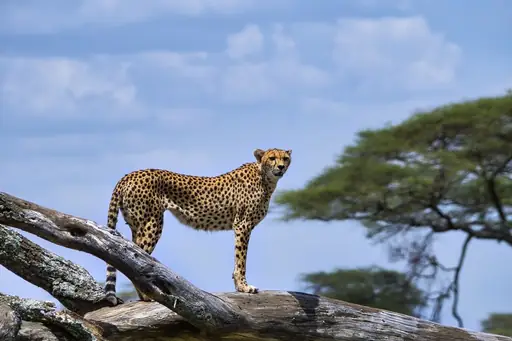
Ruaha National Park offers a quiet, authentic African safari experience that appeals to travelers seeking wildlife observation without the crowds of more famous parks. Spanning over 12,000 square kilometres in central Tanzania, it is one of the country’s largest protected areas and remains relatively undeveloped, preserving its natural landscapes and ecosystems. The park’s varied habitats – from open grasslands and riverine forests to rocky escarpments – support a diverse array of species. Visitors can observe large herds of elephants, lions, leopards and cheetahs in their native environment, as well as numerous antelope species such as impala, kudu and giraffe. Birdwatchers will find over 300 recorded species, including the rare white-headed buffalo weaver and the African fish eagle. Guided game drives are typically conducted early morning or late afternoon to maximize wildlife sightings while keeping temperatures comfortable. The park’s remote location means that accommodation options are limited to a few lodges and campsites, which provide basic amenities and an opportunity for close contact with nature. Local Maasai communities reside in the surrounding areas; their cultural practices can be experienced through community visits and traditional music performances. For travelers who value solitude, ecological integrity and genuine wildlife encounters, Ruaha National Park offers a compelling alternative to Tanzania’s more commercial safari destinations.

🏯Places worth seeing
  • 1 Ruaha National Park
🎡Places for activities
  • 1 Ruaha National Park
🏞️Natural landmarks
  • 1 Ruaha National Park
🍽️Eat & Drink
  • 1 Jongomero Camp
    International food with an East African touch at a luxury camp on the Jongomero sand river. The restaurant serves guests staying at the camp. Each evening the chef announces the dinner menu, with many meals taken outdoors.
  • 2 Ruaha River Lodge
    Local and international food at a lodge on the rapids of the Great Ruaha River in Ruaha National Park. The restaurant serves guests staying at the lodge. The restaurant is under the same roof as the main lounge.

Knowledge before you go

  • Arrive early to avoid crowds and maximize wildlife sightings.
  • Carry a reusable water bottle; refill at designated stations to stay hydrated during long drives.
  • Wear neutral-colored clothing to blend in, reducing attraction for animals and insects.
  • Consult local guides about seasonal migration patterns; they can direct you to prime viewing spots during peak times.

How to travel to Ruaha National Park

Ruaha National Park, located in southern Tanzania, is accessible primarily by road and air. The nearest major airport is Julius Nyerere International Airport in Dar es Salaam, from which travelers can fly to Kigoma or Mpanda airports, followed by a long-distance drive of approximately 6–8 hours via well-maintained roads. Alternatively, charter flights operate directly to the park’s airstrip at Msapiti, offering quicker access during dry seasons. Road travel is feasible year-round but best during the dry months (June–October) when conditions are optimal. The park’s remote location requires advance planning for transportation, with 4x4 vehicles recommended due to varying terrain and seasonal weather impacts.

Access summary

  • From Iringa Airport (IRN): 30‑min taxi to Ruaha camp.
  • From Iringa city: 30‑min drive; from Arusha: 5‑h road trip.
  • From Kilimanjaro International Airport (JRO): 4‑h drive via Mtwara.

Where to stay in Ruaha National Park

Ruaha National Park offers a range of accommodation styles that cater to both budget travelers and those seeking luxury. The park’s main lodge area features several mid‑priced tented camps where guests can enjoy comfortable beds, private bathrooms and communal dining with local cuisine. For a more upscale experience, the high‑end safari camp provides spacious suites, fine dining and guided game drives in 4×4 vehicles. A handful of eco‑lodges are scattered along the riverbanks, offering minimalist, sustainable stays that blend into the landscape while providing basic amenities such as Wi‑Fi and solar power. Additionally, a few back‑country campsites allow adventurous visitors to set up tents under the stars, experiencing the park’s wilderness in its purest form.

Hotel recommendations

*by rating and popularity. Commissions have no influence on the rankings.
We couldn't find any nearby hotels for now.

How to get around Ruaha National Park

Getting around Ruaha National Park in Tanzania is best done via four-wheel-drive safari vehicles, which are essential for navigating the park’s rugged terrain and unpaved roads. Most visitors join guided tours from nearby towns like Mikumi or Iringa, using park-approved operators who provide transportation and expert drivers familiar with wildlife movements. Self-driving is possible but restricted to designated areas; permits may be required. For flexibility, renting a 4x4 vehicle offers independence, though fuel stations are sparse – plan accordingly. Local guides often arrange transfers between lodges within the park. Public minibuses connect major towns to park gates, but private transport ensures timely access to remote camps and safari routes. Always prioritize licensed services for safety and environmental compliance.
Budget snapshot
Costs compared to home

We calculate the average costs when travelling to destinations and compare those with the living costs at your home. With this you can get an estimate of how expensive or cheap the destination is for you.

To customise this, you can set up which location and price level are used for the calculations in your account settings.

-71 %
Daily expenses in the region are around 71% lower than the average across United States. That means you'll spend a lot less on meals and getting around.
Exchange rate trend

The exchange rate price factor shows how expensive or cheap a currency currently is compared to its historical average. It's a quick way to see if a country is currently more or less affordable due to exchange rate changes.

-12 %
Your exchange rate (GBP to TZS) is 12% better than in recent years. That means travelling now is cheaper compared to the past.

Travel costs (Data for Dodoma, Tanzania - 188 km away)

To help you plan your trip, we provide estimated daily costs per person (when travelling as a pair) for different travel styles. These numbers give you an idea of what you might spend each day at this destination, including accommodation, food, transport and activities.

Additionally, we also provide average hotel costs for different travel styles to give you an estimate for the accommodation only.

Please note that these are only estimates. The real costs depend on booking times, season and other factors.

Daily cost summary

Travel style categories explained:

Backpacker:
Staying in hostels or budget hotels, cooking your own meals or eating cheap and choosing low-cost activities.

Mid-range:
Staying in mid-range hotels, eating at a mix of restaurants and casual spots and enjoying a variety of activities.

Luxury:
Staying in luxury hotels, dining out at high-end restaurants and enjoying premium experiences without worrying about the price.

Backpacker Mid-range Luxury
💵 Total costs per day, including accommodation
£26
£49
£140
🏨 Accommodation per night, per person
£11
£26
£75
🍝 Food per day
£14
£20
£50
🚕 Transportation per day
£2
£4
£15
Notable additional fees: Conservation fee US$35.40 (£26.59) per person per 24h (incl. VAT), plus about US$35.40 (£26.59) a night to sleep at a lodge inside the park. Vehicle fees are separate.
Food & Drink
🍽️ Restaurant Dinner, per person
£7
🍛 Lunch Set, per person
£2.80
🍟 Fast food combo
£7.50
🍝 Preparing your own food, per day
£4.40
☕ Cappuccino
£1.50
🍺 Beer in a restaurant, 0.5 l
£0.65
Transportation
🚌 Public transport ticket
£0.27
🚕 Taxi Ride, 10 km / 6 mi
£9.50
⛽ Petrol, 1 l
£0.85
Other
🎞️ Cinema ticket
£2.90
👩‍⚕️ Doctor's consult
£14
🤧 Cold medication
£4.70
💇 Basic haircut
£2.30

Safety information overview

General safety
7
Ruaha National Park offers a generally safe environment for travelers, with low crime rates and well‑trained rangers ensuring visitor protection. Follow standard wildlife safety guidelines: stay on marked trails, keep distance from animals and avoid night drives unless accompanied by guides.
Health & Medical
2
Ruaha National Park offers reliable medical facilities nearby, with well‑equipped clinics and trained staff. Travelers should carry malaria prophylaxis, vaccinations for yellow fever and typhoid and insect repellent. Water is safe after boiling; watch for ticks and keep up to date on travel health advice.
Accessi­bility
1
Ruaha National Park offers limited accessibility: most trails are unpaved and steep, making wheelchair use difficult. However, some guided tours provide adapted vehicles and the park’s remote setting ensures minimal crowds. Visitors should plan ahead for mobility support and bring sturdy footwear.
Tap water
1
Tap water in Ruaha National Park is generally safe to drink, supplied by reliable municipal sources and filtered at park facilities. Visitors can also find public refill stations throughout the campgrounds, ensuring convenient hydration during long game drives and hikes.

Looking for inspiration?

Discover
Best destinations to visit in October in Africa
October brings some of the hottest, driest conditions of the year to parts of East and Southern Africa, right before the rains return. Southern safari regions reach peak dry…
Read more
Discover
Best destinations for first-time travelers in Africa
Africa can feel like a bigger step for a first trip abroad, with more planning and a longer flight than some other options, though it still makes a memorable start with the right…
Read more
Discover
Best couple vacation destinations in Africa
For couples, Africa offers something that is getting rare in modern travel, the sense of experiencing something genuinely extraordinary together rather than ticking off sights you…
Read more
Discover
Best couple holiday destinations
Travelling as a couple sounds simple enough, yet the best couple holiday destinations mean something different to almost every pair. What feels romantic to one couple can feel like…
Read more
Discover
Best travel destinations for seniors in Africa
Africa has become steadily more accessible for older travelers, with more lodges and tour operators now set up to make a safari more comfortable than it used to be. Many safari…
Read more
Discover
Best destinations for first-time travellers
A first trip abroad works best somewhere that eases you in, rather than throwing every possible culture shock and logistical headache at you at once. Some first-time travellers…
Read more
Discover
Best destinations to visit in August in Africa
August remains one of the strongest months for East African safaris, with dry conditions and active wildlife holding steady from July. The wildebeest migration is often still…
Read more
Discover
Best travel destinations for seniors
Senior travel covers a wide range, from slow, low effort trips built around comfort to more independent trips for travellers who still want to cover plenty of ground. Some…
Read more
Discover
Most beautiful beaches and coastal escapes
For a lot of people, a beach is the whole point of a holiday, but what makes a beach day perfect really depends on personal taste. Some travellers want isolation and the feeling…
Read more
Discover
Stunning national parks and wilderness areas
National parks exist because someone decided that certain landscapes were too important to lose. The best of them protect ecosystems, wildlife and natural processes that would…
Read more
Discover
Intimate escapes and romantic getaways
The most memorable trips for couples tend to have less to do with luxury and more to do with the quality of shared experience. A place that slows you down, removes the usual…
Read more
Was this page helpful?
Feedback