







Was this page helpful?

These place ratings give you a quick overview of how well a destination matches different types of trips.
‘Best for’ scores:
The specific interest scores show where this place really shines – whether it's ideal for hiking, food & drink experiences, museums or other activities. These highlights help you understand what makes the destination special at a glance.
‘Your personal’ scores:
This reflects how well a place matches your personal preferences. You can adjust the importances of travel topics or other personal requirements categories in your account settings.
‘Suited for’ badges:
These give you a quick overview of how well a destination suits specific types of travellers, to help you find the places that match your lifestyle, preferences or travel situation.
| Power Grid: |
220 V, 50 Hz Plug: Type C , Type E
Type C:
  Read about power adapters |
|---|---|
| Currency: |
Malagasy Ariary (MGA) £1 ≈ MGA 6,055 |
| Cashless info: |
Rating 2/5
Cashless payments are not widely accepted in Madagascar, especially outside of major cities. Credit cards are used in some hotels and tourist shops, but cash is more commonly used.
Save with a travel credit card |
| eSIM providers: |
Best value: Saily Flexibility: Airalo Read our in-depth comparison |
| Tipping: | Tipping in Madagascar is appreciated, but not required. In restaurants, a 5-10% tip is customary if no service charge is included. Small tips for hotel staff and taxi drivers are also common. |
|---|---|
| Public drinking: | Public drinking is generally not acceptable in Madagascar. Alcohol is typically consumed in private settings or in designated areas, such as bars and restaurants. |
| Public smoking: | Smoking is allowed in public places, including restaurants and cafes, though there are some restrictions on smoking in enclosed spaces. Smoking is more common in urban areas. |
| Independence Day (26 June) |
National celebrations with parades and events |
|---|---|
| Christmas (25 December) |
Celebrated with family gatherings and church services |
| Emergency contact: | Emergency Numbers: 117 (Police), 124 (Ambulance), 118 (Fire) |
|---|---|
| Taxi apps: | Yango, Taxify |
| Other: | Madagascar is a unique travel destination, known for its biodiversity and natural landscapes. However, infrastructure can be limited, and travellers should plan ahead for transport and accommodations. |
The best times to travel section shows how the months compare for a visit, so you can find the time of year that fits what you want to do.
Background colours of the months:
The colour shows the typical temperature: yellow (hot), green (mild) and blue (cold). How strong the colour is shows the travel season: full colour means high season, soft colour means shoulder season and soft-striped means off season.
Weather symbols:
Each month has one symbol showing what the weather is typically like, such as hot and sunny, freezing or a rainy or snowy season. Use them to quickly spot months that match the weather you want, or to avoid the ones that don't.
Crowdedness:
The people icon shows how busy the place usually is. The more people, the more crowded it gets.
Additional notes:
The grey info boxes point out special things worth knowing, like recurring weather issues or seasonal events.
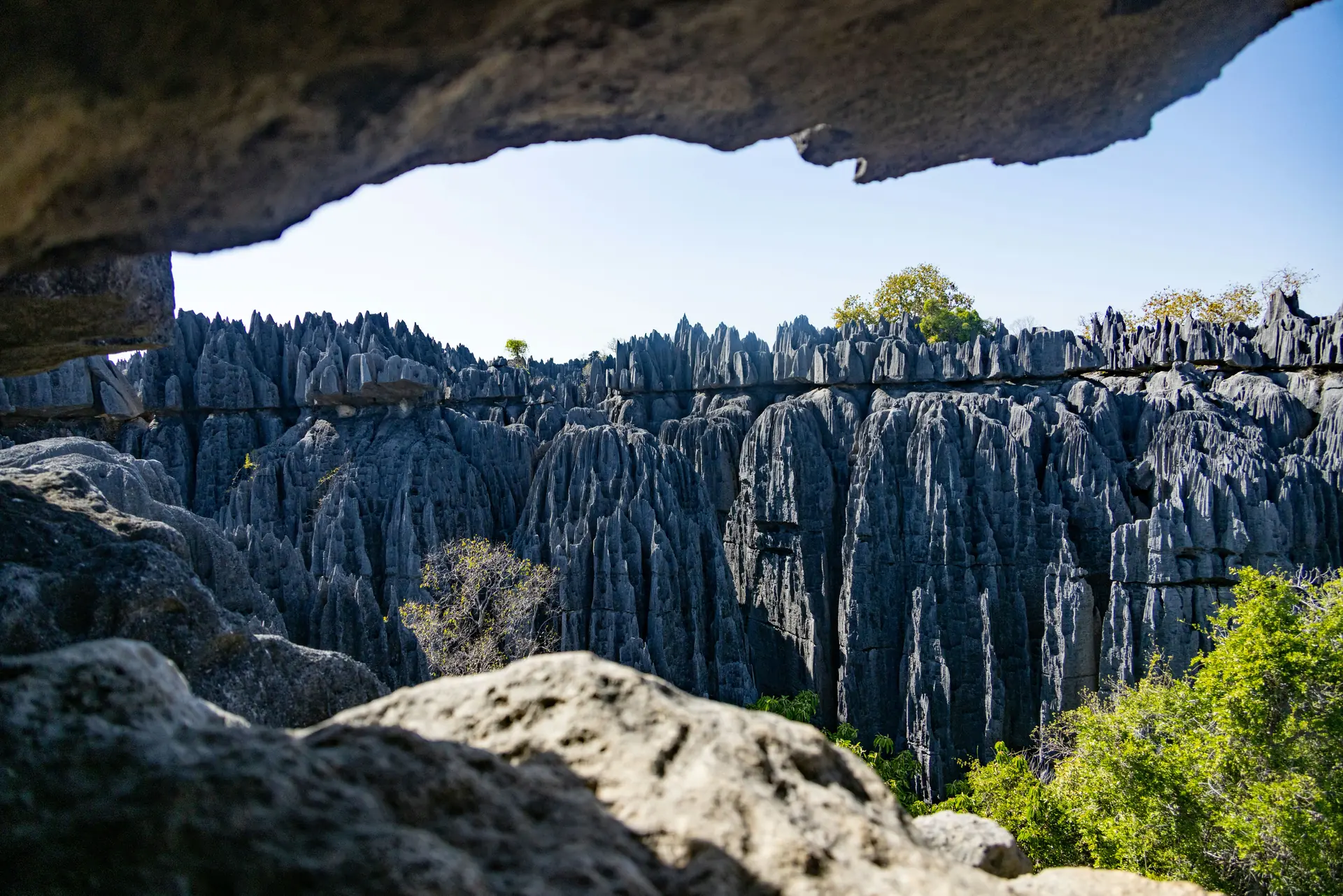
Tsingy de Bemaraha National Park, located in western Madagascar, offers a unique combination of geological wonder and biodiversity that appeals to travelers seeking an off‑beat adventure. The park’s most striking feature is the “tsingy” – sharp limestone pinnacles formed by erosion over millions of years. Walking among these jagged formations provides a sense of scale and perspective rarely found elsewhere. Beyond its dramatic landscapes, the park supports a range of endemic species. Visitors can observe lemurs such as the red-fronted brown lemur and the ring-tailed lemur in their natural habitat, along with numerous bird species including the Madagascar fish eagle. The surrounding dry deciduous forest hosts reptiles, amphibians and a variety of plant life that have adapted to the arid climate. Access to Tsingy de Bemaraha is part of the experience. Reaching the park involves a combination of road travel and guided treks, which encourages interaction with local communities and fosters sustainable tourism practices. The park’s management focuses on conservation education, ensuring that visitors understand the ecological importance of preserving these fragile ecosystems. For travelers who appreciate geological formations, wildlife observation and responsible trekking, Tsingy de Bemaraha National Park offers a memorable, grounded experience in Madagascar’s diverse natural heritage.
Tsingy de Bemaraha National Park in Madagascar is accessible primarily by road from the city of Morondava, located approximately 150 kilometers away. The park’s nearest airstrip is at Ankarana, about 60 kilometers to the north, served by small charter flights from Antananarivo or Mahajanga. Road travel involves navigating unpaved routes through dry forests and limestone formations. Seasonal conditions may affect accessibility; during rainy periods, some paths can become impassable. Local guides are recommended for safaris within the park due to its rugged terrain. The nearest major city with international connections is Antananarivo, requiring a combination of air travel followed by ground transport to reach the park’s entrance.
Near the Tsingy de Bemaraha National Park, lodging ranges from modest eco‑lodges to more upscale bungalows that blend into the limestone landscape. Most accommodations are family‑run and offer basic amenities such as shared bathrooms, communal kitchens and guided tours at a reasonable rate of US$30 – 60 (£22.43 – 44.86) per night for standard rooms. For travelers seeking higher comfort, there are boutique eco‑resorts featuring private plunge pools, solar power and organic meals, with prices around US$120 – 180 (£89.72 – 134.58) per night. The area is renowned for its “cave hotels,” where rooms are carved into the karst formations, providing a unique blend of adventure and rustic charm. All options emphasize sustainability, often using local materials and employing community staff.
We calculate the average costs when travelling to destinations and compare those with the living costs at your home. With this you can get an estimate of how expensive or cheap the destination is for you.
To customise this, you can set up which location and price level are used for the calculations in your account settings.
The exchange rate price factor shows how expensive or cheap a currency currently is compared to its historical average. It's a quick way to see if a country is currently more or less affordable due to exchange rate changes.
Log in to add this place to a travel list and get a summary of all recommended items for your whole trip.
