





Was this page helpful?

| Opening hours: |
|
|---|
| Power Grid: |
220 V, 50 Hz Plug: Type C , Type E
Type C:
  Read about power adapters |
|---|---|
| Currency: |
Malagasy Ariary (MGA) £1 ≈ MGA 6,055 |
| Cashless info: |
Rating 2/5
Cashless payments are not widely accepted in Madagascar, especially outside of major cities. Credit cards are used in some hotels and tourist shops, but cash is more commonly used.
Save with a travel credit card |
| eSIM providers: |
Best value: Saily Flexibility: Airalo Read our in-depth comparison |
| Tipping: | Tipping in Madagascar is appreciated, but not required. In restaurants, a 5-10% tip is customary if no service charge is included. Small tips for hotel staff and taxi drivers are also common. |
|---|---|
| Public drinking: | Public drinking is generally not acceptable in Madagascar. Alcohol is typically consumed in private settings or in designated areas, such as bars and restaurants. |
| Public smoking: | Smoking is allowed in public places, including restaurants and cafes, though there are some restrictions on smoking in enclosed spaces. Smoking is more common in urban areas. |
| Independence Day (26 June) |
National celebrations with parades and events |
|---|---|
| Christmas (25 December) |
Celebrated with family gatherings and church services |
| Emergency contact: | Emergency Numbers: 117 (Police), 124 (Ambulance), 118 (Fire) |
|---|---|
| Taxi apps: | Yango, Taxify |
| Other: | Madagascar is a unique travel destination, known for its biodiversity and natural landscapes. However, infrastructure can be limited, and travellers should plan ahead for transport and accommodations. |
The best times to travel section shows how the months compare for a visit, so you can find the time of year that fits what you want to do.
Background colours of the months:
The colour shows the typical temperature: yellow (hot), green (mild) and blue (cold). How strong the colour is shows the travel season: full colour means high season, soft colour means shoulder season and soft-striped means off season.
Weather symbols:
Each month has one symbol showing what the weather is typically like, such as hot and sunny, freezing or a rainy or snowy season. Use them to quickly spot months that match the weather you want, or to avoid the ones that don't.
Crowdedness:
The people icon shows how busy the place usually is. The more people, the more crowded it gets.
Additional notes:
The grey info boxes point out special things worth knowing, like recurring weather issues or seasonal events.
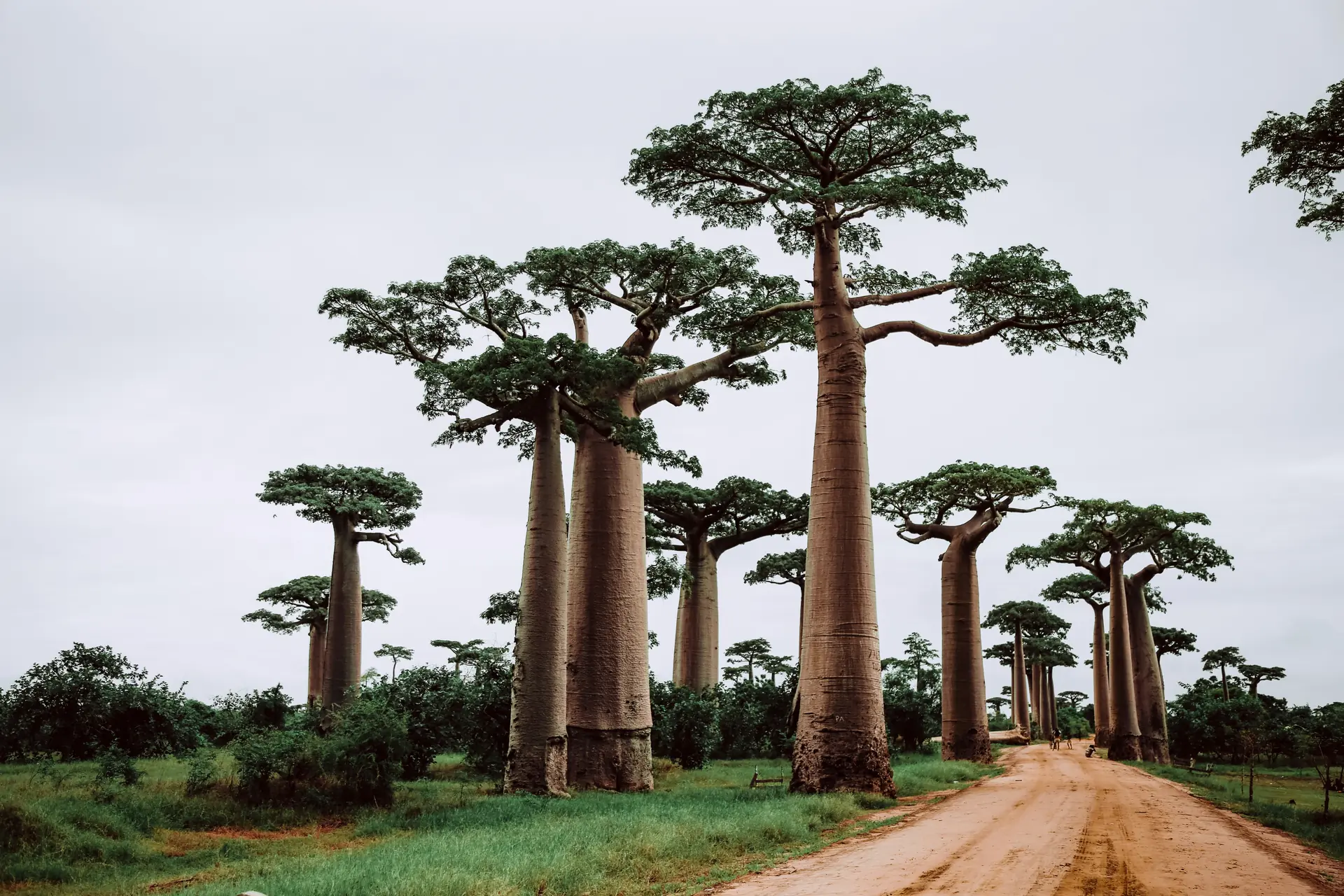
Africa’s Avenue of the Baobabs stands as one of the most distinctive natural landmarks on Earth. Located in western Madagascar this path stretches for about 26 kilometers alongside the Menabe River. The trees here are among the oldest living things in the region with some estimated to be over 800 years old. Their massive trunks and sprawling branches create a landscape unlike any other making every step feel like entering a storybook.
The baobab trees dominate the scene with their thick trunks that store water during dry seasons. These giants often reach heights of 30 meters while their roots spread wide to capture rain when it falls. The sight of these ancient plants against the sky feels both calm and powerful. Visitors can walk along dirt trails or sit near the river watching birds flit between branches while learning about how these trees survive in changing climates.
Cultural significance runs deep here as local communities have long respected the baobabs for their role in daily life. The trees provide materials for building homes and tools while their fruit and seeds are eaten by people and animals alike. Seasonal festivals celebrate the land’s cycles with music dance and stories passed down through generations. This connection between nature and culture makes every visit feel like a chance to understand how humans adapt to their environment.
Conservation efforts aim to protect these trees from threats like deforestation and climate change. Organizations work with locals to monitor tree health limit harmful practices and educate travelers about responsible tourism. Simple actions such as staying on marked paths or avoiding littering help preserve the area’s beauty for future generations. The Avenue of the Baobabs remains a place where history ecology and community come together in quiet harmony.
The Avenue of the Baobabs, located in Madagascar’s Menabe region, is accessible primarily by road. The nearest major town is Morondava, approximately 65 kilometers away, which serves as a common starting point for visitors. Roads leading to the avenue are generally unpaved but passable by standard vehicles, though 4x4s may offer greater convenience during the rainy season. Public transportation options include shared taxis and buses from Morondava to nearby villages, with walking trails beginning just outside the main road. The site is visible from the main highway, allowing for easy identification upon arrival. Visitors often combine a visit here with nearby natural attractions accessible via short local drives or guided tours.
The nearest town, Morondava, offers a range of lodging from modest guesthouses to mid‑priced boutique inns that blend local architecture with comfortable amenities. Prices typically fall between US$30 (£22.55) and US$80 (£60.12) per night for standard rooms, while more upscale options – often featuring sea views or private plunge pools – can reach US$120 – 150 (£90.18 – 112.73). Many accommodations emphasize eco‑friendly practices, using solar power and locally sourced materials, reflecting the region’s commitment to sustainable tourism. Traditional Malagasy “bungalows” with thatched roofs provide a rustic charm, whereas newer boutique hotels offer modern conveniences such as Wi‑Fi, air conditioning and guided tours of the baobab grove. For travelers seeking authenticity, homestays in nearby villages give an intimate glimpse into local life while still offering basic comforts.
Log in to add this place to a travel list and get a summary of all recommended items for your whole trip.
We calculate the average costs when travelling to destinations and compare those with the living costs at your home. With this you can get an estimate of how expensive or cheap the destination is for you.
To customise this, you can set up which location and price level are used for the calculations in your account settings.
The exchange rate price factor shows how expensive or cheap a currency currently is compared to its historical average. It's a quick way to see if a country is currently more or less affordable due to exchange rate changes.
