






Was this page helpful?

| Public website: | www.kws.org |
|---|
| Power Grid: |
240 V, 50 Hz Plug: Type G
Type G:
 Read about power adapters |
|---|---|
| Currency: |
Kenyan Shilling (KES) £1 ≈ KES 172.94 |
| Cashless info: |
Rating 5/5
Cashless payments are becoming more widespread in Kenya, particularly in larger cities. Mobile payment services like M-Pesa are extremely popular, while credit cards are also accepted in many places.
Save with a travel credit card |
| eSIM providers: |
Best value: Saily Flexibility: Airalo Read our in-depth comparison |
| Tipping: | Tipping in Kenya is not mandatory but is common for good service. In restaurants, a 10% tip is typical if service charge is not included. Tipping taxi drivers is appreciated, rounding up the fare. |
|---|---|
| Public drinking: | Public drinking is not allowed in Kenya, and alcohol consumption is restricted to licensed establishments like bars, restaurants, and hotels. Drinking in public spaces is prohibited. |
| Public smoking: | Smoking is prohibited in many indoor public spaces and on public transport. Designated smoking areas are provided in some places. |
| Mashujaa Day (20 October) |
A national holiday commemorating heroes with public celebrations |
|---|---|
| Christmas (25 December) |
Celebrated with family gatherings, festivals, and events |
| Emergency contact: | Emergency Number: 999 (Police), 911 (Ambulance) |
|---|---|
| Taxi apps: | Bolt, Uber, Little |
| Other: | Kenya is famous for its wildlife and natural beauty. Travellers should be cautious about health concerns such as malaria and take necessary precautions during safaris. |
The best times to travel section shows how the months compare for a visit, so you can find the time of year that fits what you want to do.
Background colours of the months:
The colour shows the typical temperature: yellow (hot), green (mild) and blue (cold). How strong the colour is shows the travel season: full colour means high season, soft colour means shoulder season and soft-striped means off season.
Weather symbols:
Each month has one symbol showing what the weather is typically like, such as hot and sunny, freezing or a rainy or snowy season. Use them to quickly spot months that match the weather you want, or to avoid the ones that don't.
Crowdedness:
The people icon shows how busy the place usually is. The more people, the more crowded it gets.
Additional notes:
The grey info boxes point out special things worth knowing, like recurring weather issues or seasonal events.
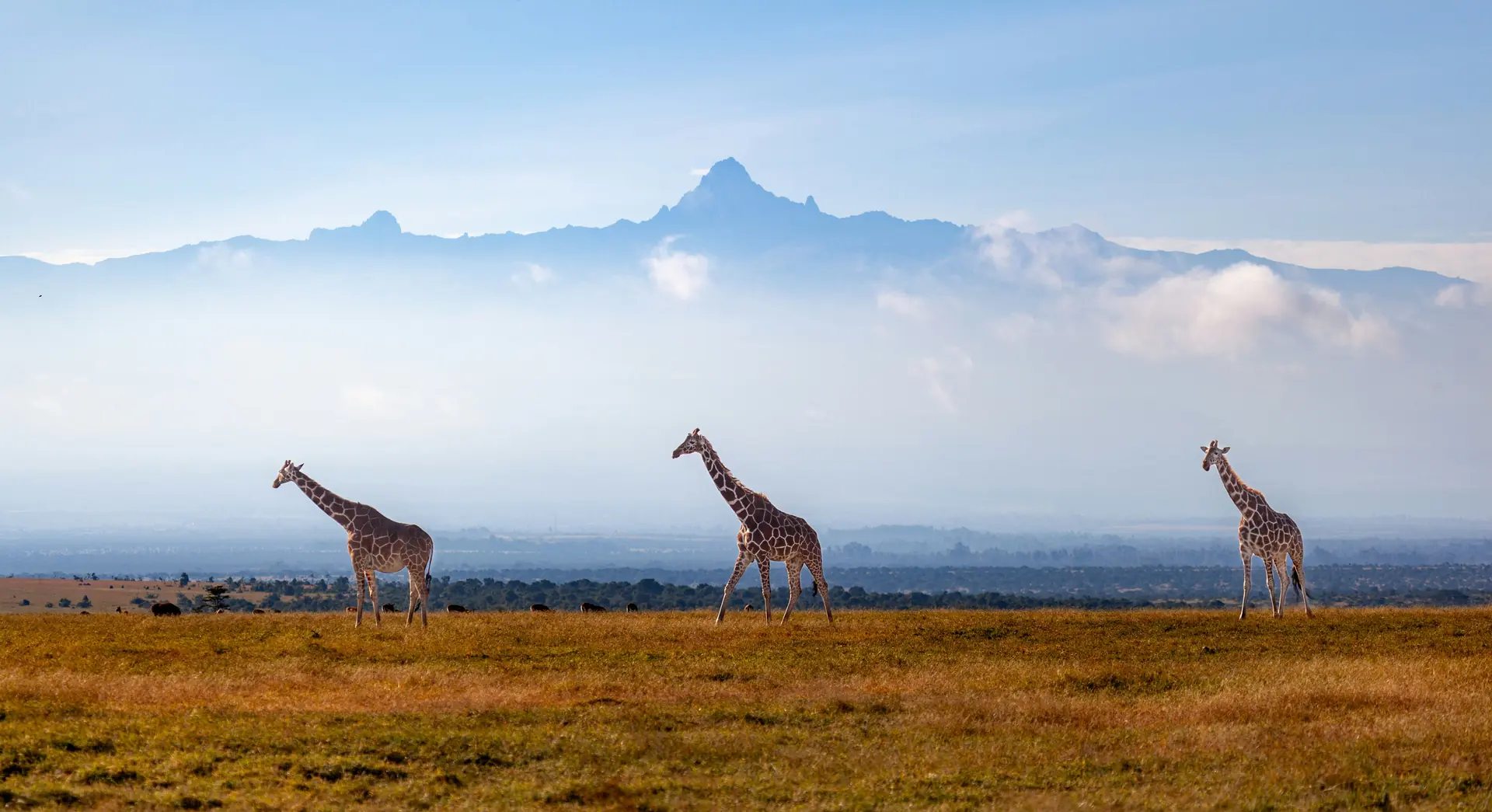
Mount Kenya rises as a towering presence in East Africa. Its peaks cut through clouds and its slopes hold stories of ancient glaciers. The mountain is not just rock and ice but home to forests that change with altitude. From dense green woodlands at the base to alpine meadows above, each zone supports different plants and animals.
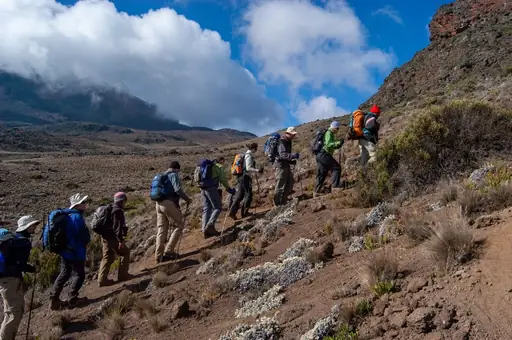
The climb tests endurance but rewards with views few places can match. Hikers pass through zones where bamboo sways in mountain breezes. Further up, heather and giant lobelias stand like sentinels. At the highest points, snow caps glint under strong sunlight. The summit feels far from the world below yet carries its own quiet power.
Wildlife thrives across the slopes. Elephants move through lower forests while smaller creatures hide among rocks. Birds circle high above, their calls echoing in open air. Conservation efforts protect these habitats and ensure that species like leopards and antelopes remain part of the mountain’s rhythm.
Local communities value Mount Kenya as a source of water and cultural meaning. Rivers start here feeding farms and towns downstream. Traditions link people to this land through stories passed over generations. Visitors can learn about these ties while exploring trails that wind around slopes rich with history and natural beauty.
Mount Kenya is accessible via Nairobi, Kenya’s capital city, which serves as the primary gateway. The nearest major airport is Jomo Kenyatta International Airport (NBO), located approximately 150 kilometers south of the mountain. Travelers can reach Mount Kenya by road or air: domestic flights to nearby airstrips such as Nanyuki or Embu connect to Nairobi, followed by a drive through scenic highlands. Buses and private transfers operate from Nairobi to towns like Thika or Nanyuki, which act as starting points for treks. The mountain’s proximity to the Equator results in diverse climates across its slopes, offering varied access routes depending on season and activity.
Mount Kenya’s base camps and surrounding villages offer a range of lodging from rustic back‑country tents to mid‑range lodges with basic amenities. The most popular choice for trekkers is the well‑equipped, self‑contained tented camps that provide communal kitchens, shared bathrooms and reliable Wi‑Fi, allowing groups to stay comfortably while keeping costs moderate. For those seeking a quieter retreat, several eco‑lodges in Nanyuki and Thika offer single rooms with private bathrooms, hot showers and locally sourced meals, often at premium rates reflecting their proximity to the trailhead. In the nearby town of Kabarnet, budget guesthouses provide simple dormitory or private rooms for travelers on a tighter budget, while still offering easy access to the mountain’s lower slopes.
Log in to add this place to a travel list and get a summary of all recommended items for your whole trip.
We calculate the average costs when travelling to destinations and compare those with the living costs at your home. With this you can get an estimate of how expensive or cheap the destination is for you.
To customise this, you can set up which location and price level are used for the calculations in your account settings.
The exchange rate price factor shows how expensive or cheap a currency currently is compared to its historical average. It's a quick way to see if a country is currently more or less affordable due to exchange rate changes.
