
transitpeople, CC BY 2.0
South America › Chile › Santiago › Museum of Memory & Human Rights

Museum of Memory & Human Rights

Scroll
Reflection on Chile's Past

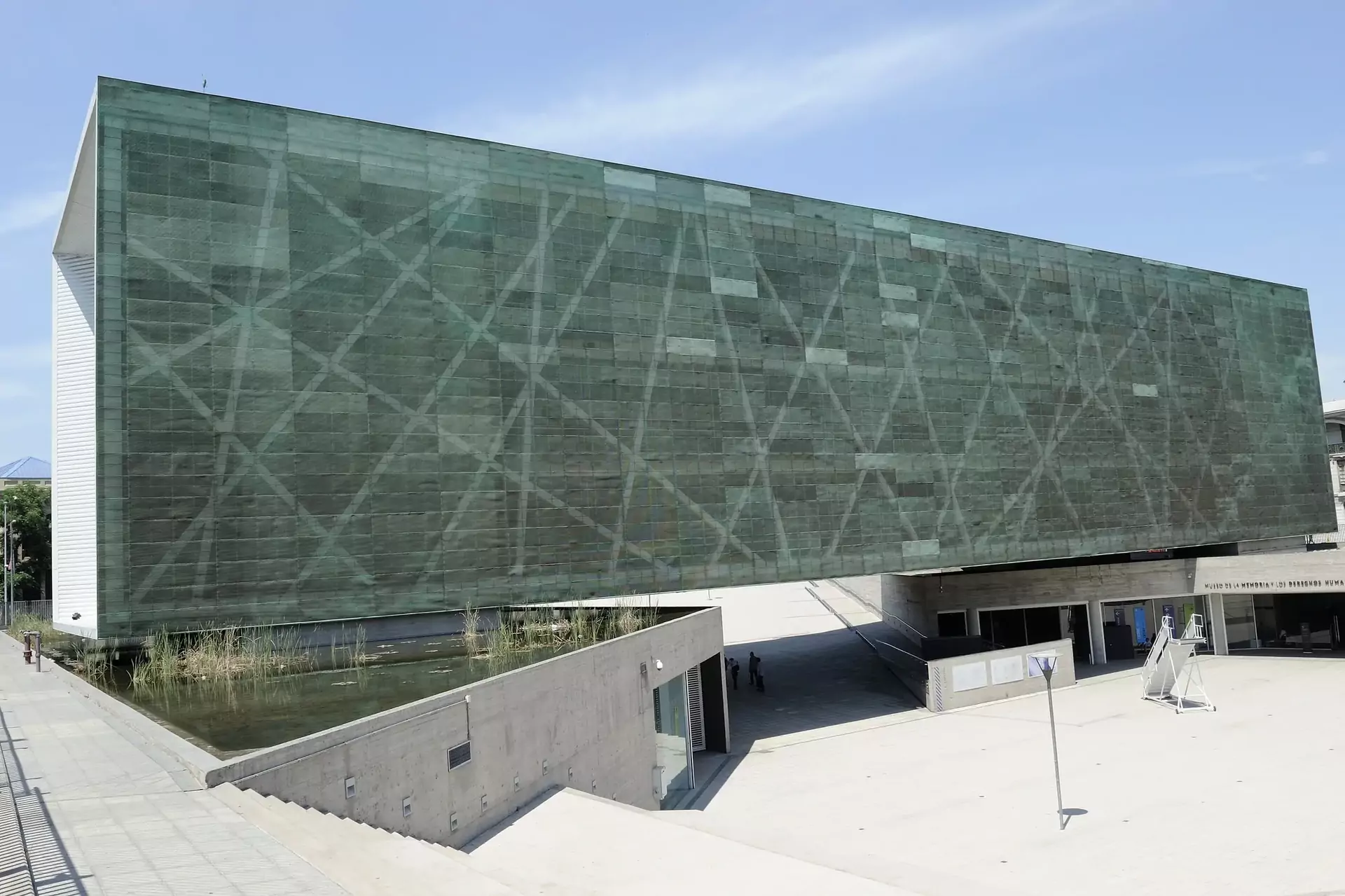
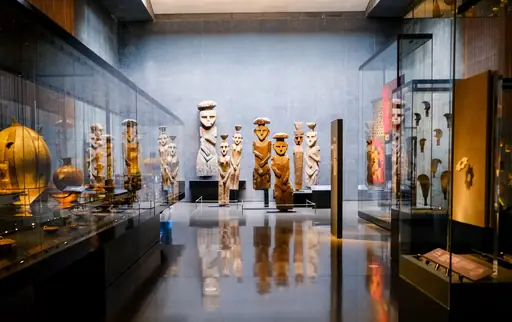
The Museum of Memory and Human Rights in Santiago stands as a quiet space dedicated to remembering Chile’s past. It focuses on the experiences of those affected by political violence during the 1970s and 1980s. Exhibits include personal stories, photographs and artifacts that show daily life under repression. The building itself reflects openness through large windows facing a central plaza. Visitors can walk through galleries designed to encourage reflection while learning about human rights struggles and ongoing efforts for justice in Chile today.

Museum in Santiago
Climate zone: Mediterranean

Mediterranean: Mediterranean-type climates with warm, dry summers and cool, wet winters, often at higher elevations or coastal latitudes.

See climate table
Ticket price: $$$
$Cheap
$$Medium
$$$Expensive, upscale
$$$+Very expensive, luxury
Safety: 7.8
General Safety:8
Accessibility:7
Read details
Tourist English: 4/5
English is commonly spoken by museum staff and in tourism areas, facilitating meaningful communication for international visitors.
Last update: 12 Oct 2026
* We earn a commission from some links on this page.
Museum of Memory & Human Rights Summary
Important for modern history education. Explore exhibitions documenting Chile’s dictatorship and stories of human rights struggles.
Opening hours:
Mon:Closed
Tue-Sun:10:00 - 18:00
Public website: mmdh.cl
Chile – Quick facts
Power Grid: 220 V, 50 Hz
Plug: Type C , Type L
Type C:
Diagram of a Type C power plug
Type L:
Diagram of a Type L power plug

Read about power adapters
Currency: Chilean Peso (CLP)
£1 ≈ CLP 1,306
Cashless info: Rating 5/5
Cashless payments are widely accepted in Chile, particularly in cities and tourist areas. Credit and debit cards are commonly used.

Save with a travel credit card
eSIM providers: Best value: Saily
Flexibility: Airalo
Read our in-depth comparison
Tipping: Tipping is appreciated in Chile but not mandatory. A 10% tip is typical in restaurants. Taxi drivers and hotel staff also appreciate small tips for good service.
Public drinking: Public drinking is generally allowed in designated areas, but it is illegal to drink alcohol on the streets in some cities. It is best to consume alcohol in licensed venues.
Public smoking: Smoking is prohibited in indoor public spaces, including restaurants, bars, and public transport.
Fiestas Patrias
(18–19 September)
National holiday celebrating Chile's independence with parades and festivities
Christmas
(25 December)
Celebrated with family gatherings and festive meals
Emergency contact: Emergency Numbers: 133 (Police), 131 (Ambulance), 132 (Fire)
Taxi apps: Uber, Cabify
Other: Chile is famous for its natural beauty, including the Andes mountains, Atacama Desert, and Patagonia. It is a top destination for adventure tourism and outdoor activities.
Best times to travel

The best times to travel section shows how the months compare for a visit, so you can find the time of year that fits what you want to do.

Background colours of the months:
The colour shows the typical temperature: yellow (hot), green (mild) and blue (cold). How strong the colour is shows the travel season: full colour means high season, soft colour means shoulder season and soft-striped means off season.

Weather symbols:
Each month has one symbol showing what the weather is typically like, such as hot and sunny, freezing or a rainy or snowy season. Use them to quickly spot months that match the weather you want, or to avoid the ones that don't.

Crowdedness:
The people icon shows how busy the place usually is. The more people, the more crowded it gets.

Additional notes:
The grey info boxes point out special things worth knowing, like recurring weather issues or seasonal events.

for Museum of Memory & Human Rights, Chile
☀️
Jan
☀️
Feb
☀️
Mar
☀️
Apr
☀️
May
☀️
Jun
☀️
Jul
☀️
Aug
☀️
Sep
☀️
Oct
☀️
Nov
☀️
Dec
High season: April, Sep. - Nov.
Shoulder season: Jan. - March, May, Aug., Dec.
Tap on a month for more info Hover over a month for more info
Closed Mondays; free entry, with audio guides and exhibits in English
11 September coup anniversary: commemorations and marches in central Santiago, with higher visitor numbers around the museum

The Museum of Memory and Human Rights is a modern institution dedicated to preserving the memory of victims of human rights abuses during Chile’s dictatorship from 1973 to 1990. The museum seeks to honor victims’ dignity while educating visitors about the importance of human rights and democracy.

Its architecturally striking building houses evocative multimedia exhibits, photographs and personal testimonies that highlight the impact of repression and resistance in Chile’s recent history. Notable features include the 'Wall of Names,' honoring over 40,000 victims and immersive galleries that foster reflection and dialogue.

While the museum offers a deeply educational experience, visitors should approach the content with readiness for intense and sometimes graphic material, as the exhibits detail torture and repression methods. Photography is restricted in sensitive areas to preserve respect and privacy. It is recommended to visit during weekdays or early in the day to avoid crowds and engage fully with the material.

Overall, the museum stands as a vital space for remembrance, learning and commitment to ensuring such atrocities are never repeated, making it a profoundly impactful visit in Santiago.

Knowledge before you go

  • Free entry; allocate 2-3 hours for exhibits.
  • Expect emotionally intense content on Pinochet dictatorship; audio guides enhance understanding of testimonies.
  • Arrive early weekdays via Quinta Normal metro to avoid crowds and allow quiet reflection time.
  • Opened 2010 by President Bachelet, documents 1973-1990 human rights violations using survivor artifacts and archives.

How to travel to Museum of Memory & Human Rights

The museum is located in the historic Barrio Yungay area of Santiago. Visitors commonly arrive via Santiago International Airport, which connects globally. From central Santiago, the museum is easily accessible by taking the metro to Quinta Normal station (Line 5), followed by a short walk. Alternatively, several bus lines stop nearby and taxis or rideshares like Uber are convenient options.

Access summary

  • From Santiago Airport (SCL): Airport bus or taxi to Quinta Normal area (~30–45 min).
  • From central Santiago: Metro Line 5 to Quinta Normal, then short walk.
  • From Valparaíso: Bus to Santiago Alameda, then Metro Line 1+5 to Quinta Normal (~2–2.5 h).

Where to stay near Museum of Memory & Human Rights

Santiago offers many accommodation options from affordable hostels to upscale hotels, particularly in central neighborhoods like Barrio Yungay, Lastarria or Providencia, providing easy access to the museum and city attractions.

Packing recommendations for Museum of Memory & Human Rights

Log in to add this place to a travel list and get a summary of all recommended items for your whole trip.

Budget snapshot
Costs compared to home

We calculate the average costs when travelling to destinations and compare those with the living costs at your home. With this you can get an estimate of how expensive or cheap the destination is for you.

To customise this, you can set up which location and price level are used for the calculations in your account settings.

-37 %
Daily expenses in the region are around 37% lower than the average across United States. That means you'll spend considerably less on meals and getting around.
Exchange rate trend

The exchange rate price factor shows how expensive or cheap a currency currently is compared to its historical average. It's a quick way to see if a country is currently more or less affordable due to exchange rate changes.

-17 %
Your exchange rate (GBP to CLP) is 17% better than in recent years. That means travelling now is considerably cheaper compared to the past.

Safety information overview

General safety
8
Santiago’s Museum of Memory & Human Rights is located in a well‑policed, central district with ample CCTV coverage and clear signage. Visitors rarely encounter crime; standard precautions – keeping valuables secure and staying aware of surroundings – ensure a safe, respectful experience.
Accessi­bility
7
The Museum of Memory & Human Rights in Santiago offers wheelchair access, elevators and tactile displays, making it largely inclusive. However, some older galleries lack ramps and signage is limited for non‑Spanish speakers. Visitors should check accessibility services beforehand.

Looking for inspiration?

Discover
Top art destinations and cultural hubs
For many travellers, standing in front of a painting they have only ever seen in books is one of the best moments of a trip and it often feels very different from what they…
Read more
Discover
Top museum destinations and cultural institutions
Museum travel has developed a dedicated following built around the world's great permanent collections, blockbuster exhibition programmes and the architecturally significant…
Read more
Discover
Top historical destinations and historic sites
The most compelling history destinations are places where the past is still physically present and legible in the landscape, the architecture and the daily life of the people who…
Read more
Discover
Best museum destinations in South America
South America's best known museums lean heavily toward art and pre Columbian history, with a handful of standouts spread across the continent's major cities. Sao Paulo's MASP is…
Read more
Discover
Best art destinations in Oceania
Oceania's art offer is shaped by two distinct traditions of extraordinary depth, with the Aboriginal and Torres Strait Islander art of Australia representing one of the world's…
Read more
Discover
Best historical destinations in South America
South America's history is as layered as its landscapes, stretching from some of the most sophisticated pre-Columbian civilisations on earth through the upheaval of European…
Read more
Discover
Most beautiful beaches and coastal escapes
For a lot of people, a beach is the whole point of a holiday, but what makes a beach day perfect really depends on personal taste. Some travellers want isolation and the feeling…
Read more
Discover
Stunning national parks and wilderness areas
National parks exist because someone decided that certain landscapes were too important to lose. The best of them protect ecosystems, wildlife and natural processes that would…
Read more
Discover
Intimate escapes and romantic getaways
The most memorable trips for couples tend to have less to do with luxury and more to do with the quality of shared experience. A place that slows you down, removes the usual…
Read more
Was this page helpful?
Feedback