South America › Chile › Pucon › Climate

Pucón climate data

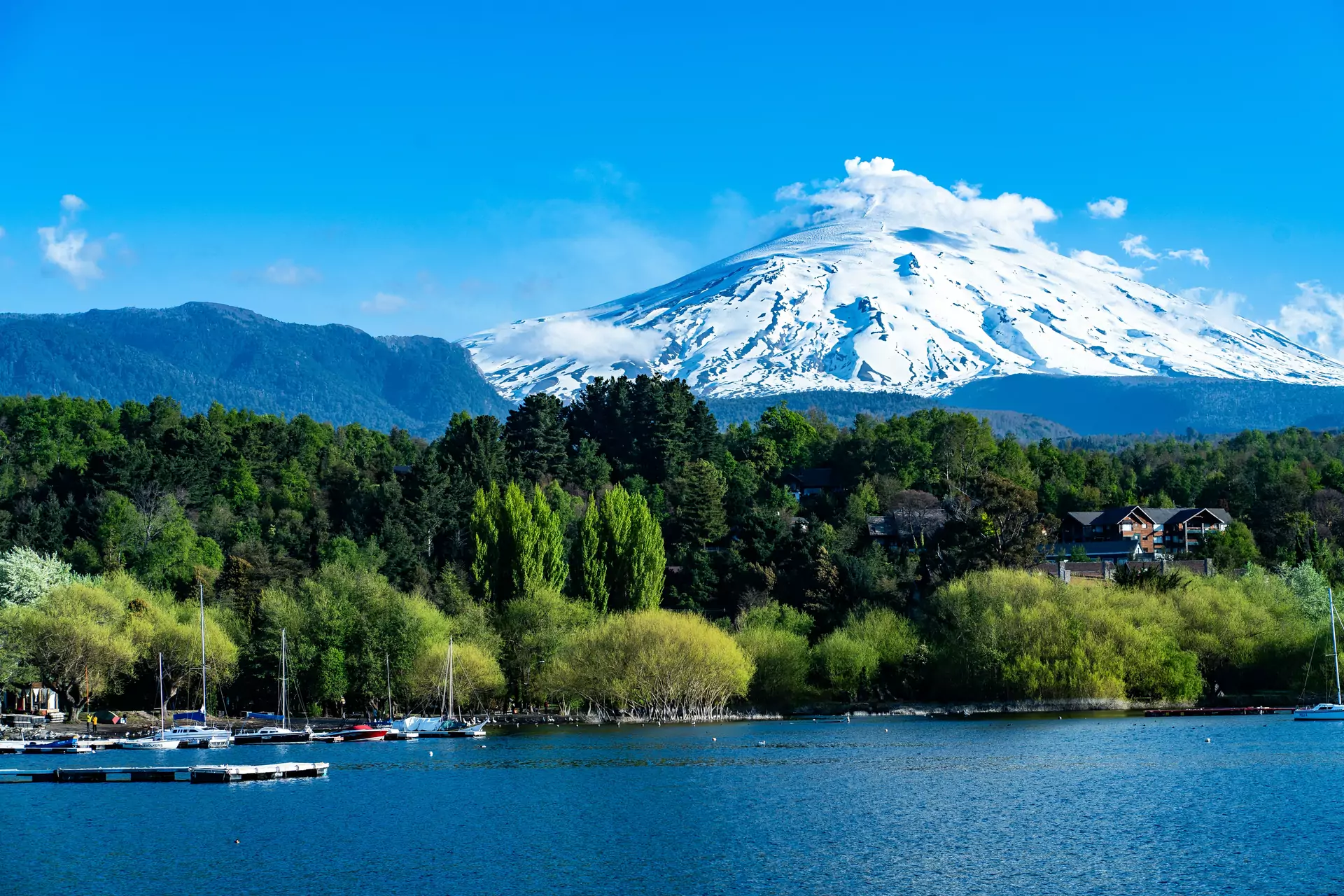
Pucón, nestled in Chile’s scenic Lake District, enjoys a temperate climate with four distinct seasons. Summers are warm and sunny, perfect for outdoor adventures, while winters are cold, wet, and often snowy, drawing winter sports enthusiasts. Spring and autumn bring vibrant colours and mild conditions, making Pucón a year-round destination for nature lovers and thrill-seekers alike.

Best times to travel

The best times to travel section shows how the months compare for a visit, so you can find the time of year that fits what you want to do.

Background colours of the months:
The colour shows the typical temperature: yellow (hot), green (mild) and blue (cold). How strong the colour is shows the travel season: full colour means high season, soft colour means shoulder season and soft-striped means off season.

Weather symbols:
Each month has one symbol showing what the weather is typically like, such as hot and sunny, freezing or a rainy or snowy season. Use them to quickly spot months that match the weather you want, or to avoid the ones that don't.

Crowdedness:
The people icon shows how busy the place usually is. The more people, the more crowded it gets.

Additional notes:
The grey info boxes point out special things worth knowing, like recurring weather issues or seasonal events.

for Pucon, Chile
☀️
Jan
☀️
Feb
☀️
Mar
🌤️
Apr
⛈️
May
⛈️
Jun
⛈️
Jul
⛈️
Aug
⛈️
Sep
🌧️
Oct
🌤️
Nov
🌤️
Dec
High season: Jan. - March, July - Aug., Dec.
Shoulder season: April, Sep., Nov.
Crowdedness: 7 (Many tourists)
Tap on a month for more info Hover over a month for more info
Villarrica volcano climbs run roughly November to April, cancelled in bad weather or high volcanic activity
Chilean school holidays January to February: busiest and most expensive period, book accommodation early
Ski season at Pucón-Villarrica ski centre usually July to September, depending on snow

The climate of Pucón

Pucón features a temperate oceanic climate (Cfb), characterised by significant seasonal variation in both temperature and precipitation. Summers (December to March) are warm and relatively dry, with daytime highs averaging 22–26°C and cool nights around 7–12°C. Sunshine is abundant, with up to 11–14 hours of daylight, making this the peak season for hiking, water sports, and exploring the region’s lakes and volcanoes. Rainfall is lowest in summer, but occasional brief showers can occur.

Autumn (March to May) and spring (September to November) offer mild temperatures, ranging from 10–20°C, and increased rainfall, especially in autumn. These seasons are noted for their colourful foliage and blooming landscapes, as well as cultural festivals. Winters (June to August) are cold, wet, and overcast, with daytime highs of 7–10°C and nighttime lows near 2–4°C. Snow is common, especially in the mountains and on Villarrica Volcano, creating excellent conditions for skiing and snowboarding. Winter also brings the highest rainfall, with June being the wettest month. Humidity is high year-round, averaging 80–90%, and winds are generally light to moderate, though stronger gusts can occur during storms. Daylight hours drop to about 9 in winter, but the region’s hot springs and cosy lodges offer warmth and relaxation.

Pucón’s climate supports a diverse range of activities throughout the year, from summer lake days and mountain treks to winter sports and hot spring soaks. The dramatic seasonal changes and stunning natural scenery make it a favourite for outdoor enthusiasts and travellers seeking both adventure and relaxation.

Average climate data for Pucón, Chile
Month Jan Feb Mar Apr May Jun Jul Aug Sep Oct Nov Dec Year
Average maximum temperature (°C) 22 22 20 15 11 7 6 8 10 13 16 19 22
Average minimum temperature (°C) 7 7 5 4 3 1 -1 0 1 2 3 5 -1
Average precipitation (mm) 44 44 56 78 200 336 325 288 165 154 84 68 1,842
Average rainfall days (days) 6 8 9 12 18 22 21 22 18 17 13 10 176
Average snowfall (mm) 0 0 0 0 0 1 20 1 1 0 0 0 23
Average snowfall days (days) 0 0 0 0 0 0 1 0 0 0 0 0 2
Average relative humidity (%) 73 71 73 80 88 92 91 91 87 84 79 77 82
Average wind speed (km/h) 8 8 7 8 8 9 9 10 8 8 8 8 8
Average daily daylight hours (h) 14 13 12 11 10 9 9 10 11 13 14 14 12
Average daily sunshine hours (h) 10 8 8 6 5 3 3 4 5 6 7 8 6
Average cloud coverage (%) 30 31 34 44 54 67 62 66 58 56 49 42 49
Average UV index 4 4 4 3 2 2 2 2 2 2 3 4 3

Travel info

  • Summer (December–March): Warm and sunny, with highs of 22–26°C and cool nights. Ideal for hiking, water sports, and volcano climbs. Pack sun protection and a light rain jacket for occasional showers.
  • Autumn (March–May): Mild and colourful, with highs of 15–20°C. Rain increases, and evenings are chilly. Great for photography and outdoor activities – bring layers and waterproof shoes.
  • Winter (June–August): Cold and wet, with highs of 7–10°C and frequent rain or snow. Perfect for skiing and snowboarding on Villarrica Volcano, as well as relaxing in hot springs. Dress warmly and prepare for wet conditions.
  • Spring (September–November): Mild and fresh, with highs of 12–18°C. Nature blooms and rainfall gradually decreases. Excellent for hiking and fishing. Pack a jacket for cool mornings and evenings.
  • Travel tip: Summer is high season – book accommodations early. For winter sports, check snow conditions on Villarrica Volcano. Weather can change quickly; always check forecasts and pack for varied conditions.

The best time to visit Pucón

The best time to visit Pucón is during the Chilean summer, from December to March, when temperatures are warm, rainfall is low, and days are long and sunny – ideal for outdoor adventures, water sports, and exploring the area’s natural beauty. For winter sports, June to September offers reliable snow on Villarrica Volcano and fewer crowds.

The worst time to visit Pucón

The least favourable time to visit Pucón is in late autumn and winter (May to August), when rain is most frequent, days are shortest, and cold, damp conditions can limit outdoor activities for those not interested in winter sports. Some trails may be muddy or inaccessible due to weather.

Frequently asked questions

What is the climate like in Pucón throughout the year?

Pucón has a temperate climate with warm, sunny summers and cold, wet winters. Spring and autumn are mild and colourful, with increased rainfall. Snow is common in winter, especially in the mountains, supporting a wide range of outdoor activities year-round.

When is the best time to visit Pucón for outdoor activities?

The best time for outdoor activities is summer (December to March), when temperatures are warm, rainfall is low, and daylight is longest. This period is perfect for hiking, water sports, and exploring the region’s lakes and volcanoes.

Does it snow in Pucón?

Yes, snow is common in Pucón during winter (June to August), especially on Villarrica Volcano and the surrounding mountains. The town itself may see occasional snow, and winter is popular for skiing and snowboarding.

How much does it rain in Pucón?

Pucón receives significant rainfall, with annual precipitation ranging from 1,400 mm to over 2,000 mm. The wettest months are May to August, while summer (December to March) is much drier, though brief showers can still occur.

What should I pack for a trip to Pucón?

Pack light, breathable clothing and sun protection for summer, and warm, waterproof layers for winter. Bring a rain jacket year-round, as weather can change quickly. Sturdy shoes are recommended for hiking and exploring the outdoors.

Is Pucón suitable for travel in winter?

Yes, Pucón is a great winter destination for snow sports, hot springs, and cosy lodges. However, expect frequent rain, cold temperatures, and shorter days. Check snow conditions if planning to ski or snowboard.

How many hours of daylight does Pucón get?

Daylight varies from about 14 hours in summer (December–February) to just 9 hours in winter (June–August). Summer offers long, bright days for outdoor activities, while winter days are shorter but ideal for enjoying hot springs and winter sports.

Minimum and maximum temperatures in Pucón

The warmest month, with the highest average maximum temperature, is January (22.1 °C). The month with the lowest average maximum temperature is July (6.5 °C). Overall, the average maximum temperature over the whole year is 14.1 °C.

The month with the highest average minimum temperature is February (7.2 °C). The coldest month, with the lowest average minimum temperature, is July (-0.5 °C). Overall, the average minimum temperature over the whole year is 3.1 °C.

Rainfall amount in Pucón

The wettest month, with the highest amount of precipitation, is June (336.5 mm). The driest month, with the least amount of precipitation, is January (43.6 mm). Over the whole year there are 1,842.4 mm of rainfall on average.

Rainfall days in Pucón

The month with the most days of rain is August (22 days). The month with the fewest days of rain is January (6.2 days). Over the whole year there are 175.6 days of rain on average.

Snowfall amount in Pucón

The month with the most snowfall is July (19.8 mm). The months with the least snowfall are January, February, March, April, May, October, November and December (0 mm). Over the whole year there are 22.9 mm of snowfall on average.

Snowfall days in Pucón

The month with the most days of snowfall is July (1.4 days). The months with the fewest days of snowfall are February, May, October and November (0 days). Over the whole year there are 2.2 days of snowfall on average.

Relative humidity in Pucón

The month with the highest average relative humidity is June (91.9 %). The month with the lowest average relative humidity is February (70.8 %). The overall average relative humidity over the whole year is 82.1 %.

Wind speed in Pucón

The windiest month, with the highest average wind speed, is August (9.5 km/h). The calmest month, with the lowest average wind speed, is March (7.4 km/h). The overall average wind speed over the whole year is 8.2 km/h.

Cloud coverage in Pucón

The month with the cloudiest skies, so the highest cloud coverage, is June (66.7 %). The month with the clearest skies, so the lowest cloud coverage, is January (29.6 %). Over the whole year there is an average cloud coverage of 49.3 %.

Daylight hours and sunshine hours in Pucón

The month with the longest days, so the most daylight, is December (Average daylight: 14.1 h). The month with the shortest days, so the least daylight, is June (Average daylight: 9 h). Over the whole year there are 11.7 h of daylight per day on average.

The month with the most sunshine per day is January (Average sunshine: 10.1 h). The month with the least sunshine per day is June (Average sunshine: 2.9 h). Over the whole year there are 6.1 h of sunlight per day on average.

UV index in Pucón

The months with the highest average UV index are January, February, March and December (UV index: 4). The months with the lowest average UV index are May, June, July, August, September and October (UV index: 2). Over the whole year the average UV index is 2.8.

Was this page helpful?
Feedback