





Was this page helpful?

| Public website: | www.myswitzerland.com |
|---|
| Power Grid: |
220 V, 50 Hz Plug: Type C , Type L
Type C:
  Read about power adapters |
|---|---|
| Currency: |
Chilean Peso (CLP) £1 ≈ CLP 1,311 |
| Cashless info: |
Rating 5/5
Cashless payments are widely accepted in Chile, particularly in cities and tourist areas. Credit and debit cards are commonly used.
Save with a travel credit card |
| eSIM providers: |
Best value: Saily Flexibility: Airalo Read our in-depth comparison |
| Tipping: | Tipping is appreciated in Chile but not mandatory. A 10% tip is typical in restaurants. Taxi drivers and hotel staff also appreciate small tips for good service. |
|---|---|
| Public drinking: | Public drinking is generally allowed in designated areas, but it is illegal to drink alcohol on the streets in some cities. It is best to consume alcohol in licensed venues. |
| Public smoking: | Smoking is prohibited in indoor public spaces, including restaurants, bars, and public transport. |
| Fiestas Patrias (18–19 September) |
National holiday celebrating Chile's independence with parades and festivities |
|---|---|
| Christmas (25 December) |
Celebrated with family gatherings and festive meals |
| Emergency contact: | Emergency Numbers: 133 (Police), 131 (Ambulance), 132 (Fire) |
|---|---|
| Taxi apps: | Uber, Cabify |
| Other: | Chile is famous for its natural beauty, including the Andes mountains, Atacama Desert, and Patagonia. It is a top destination for adventure tourism and outdoor activities. |
The best times to travel section shows how the months compare for a visit, so you can find the time of year that fits what you want to do.
Background colours of the months:
The colour shows the typical temperature: yellow (hot), green (mild) and blue (cold). How strong the colour is shows the travel season: full colour means high season, soft colour means shoulder season and soft-striped means off season.
Weather symbols:
Each month has one symbol showing what the weather is typically like, such as hot and sunny, freezing or a rainy or snowy season. Use them to quickly spot months that match the weather you want, or to avoid the ones that don't.
Crowdedness:
The people icon shows how busy the place usually is. The more people, the more crowded it gets.
Additional notes:
The grey info boxes point out special things worth knowing, like recurring weather issues or seasonal events.
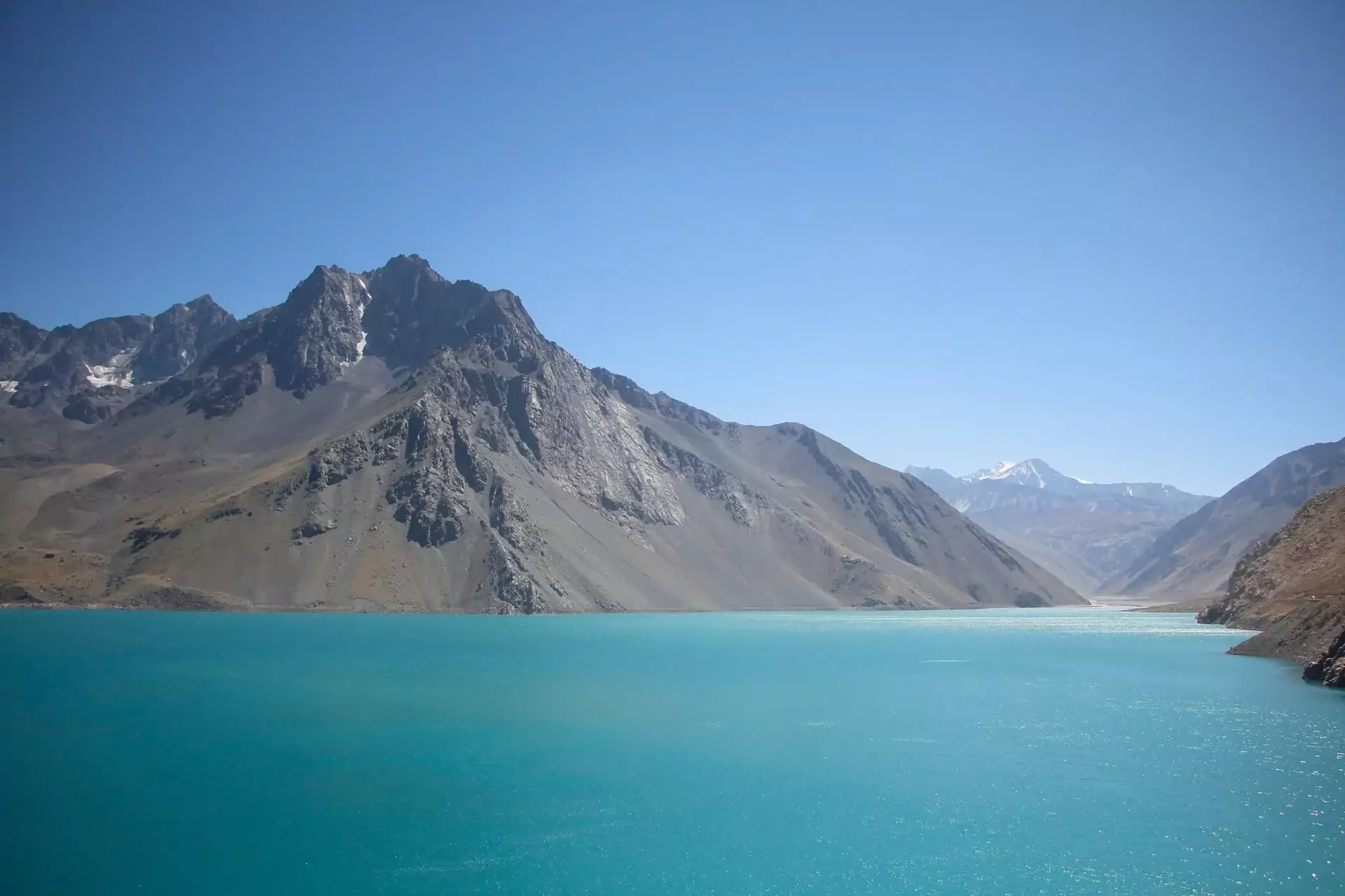
Embalse El Yeso is renowned for its striking turquoise waters set against the dramatic backdrop of the Andes Mountains. The reservoir was created in 1964 and serves as a key water supply for Santiago while adding an enchanting scenic spot for both locals and travelers.
The area offers various outdoor activities such as hiking, photography, boating and guided nature tours, allowing visitors to immerse themselves in the pristine environment. Nearby hot springs and glaciers enhance the appeal for adventure seekers and relaxation enthusiasts alike.
Visitors should be cautious on the unpaved mountain roads leading to the reservoir, which can be challenging especially in winter months. Equipment such as chains and four-wheel drive vehicles may be necessary. Remote location means minimal services, so adequate preparation is essential.
Despite the ruggedness, Embalse El Yeso remains a breathtaking destination showcasing Chile's natural beauty, perfect for those seeking peaceful alpine landscapes and outdoor adventure.
Embalse El Yeso lies approximately 100 km southeast of Santiago, accessible by car via Route G-25 through Cajón del Maipo. The drive involves some rugged, unpaved roads with sharp turns, so a 4x4 vehicle and caution are recommended. Tours from Santiago offer guided transportation including stops at viewpoints and local attractions.
Accommodation is sparse near the reservoir, with options mainly in nearby Cajón del Maipo villages or Santiago city. Visitors often stay in rustic lodges or mountain cabins when exploring the area extensively.
Log in to add this place to a travel list and get a summary of all recommended items for your whole trip.
We calculate the average costs when travelling to destinations and compare those with the living costs at your home. With this you can get an estimate of how expensive or cheap the destination is for you.
To customise this, you can set up which location and price level are used for the calculations in your account settings.
The exchange rate price factor shows how expensive or cheap a currency currently is compared to its historical average. It's a quick way to see if a country is currently more or less affordable due to exchange rate changes.
