








Was this page helpful?

| Opening hours: |
|
|
|---|---|---|
| Public website: | turismo.buenosaires.gob.ar |
| Power Grid: |
220 V, 50 Hz Plug: Type C , Type I
Type C:
  Read about power adapters |
|---|---|
| Currency: |
Argentine Peso (ARS) £1 ≈ ARS 2,045.62 |
| Cashless info: |
Rating 4/5
Cashless payments are widely accepted in larger cities, especially with credit and debit cards. However, cash is often preferred in smaller towns.
Save with a travel credit card |
| eSIM providers: |
Best value: Saily Flexibility: Airalo Read our in-depth comparison |
| Tipping: | In restaurants, a 10% tip is standard. Tipping in taxis is not required, but rounding up is common. |
|---|---|
| Public drinking: | Public drinking is legal but should be done responsibly. It is common in parks and beaches. |
| Public smoking: | Smoking is prohibited indoors in public spaces, but allowed in outdoor areas. |
| Argentina Independence Day (July) |
Expect public celebrations and some business closures. |
|---|---|
| Christmas (December) |
Expect closures and holiday events. |
| Emergency contact: | Emergency Numbers: 911 (Police), 107 (Ambulance), 100 (Fire) |
|---|---|
| Taxi apps: | Cabify, Uber, BA Taxi |
| Other: | Argentina is known for its vibrant culture, tango, and excellent cuisine, including steaks and wines. |
The best times to travel section shows how the months compare for a visit, so you can find the time of year that fits what you want to do.
Background colours of the months:
The colour shows the typical temperature: yellow (hot), green (mild) and blue (cold). How strong the colour is shows the travel season: full colour means high season, soft colour means shoulder season and soft-striped means off season.
Weather symbols:
Each month has one symbol showing what the weather is typically like, such as hot and sunny, freezing or a rainy or snowy season. Use them to quickly spot months that match the weather you want, or to avoid the ones that don't.
Crowdedness:
The people icon shows how busy the place usually is. The more people, the more crowded it gets.
Additional notes:
The grey info boxes point out special things worth knowing, like recurring weather issues or seasonal events.
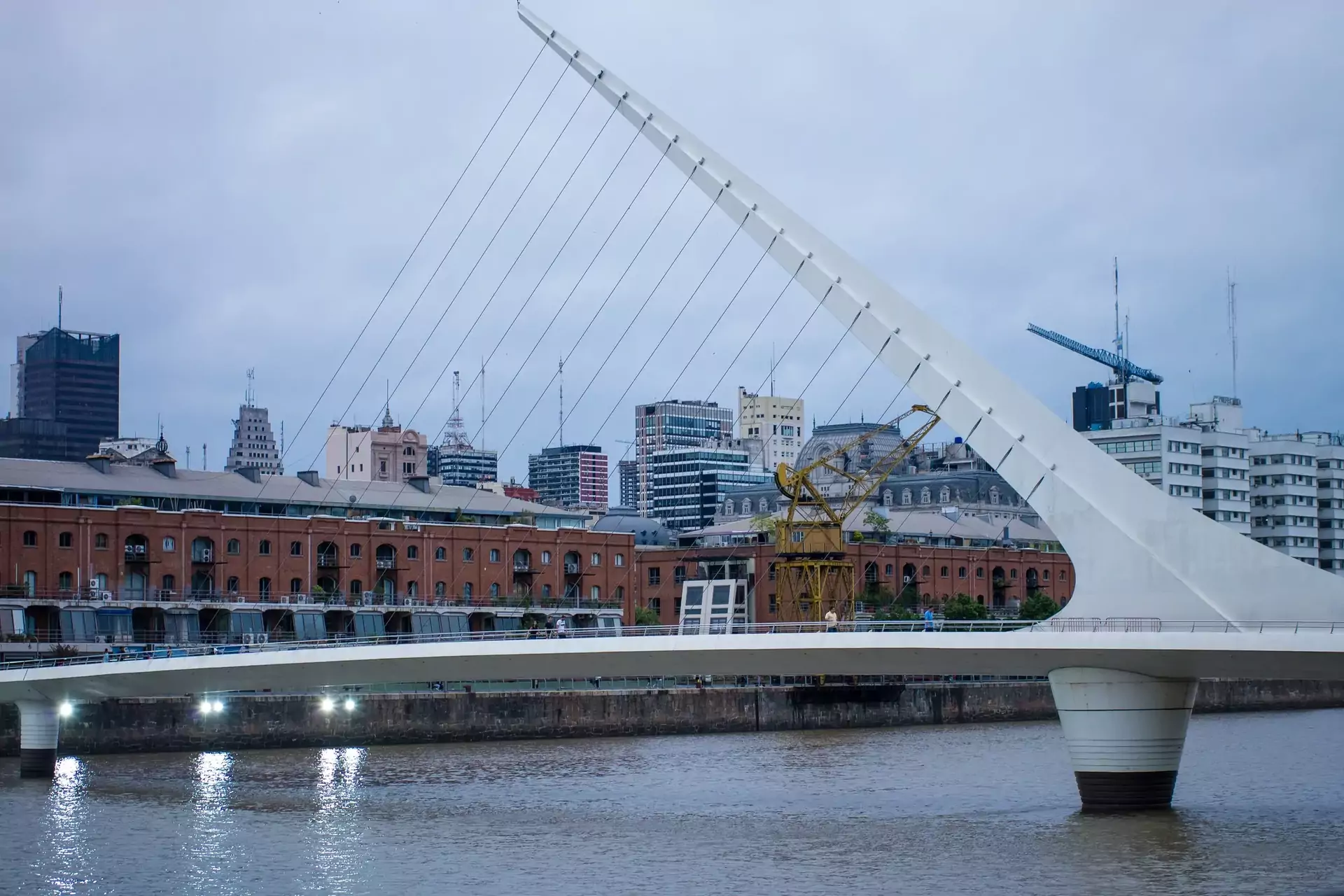
Puente de la Mujer was designed by renowned Spanish architect Santiago Calatrava and opened in 2001, quickly becoming an iconic symbol of modern Buenos Aires. The bridge’s sleek white mast represents the male dancer in tango, while the curved profile symbolizes the female, capturing the rhythm and grace of Argentina’s famous dance.
This pedestrian bridge is unique due to its ability to rotate 90 degrees to allow boat passage along the Rio de la Plata. Its lightweight structure and elegant aesthetics make it highly photogenic, especially at sunset or when illuminated at night. The adjacent Puerto Madero district offers restaurants, bars and cafes that add to the lively urban atmosphere surrounding the bridge.
While the bridge is a beautiful city landmark, some visitors note that the area can become crowded, especially in evenings and weekends. The waterfront promenades are best explored on foot, so comfortable walking shoes are recommended. Visitors should be mindful of their belongings in busy periods and enjoy the nearby amenities responsibly.
Recognized as a Cultural Heritage of Buenos Aires since 2018, the bridge is also notable for its 2022 renovation using innovative recycled materials, reflecting the city’s commitment to sustainability and modern design.
Puente de la Mujer is located in the rejuvenated Puerto Madero area of Buenos Aires. Visitors can arrive via taxi or rideshare from Buenos Aires Ministro Pistarini International Airport in about 40-50 minutes. Public transport options include train routes to Retiro Station followed by a bus to Puerto Madero or direct bus lines stopping nearby. Walking from central Buenos Aires neighborhoods is also popular.
Buenos Aires offers a variety of accommodation options near Puente de la Mujer, ranging from upscale boutique hotels to modern apartments, ideal for travelers wanting easy access to waterfront attractions and city nightlife.
Log in to add this place to a travel list and get a summary of all recommended items for your whole trip.
We calculate the average costs when travelling to destinations and compare those with the living costs at your home. With this you can get an estimate of how expensive or cheap the destination is for you.
To customise this, you can set up which location and price level are used for the calculations in your account settings.
The exchange rate price factor shows how expensive or cheap a currency currently is compared to its historical average. It's a quick way to see if a country is currently more or less affordable due to exchange rate changes.
