









Was this page helpful?

| Opening hours: |
|
||
|---|---|---|---|
| Public website: | www.nps.gov |
| Power Grid: |
120 V, 60 Hz Plug: Type A , Type B
Type A:
  Read about power adapters |
|---|---|
| Currency: |
US Dollar (USD) £1 ≈ US$1.33 |
| Cashless info: |
Rating 5/5
The U.S. is highly cashless, with credit and debit cards accepted almost everywhere. Mobile payment options like Apple Pay and Google Pay are widely used.
Save with a travel credit card |
| eSIM providers: |
Best value: Saily Flexibility: Airalo Read our in-depth comparison |
| Tipping: | Tipping is customary and expected in the U.S. In restaurants, 15-20% is standard. Taxi drivers, hotel staff, and tour guides also expect tips, usually around 10-20% depending on the service. |
|---|---|
| Public drinking: | Public drinking laws vary by state, but it is generally prohibited in public spaces without a permit. |
| Public smoking: | Smoking is restricted in most indoor public spaces and some outdoor areas. Local laws vary. |
| Etiquette: | Greet with a firm handshake, maintain eye contact, respect personal space, and avoid discussing politics or income unless invited to share opinions. Politeness and friendliness are appreciated. |
| Thanksgiving (November) |
A major holiday with closures and domestic travel surges. |
|---|---|
| Independence Day (July) |
Expect parades, fireworks, and celebrations nationwide. |
| Christmas (December) |
Markets, festive events, and crowded tourist spots. |
| Emergency contact: | Emergency Number: 911 (Police, Fire, Ambulance) |
|---|---|
| Taxi apps: | Uber, Lyft, Bolt |
| Helpful links: |
Wikipedia Visa regulations Customs & border control Travel with medicine |
| Other: | The U.S. is known for its diverse landscapes, cultural experiences, and regional cuisines. Public transport is efficient in cities but less so in rural areas. Renting a car is recommended for exploring national parks. |
The best times to travel section shows how the months compare for a visit, so you can find the time of year that fits what you want to do.
Background colours of the months:
The colour shows the typical temperature: yellow (hot), green (mild) and blue (cold). How strong the colour is shows the travel season: full colour means high season, soft colour means shoulder season and soft-striped means off season.
Weather symbols:
Each month has one symbol showing what the weather is typically like, such as hot and sunny, freezing or a rainy or snowy season. Use them to quickly spot months that match the weather you want, or to avoid the ones that don't.
Crowdedness:
The people icon shows how busy the place usually is. The more people, the more crowded it gets.
Additional notes:
The grey info boxes point out special things worth knowing, like recurring weather issues or seasonal events.
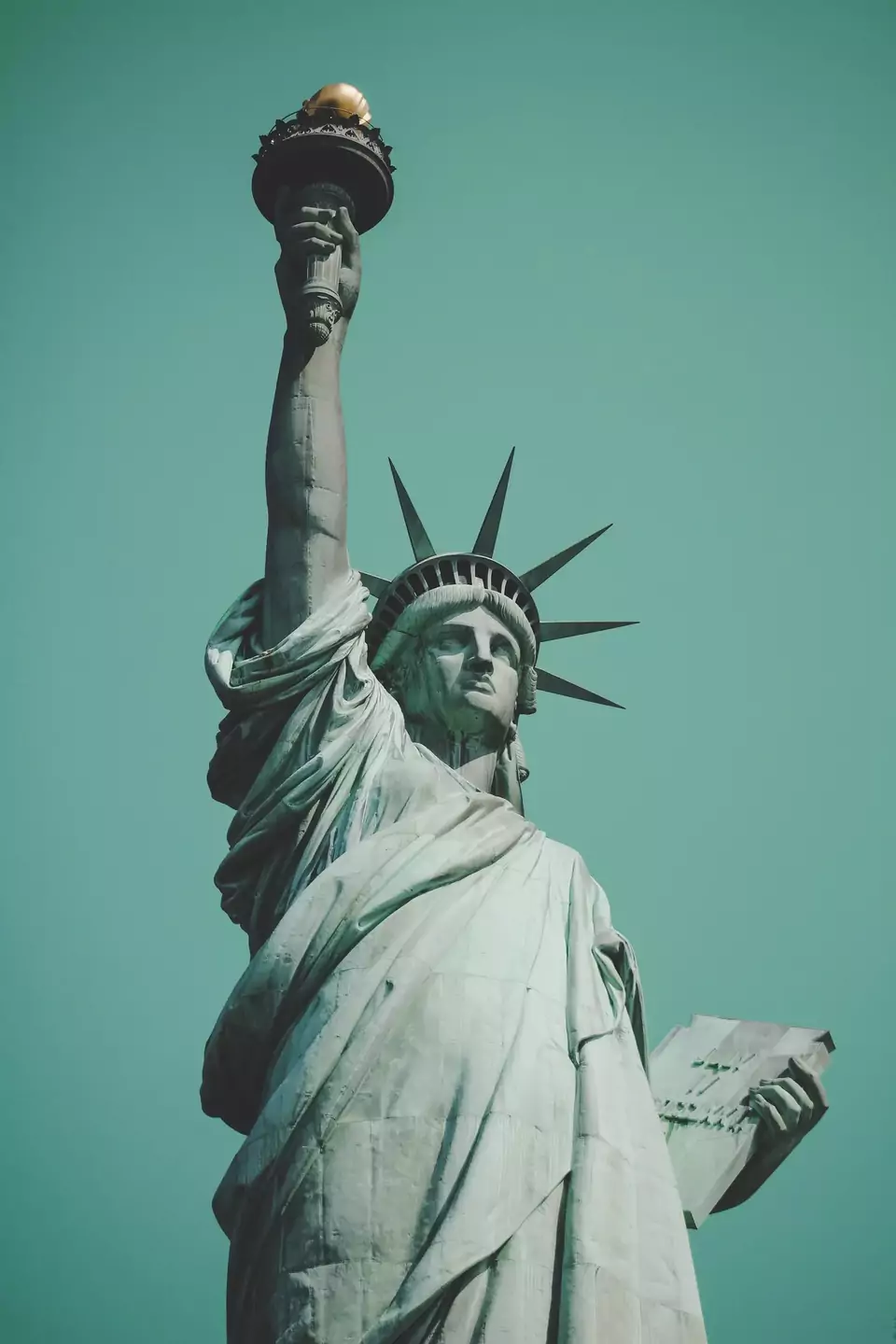
The Statue of Liberty, officially named "Liberty Enlightening the World," was gifted to the United States by France in 1886. It represents ideals of liberty and democracy and stands 151 feet tall, atop a pedestal that brings the total height to 305 feet. Crafted from copper sheets supported by an iron framework designed by Gustave Eiffel, the statue’s green patina has become a global icon welcoming immigrants and visitors alike to New York Harbor.
Visitors often marvel at not only the statue itself but also the panoramic vistas from its pedestal and crown, where 354 steps lead to observation windows showcasing spectacular views of the city and waterways. The statue’s symbolism is reinforced by elements such as the broken chains at its feet signifying freedom and the tablet with the Declaration of Independence date.
While the experience is unforgettable, it’s important to be aware of a few considerations: strict security screenings resembling airport checks can slow entrance, large bags and certain items are prohibited and visiting the crown requires advance planning due to limited space. The ferry can be crowded during peak seasons and weather in New York can vary widely, so visitors should dress accordingly.
Despite minor inconveniences frequently mentioned by visitors, the Statue of Liberty endures as a must-see historic icon where art, architecture and history intertwine in a uniquely inspiring setting that continues to draw millions annually.
Travelers typically reach the Statue of Liberty by ferry departing from Battery Park in Manhattan or Liberty State Park in New Jersey. The ferry ride itself is a scenic journey providing stunning views of Lower Manhattan, the statue and the harbor skyline. Advance ticket purchase is highly recommended to secure access, especially for visits to the pedestal or crown, which require special tickets and have limited availability. Upon arrival, visitors should be prepared for airport-style security screenings both before boarding the ferry and again before entering the statue premises.
Most visitors stay in Manhattan, where there is a wide range of accommodations from budget to luxury hotels. Staying near Battery Park offers the advantage of quick ferry access. The area has numerous hotels, many with views of the harbor and skyline, but demand is high especially during tourist season.
Log in to add this place to a travel list and get a summary of all recommended items for your whole trip.
We calculate the average costs when travelling to destinations and compare those with the living costs at your home. With this you can get an estimate of how expensive or cheap the destination is for you.
To customise this, you can set up which location and price level are used for the calculations in your account settings.
The exchange rate price factor shows how expensive or cheap a currency currently is compared to its historical average. It's a quick way to see if a country is currently more or less affordable due to exchange rate changes.
