









Was this page helpful?

| Power Grid: |
230 V, 50 Hz Plug: Type G
Type G:
 Read about power adapters |
|---|---|
| Currency: | Pound Sterling (GBP) |
| Cashless info: |
Rating 5/5
Cashless payments are widely accepted in the UK, especially in cities. Contactless payments and mobile payment options are increasingly popular, with smaller businesses also accepting cards.
Save with a travel credit card |
| eSIM providers: |
Best value: Saily Flexibility: Airalo Read our in-depth comparison |
| Tipping: | Tipping is customary in the UK, with 10-15% in restaurants. Taxi drivers generally expect a 10% tip or rounding up. Small tips for hotel staff are appreciated. |
|---|---|
| Public drinking: | Public drinking is allowed in many parts of the UK, especially in parks, festivals, and licensed premises. However, it's banned on public transport or in certain public spaces. |
| Public smoking: | Smoking is prohibited indoors in all public spaces, including bars and restaurants. There are designated outdoor smoking areas. |
| Christmas (December) |
Christmas is widely celebrated, expect crowded markets and higher accommodation prices. |
|---|---|
| Bank Holiday (August) |
Busy periods, especially in cities and along coastal areas. Many businesses close. |
| New Year’s Day (January) |
A major public holiday with celebrations and closures in some sectors. |
| Emergency contact: | Emergency Number: 999 or 112 (Police, Fire, Ambulance) |
|---|---|
| Taxi apps: | Uber, Bolt, Free Now, Ola |
| Other: | The UK is well-prepared for tourists, with excellent infrastructure. However, be aware of language barriers in remote areas. |
The best times to travel section shows how the months compare for a visit, so you can find the time of year that fits what you want to do.
Background colours of the months:
The colour shows the typical temperature: yellow (hot), green (mild) and blue (cold). How strong the colour is shows the travel season: full colour means high season, soft colour means shoulder season and soft-striped means off season.
Weather symbols:
Each month has one symbol showing what the weather is typically like, such as hot and sunny, freezing or a rainy or snowy season. Use them to quickly spot months that match the weather you want, or to avoid the ones that don't.
Crowdedness:
The people icon shows how busy the place usually is. The more people, the more crowded it gets.
Additional notes:
The grey info boxes point out special things worth knowing, like recurring weather issues or seasonal events.
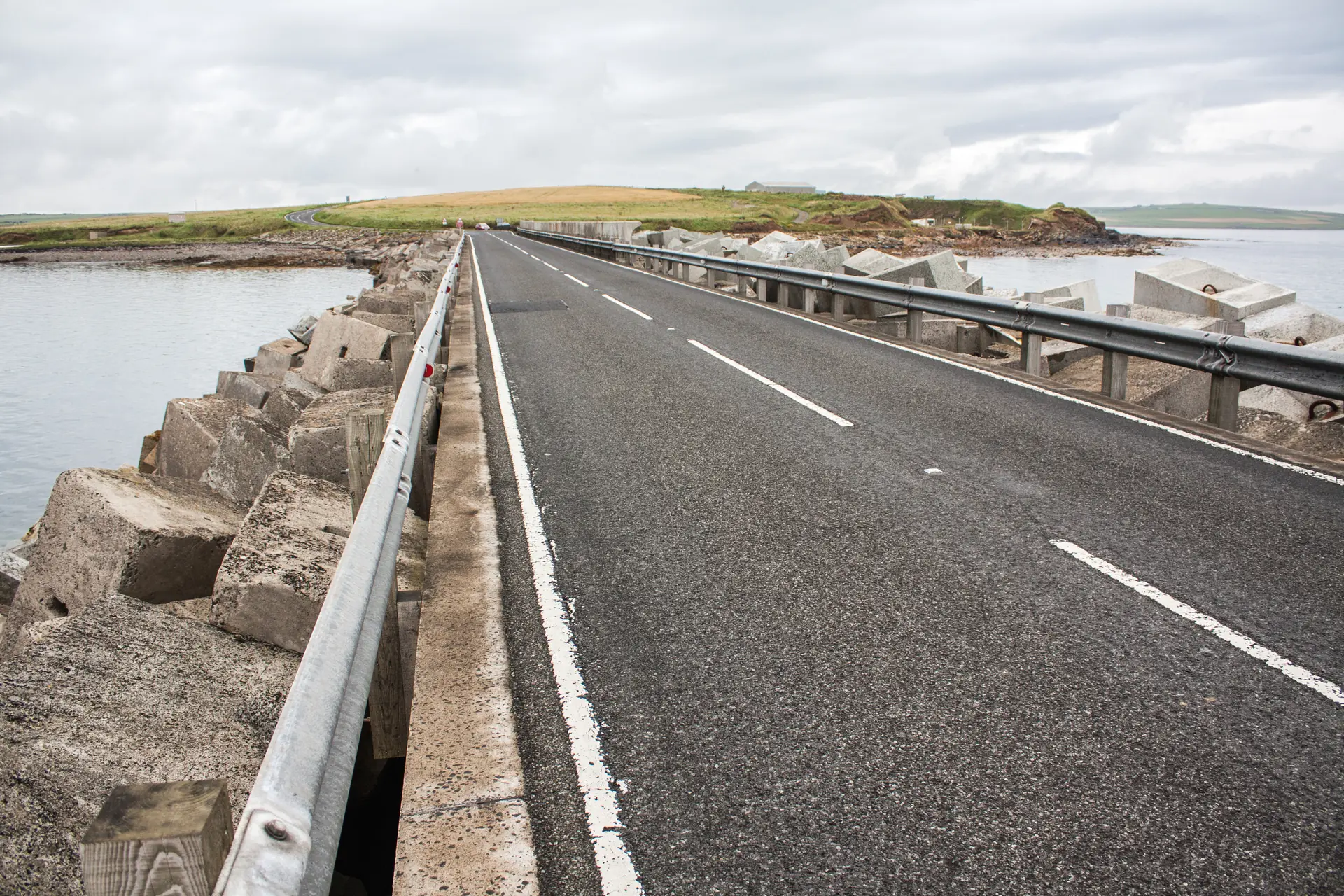
Scapa Flow is a large bay located in the Orkney Islands of Scotland. It was formed during the last ice age and now serves as a significant natural harbor. The area features calm waters surrounded by rolling hills and historic sites. Visitors often notice how the landscape feels both ancient and alive with stories from centuries past.
The bay’s history includes its role in naval activities. During World War I and II ships were anchored here for repairs and storage. Today remnants of these events remain visible in scattered wrecks and old facilities that attract those interested in maritime history. The surrounding waters hold more than just boats; seals often swim near the shore while seabirds circle above creating a lively scene.
Nature plays a central part in life around Scapa Flow. The climate stays mild compared to other parts of Scotland thanks to ocean currents. Grass covers much of the land and wildflowers bloom during summer months adding color to fields. Walking paths lead through villages where locals share knowledge about the area’s past and present making every visit feel personal.
Exploring Scapa Flow involves both calm moments and active pursuits. Kayaking lets travelers see small coves up close while cycling routes pass by quiet beaches and old ruins. The community values preservation so sustainable tourism is common. Whether seeking history adventure or peace the bay delivers experiences that feel genuine without needing extra embellishment.
Scapa Flow, located in the Orkney Islands of Scotland, is accessible primarily by sea or air. The nearest airport is Kirkwall Airport (KOI), approximately 40 miles southwest of Scapa Flow, offering domestic flights from major UK cities such as Edinburgh and Glasgow. For maritime access, ferries operate seasonally to connect with mainland Scotland via Stromness on the Orkney Mainland. During summer months, passenger vessels also provide service from Scrabster or Stromness harbors. Tidal conditions influence ferry schedules, so travelers should check local timetables in advance. No road networks exist within the islands themselves, making boat or air transport essential for reaching Scapa Flow.
Scapa Flow offers a mix of self‑contained cottages, holiday homes and small bed‑and‑breakfasts that cater to both families and solo travelers. The area’s accommodation stock is modest – roughly 30–40 units – but each is well maintained, often featuring traditional Scottish architecture with modern amenities. Many properties boast sea views or proximity to the historic naval wreck sites, making them popular for history enthusiasts. Seasonal demand spikes during summer and the annual Scapa Flow Festival, yet the local council promotes eco‑friendly lodging, encouraging energy‑efficient designs and renewable heating. For those seeking a quieter retreat, the remote islands provide rustic cabins that blend seamlessly into the rugged coastline, offering an authentic Scottish island experience.
Log in to add this place to a travel list and get a summary of all recommended items for your whole trip.
We calculate the average costs when travelling to destinations and compare those with the living costs at your home. With this you can get an estimate of how expensive or cheap the destination is for you.
To customise this, you can set up which location and price level are used for the calculations in your account settings.
The exchange rate price factor shows how expensive or cheap a currency currently is compared to its historical average. It's a quick way to see if a country is currently more or less affordable due to exchange rate changes.
