








Was this page helpful?

| Opening hours: |
|
||
|---|---|---|---|
| Public website: | www.nhm.ac.uk |
| Power Grid: |
230 V, 50 Hz Plug: Type G
Type G:
 Read about power adapters |
|---|---|
| Currency: | Pound Sterling (GBP) |
| Cashless info: |
Rating 5/5
Cashless payments are widely accepted in the UK, especially in cities. Contactless payments and mobile payment options are increasingly popular, with smaller businesses also accepting cards.
Save with a travel credit card |
| eSIM providers: |
Best value: Saily Flexibility: Airalo Read our in-depth comparison |
| Tipping: | Tipping is customary in the UK, with 10-15% in restaurants. Taxi drivers generally expect a 10% tip or rounding up. Small tips for hotel staff are appreciated. |
|---|---|
| Public drinking: | Public drinking is allowed in many parts of the UK, especially in parks, festivals, and licensed premises. However, it's banned on public transport or in certain public spaces. |
| Public smoking: | Smoking is prohibited indoors in all public spaces, including bars and restaurants. There are designated outdoor smoking areas. |
| Christmas (December) |
Christmas is widely celebrated, expect crowded markets and higher accommodation prices. |
|---|---|
| Bank Holiday (August) |
Busy periods, especially in cities and along coastal areas. Many businesses close. |
| New Year’s Day (January) |
A major public holiday with celebrations and closures in some sectors. |
| Emergency contact: | Emergency Number: 999 or 112 (Police, Fire, Ambulance) |
|---|---|
| Taxi apps: | Uber, Bolt, Free Now, Ola |
| Other: | The UK is well-prepared for tourists, with excellent infrastructure. However, be aware of language barriers in remote areas. |
The best times to travel section shows how the months compare for a visit, so you can find the time of year that fits what you want to do.
Background colours of the months:
The colour shows the typical temperature: yellow (hot), green (mild) and blue (cold). How strong the colour is shows the travel season: full colour means high season, soft colour means shoulder season and soft-striped means off season.
Weather symbols:
Each month has one symbol showing what the weather is typically like, such as hot and sunny, freezing or a rainy or snowy season. Use them to quickly spot months that match the weather you want, or to avoid the ones that don't.
Crowdedness:
The people icon shows how busy the place usually is. The more people, the more crowded it gets.
Additional notes:
The grey info boxes point out special things worth knowing, like recurring weather issues or seasonal events.
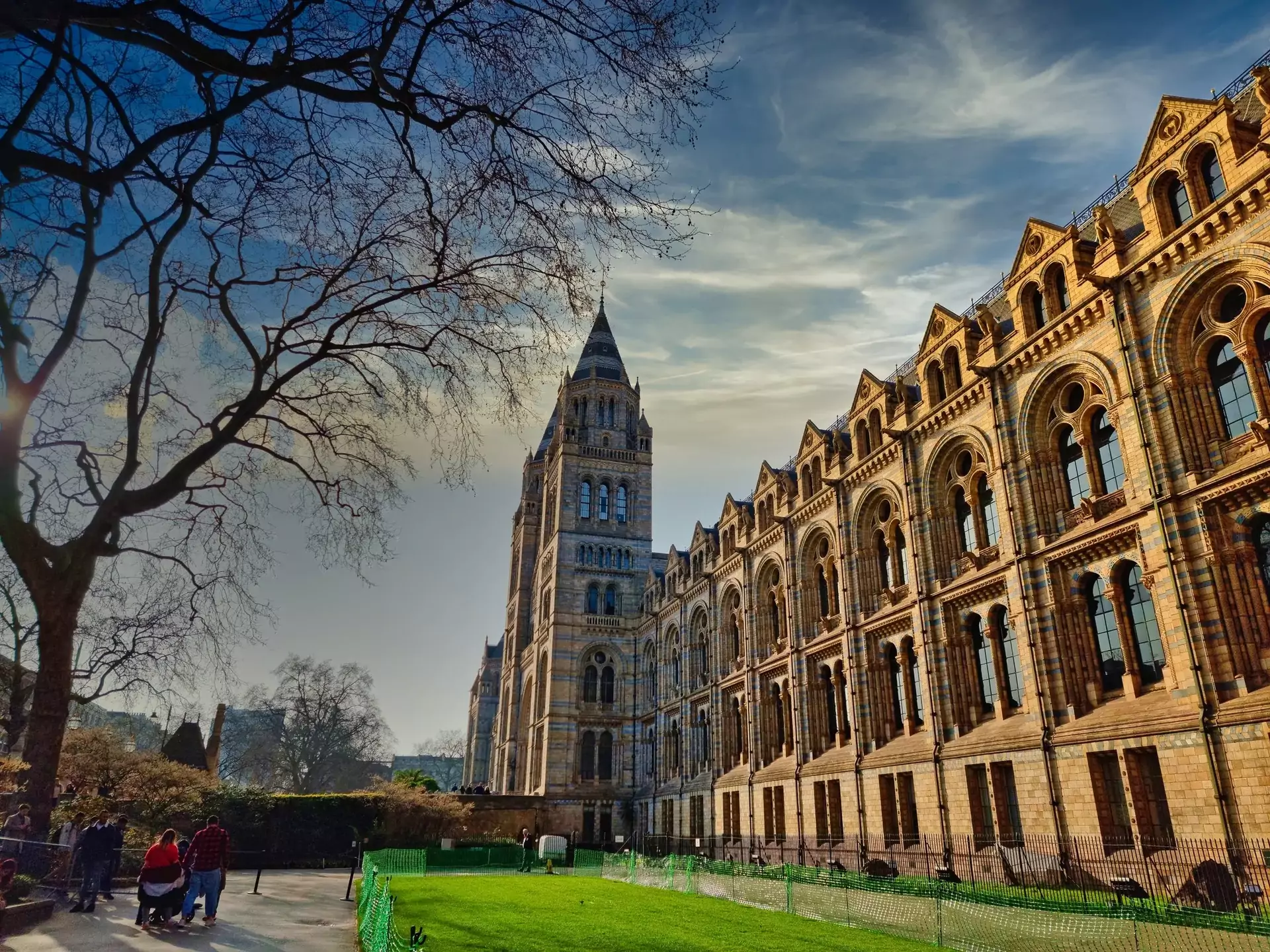
The Natural History Museum opened in 1881 and quickly became one of London’s most beloved institutions. The grand Romanesque architecture itself is a treat, with ornate terracotta decorations inspired by flora and fauna. Inside, the museum offers an astonishing array of exhibits, with its iconic blue whale skeleton 'Hope' hanging majestically in the central Hintze Hall.
The museum’s extensive collections cover botany, entomology, geology, paleontology and zoology. The Dinosaur Gallery remains a highlight, featuring life-sized skeletons and interactive displays that captivate visitors of all ages. The Darwin Centre offers a behind-the-scenes glimpse at research and specimen conservation.
While entry to the permanent exhibitions is free, some special exhibitions may require tickets. The museum can become very crowded, especially on weekends and during school holidays. Visitors are encouraged to plan ahead, wear comfortable shoes and allow ample time to explore the vast galleries.
The adjoining wildlife garden provides a serene escape, showcasing native plants and butterflies, perfect for a quiet break from the bustling city. The museum also offers engaging family programs and talks, making it an enriching experience for visitors of all interests.
Located in South Kensington, London, the Natural History Museum is easily accessible via the London Underground with South Kensington station nearby. International visitors usually arrive via Heathrow or Gatwick Airports, connecting by express trains or public transport to the city center. The museum is well signposted and accessible by bus and taxi as well.
Central London offers a wide range of accommodations near the Natural History Museum, from luxury hotels in Knightsbridge to budget options in South Kensington and Chelsea, providing convenient access to this and other cultural attractions.
Log in to add this place to a travel list and get a summary of all recommended items for your whole trip.
We calculate the average costs when travelling to destinations and compare those with the living costs at your home. With this you can get an estimate of how expensive or cheap the destination is for you.
To customise this, you can set up which location and price level are used for the calculations in your account settings.
The exchange rate price factor shows how expensive or cheap a currency currently is compared to its historical average. It's a quick way to see if a country is currently more or less affordable due to exchange rate changes.
