








Was this page helpful?

| Power Grid: |
230 V, 50 Hz Plug: Type G
Type G:
 Read about power adapters |
|---|---|
| Currency: | Pound Sterling (GBP) |
| Cashless info: |
Rating 5/5
Cashless payments are widely accepted in the UK, especially in cities. Contactless payments and mobile payment options are increasingly popular, with smaller businesses also accepting cards.
Save with a travel credit card |
| eSIM providers: |
Best value: Saily Flexibility: Airalo Read our in-depth comparison |
| Tipping: | Tipping is customary in the UK, with 10-15% in restaurants. Taxi drivers generally expect a 10% tip or rounding up. Small tips for hotel staff are appreciated. |
|---|---|
| Public drinking: | Public drinking is allowed in many parts of the UK, especially in parks, festivals, and licensed premises. However, it's banned on public transport or in certain public spaces. |
| Public smoking: | Smoking is prohibited indoors in all public spaces, including bars and restaurants. There are designated outdoor smoking areas. |
| Christmas (December) |
Christmas is widely celebrated, expect crowded markets and higher accommodation prices. |
|---|---|
| Bank Holiday (August) |
Busy periods, especially in cities and along coastal areas. Many businesses close. |
| New Year’s Day (January) |
A major public holiday with celebrations and closures in some sectors. |
| Emergency contact: | Emergency Number: 999 or 112 (Police, Fire, Ambulance) |
|---|---|
| Taxi apps: | Uber, Bolt, Free Now, Ola |
| Other: | The UK is well-prepared for tourists, with excellent infrastructure. However, be aware of language barriers in remote areas. |
The best times to travel section shows how the months compare for a visit, so you can find the time of year that fits what you want to do.
Background colours of the months:
The colour shows the typical temperature: yellow (hot), green (mild) and blue (cold). How strong the colour is shows the travel season: full colour means high season, soft colour means shoulder season and soft-striped means off season.
Weather symbols:
Each month has one symbol showing what the weather is typically like, such as hot and sunny, freezing or a rainy or snowy season. Use them to quickly spot months that match the weather you want, or to avoid the ones that don't.
Crowdedness:
The people icon shows how busy the place usually is. The more people, the more crowded it gets.
Additional notes:
The grey info boxes point out special things worth knowing, like recurring weather issues or seasonal events.
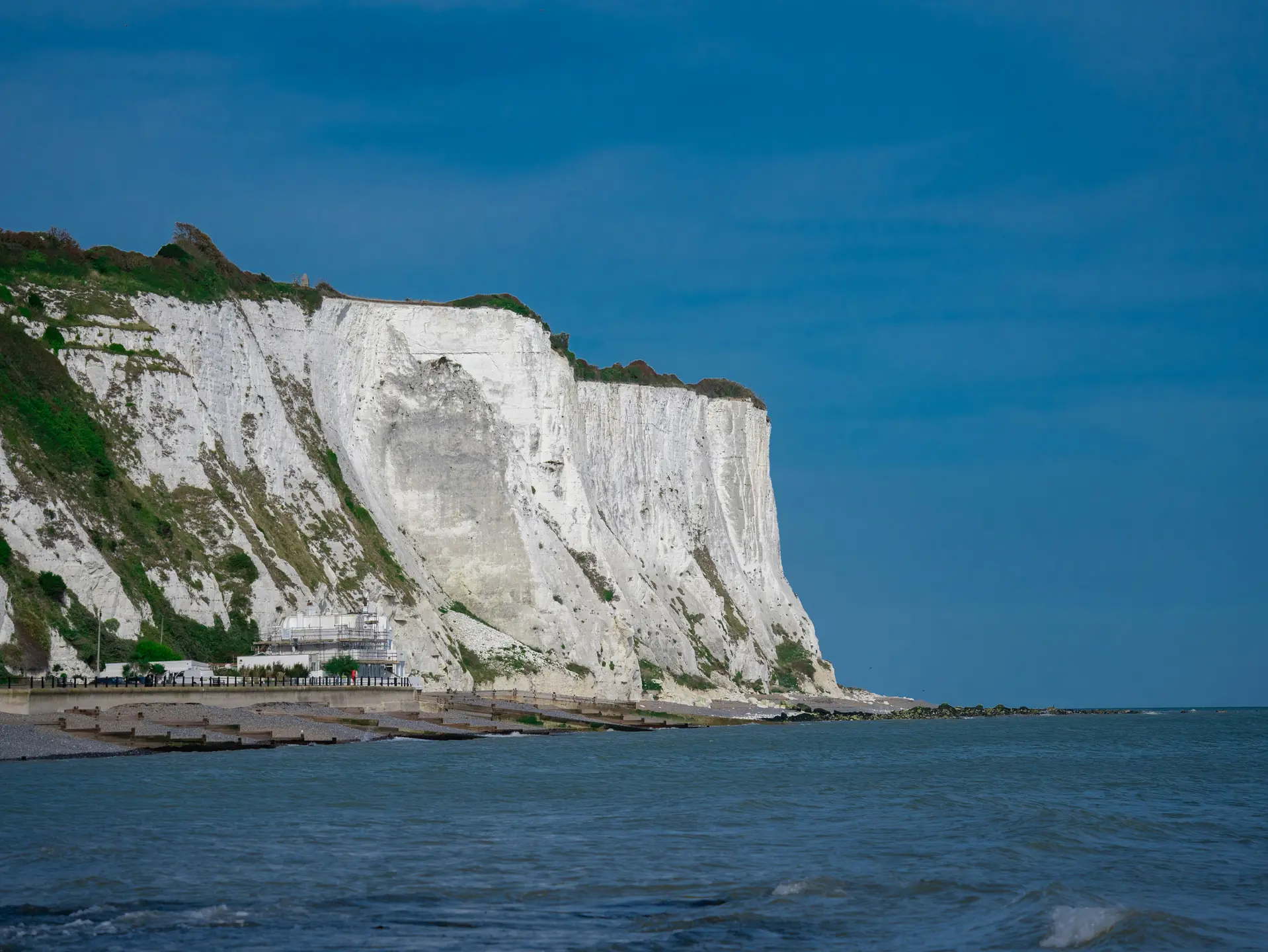
The White Cliffs of Dover rise sharply from the English Channel creating a striking natural landmark. These chalk formations stretch for miles along Kent’s southern coast offering panoramic views that extend far beyond the horizon. Visitors encounter a landscape shaped by centuries of wind and tide revealing layers of history embedded in the rock.
The cliffs stand as a testament to geological processes shaping Earth over millions of years. White chalk surfaces contrast with deep blue waters making the site visually powerful yet scientifically fascinating. Paths wind through grassy slopes allowing hikers to explore without disturbing fragile ecosystems found along the edges. Sunlight reflects off the stone creating bright glows during early mornings and late afternoons.
Human activity has left marks here too. Ancient pathways once used by traders and travelers still echo past footsteps while wartime bunkers remind people of recent conflicts. Local communities value the cliffs as cultural symbols appearing in art literature and daily life. Guided walks explain how erosion continues to reshape the terrain requiring careful monitoring to protect both visitors and habitats.
Access points near Dover town provide convenient entry for those wanting short strolls or longer treks. Weather conditions vary frequently so layers are recommended even on clear days. Photography enthusiasts find endless opportunities capturing dramatic angles of waves crashing against stone or seabirds circling overhead. The area remains a place where natural beauty meets practical exploration encouraging curiosity without compromising safety.
The White Cliffs of Dover are accessible via several transportation methods. The nearest major town is Dover, served by Dover Priory railway station, with regular trains from London St Pancras International (approx. 2 hours). The South Eastern Main Line connects directly to the coast. For road access, the M20 motorway terminates near Dover; the cliffs are a short drive west via A26 and A2 roads. Ferry services operate from Calais or Dunkirk in France, landing at Dover Harbour (approx. 1 hour crossing). Buses link Dover town center to the cliffs, with frequent local routes available. Walking trails along the coastline provide direct access to viewing points.
The area around the White Cliffs of Dover offers a mix of cozy bed‑and‑breakfasts, family cottages and boutique inns that cater to both day‑trippers and longer stays. Many accommodations emphasize local charm, featuring timber‑frame architecture, sea‑view rooms and garden spaces overlooking the chalk cliffs. Prices vary from budget-friendly self‑catering units at £70 – 90 (£70 – 90) per night to mid‑range lodges offering breakfast and free parking around £120 – 150 (£120 – 150). The region is renowned for its “cliffside” inns that provide panoramic views of the English Channel, often with historic interiors and artisanal food options. For those seeking a quieter retreat, there are several country cottages in nearby villages such as Dovercourt and Deal, offering tranquil settings while still within easy reach of the cliffs.
Log in to add this place to a travel list and get a summary of all recommended items for your whole trip.
We calculate the average costs when travelling to destinations and compare those with the living costs at your home. With this you can get an estimate of how expensive or cheap the destination is for you.
To customise this, you can set up which location and price level are used for the calculations in your account settings.
The exchange rate price factor shows how expensive or cheap a currency currently is compared to its historical average. It's a quick way to see if a country is currently more or less affordable due to exchange rate changes.
