






Was this page helpful?

| Opening hours: |
|
||
|---|---|---|---|
| Public website: | www.park-skocjanske-jame.si |
| Power Grid: |
230 V, 50 Hz Plug: Type C , Type F
Type C:
  Read about power adapters |
|---|---|
| Currency: |
Euro (EUR) £1 ≈ €1.19 |
| Cashless info: |
Rating 5/5
Cashless payments are widely accepted, even in smaller towns and businesses.
Save with a travel credit card |
| eSIM providers: |
Best value: Saily Flexibility: Airalo Read our in-depth comparison |
| Tipping: | Tipping is appreciated but not mandatory. A 5-10% tip in restaurants is common. |
|---|---|
| Public drinking: | Public drinking is restricted but tolerated during festivals. |
| Public smoking: | Smoking is prohibited in public indoor spaces and near entrances. |
| Preseren Day (February) |
Cultural events and closures. |
|---|---|
| Statehood Day (June) |
Parades and celebrations. |
| Christmas (December) |
Markets and closures. |
| Emergency contact: | Emergency Number: 112 |
|---|---|
| Taxi apps: | Bolt, Taxi Metro, Taxi Ljubljana |
| Other: | Slovenia is known for its stunning Alps, lakes, and charming cities like Ljubljana and Bled. |
The best times to travel section shows how the months compare for a visit, so you can find the time of year that fits what you want to do.
Background colours of the months:
The colour shows the typical temperature: yellow (hot), green (mild) and blue (cold). How strong the colour is shows the travel season: full colour means high season, soft colour means shoulder season and soft-striped means off season.
Weather symbols:
Each month has one symbol showing what the weather is typically like, such as hot and sunny, freezing or a rainy or snowy season. Use them to quickly spot months that match the weather you want, or to avoid the ones that don't.
Crowdedness:
The people icon shows how busy the place usually is. The more people, the more crowded it gets.
Additional notes:
The grey info boxes point out special things worth knowing, like recurring weather issues or seasonal events.
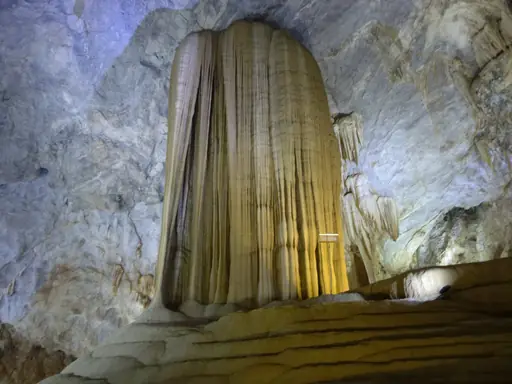
Slovenia’s Skocjan Caves reveal a hidden world beneath the earth’s surface. The caves stretch over 24 kilometers and include vast chambers filled with echoes that travel for hundreds of meters. Water has carved through limestone over millions of years creating narrow passages and open spaces where stalactites hang like frozen drips from ceilings.
The main attraction is the Great Hall, a massive chamber where sound behaves strangely due to its size and shape. Visitors walk along wooden paths that follow ancient routes once used by locals for centuries. Guides explain how water still flows through parts of the cave system keeping it alive and changing slowly over time.
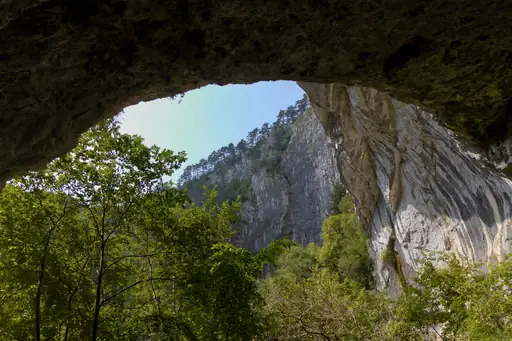
Above ground the landscape is gentle with rolling hills covered in grass and scattered trees. The area around Skocjan Caves supports diverse plant life including ferns mosses and wildflowers that thrive in cool damp conditions. Local farms grow vegetables and fruits using traditional methods passed down through generations.
Visiting this place feels like stepping into a quiet museum where nature’s artistry takes center stage. The caves are part of a UNESCO World Heritage site recognizing their geological importance. Travelers interested in science history or simple wonder will find the experience both educational and calming without overwhelming crowds or flashy displays.
The Skocjan Caves, a UNESCO World Heritage Site in Slovenia, are accessible via several transportation routes. The nearest major airport is Ljubljana Jože Pučnik Airport (about 70 km away), with regular bus services and taxis connecting it to the caves. Public transport includes regional buses from Ljubljana or nearby towns like Postojna, which also serve as a gateway to other Slovenian attractions. For visitors driving, the caves are reachable via the A2 motorway, linking them to the Italian border and other parts of Slovenia. Seasonal shuttle services may operate during peak tourist months. Accessibility is further supported by well-marked trails within the cave complex, suitable for various mobility levels.
Near the Skocjan Caves, accommodations range from rustic farm stays to modern boutique inns, catering to both budget travelers and those seeking comfort. Guesthouses in the surrounding villages offer charming rooms with local décor, typically priced between €50 – 80 (£42.12 – 67.39) per night, while nearby hotels provide larger suites and amenities such as free Wi‑Fi, breakfast and spa services for €90 – 150 (£75.82 – 126.36). The area is renowned for its agritourism lodges, where guests can enjoy farm-to-table meals and traditional Slovenian hospitality. For a more secluded experience, eco-friendly cabins or glamping tents are available, often priced at €70 – 120 (£58.97 – 101.09) per night, blending nature immersion with basic comforts.
Log in to add this place to a travel list and get a summary of all recommended items for your whole trip.
We calculate the average costs when travelling to destinations and compare those with the living costs at your home. With this you can get an estimate of how expensive or cheap the destination is for you.
To customise this, you can set up which location and price level are used for the calculations in your account settings.
The exchange rate price factor shows how expensive or cheap a currency currently is compared to its historical average. It's a quick way to see if a country is currently more or less affordable due to exchange rate changes.
