









Was this page helpful?

| Public website: | www.oslo.kommune.no |
|---|
| Power Grid: |
230 V, 50 Hz Plug: Type C , Type F
Type C:
  Read about power adapters |
|---|---|
| Currency: |
Norwegian Krone (NOK) £1 ≈ NOK 12.33 |
| Cashless info: |
Rating 5/5
Norway is a highly cashless society. Credit and debit cards are widely accepted, and many places even prefer card payments over cash.
Save with a travel credit card |
| eSIM providers: |
Best value: Saily Flexibility: Airalo Read our in-depth comparison |
| Tipping: | Tipping is not obligatory in Norway, though it is appreciated. In restaurants, rounding up the bill or leaving 5-10% is common. Taxi drivers expect small tips, and hotel staff appreciate small gratuities. |
|---|---|
| Public drinking: | Public drinking is allowed in Norway in some areas, such as designated outdoor events. However, it is prohibited in public places like parks and streets in many cities. |
| Public smoking: | Smoking is prohibited indoors in all public places, including restaurants and public transport. Designated outdoor smoking areas are available in most public spaces. |
| Norwegian Constitution Day (May) |
A national holiday with celebrations, especially in Oslo, expect crowded areas and festivities. |
|---|---|
| Christmas (December) |
Christmas celebrations are widespread, with Christmas markets and festive events, but expect crowded cities and higher accommodation prices. |
| Midsummer (June) |
Midsummer celebrations take place with outdoor events, festivals, and celebrations. |
| Emergency contact: | Emergency Number: 112 (Police, Fire, Ambulance) |
|---|---|
| Taxi apps: | Uber, Bolt |
| Other: | Norway is a beautiful country with extensive natural landscapes. Be prepared for variable weather and pack accordingly, especially if you plan to explore the outdoors. |
The best times to travel section shows how the months compare for a visit, so you can find the time of year that fits what you want to do.
Background colours of the months:
The colour shows the typical temperature: yellow (hot), green (mild) and blue (cold). How strong the colour is shows the travel season: full colour means high season, soft colour means shoulder season and soft-striped means off season.
Weather symbols:
Each month has one symbol showing what the weather is typically like, such as hot and sunny, freezing or a rainy or snowy season. Use them to quickly spot months that match the weather you want, or to avoid the ones that don't.
Crowdedness:
The people icon shows how busy the place usually is. The more people, the more crowded it gets.
Additional notes:
The grey info boxes point out special things worth knowing, like recurring weather issues or seasonal events.
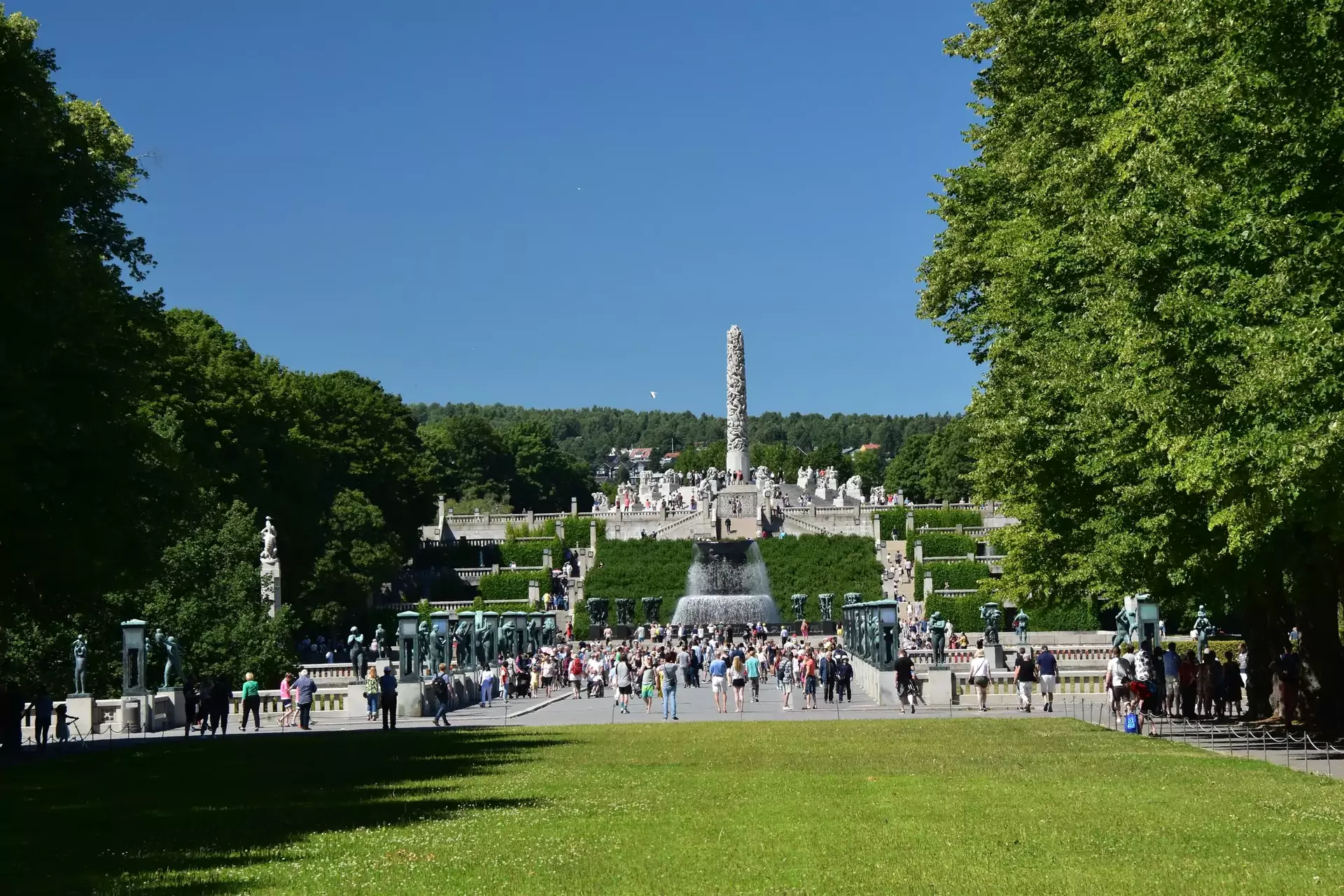
Frogner Park is not just Oslo’s largest park, covering 45 hectares, but also home to the world’s largest sculpture park created by a single artist, Gustav Vigeland. The centerpiece is the Vigeland installation, featuring more than 200 bronze and granite sculptures portraying the human experience from birth to death with striking detail and emotion.
The park’s layout comprises beautifully manicured gardens, winding walkways, ponds and recreational spaces, such as Frogner Stadium and Frognerbadet outdoor pool. Among the most iconic sculptures are The Monolith, a towering column of intertwined human figures symbolizing life’s cycle and the Bridge, adorned with dozens of statues illustrating a diversity of human emotions.
Originally part of the Frogner Manor estate, the park was opened to the public in the early 20th century and has since become a beloved green lung for both locals and tourists. The manor house now houses the Oslo City Museum, adding a cultural touch to the area. Visitors can often find families, joggers and photographers enjoying the expansive grounds in all seasons.
While the park is a serene retreat in the midst of the city, it can get busy during warm, sunny days and peak tourist seasons. Visitors should be prepared for potential crowds around the sculpture areas and take care when walking on some uneven paths. Weather in Oslo can be variable, so packing appropriate outerwear is recommended.
Frogner Park is located in the Frogner borough of Oslo, well connected by city buses and trams. From Oslo Gardermoen Airport, visitors can take the airport express train (Flytoget) or regional trains into Oslo Central Station, then transfer to public transport toward Frogner Park. The park is open all year and accessible free of charge, making it an easy and welcoming destination for visitors.
Oslo offers many accommodation options near Frogner Park, from charming boutique hotels in the Frogner district to more central urban hotels. Staying nearby allows easy access to the park and other downtown attractions.
Log in to add this place to a travel list and get a summary of all recommended items for your whole trip.
We calculate the average costs when travelling to destinations and compare those with the living costs at your home. With this you can get an estimate of how expensive or cheap the destination is for you.
To customise this, you can set up which location and price level are used for the calculations in your account settings.
The exchange rate price factor shows how expensive or cheap a currency currently is compared to its historical average. It's a quick way to see if a country is currently more or less affordable due to exchange rate changes.
