







Was this page helpful?

| Opening information: |
|
|
|---|---|---|
| Public website: | keukenhof.nl |
| Power Grid: |
230 V, 50 Hz Plug: Type C , Type F
Type C:
  Read about power adapters |
|---|---|
| Currency: |
Euro (EUR) £1 ≈ €1.19 |
| Cashless info: |
Rating 5/5
The Netherlands is highly cashless, with almost all businesses accepting card payments. Contactless payments and mobile apps are widely used, and cash is not always necessary.
Save with a travel credit card |
| eSIM providers: |
Best value: Saily Flexibility: Airalo Read our in-depth comparison |
| Tipping: | Tipping is appreciated but not compulsory in the Netherlands. In restaurants, a tip of 5-10% is standard. Taxi drivers usually expect a small tip or rounding up, and hotel staff appreciate small tips. |
|---|---|
| Public drinking: | Public drinking is allowed in most places in the Netherlands, including parks and on the streets. However, there are some restrictions in specific areas or during festivals. |
| Public smoking: | Smoking is banned indoors in public spaces, including bars, restaurants, and public transport. Smoking areas are designated in many public places. |
| King's Day (April) |
A national holiday with celebrations, parades, and festivals. Expect large crowds, especially in cities like Amsterdam. |
|---|---|
| Christmas (December) |
Festivities are widespread, but cities can be crowded, and prices for accommodation may rise. |
| Sinterklaas (December) |
Celebrations for the Dutch Christmas tradition, expect family-oriented events and high demand for accommodation. |
| Emergency contact: | Emergency Number: 112 (Police, Fire, Ambulance) |
|---|---|
| Taxi apps: | Uber, Bolt, Ola |
| Other: | The Netherlands has a well-developed infrastructure and public transport system. Be prepared for high bike usage in cities like Amsterdam, and expect occasional rain throughout the year. |
The best times to travel section shows how the months compare for a visit, so you can find the time of year that fits what you want to do.
Background colours of the months:
The colour shows the typical temperature: yellow (hot), green (mild) and blue (cold). How strong the colour is shows the travel season: full colour means high season, soft colour means shoulder season and soft-striped means off season.
Weather symbols:
Each month has one symbol showing what the weather is typically like, such as hot and sunny, freezing or a rainy or snowy season. Use them to quickly spot months that match the weather you want, or to avoid the ones that don't.
Crowdedness:
The people icon shows how busy the place usually is. The more people, the more crowded it gets.
Additional notes:
The grey info boxes point out special things worth knowing, like recurring weather issues or seasonal events.
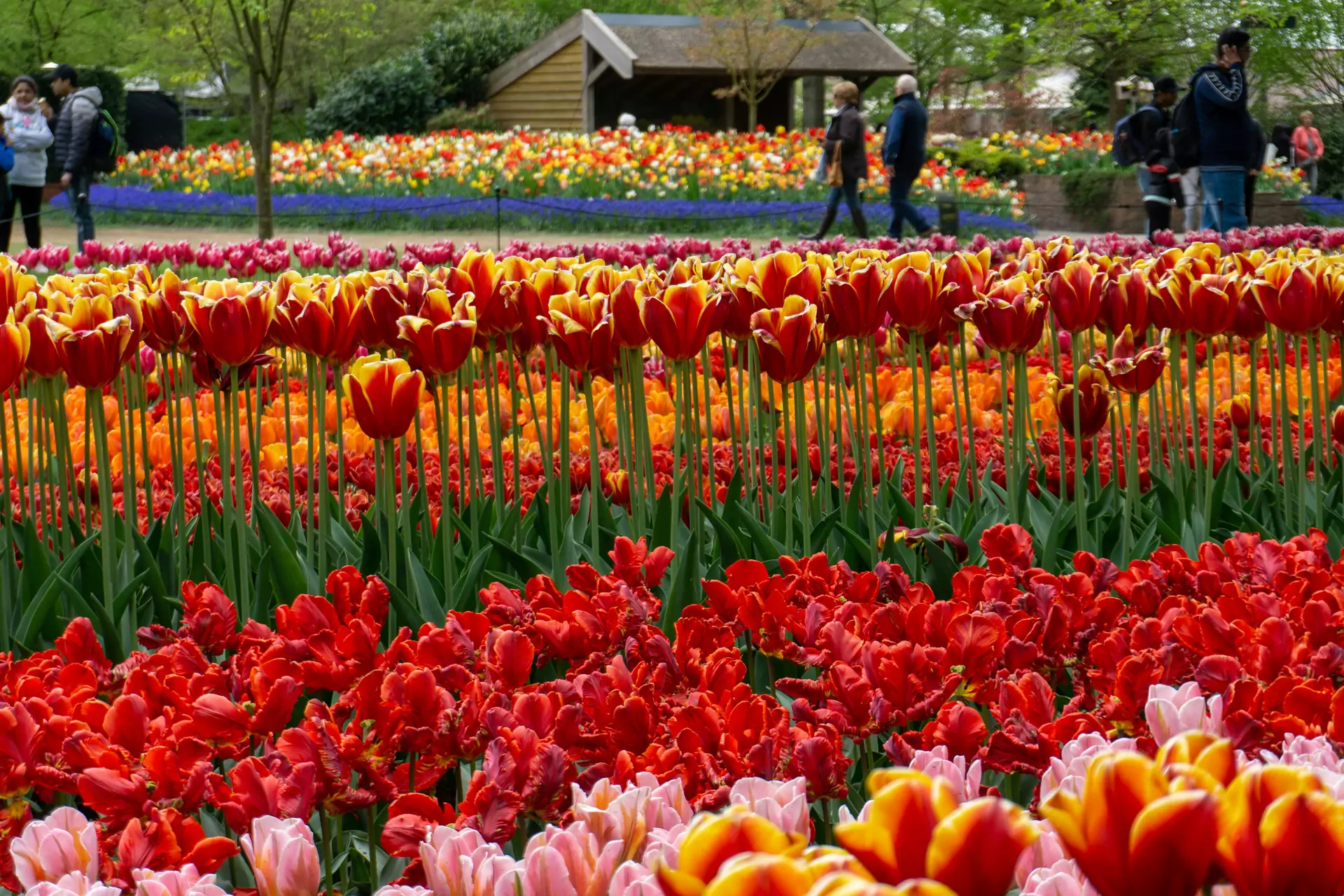
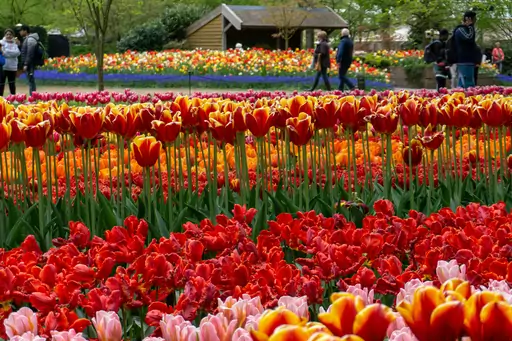
Keukenhof stands as one of the world’s largest flower gardens. Spanning over 32 hectares it showcases millions of tulips daffodils and other spring blooms. The garden opens each year in March to May when temperatures rise and colors burst across the landscape. Visitors walk paths lined with carefully arranged beds creating a living canvas that changes daily.
The site began as a private kitchen garden for a 15th-century manor. Over centuries it evolved into a public attraction drawing artists photographers and families from around the globe. Today the park includes greenhouses where rare bulbs grow under controlled conditions. Guides explain how tulip varieties were traded historically and how modern cultivation uses sustainable methods to protect soil health.
Beyond open fields there are themed areas dedicated to specific flower types. One section focuses on hyacinths another highlights roses grown for their scent. Interactive displays let guests learn about pollination and the role of bees in maintaining biodiversity. Seasonal events such as guided tours workshops and photography sessions encourage deeper engagement with plant life cycles.
Travelers seeking a calm escape find peace among fragrant blossoms. Public transport connects Amsterdam to Keukenhof making it easy to visit without a car. The garden remains free of commercial ads ensuring focus stays on nature’s beauty. It serves as a reminder of how careful planning and respect for the environment can create spaces that inspire wonder year after year.
Keukenhof, located in Lisse, Netherlands, is accessible primarily by car or public transportation. The nearest train station is **Lisse**, approximately 3 kilometers from the garden. From Amsterdam Centraal Station, direct trains to Lisse take about 25–30 minutes via the NS (Dutch Railways). Buses and regional trams also connect Lisse to nearby cities like Leiden and Haarlem. For cyclists, dedicated bike paths link Keukenhof to surrounding areas, including Amsterdam via the **Amsterdamse Bos** route. The garden is open year-round for cycling or walking, with ample parking available near the entrance. Visitors must purchase tickets in advance during peak seasons (March–May).
The Keukenhof area offers a mix of budget-friendly hostels and mid‑range guesthouses, with a handful of boutique bed‑and‑breakfasts that emphasize local design. Many accommodations are within a 15‑minute drive, featuring easy shuttle services to the park’s entrance. The region is known for its charming Dutch farm stays, where guests can enjoy traditional architecture and organic produce. For those seeking higher-end options, several luxury hotels in nearby Lisse provide spa facilities and panoramic garden views. Seasonal packages often include free parking or discounted tickets, making it convenient for families and couples alike to explore the floral spectacle without compromising comfort.


Log in to add this place to a travel list and get a summary of all recommended items for your whole trip.
We calculate the average costs when travelling to destinations and compare those with the living costs at your home. With this you can get an estimate of how expensive or cheap the destination is for you.
To customise this, you can set up which location and price level are used for the calculations in your account settings.
The exchange rate price factor shows how expensive or cheap a currency currently is compared to its historical average. It's a quick way to see if a country is currently more or less affordable due to exchange rate changes.
