





Was this page helpful?

| Power Grid: |
230 V, 50 Hz Plug: Type F
Type F:
 Read about power adapters |
|---|---|
| Currency: |
Icelandic Króna (ISK) £1 ≈ ISK 163 |
| Cashless info: |
Rating 5/5
Cashless payments are highly common in Iceland, especially in cities. Most businesses accept credit and debit cards, including smaller establishments. Mobile payment options like Apple Pay and Google Pay are popular.
Save with a travel credit card |
| eSIM providers: |
Best value: Saily Flexibility: Airalo Read our in-depth comparison |
| Tipping: | Tipping is not common in Iceland and not expected in restaurants. A service charge is usually included in the bill. Tipping taxi drivers or hotel staff is appreciated but not necessary. |
|---|---|
| Public drinking: | Public drinking is allowed, especially in designated areas during festivals or outdoor events. Alcohol is also available at licensed venues. |
| Public smoking: | Smoking is prohibited in indoor public spaces and on public transport. Designated smoking areas are available outside of many restaurants and public buildings. |
| Icelandic National Day (June) |
Expect parades and celebrations throughout the country. Hotels and tourist spots can get busy. |
|---|---|
| Christmas (December) |
Christmas is widely celebrated, and it’s a great time to visit for festive markets, but accommodation can be more expensive. |
| Þorrablót Festival (January) |
A festival celebrating Icelandic cuisine, it’s a popular time to visit, though some businesses may have reduced hours. |
| Emergency contact: | Emergency Number: 112 (Police, Fire, Ambulance) |
|---|---|
| Taxi apps: | Hreyfill, Reykjavik Taxi |
| Other: | Iceland's weather can be unpredictable, so it’s important to prepare for sudden changes in climate. Always check weather forecasts before venturing into nature. |
The best times to travel section shows how the months compare for a visit, so you can find the time of year that fits what you want to do.
Background colours of the months:
The colour shows the typical temperature: yellow (hot), green (mild) and blue (cold). How strong the colour is shows the travel season: full colour means high season, soft colour means shoulder season and soft-striped means off season.
Weather symbols:
Each month has one symbol showing what the weather is typically like, such as hot and sunny, freezing or a rainy or snowy season. Use them to quickly spot months that match the weather you want, or to avoid the ones that don't.
Crowdedness:
The people icon shows how busy the place usually is. The more people, the more crowded it gets.
Additional notes:
The grey info boxes point out special things worth knowing, like recurring weather issues or seasonal events.
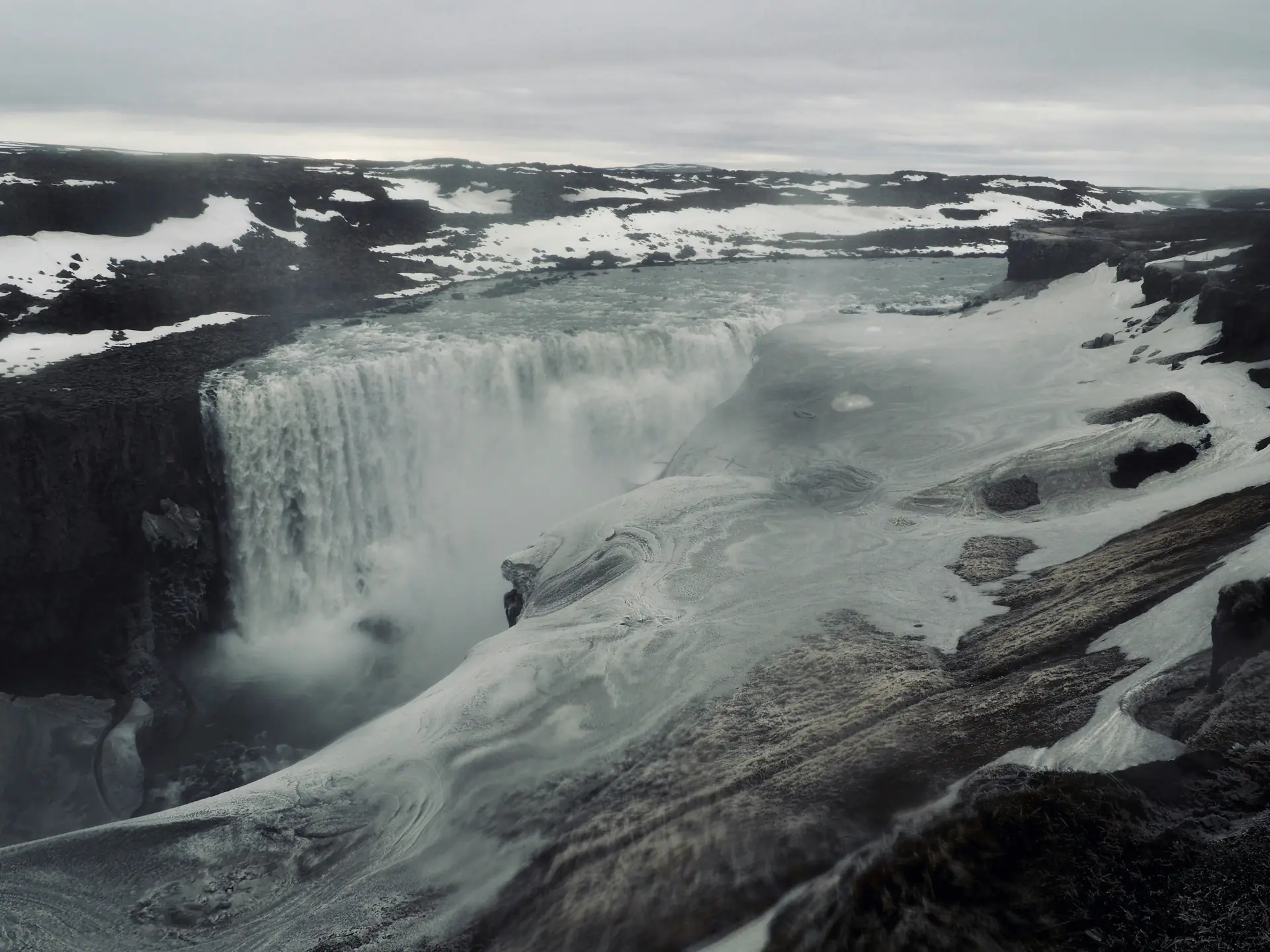
Dettifoss is a powerful waterfall located in Vatnajökull National Park in northeastern Iceland. It drops from the Jökulsárgljúfur Canyon and releases an impressive amount of water every second. The flow rate averages around 200 cubic meters per second during peak seasons making it one of the most forceful falls in Europe. Visitors often notice how the mist creates rainbows on sunny days and how the surrounding rocks are shaped by constant erosion.
The area around Dettifoss features a rugged landscape with basalt columns and lava fields that tell stories of volcanic activity over thousands of years. The ground is uneven in places so sturdy shoes are important for safety. A short trail leads to viewing platforms where you can observe the water’s force without getting too close to slippery rocks. In winter snow often coats the cliffs adding a quiet beauty when viewed from a distance.
Accessing Dettifoss requires traveling through remote regions of Iceland. Roads are mostly gravel and some sections may need a 4x4 vehicle during wet conditions. Public transport is limited so renting a car provides flexibility. The journey itself reveals glaciers rivers and small villages that showcase everyday life in the north. Guides often share facts about local geology climate patterns and wildlife to help visitors understand the environment.
Photographers appreciate early morning light when clouds gather over the falls creating dramatic scenes. The sound of rushing water can be heard from far away making it easy to locate even without seeing the falls directly. Nearby attractions include Ásbyrgi Canyon and the Jökulsárlón glacier lagoon which allow longer trips across the region. Travelers who plan ahead find that combining these sites offers a complete picture of Iceland’s natural wonders.
Dettifoss, located in Vatnajökull National Park, southeastern Iceland, is accessible via Route 216 from the town of Höfn. The drive takes approximately 45 minutes and offers scenic views of lava fields and glacial rivers. Public transportation options include guided tours departing from Reykjavík or Akureyri, which provide round-trip access to the waterfall. During winter months, road conditions may require 4x4 vehicles due to snow and ice. The nearest major airport is Egilsstaðir (EGS), with car rentals available for onward travel. Footpaths near the falls allow close-up views, though visitors should exercise caution due to slippery terrain.
Near Dettifoss, lodging ranges from rustic farm stays to modern eco‑lodges, catering to both budget travelers and those seeking comfort. Guesthouses in the surrounding villages offer cozy rooms with local cuisine, typically priced between €50 – 90 (£41.98 – 75.57) per night. For a more upscale experience, boutique hotels in nearby towns feature panoramic views of the river valley, with rates around €120 – 180 (£100.76 – 151.14). The area is renowned for its “farm‑stay” accommodations that blend traditional Icelandic architecture with sustainable practices, allowing guests to immerse themselves in rural life while enjoying modern amenities. Campsites and cabins provide affordable options, especially during the shoulder seasons when prices drop to under €30 (£25.19) per night.
Log in to add this place to a travel list and get a summary of all recommended items for your whole trip.
We calculate the average costs when travelling to destinations and compare those with the living costs at your home. With this you can get an estimate of how expensive or cheap the destination is for you.
To customise this, you can set up which location and price level are used for the calculations in your account settings.
The exchange rate price factor shows how expensive or cheap a currency currently is compared to its historical average. It's a quick way to see if a country is currently more or less affordable due to exchange rate changes.
