We use cookies and external services: MapTiler for interactive maps and Google Maps to show route duration/distance. Both may process personal data such as your IP address, including transfers outside the EU/EEA. See our privacy policy for details. By clicking ‘Accept all’, you consent to this.
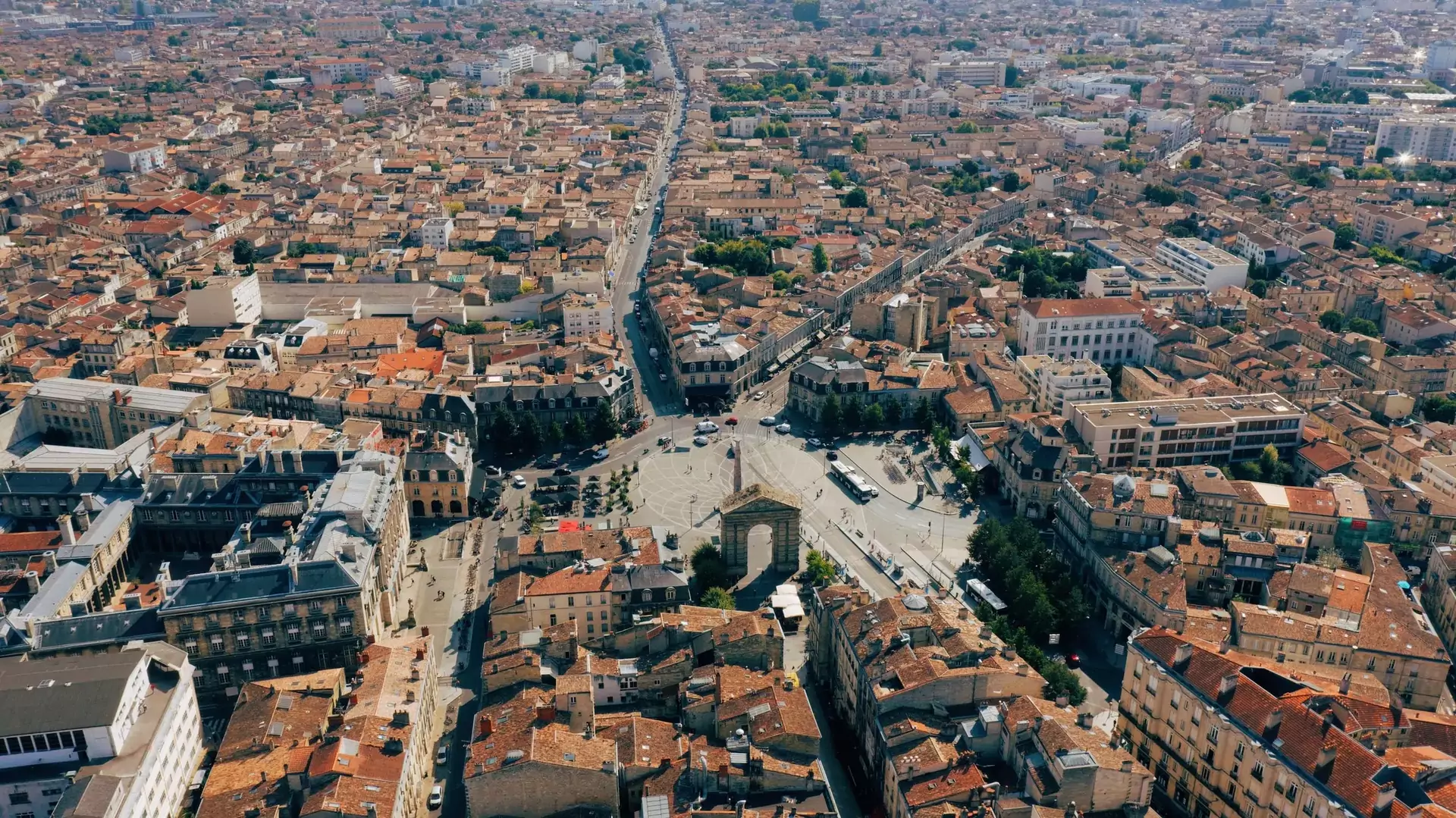
Bordeaux, in southwest France, enjoys a mild oceanic climate influenced by the Atlantic. Summers are warm and sunny, winters are cool and damp, and rainfall is spread throughout the year. With few weather extremes, Bordeaux’s climate supports its famous vineyards and offers pleasant conditions for exploring the city, especially in spring and autumn.
The best times to travel section shows how the months compare for a visit, so you can find the time of year that fits what you want to do.
Background colours of the months:
The colour shows the typical temperature: yellow (hot), green (mild) and blue (cold). How strong the colour is shows the travel season: full colour means high season, soft colour means shoulder season and soft-striped means off season.
Weather symbols:
Each month has one symbol showing what the weather is typically like, such as hot and sunny, freezing or a rainy or snowy season. Use them to quickly spot months that match the weather you want, or to avoid the ones that don't.
Crowdedness:
The people icon shows how busy the place usually is. The more people, the more crowded it gets.
Additional notes:
The grey info boxes point out special things worth knowing, like recurring weather issues or seasonal events.
The climate of Bordeaux
Bordeaux’s climate is classified as oceanic, shaped by its proximity to the Atlantic Ocean. This results in moderate temperatures year-round, with warm, sunny summers and mild, wet winters. Summer highs average 27°C in July and August, but can occasionally spike above 35°C, though such heatwaves are rare and usually brief. Nights remain comfortable, and sea breezes help moderate the warmth. Winters are mild by European standards, with daytime highs around 10°C and lows between 2–5°C. Snowfall is rare, though morning frosts can occur. Spring and autumn are transitional, with spring starting mild and rainy in March and becoming sunnier and warmer by June, while autumn remains pleasant and around 20°C in September before cooling and becoming wetter by November.
Rain falls throughout the year, with annual totals between 760–930 mm. December and January are the wettest months, each averaging close to 100 mm, while July is the driest with about 47 mm. Despite the rain, Bordeaux enjoys over 2,000 hours of sunshine annually, with up to 8 hours of sun per day in summer and just 2–4 hours in winter. Humidity is moderate to high, peaking in winter. Winds are generally light to moderate (10–15 km/h), and storms are infrequent but possible. The swimming season runs from July to September, when sea temperatures reach 20–22°C. Bordeaux’s climate is rarely harsh, but it is famously changeable – sunshine and rain can alternate within a single day, so visitors should always be prepared for both.
| Average climate data for Bordeaux, France | |||||||||||||
|---|---|---|---|---|---|---|---|---|---|---|---|---|---|
| Month | Jan | Feb | Mar | Apr | May | Jun | Jul | Aug | Sep | Oct | Nov | Dec | Year |
| Average maximum temperature (°C) | 10 | 11 | 15 | 18 | 21 | 25 | 27 | 27 | 24 | 20 | 14 | 11 | 27 |
| Average minimum temperature (°C) | 4 | 4 | 6 | 9 | 11 | 14 | 16 | 16 | 14 | 11 | 8 | 5 | 4 |
| Average precipitation (mm) | 33 | 23 | 31 | 33 | 31 | 32 | 17 | 19 | 15 | 28 | 51 | 43 | 356 |
| Average rainfall days (days) | 13 | 10 | 13 | 13 | 14 | 13 | 12 | 9 | 9 | 12 | 13 | 13 | 144 |
| Average snowfall (mm) | 0 | 2 | 1 | 0 | 0 | 0 | 0 | 0 | 0 | 0 | 0 | 4 | 7 |
| Average snowfall days (days) | 0 | 0 | 0 | 0 | 0 | 0 | 0 | 0 | 0 | 0 | 0 | 0 | 1 |
| Average relative humidity (%) | 85 | 78 | 76 | 71 | 74 | 71 | 70 | 69 | 70 | 75 | 83 | 85 | 75 |
| Average wind speed (km/h) | 11 | 12 | 12 | 10 | 11 | 10 | 10 | 9 | 9 | 10 | 11 | 11 | 10 |
| Average daily daylight hours (h) | 9 | 10 | 11 | 13 | 14 | 15 | 15 | 14 | 12 | 11 | 9 | 8 | 12 |
| Average daily sunshine hours (h) | 5 | 6 | 7 | 7 | 9 | 9 | 10 | 9 | 8 | 7 | 5 | 5 | 7 |
| Average cloud coverage (%) | 53 | 46 | 42 | 40 | 40 | 37 | 31 | 27 | 30 | 36 | 50 | 47 | 40 |
| Average UV index | 3 | 3 | 3 | 4 | 5 | 5 | 6 | 6 | 5 | 4 | 3 | 3 | 4 |
Travel info
- Spring (March–May): Mild and rainy, with temperatures rising from 13°C to 21°C. Gardens bloom and daylight increases. Pack layers and a rain jacket.
- Summer (June–August): Warm and sunny, with highs of 25–27°C. Occasional brief heatwaves and summer rain showers. Long daylight hours and lively festivals – bring sun protection and an umbrella.
- Autumn (September–November): Pleasant in September (15–25°C), turning cooler and wetter by November. Wine harvest festivals and colourful foliage. Layered clothing and waterproof gear are recommended.
- Winter (December–February): Cool and damp, with highs of 7–13°C and lows of 2–5°C. Occasional frost, rare snow, and frequent rain. Warm, waterproof clothing is essential.
- Travel Tips: Bordeaux’s weather is unpredictable – always pack layers and rain gear. Spring and autumn are ideal for sightseeing and wine tours. Summer is busiest, while winter offers fewer crowds and cosy wine bars.
The best time to visit Bordeaux
The best time to visit Bordeaux is from May to October, when temperatures are warm (18–27°C), days are long, and rainfall is lower. Late spring and early autumn offer pleasant weather, fewer crowds, and vibrant festivals, making them ideal for sightseeing, wine tours, and outdoor activities.
The worst time to visit Bordeaux
The least favourable time to visit is from November to February, when Bordeaux is coolest (7–13°C), wettest, and daylight is shortest. Frequent rain, dampness, and occasional storms can limit outdoor activities, though the city’s cultural attractions and wine bars remain inviting.
Frequently asked questions
Bordeaux has a mild oceanic climate with warm, sunny summers (up to 27°C), cool, damp winters (7–13°C), and rainfall spread throughout the year. Weather is variable, with frequent shifts between sunshine and showers.
The best time to visit Bordeaux is from May to October, especially in late spring and early autumn. These months offer warm temperatures, lower rainfall, and lively festivals, ideal for sightseeing and wine tours.
Snow is rare in Bordeaux. Winters are generally mild, with occasional morning frost but very few snow days. Most winter precipitation falls as rain.
Bordeaux receives 760–930 mm of rain annually, with the wettest months in winter and the driest in July. Rain can occur any time of year, so packing rain gear is recommended.
The swimming season in Bordeaux runs from July to September, when sea temperatures reach 20–22°C. These months are best for beach trips to the nearby Atlantic coast.
Bordeaux enjoys over 2,000 hours of sunshine annually, with up to 8 hours per day in summer and 2–4 hours in winter. Summer days are long and bright, while winter is cloudier.
Minimum and maximum temperatures in Bordeaux
The warmest month, with the highest average maximum temperature, is August (27.4 °C). The month with the lowest average maximum temperature is January (9.7 °C). Overall, the average maximum temperature over the whole year is 18.5 °C.
The month with the highest average minimum temperature is July (16.3 °C). The coldest month, with the lowest average minimum temperature, is February (4 °C). Overall, the average minimum temperature over the whole year is 10.1 °C.
Rainfall amount in Bordeaux
The wettest month, with the highest amount of precipitation, is November (51.4 mm). The driest month, with the least amount of precipitation, is September (14.9 mm). Over the whole year there are 355.9 mm of rainfall on average.
Rainfall days in Bordeaux
The month with the most days of rain is May (14.3 days). The month with the fewest days of rain is September (8.6 days). Over the whole year there are 143.6 days of rain on average.
Snowfall amount in Bordeaux
The month with the most snowfall is December (4 mm). The months with the least snowfall are January, April, May, June, July, August, September, October and November (0 mm). Over the whole year there are 7 mm of snowfall on average.
Snowfall days in Bordeaux
The month with the most days of snowfall is December (0.4 days). The months with the fewest days of snowfall are May, July and August (0 days). Over the whole year there are 1.2 days of snowfall on average.
Relative humidity in Bordeaux
The month with the highest average relative humidity is December (84.8 %). The month with the lowest average relative humidity is August (68.7 %). The overall average relative humidity over the whole year is 75.4 %.
Wind speed in Bordeaux
The windiest month, with the highest average wind speed, is March (11.9 km/h). The calmest month, with the lowest average wind speed, is August (8.8 km/h). The overall average wind speed over the whole year is 10.4 km/h.
Cloud coverage in Bordeaux
The month with the cloudiest skies, so the highest cloud coverage, is January (52.6 %). The month with the clearest skies, so the lowest cloud coverage, is August (27.2 %). Over the whole year there is an average cloud coverage of 39.9 %.
Daylight hours and sunshine hours in Bordeaux
The month with the longest days, so the most daylight, is June (Average daylight: 15 h). The month with the shortest days, so the least daylight, is December (Average daylight: 8.1 h). Over the whole year there are 11.8 h of daylight per day on average.
The month with the most sunshine per day is July (Average sunshine: 10 h). The month with the least sunshine per day is January (Average sunshine: 4.9 h). Over the whole year there are 7.3 h of sunlight per day on average.
UV index in Bordeaux
The months with the highest average UV index are July and August (UV index: 6). The months with the lowest average UV index are January, February, March, November and December (UV index: 3). Over the whole year the average UV index is 4.2.
- Bordeaux climate overview
- Climate table
- Related travel information for Bordeaux
- The best time to visit Bordeaux
- The worst time to visit Bordeaux
- Frequently asked questions
- Temperature summary
- Rainfall amount summary
- Rainfall days summary
- Snowfall amount summary
- Snowfall days summary
- Relative humidity summary
- Wind speed summary
- Cloud coverage summary
- Daylight hours and sunshine hours summary
- UV index summary
- Other recommended travel destinations