




Was this page helpful?

| Opening hours: |
|
|
|---|---|---|
| Public website: | www.visitmoen.com |
| Power Grid: |
230 V, 50 Hz Plug: Type C , Type E , Type K
Type C:
   Read about power adapters |
|---|---|
| Currency: |
Danish Krone (DKK) £1 ≈ DKK 8.92 |
| Cashless info: |
Rating 5/5
Cashless payments are widespread, and cards are accepted almost everywhere.
Save with a travel credit card |
| eSIM providers: |
Best value: Saily Flexibility: Airalo Read our in-depth comparison |
| Tipping: | Tipping is not mandatory but appreciated. Rounding up the bill or leaving 5-10% is common. |
|---|---|
| Public drinking: | Public drinking is allowed, especially during festivals and celebrations. |
| Public smoking: | Smoking is banned in most indoor public spaces and workplaces. |
| Constitution Day (June) |
Celebrations occur, but shops may close early. |
|---|---|
| Christmas (December) |
Markets and festive events are popular. |
| Easter (March/April) |
Many closures and family gatherings. |
| Emergency contact: | Emergency Number: 112 (Police, Fire, Ambulance) |
|---|---|
| Taxi apps: | Uber, Bolt |
| Other: | Cycling is popular and convenient in Denmark. The country has a focus on sustainability and green living. |
The best times to travel section shows how the months compare for a visit, so you can find the time of year that fits what you want to do.
Background colours of the months:
The colour shows the typical temperature: yellow (hot), green (mild) and blue (cold). How strong the colour is shows the travel season: full colour means high season, soft colour means shoulder season and soft-striped means off season.
Weather symbols:
Each month has one symbol showing what the weather is typically like, such as hot and sunny, freezing or a rainy or snowy season. Use them to quickly spot months that match the weather you want, or to avoid the ones that don't.
Crowdedness:
The people icon shows how busy the place usually is. The more people, the more crowded it gets.
Additional notes:
The grey info boxes point out special things worth knowing, like recurring weather issues or seasonal events.
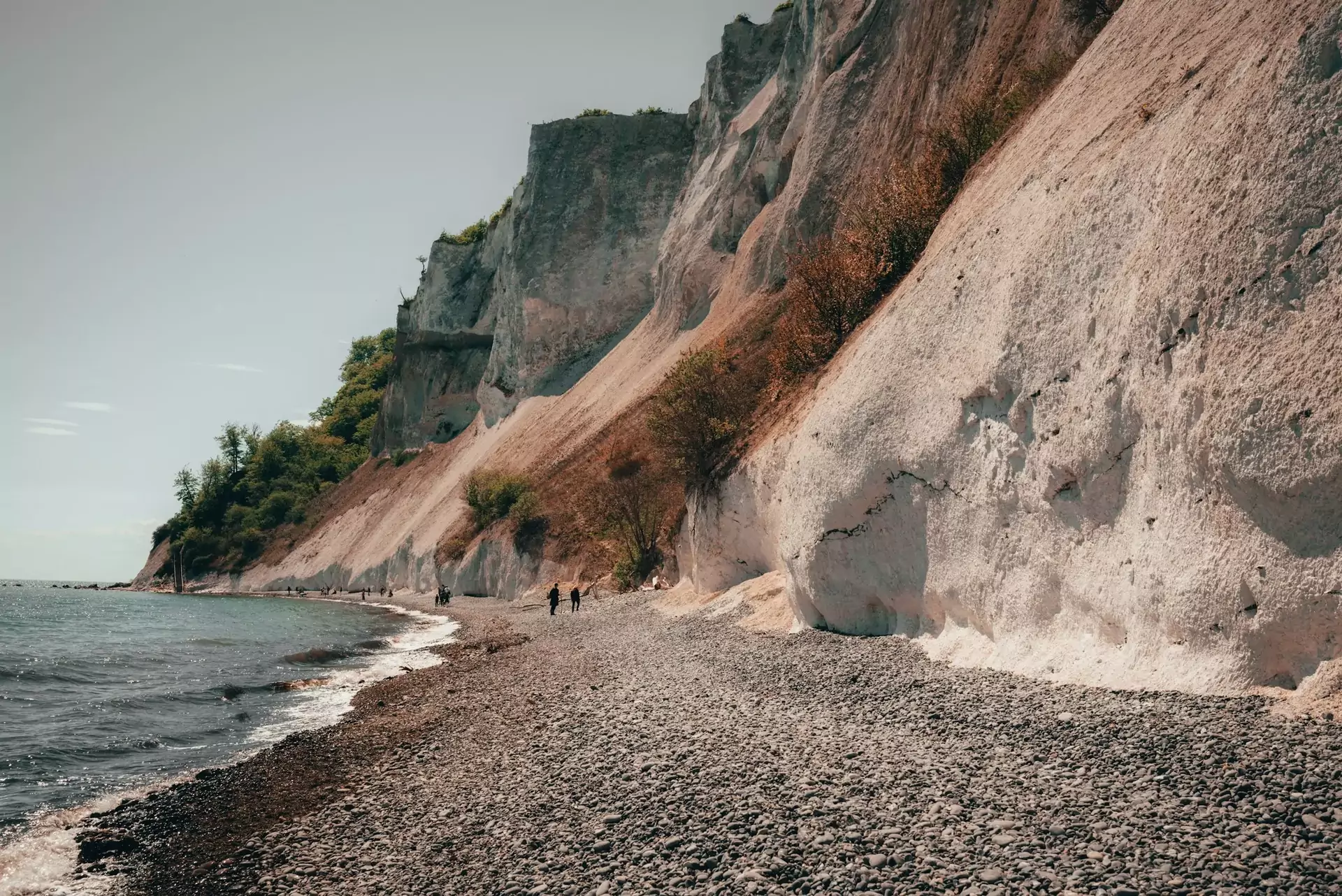
Møns Klint stands out as Denmark's most striking natural landmark. These white chalk cliffs stretch for about 6 kilometers along the island of Møn, towering up to 128 meters above the Baltic Sea. The formation dates back over 70 million years, preserving fossils of ancient sea creatures. The cliffs continue to be shaped by natural erosion, lending to a dramatic and dynamic landscape.
The surrounding area features lush beech forests, including some of Denmark’s oldest trees, creating a rich environment for hiking and wildlife watching. The GeoCenter Møns Klint museum at the cliff base offers an interactive dive into the geology and history of the cliffs, with family-friendly activities and exhibitions. Visitors can explore the extensive staircases such as the Maglevand and Gråryg stairs to access the shoreline or enjoy sweeping cliff-top views.
While the cliffs are breathtaking, caution is advised due to steep, slippery paths and loose chalk. Some hiking trails involve many steps, so physical readiness is important. Also, erosion sometimes leads to landslides and certain areas are restricted for safety. Weather can be changeable, so visitors should come prepared for wind and rain, especially outside summer months.
Møns Klint is a year-round destination though best enjoyed in late spring to early autumn for the fullest outdoor experience. Its peaceful beauty and chances to witness rare birds like peregrine falcons make it a sanctuary for nature enthusiasts and photographers alike.
Møns Klint is about a two-hour drive south from Copenhagen via the E47 motorway, making it accessible for day trips or longer stays. Public transportation to Møns Klint is possible but involves multiple connections: take a train from Copenhagen to Vordingborg, then buses towards Stege and on to the cliffs. Renting a car is recommended for flexibility and ease of access.
Accommodation options near Møns Klint range from cozy guesthouses and boutique hotels to camping sites. The nearby town of Stege offers a selection of places to stay and some visitors also choose to stay in Copenhagen for day trips.
Log in to add this place to a travel list and get a summary of all recommended items for your whole trip.
We calculate the average costs when travelling to destinations and compare those with the living costs at your home. With this you can get an estimate of how expensive or cheap the destination is for you.
To customise this, you can set up which location and price level are used for the calculations in your account settings.
The exchange rate price factor shows how expensive or cheap a currency currently is compared to its historical average. It's a quick way to see if a country is currently more or less affordable due to exchange rate changes.
