






Was this page helpful?

| Opening hours: |
|
||
|---|---|---|---|
| Public website: | diadaocuchi.com.vn |
| Power Grid: |
220 V, 50 Hz Plug: Type A , Type C
Type A:
  Read about power adapters |
|---|---|
| Currency: |
Vietnamese Dong (VND) £1 ≈ ₫34,381 |
| Cashless info: |
Rating 4/5
Cashless payments are widely accepted in Vietnam, especially in larger cities and tourist areas. Cash is still commonly used in rural areas.
Save with a travel credit card |
| eSIM providers: |
Best value: Saily Flexibility: Airalo Read our in-depth comparison |
| Tipping: | Tipping is not customary in Vietnam, but small tips are appreciated for good service in restaurants, taxis, and hotels. |
|---|---|
| Public drinking: | Public drinking is generally allowed in Vietnam, but drinking in certain public spaces, like parks, may be regulated. |
| Public smoking: | Smoking is allowed in outdoor public spaces, but there are smoking restrictions in some indoor public areas. |
| Independence Day (2 September) |
Celebrates Vietnam’s independence from France |
|---|---|
| Tết (January/February) |
The most important holiday in Vietnam, typically in January or February |
| Emergency contact: | Emergency Numbers: 113 (Police), 115 (Ambulance), 114 (Fire) |
|---|---|
| Taxi apps: | Grab |
| Other: | Vietnam is famous for its vibrant cities, historic sites, and stunning landscapes like Ha Long Bay and the Mekong Delta, offering a rich and diverse travel experience. |
The best times to travel section shows how the months compare for a visit, so you can find the time of year that fits what you want to do.
Background colours of the months:
The colour shows the typical temperature: yellow (hot), green (mild) and blue (cold). How strong the colour is shows the travel season: full colour means high season, soft colour means shoulder season and soft-striped means off season.
Weather symbols:
Each month has one symbol showing what the weather is typically like, such as hot and sunny, freezing or a rainy or snowy season. Use them to quickly spot months that match the weather you want, or to avoid the ones that don't.
Crowdedness:
The people icon shows how busy the place usually is. The more people, the more crowded it gets.
Additional notes:
The grey info boxes point out special things worth knowing, like recurring weather issues or seasonal events.
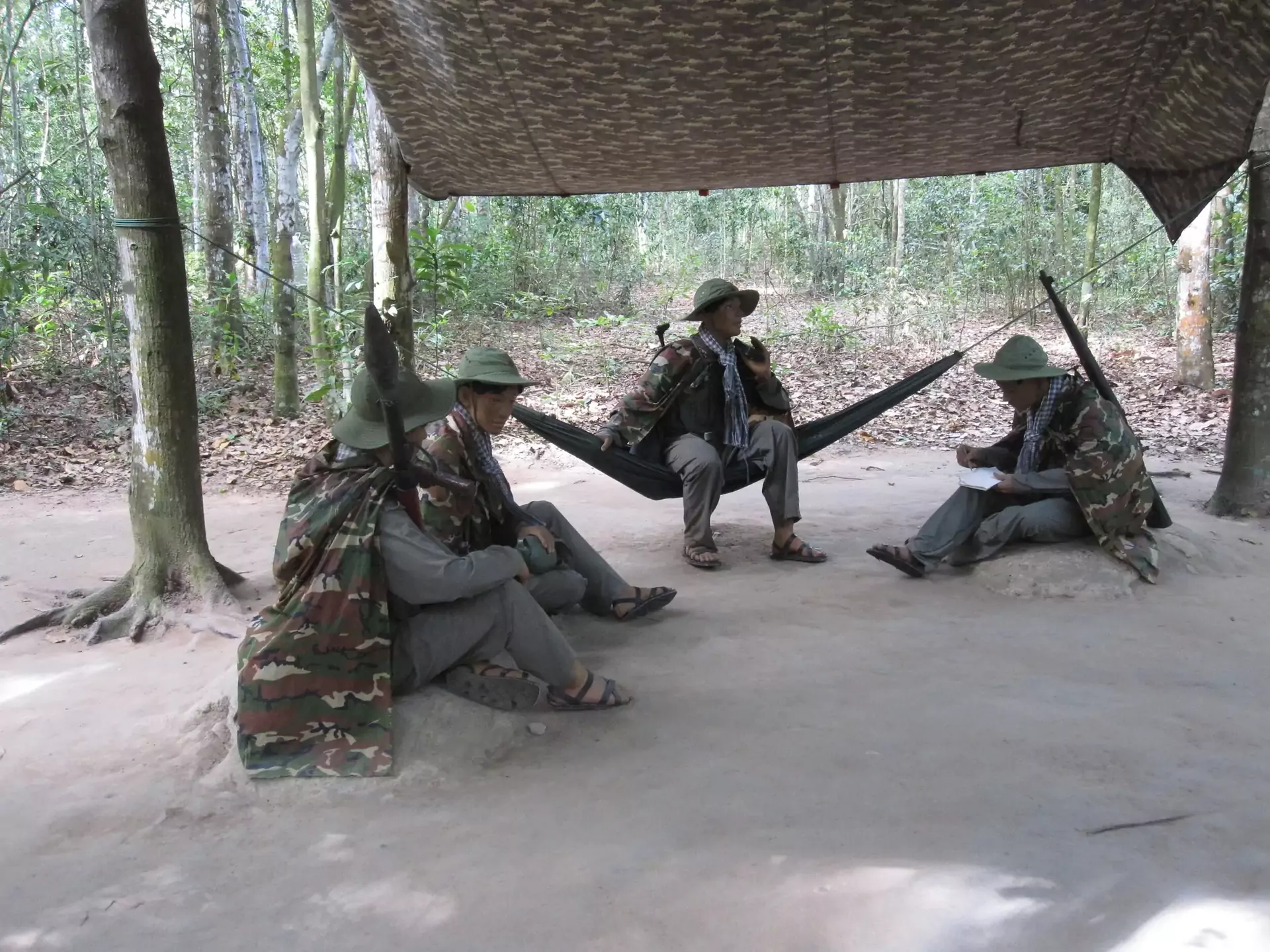
The Cu Chi Tunnels represent a vast underworld built originally in 1948 and expanded greatly during the Vietnam War as a crucial base for Viet Cong fighters. Stretching over 200 kilometers in multiple underground levels, the tunnels hosted entire communities including kitchens, hospitals, weapon factories and command centers, all hidden beneath dense jungle.
Visitors today can explore safe sections of the tunnels, experiencing the cramped space that challenged soldiers daily. The tunnels feature original and reconstructed entrances camouflaged with foliage and booby traps, offering an authentic look at guerrilla warfare ingenuity. Above ground, remnants of bomb craters and wartime relics further tell the dramatic story of this region.
While the tunnels are fascinating, visitors should be aware of tight and narrow passages that may not be suitable for claustrophobic or physically challenged individuals. The site can get crowded, especially on weekends and holidays and facilities are basic. Also, the tropical climate means it can be hot and humid, so dress comfortably and stay hydrated.
Overall, the Cu Chi Tunnels provide a moving and educational experience, allowing visitors to deeply understand the hardships and strategy of Vietnamese fighters during a pivotal chapter of history.
The Cu Chi Tunnels are located about 35‑70 km northwest of Ho Chi Minh City, depending on the entry point. Visitors typically reach the site by organized tour buses, private car or motorbike from Ho Chi Minh City's center, with travel times ranging from 1 to 1.5 hours. Public transportation options are limited, so tours are often the most convenient way.
Most visitors stay in Ho Chi Minh City, which offers a wide range of accommodations from budget hostels to luxury hotels, providing easy access to the Cu Chi Tunnels and other city attractions.
Log in to add this place to a travel list and get a summary of all recommended items for your whole trip.
We calculate the average costs when travelling to destinations and compare those with the living costs at your home. With this you can get an estimate of how expensive or cheap the destination is for you.
To customise this, you can set up which location and price level are used for the calculations in your account settings.
The exchange rate price factor shows how expensive or cheap a currency currently is compared to its historical average. It's a quick way to see if a country is currently more or less affordable due to exchange rate changes.
