We use cookies and external services: MapTiler for interactive maps and Google Maps to show route duration/distance. Both may process personal data such as your IP address, including transfers outside the EU/EEA. See our privacy policy for details. By clicking ‘Accept all’, you consent to this.
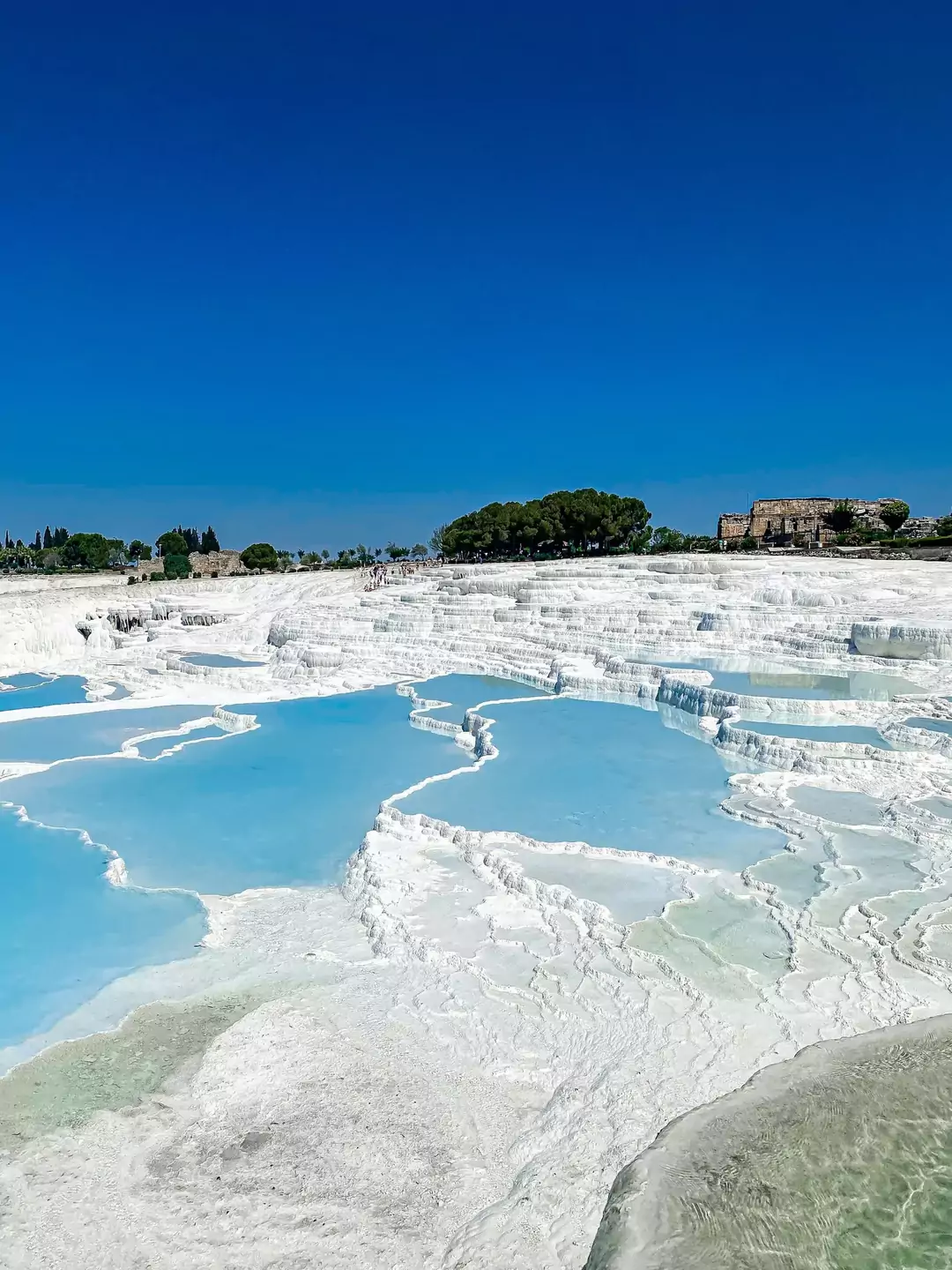
Pamukkale, in Turkey’s Aegean region, features a climate of hot, dry summers and cold, wet winters. The area experiences significant seasonal temperature swings, with abundant sunshine in summer and modest rainfall in winter. Its unique travertine terraces and thermal pools make Pamukkale a fascinating destination for travellers in every season.
The best times to travel section shows how the months compare for a visit, so you can find the time of year that fits what you want to do.
Background colours of the months:
The colour shows the typical temperature: yellow (hot), green (mild) and blue (cold). How strong the colour is shows the travel season: full colour means high season, soft colour means shoulder season and soft-striped means off season.
Weather symbols:
Each month has one symbol showing what the weather is typically like, such as hot and sunny, freezing or a rainy or snowy season. Use them to quickly spot months that match the weather you want, or to avoid the ones that don't.
Crowdedness:
The people icon shows how busy the place usually is. The more people, the more crowded it gets.
Additional notes:
The grey info boxes point out special things worth knowing, like recurring weather issues or seasonal events.
The climate of Pamukkale
Pamukkale’s climate is marked by pronounced seasonal contrasts. Summers (June–August) are hot, dry, and sunny, with average daytime highs of 30–35°C and nighttime lows of 16–19°C. July and August are the hottest months, and temperatures can occasionally exceed 40°C. Rain is scarce in summer, with August being the driest month, and the region enjoys up to 13–14 hours of sunshine daily. The intense sun reflects off the white terraces, making sun protection essential. Humidity is low, and breezes are generally gentle, though the area is open to occasional winds from the Aegean Sea.
Winters (December–February) are cold and wetter, with average highs of 10–12°C and lows near or below freezing. January is the wettest month, often bringing 60–100 mm of rain or even occasional snow, though snow is rare and short-lived. Days are much shorter, with only 5 hours of sunshine in December. Spring (March–May) and autumn (September–November) are transitional, offering mild to warm temperatures (15–26°C), moderate rainfall, and pleasant conditions for exploring the terraces and ancient ruins. Annual precipitation averages around 430–700 mm, and the region’s microclimate can bring unpredictable showers, especially from September to June. Winds are usually light, but can be brisk during storms, particularly in winter and spring.
| Average climate data for Pamukkale, Turkey | |||||||||||||
|---|---|---|---|---|---|---|---|---|---|---|---|---|---|
| Month | Jan | Feb | Mar | Apr | May | Jun | Jul | Aug | Sep | Oct | Nov | Dec | Year |
| Average maximum temperature (°C) | 10 | 12 | 16 | 21 | 26 | 30 | 34 | 33 | 30 | 23 | 17 | 12 | 34 |
| Average minimum temperature (°C) | 2 | 3 | 5 | 9 | 13 | 16 | 19 | 18 | 15 | 11 | 7 | 4 | 2 |
| Average precipitation (mm) | 98 | 80 | 62 | 47 | 36 | 20 | 14 | 9 | 17 | 40 | 62 | 105 | 591 |
| Average rainfall days (days) | 13 | 12 | 12 | 11 | 8 | 3 | 5 | 7 | 4 | 6 | 9 | 12 | 102 |
| Average daily daylight hours (h) | 9 | 10 | 12 | 13 | 14 | 14 | 14 | 13 | 12 | 11 | 10 | 9 | 12 |
| Average daily sunshine hours (h) | 5 | 5 | 7 | 8 | 10 | 13 | 14 | 13 | 11 | 8 | 6 | 5 | 9 |
| Average UV index | 2 | 3 | 5 | 7 | 9 | 10 | 11 | 10 | 7 | 5 | 3 | 2 | 6 |
Travel info
- Spring (March–May): Mild and blooming, with highs from 15–25°C. Occasional rain showers – ideal for sightseeing and fewer crowds. Bring layers and a light rain jacket.
- Summer (June–August): Hot, dry, and sunny, with highs of 30–35°C. Minimal rain and long daylight hours. Best for thermal pool bathing – pack sun protection, light clothing, and a hat. Early mornings and evenings are most comfortable.
- Autumn (September–November): Warm in September (up to 30°C), cooling to 15°C by November. Rain increases gradually. Great for festivals and less crowded terraces – bring layers and rain gear for October and November.
- Winter (December–February): Cold and wetter, with highs of 10–12°C and lows near 0°C. Occasional rain and rare snow. Dress warmly and bring waterproof clothing. The terraces can be tranquil and photogenic with fewer visitors.
- General tips: Weather can change quickly – dress in layers and carry rain gear in spring, autumn, and winter. Summer sun is intense – use high SPF sun cream. Comfortable shoes are essential for exploring the terraces and ruins. The travertine pools are open year-round, but water levels may vary by season.
The best time to visit Pamukkale
The best time to visit Pamukkale is during spring (April–May) and autumn (September–October), when temperatures are mild (18–26°C), rainfall is moderate, and crowds are smaller. These seasons offer the most comfortable weather for exploring the terraces, ancient city, and thermal pools, with blooming flowers or colourful foliage adding to the scenery.
The worst time to visit Pamukkale
The least favourable time to visit Pamukkale is in peak summer (late July–August), when temperatures can exceed 35°C and the sun is intense, making midday exploration uncomfortable. Winters (December–February) can also be less appealing due to cold, wet weather, occasional snow, and shorter days, though they offer a quieter experience.
Frequently asked questions
Pamukkale has hot, dry summers with highs up to 35°C and cold, wetter winters with highs around 10–12°C. Spring and autumn are mild and pleasant, with moderate rainfall and ideal conditions for sightseeing.
The best time to visit is in spring (April–May) and autumn (September–October), when temperatures are comfortable, rainfall is moderate, and crowds are fewer. These seasons are perfect for exploring the terraces and ancient ruins.
Snow is rare in Pamukkale but possible in winter, especially in January. When it does occur, it usually melts quickly. Most winter precipitation falls as rain, and the terraces look beautiful in the winter mist.
Summer highs in Pamukkale typically reach 30–35°C, with July and August being the hottest months. Temperatures can occasionally exceed 40°C, and the sun’s reflection off the white terraces intensifies the heat.
Yes, Pamukkale is open year-round, including winter. While the terraces and pools are less crowded, the weather can be cold and wet, and some days may see snow. The landscape is especially photogenic in winter.
In summer, bring light, breathable clothing, a hat, sunglasses, and sun cream. For spring and autumn, pack layers and a rain jacket. In winter, bring warm clothes, waterproof gear, and sturdy shoes for exploring wet or icy terraces.
Yes, summer is peak season, especially in July and August. Expect large crowds and higher accommodation prices. For a quieter experience, visit early in the morning, late in the day, or during spring or autumn.
Minimum and maximum temperatures in Pamukkale
The warmest month, with the highest average maximum temperature, is July (34.1 °C). The month with the lowest average maximum temperature is January (10.1 °C). Overall, the average maximum temperature over the whole year is 22 °C.
The month with the highest average minimum temperature is July (19 °C). The coldest month, with the lowest average minimum temperature, is January (2 °C). Overall, the average minimum temperature over the whole year is 10.2 °C.
Rainfall amount in Pamukkale
The wettest month, with the highest amount of precipitation, is December (105.2 mm). The driest month, with the least amount of precipitation, is August (8.9 mm). Over the whole year there are 590.5 mm of rainfall on average.
Rainfall days in Pamukkale
The month with the most days of rain is January (12.9 days). The month with the fewest days of rain is June (3 days). Over the whole year there are 102 days of rain on average.
Daylight hours and sunshine hours in Pamukkale
The month with the longest days, so the most daylight, is June (Average daylight: 14.1 h). The month with the shortest days, so the least daylight, is December (Average daylight: 9.1 h). Over the whole year there are 11.8 h of daylight per day on average.
The month with the most sunshine per day is July (Average sunshine: 14 h). The month with the least sunshine per day is December (Average sunshine: 4.9 h). Over the whole year there are 8.7 h of sunlight per day on average.
UV index in Pamukkale
The month with the highest average UV index is July (UV index: 11). The months with the lowest average UV index are January and December (UV index: 2). Over the whole year the average UV index is 6.2.
- Pamukkale climate overview
- Climate table
- Related travel information for Pamukkale
- The best time to visit Pamukkale
- The worst time to visit Pamukkale
- Frequently asked questions
- Temperature summary
- Rainfall amount summary
- Rainfall days summary
- Daylight hours and sunshine hours summary
- UV index summary
- Other recommended travel destinations