





Was this page helpful?

The best times to travel section shows how the months compare for a visit, so you can find the time of year that fits what you want to do.
Background colours of the months:
The colour shows the typical temperature: yellow (hot), green (mild) and blue (cold). How strong the colour is shows the travel season: full colour means high season, soft colour means shoulder season and soft-striped means off season.
Weather symbols:
Each month has one symbol showing what the weather is typically like, such as hot and sunny, freezing or a rainy or snowy season. Use them to quickly spot months that match the weather you want, or to avoid the ones that don't.
Crowdedness:
The people icon shows how busy the place usually is. The more people, the more crowded it gets.
Additional notes:
The grey info boxes point out special things worth knowing, like recurring weather issues or seasonal events.
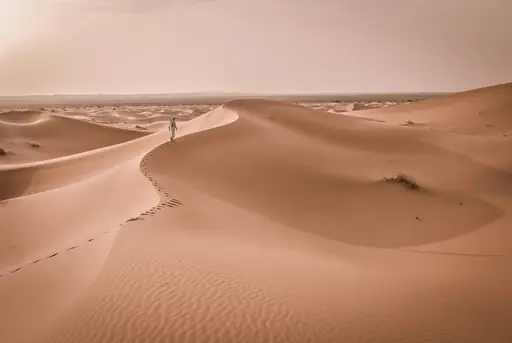
The Rub al Khali spans a large part of Saudi Arabia’s southeastern region. It is known for its stark beauty and endless sand dunes that shift with the wind. The landscape appears mostly flat but rises in places where ancient rock formations break the surface. Daytime temperatures often climb high while nights can bring sudden drops, creating a challenging environment for most life forms.
Travelers encounter remarkable adaptations here. Hardy shrubs and grasses cling to moisture near hidden water tables. Some animals like sand cats and desert foxes move quietly across the surface. Birds such as falcons hunt above while insects find shelter beneath stones. The presence of these species shows how life persists despite limited resources.
Human history in this area includes ancient trade routes where caravans crossed with camels carrying frankincense and spices. Remnants of old wells and stone structures hint at past settlements that relied on seasonal rains. Modern exploration now focuses on scientific research, especially studies about climate patterns and underground water reserves.
Visiting requires careful planning due to extreme conditions. Roads are limited but off-road travel reveals more of the terrain’s texture. Camping under clear night skies offers a chance to see stars without city light interference. Respect for local guidelines ensures safety while preserving this fragile environment for future visitors.
The Rub' al-Khali or Empty Quarter, is accessible primarily by desert-specific transportation. Travelers typically use 4x4 vehicles equipped for sand terrain, available through guided tours departing from Abu Dhabi or Dubai in the UAE. Overland routes require experienced drivers due to extreme conditions and limited infrastructure. Air access exists via small aircraft landing on remote airstrips near border regions of Saudi Arabia, Yemen, Oman and the UAE, though permits are mandatory for foreign visitors. Camel treks offer alternative access but cover limited distances. Most areas lack roads, necessitating specialized transport. Travel is seasonal, avoiding summer heat; winter months provide marginally better conditions. Entry requires coordination with local authorities or licensed operators due to restricted desert zones.
In the Rub al Khali, lodging ranges from modest nomadic tents to luxurious glamping suites that blend traditional Bedouin design with modern comforts. Most camps offer basic amenities – solar‑powered lights, communal kitchens and shared bathrooms – catering to budget travelers seeking an authentic desert experience. For those willing to spend more, boutique eco‑villages provide private rooms, Wi‑Fi and guided tours of the dunes, often featuring stargazing decks and camel rides. The area is renowned for its “desert safari” accommodations, where guests can stay in reinforced canvas tents equipped with air conditioning and panoramic windows to view the endless sandscape. Seasonal festivals sometimes bring pop‑up luxury tents, offering gourmet meals and spa treatments amid the dunes.


Log in to add this place to a travel list and get a summary of all recommended items for your whole trip.
We calculate the average costs when travelling to destinations and compare those with the living costs at your home. With this you can get an estimate of how expensive or cheap the destination is for you.
To customise this, you can set up which location and price level are used for the calculations in your account settings.
