







Was this page helpful?

| Opening hours: |
|
||||
|---|---|---|---|---|---|
| Public website: | www.museebeyrouth-liban.org |
| Power Grid: |
230 V, 50 Hz Plug: Type A , Type B , Type C
Type A:
   Read about power adapters |
|---|---|
| Currency: |
Lebanese Pound (LBP) £1 ≈ LBP 119,864 |
| Cashless info: |
Rating 4/5
Cashless payments are accepted in major cities and tourist areas. Credit cards are widely used in upscale restaurants, hotels, and shops, while mobile payment options are still emerging.
Save with a travel credit card |
| eSIM providers: |
Flexibility: Airalo Read our in-depth comparison |
| Tipping: | Tipping is customary in Lebanon. In restaurants, a tip of 10-15% is expected, although some restaurants include a service charge. Taxi drivers appreciate rounding up the fare. |
|---|---|
| Public drinking: | Public drinking is allowed in Lebanon, particularly in bars, restaurants, and designated areas. However, drinking in public spaces like streets and parks may be frowned upon. |
| Public smoking: | Smoking is very common in Lebanon. A 2011 law bans smoking in indoor public spaces such as restaurants and cafés, but it is widely ignored, and smoking indoors is still common. |
| Independence Day (22 November) |
National celebrations with parades and festivals |
|---|---|
| Eid al-Fitr (variable) |
Celebrations marking the end of Ramadan with feasts and family gatherings |
| Emergency contact: | Emergency Number: 112 (Police), 140 (Ambulance) |
|---|---|
| Taxi apps: | Careem, Uber |
| Other: | Lebanon has a rich history and offers diverse experiences, including ancient ruins, vibrant cities, and scenic landscapes. Be aware of the security situation, particularly near borders. |
The best times to travel section shows how the months compare for a visit, so you can find the time of year that fits what you want to do.
Background colours of the months:
The colour shows the typical temperature: yellow (hot), green (mild) and blue (cold). How strong the colour is shows the travel season: full colour means high season, soft colour means shoulder season and soft-striped means off season.
Weather symbols:
Each month has one symbol showing what the weather is typically like, such as hot and sunny, freezing or a rainy or snowy season. Use them to quickly spot months that match the weather you want, or to avoid the ones that don't.
Crowdedness:
The people icon shows how busy the place usually is. The more people, the more crowded it gets.
Additional notes:
The grey info boxes point out special things worth knowing, like recurring weather issues or seasonal events.
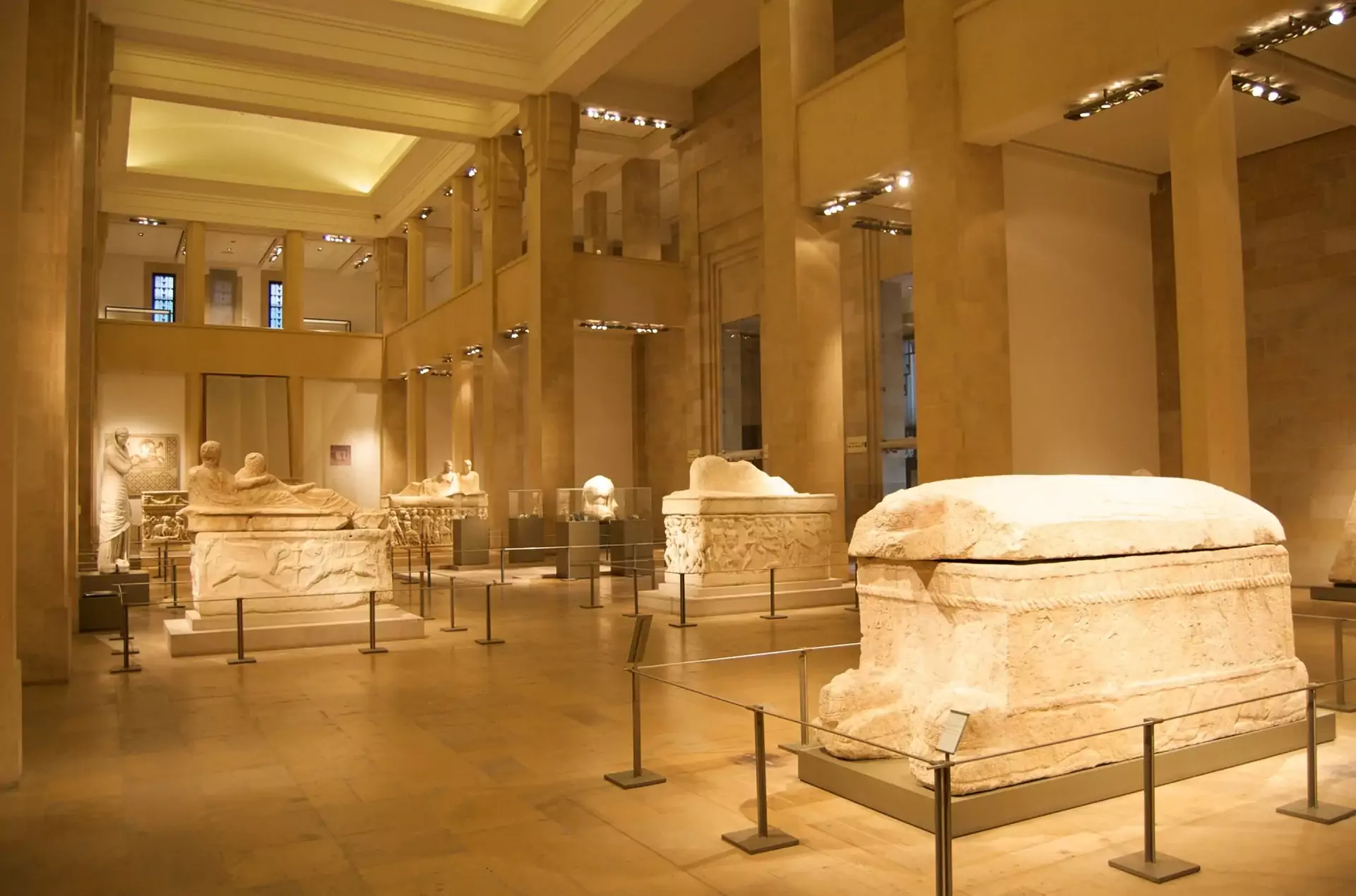
The National Museum of Beirut was officially opened in 1942 and holds Lebanon’s most important archaeological collection, representing a wide span of historical periods from prehistoric to medieval times. The museum building itself showcases a blend of modern and traditional Lebanese architectural elements.
During the Lebanese Civil War, the museum suffered extensive damage, standing on a frontline, which led to looting and destruction of parts of its collection and building. After years of restoration and preservation efforts, the museum reopened in 1999, showcasing approximately 1,300 carefully preserved artifacts including stunning Phoenician jewelry, Roman statues, mosaics and sarcophagi.
The museum is a vital cultural repository for Lebanon, offering visitors a profound glimpse into the country’s rich and turbulent history. The exhibits are well-curated, but some visitors note that the museum can feel small and the information panels may require some prior historical knowledge to fully appreciate.
While the building is well-maintained, visitors should be mindful of the complex security situation in Lebanon and check local travel advisories. The museum does not have extensive interactive or child-friendly exhibits, so it’s best suited for visitors with a strong interest in archaeology and history.
The National Museum of Beirut is located in the capital’s city center. Most travelers arrive via Beirut-Rafic Hariri International Airport, then take a taxi or shuttle to downtown Beirut. The museum is accessible on foot or by local transport from central Beirut neighborhoods.
Beirut offers a range of accommodation from luxurious hotels in the downtown area to more modest guesthouses, providing convenient access to the National Museum and other cultural sites.
Log in to add this place to a travel list and get a summary of all recommended items for your whole trip.
We calculate the average costs when travelling to destinations and compare those with the living costs at your home. With this you can get an estimate of how expensive or cheap the destination is for you.
To customise this, you can set up which location and price level are used for the calculations in your account settings.
The exchange rate price factor shows how expensive or cheap a currency currently is compared to its historical average. It's a quick way to see if a country is currently more or less affordable due to exchange rate changes.
