

Asia › Japan › Shirakawa-go

Shirakawa-go

Scroll
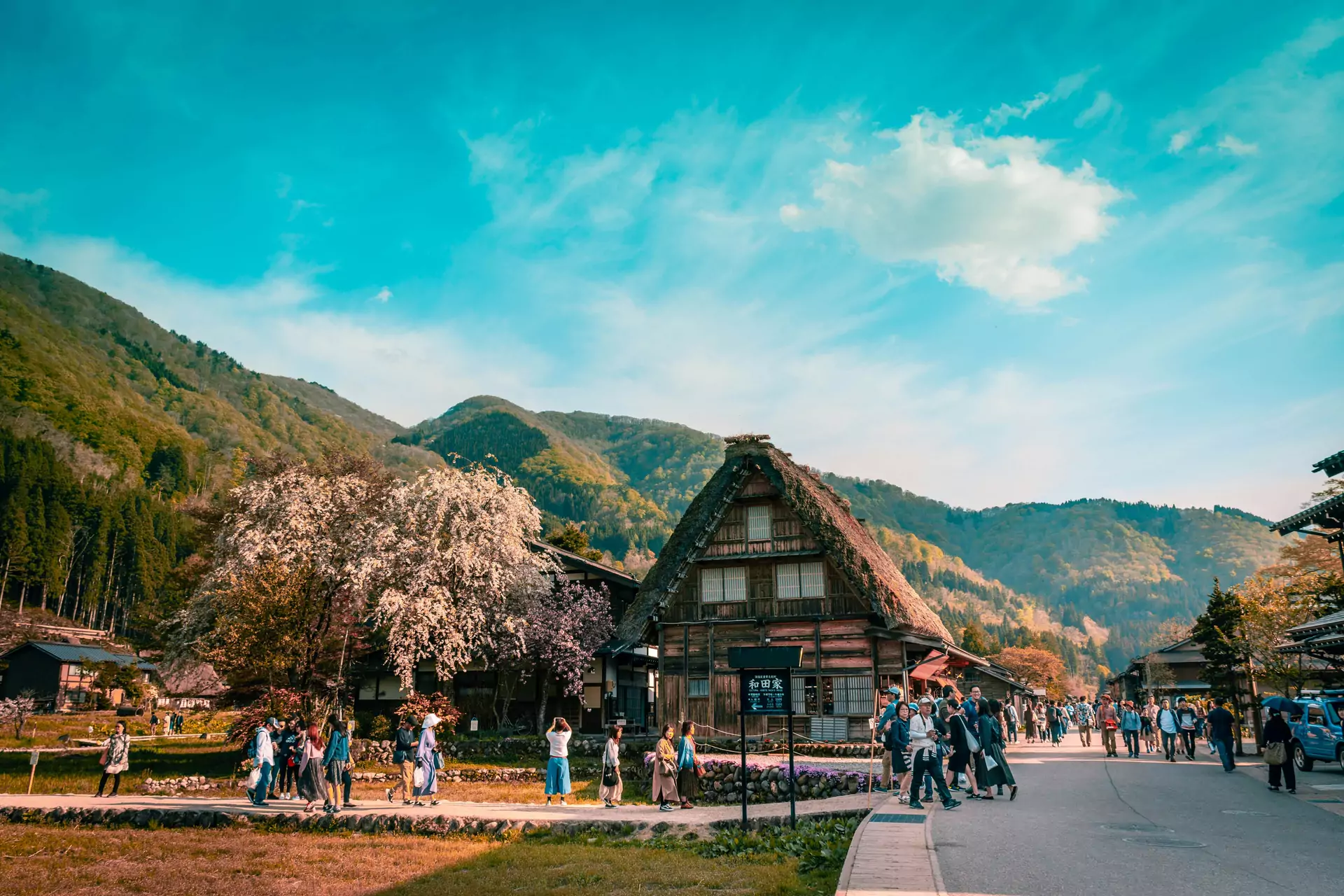
Thatched gassho farmhouses in the Hida mountains

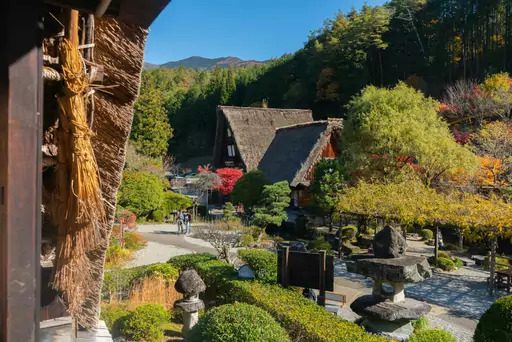
Shirakawa-go is a village of gassho-style farmhouses in the mountains of northern Gifu Prefecture, listed as a UNESCO World Heritage Site in 1995. The houses have thick thatched roofs with steep pitches that resemble hands pressed together in prayer, which gave the style its name. More than 100 of these buildings are in the Ogimachi area and people still live in many of them. Visitors can walk the lanes in a couple of hours, step inside a preserved farmhouse and climb to a viewpoint above the village. There's no railway so almost everyone arrives by highway bus from Takayama, Kanazawa or Toyama.

Village in Japan
Climate zone: Humid subtropical

Humid subtropical: Warm temperate climates with hot, humid summers, mild winters and evenly distributed rainfall, common on eastern continental margins.

See climate table
Price level: $$$
$Cheap
$$Medium
$$$Expensive, upscale
$$$+Very expensive, luxury
See price details
Safety: 7.8
General Safety:9
Health & medical:6
Accessibility:4
Tap water:9
Read details
Tourist English: 2/5
English is spoken at major guesthouses, tourist centres and some restaurants, but less so in small shops or minshuku. Most signage at attractions is bilingual. A translation app is helpful for deeper exploration.
Last update: 20 Oct 2026
* We earn a commission from some links on this page.
Shirakawa-go Summary

These place ratings give you a quick overview of how well a destination matches different types of trips.

‘Best for’ scores:
The specific interest scores show where this place really shines – whether it's ideal for hiking, food & drink experiences, museums or other activities. These highlights help you understand what makes the destination special at a glance.

‘Your personal’ scores:
This reflects how well a place matches your personal preferences. You can adjust the importances of travel topics or other personal requirements categories in your account settings.

‘Suited for’ badges:
These give you a quick overview of how well a destination suits specific types of travellers, to help you find the places that match your lifestyle, preferences or travel situation.

Read how our scores work
Famous for traditional village architecture. Walk between historic thatched houses, visit cultural museums, enjoy seasonal festivals and photograph mountain scenery.
Place score
7.6
Best at:
Cosy towns
9
Snow
9
Spotless
9
Architecture
9
Traditional culture
9
Personal score
?
Log in to see how this place matches your personal travel interests.
Suited for
👶 7
Families
🧓 6
Seniors
❤️ 8
Couples
🛡️ 7
Travel Beginners
Japan – Quick facts
Power Grid: 100 V, 50 Hz
Plug: Type A
Type A:
Diagram of a Type A power plug

Read about power adapters
Currency: Japanese Yen (JPY)
£1 ≈ JP¥210
Cashless info: Rating 4/5
Cashless payments are becoming more common, especially in cities, with some shops still preferring cash. Be prepared for occasional cash-only situations in rural areas.

Save with a travel credit card
eSIM providers: Best value: Saily
Flexibility: Airalo
Read our in-depth comparison
Tipping: Tipping is not customary in Japan and can be considered rude. Excellent service is the norm, and tipping is unnecessary in most places.
Public drinking: Public drinking is legal and commonly accepted, particularly during festivals and events.
Public smoking: Smoking is prohibited in indoor public places but allowed in designated outdoor areas. Some restaurants may have smoking sections.
New Year
(January)
One of the most important holidays, expect crowded temples and high prices. Plan ahead.
Golden Week
(April-May)
The busiest travel time, expect high demand for accommodation and transport.
Obon
(August)
A time to honour ancestors, many businesses close, and transport can be crowded.
Emergency contact: Emergency Number: 110 (Police), 119 (Fire & Ambulance)
Taxi apps: Uber, JapanTaxi, DiDi
Other: Japan is a country of respect, so understanding local customs and etiquette is important. Public transport is efficient, but can be crowded during peak hours.
Best times to travel

The best times to travel section shows how the months compare for a visit, so you can find the time of year that fits what you want to do.

Background colours of the months:
The colour shows the typical temperature: yellow (hot), green (mild) and blue (cold). How strong the colour is shows the travel season: full colour means high season, soft colour means shoulder season and soft-striped means off season.

Weather symbols:
Each month has one symbol showing what the weather is typically like, such as hot and sunny, freezing or a rainy or snowy season. Use them to quickly spot months that match the weather you want, or to avoid the ones that don't.

Crowdedness:
The people icon shows how busy the place usually is. The more people, the more crowded it gets.

Additional notes:
The grey info boxes point out special things worth knowing, like recurring weather issues or seasonal events.

for Shirakawa-go, Japan
🌨️
Jan
🌨️
Feb
🌤️
Mar
🌤️
Apr
☀️
May
🌦️
Jun
⛈️
Jul
🌦️
Aug
🌦️
Sep
🌦️
Oct
🌤️
Nov
🌨️
Dec
High season: Jan. - Feb., Oct.
Shoulder season: March - May, Aug. - Sep., Nov. - Dec.
Crowdedness: 9 (Very crowded)
Tap on a month for more info Hover over a month for more info
Winter light-up on a few selected evenings late January to February, advance reservation required
Heavy snow December to March can delay buses and close mountain roads
Most visitors come as day trips from Takayama, Kanazawa or Toyama, so overnight stays are limited

Why travel to Shirakawa-go?

Shirakawa-go has more than 100 gassho-zukuri farmhouses in the Ogimachi area and residents still occupy many of them. Rice fields and vegetable plots fill the gaps between the houses, so it looks like a working village rather than a museum. Most visits are a simple loop. You walk the lanes of Ogimachi and step inside a preserved farmhouse such as Kanda House, which has about 160 years of history. Then you climb to the Shiroyama viewpoint for the classic view of the roofs among rice fields and forest. Myozenji Temple, founded in 1748, has a museum in its former monks' residence. The scenery changes with the season. In autumn the rice fields turn golden and in winter heavy snow covers the roofs. Two to three hours covers the village for most first-time visitors so it fits as a day trip from Takayama or Kanazawa. Staying overnight in a gassho-style guesthouse adds a meal in the house and a quieter evening in the village. Those rooms are very popular so they book out months ahead. It also pairs well with Takayama for a longer route through the Hida region.

🏯Places worth seeing
  • 1 Kanda house
  • 2 Wada house
  • 3 Nagase House
  • 4 Myozenji Museum
  • 5 Doburoku Festival Museum
🎡Places for activities
  • 1 Shiroyama Tenshukaku Observation Deck
  • 2 Myōzen Temple
  • 3 Shirakawa Hachiman Shrine
🏞️Natural landmarks
  • 1 Mt. Oizurugadake
🍽️Eat & Drink
  • 1 Irori
    Irori serves Hida beef, river fish and regional dishes cooked over a traditional hearth. It is in Ogimachi, Shirakawa-go’s main gassho-zukuri village, near the central pedestrian lanes and several thatched farmhouse museums.
  • 2 Nomura
    Nomura serves Hida beef meals, soba and local mountain cuisine in a traditional gassho-style setting. It is in central Ogimachi, within Shirakawa-go’s UNESCO-listed village, a short walk from the Wada House area.
  • 3 Hakusuien
    Hakusuien offers Hida beef, set meals and regional dishes in the Ogimachi village area. It stands close to Shirakawa-go Bus Terminal and the main entrance to the World Heritage gassho-zukuri settlement.
  • 4 Kyoshu
    Kyoshu serves Hida beef dishes, soba and Japanese set meals in an old-style village building. It is located in Ogimachi, central Shirakawa-go, along the walking route between the bus terminal and the Wada House.
  • 5 Ochudo
    Ochudo serves regional comfort food such as soba, tofu and grilled river fish. It is in Ogimachi, Shirakawa-go’s largest hamlet, among the thatched-roof homes and walking paths of the World Heritage village.
  • 6 Shirakawa-go Pudding no Ie
    Shirakawa-go Pudding no Ie makes custard puddings and soft-serve desserts using local milk. It is in Ogimachi near the main village streets, convenient for a sweet stop while exploring the gassho-zukuri houses.
  • 7 Kobikiya
    Kobikiya offers coffee, sweets and light meals in a restored traditional building. It is in Ogimachi, Shirakawa-go’s central heritage district, near the canal-side lanes and the village’s thatched farmhouses.
  • 8 Ogi-machi Jaya
    Ogi-machi Jaya serves Hida beef croquettes, gohei-mochi rice cakes and light local snacks. It is in the central Ogimachi settlement, close to the pedestrian approach from Shirakawa-go Bus Terminal.
  • 9 Shirakawa-go no Yu Restaurant
    The restaurant at Shirakawa-go no Yu serves Hida beef, local vegetables and Japanese set meals. It is beside the Shogawa River at the edge of Ogimachi, near the suspension bridge leading into the heritage village.
  • 10 Tenshukaku Observatory Cafe
    This café serves drinks and light snacks with elevated views over Ogimachi’s gassho-zukuri rooftops. It is at the Shiroyama Observation Deck above Shirakawa-go, reached by foot or shuttle from the main village.
🎈Events
  • Doburoku Festival (October)
  • Winter Light-up (selected nights Jan-Feb)
  • Cherry Blossom Viewing (April)
  • Autumn Leaves Festival

Knowledge before you go

  • Book bus seats ahead, since the Kanazawa buses always need a reservation.
  • Japan Rail Passes don't cover the Shirakawa-go buses, so budget for the fare separately.
  • Bring cash, since some restaurants and the Shiroyama viewpoint cafe don't accept credit cards.
  • The winter light-up runs on only a few evenings in January and February and needs advance reservations.

How to travel to Shirakawa-go

Shirakawa-go has no railway so the last leg is a highway bus to the Shirakawa-go Bus Terminal in Ogimachi. From Takayama the bus takes about 50 minutes. From Kanazawa it takes about 75 minutes and from Toyama about 80 minutes. Reservations are needed on all Kanazawa services and on limited Toyama services. A direct bus from Nagoya takes about 3 hours and must be reserved. From Tokyo expect about 4 to 4.5 hours via the Hokuriku Shinkansen to Toyama or Kanazawa and then the bus. Rail passes cover trains but not these buses. Book seats ahead for weekends and holidays since popular services sell out. By car you can drive in and park in the village-run car park. Autumn foliage season brings heavy traffic.

Access summary

  • From Toyama Airport (TOY): Bus via Toyama Station, about 2–2.5 hours total.
  • From Takayama: Direct highway buses to Shirakawa-go, around 1–1.5 hours.
  • From Kanazawa: Direct highway buses to Shirakawa-go, roughly 1.5 hours.

Where to stay in Shirakawa-go

Overnight guests stay in Ogimachi in gassho-style guesthouses where you sleep in a traditional thatched farmhouse and usually have dinner and breakfast in the house. These are very popular so book months ahead especially for autumn and winter. A hot spring bath is also open to day visitors in the Shirakawa-go area. Many visitors stay in Takayama or Kanazawa instead. Both have more hotels and make a day trip easy with a bus ride of 50 to 75 minutes each way. Staying in the village itself means you see it at its quietest before the first buses arrive and after the last ones leave.

How to get around Shirakawa-go

Ogimachi is small enough to explore entirely on foot. The village centre is near the Shirakawa-go Bus Terminal, where coin lockers are open from 08:00 – 17:00. Most visitors spend two to three hours walking the lanes and visiting a farmhouse or two.

The Shiroyama viewpoint above the village is about 30 minutes on foot uphill or about 10 minutes by shuttle bus. The viewpoint building keeps short hours from the morning to mid-afternoon with irregular closing days. If you drive, leave the car at the village car park and walk in. In winter you need snow tyres or chains and should expect icy lanes.

Food in Shirakawa-go

Food here is Hida mountain cooking served in farmhouse settings. The signature dish is Hida beef grilled with hoba miso, a miso paste cooked on a magnolia leaf. Soba and locally grown rice are also common. Hida beef croquettes are a popular snack to eat on the lane and toasted mochi and rice-flour waffles are sold in local shops. Doburoku, a cloudy unfiltered sake, is the local drink and has a festival in autumn.

Many restaurants are small and some close by mid-afternoon and take cash only, so plan lunch around midday. Gassho guesthouses include dinner so there's no need to look for an evening meal.

Budget snapshot
Costs compared to home

We calculate the average costs when travelling to destinations and compare those with the living costs at your home. With this you can get an estimate of how expensive or cheap the destination is for you.

To customise this, you can set up which location and price level are used for the calculations in your account settings.

-46 %
Daily expenses in the region are around 46% lower than the average across United States. That means you'll spend a lot less on meals and getting around.
Exchange rate trend

The exchange rate price factor shows how expensive or cheap a currency currently is compared to its historical average. It's a quick way to see if a country is currently more or less affordable due to exchange rate changes.

-20 %
Your exchange rate (GBP to JPY) is 20% better than in recent years. That means travelling now is considerably cheaper compared to the past.

Travel costs (Data for Hida, Japan - 26 km away)

To help you plan your trip, we provide estimated daily costs per person (when travelling as a pair) for different travel styles. These numbers give you an idea of what you might spend each day at this destination, including accommodation, food, transport and activities.

Additionally, we also provide average hotel costs for different travel styles to give you an estimate for the accommodation only.

Please note that these are only estimates. The real costs depend on booking times, season and other factors.

Daily cost summary

Travel style categories explained:

Backpacker:
Staying in hostels or budget hotels, cooking your own meals or eating cheap and choosing low-cost activities.

Mid-range:
Staying in mid-range hotels, eating at a mix of restaurants and casual spots and enjoying a variety of activities.

Luxury:
Staying in luxury hotels, dining out at high-end restaurants and enjoying premium experiences without worrying about the price.

Backpacker Mid-range Luxury
💵 Total costs per day, including accommodation
£44
£96
£246
🏨 Accommodation per night, per person
£23
£56
£113
🍝 Food per day
£17
£32
£98
🚕 Transportation per day
£5
£7
£35
Food & Drink
🍽️ Restaurant Dinner, per person
£12
🍛 Lunch Set, per person
£4.90
🍟 Fast food combo
£3.70
🍝 Preparing your own food, per day
£6.50
☕ Cappuccino
£2.30
🍺 Beer in a restaurant, 0.5 l
£2.30
Transportation
🚌 Public transport ticket
£1.20
🚕 Taxi Ride, 10 km / 6 mi
£21
⛽ Petrol, 1 l
£0.85
Other
🎞️ Cinema ticket
£9
👩‍⚕️ Doctor's consult
£24
🤧 Cold medication
£7
💇 Basic haircut
£12

Safety information overview

General safety
9
Shirakawa-go is a very safe village with little crime. The main risks come from winter, with heavy snow, icy lanes and slippery mountain roads. The thatched houses are a fire risk, so follow posted rules about smoking and stay out of private property.
Health & Medical
6
The village has few medical facilities, so larger hospitals are in Takayama and Kanazawa, about an hour away by bus or road. English-speaking care is limited. Winter cold and icy paths are the main health concerns, so dress warmly and take care on slopes.
Accessi­bility
4
Ogimachi is mostly flat, which suits slow walks, but some lanes are uneven or snow-covered in winter. Preserved farmhouses have steps and steep interior stairs. The Shiroyama viewpoint needs a steep walk or a shuttle bus.
Tap water
9
Tap water is safe to drink here, as across Japan, so there's no need to buy bottled water. Carry a refillable bottle for the viewpoint walk, though shops in the village also sell drinks and snacks.

Packing recommendations for Shirakawa-go

Log in to add this place to a travel list and get a summary of all recommended items for your whole trip.

Looking for inspiration?

Discover
Best cozy town destinations in Asia
A lantern-lit old town in Vietnam has preserved its heritage remarkably well, with tailors, lanterns and riverside cafés creating an atmosphere that's hard to find elsewhere in the…
Read more
Discover
Top cosy towns and quaint villages
Some towns have an atmosphere that's hard to manufacture deliberately: scale, architecture and a pace of life that makes a short visit feel unusually restorative. The best of them…
Read more
Discover
Best couple vacation destinations in Asia
Asia is perfect for couples who want their holiday to feel like a shared adventure rather than just a change of scenery. Few continents offer so many ways to be amazed together.…
Read more
Discover
Best fall foliage destinations in Asia
Asia's autumn foliage season spans a wide geographic range, with the most celebrated displays concentrated in the temperate forests of East Asia where a rich mix of deciduous…
Read more
Discover
Top autumn foliage destinations and colours
Few natural spectacles are as season-specific and location-dependent as autumn foliage, where the combination of tree species composition, temperature drop and daylight reduction…
Read more
Discover
Top photography destinations and scenic landscapes
A genuinely photogenic destination offers more than one good shot: it has the light, the composition and enough variety of conditions to reward repeat visits at different times of…
Read more
Discover
Best destinations for first-time travelers in Asia
Asia has one of the best established beginner travel routes anywhere, largely because so many first time travelers have worn the path before you. Southeast Asia in particular…
Read more
Discover
Best photography destinations in Asia
High-altitude desert landscapes in northern South Asia sit under some of the clearest skies on the continent, while terraced rice fields elsewhere create an entirely different,…
Read more
Discover
Top architecture destinations and iconic landmarks
Architecture travel spans everything from ancient ceremonial complexes and medieval urban cores to the grands projets of the twentieth century and contemporary buildings that draw…
Read more
Discover
Top traditional destinations and cultural heritage sites
Traditional destinations are those where cultural practices, craftsmanship, ceremony and ways of life that predate industrialisation and mass tourism remain visible and active…
Read more
Discover
Best rural retreat destinations in Asia
Rural retreat travel is defined by the deliberate removal from urban pace and density, with landscape immersion, slower rhythms and direct engagement with food, nature and local…
Read more
Discover
Top museum destinations and cultural institutions
Museum travel has developed a dedicated following built around the world's great permanent collections, blockbuster exhibition programmes and the architecturally significant…
Read more
Discover
Best solo travel destinations in Asia
Asia is where most solo travelers figure out they can actually do this. The backpacker trails through Southeast Asia have been running for decades, and the infrastructure along…
Read more
Discover
Top solo travel destinations and safe hubs
Travelling alone sounds like a bigger deal than it is. The first day feels strange – eating dinner by yourself, navigating without someone to double-check the map with, making…
Read more
Discover
Best couple holiday destinations
Travelling as a couple sounds simple enough, yet the best couple holiday destinations mean something different to almost every pair. What feels romantic to one couple can feel like…
Read more
Feedback
