






Was this page helpful?

| Opening hours: |
|
||
|---|---|---|---|
| Public website: | azadi-tower.ir |
| Power Grid: |
230 V, 50 Hz Plug: Type C , Type F
Type C:
  Read about power adapters |
|---|---|
| Currency: |
Iranian Rial (IRR) £1 ≈ IRR 1,756,040 |
| Cashless info: |
Rating 3/5
Foreign credit and debit cards do not work in Iran because of international sanctions, so travellers must bring enough cash (euros or US dollars) to exchange. Locals mostly pay with domestic bank cards, and ride-hailing apps like Snapp are popular.
Save with a travel credit card |
| eSIM providers: | We cannot recommend an eSIM provider for this country. We advise getting a local SIM card. |
| Tipping: | Tipping is not mandatory but appreciated in Iran. In restaurants, leaving a small tip of around 5-10% is common. Taxi drivers do not expect tips, but rounding up fares is appreciated. |
|---|---|
| Public drinking: | Public drinking is illegal in Iran, and alcohol consumption is strictly prohibited. Alcohol is only available in private or special non-public establishments for non-Muslim minorities. |
| Public smoking: | Smoking is generally allowed in outdoor public spaces and designated areas, but it is prohibited in many indoor public areas such as shopping centres and restaurants. |
| Nowruz (20 March) |
Iranian New Year, a major holiday celebrated with family gatherings and festivities |
|---|---|
| Ashura (Varies) |
A religious holiday observed with mourning ceremonies, especially in Shia communities |
| Emergency contact: | Emergency Number: 110 (Police), 115 (Ambulance) |
|---|---|
| Taxi apps: | Snapp, Tap30 |
| Other: | Iran is home to a rich history and culture, including ancient sites like Persepolis and Isfahan. Travellers should be aware of the country's conservative social norms and regulations, particularly concerning dress code and behaviour. |
The best times to travel section shows how the months compare for a visit, so you can find the time of year that fits what you want to do.
Background colours of the months:
The colour shows the typical temperature: yellow (hot), green (mild) and blue (cold). How strong the colour is shows the travel season: full colour means high season, soft colour means shoulder season and soft-striped means off season.
Weather symbols:
Each month has one symbol showing what the weather is typically like, such as hot and sunny, freezing or a rainy or snowy season. Use them to quickly spot months that match the weather you want, or to avoid the ones that don't.
Crowdedness:
The people icon shows how busy the place usually is. The more people, the more crowded it gets.
Additional notes:
The grey info boxes point out special things worth knowing, like recurring weather issues or seasonal events.
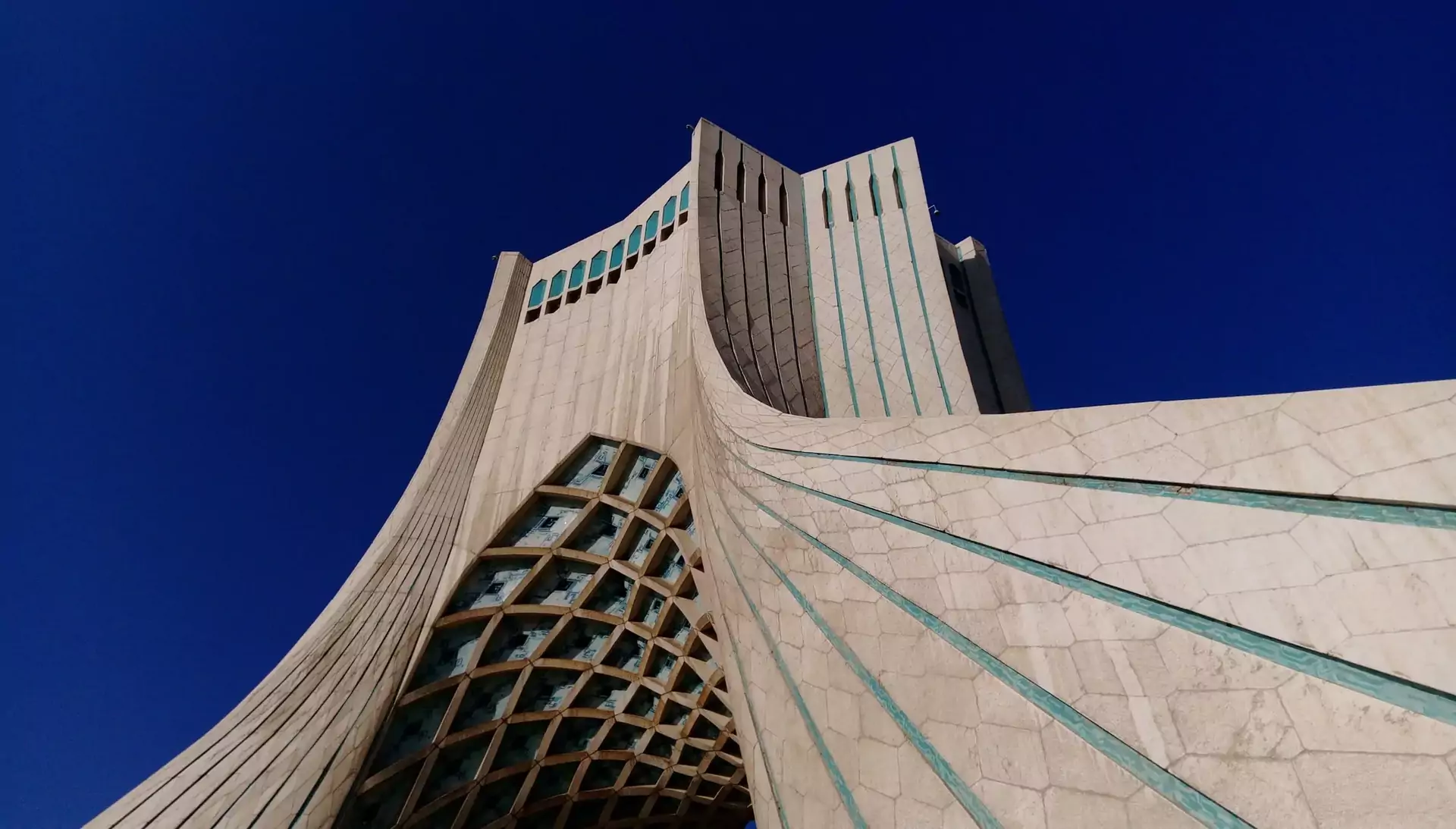
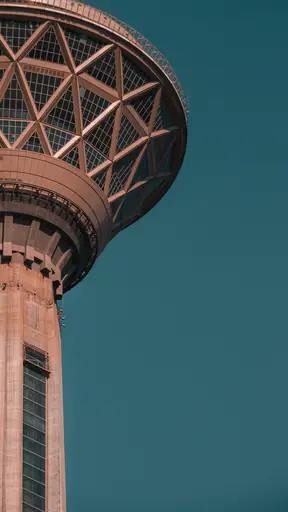
Azadi Tower, formerly known as Shahyad Tower, was completed in 1971 as a monument celebrating Iran’s 2,500 years of civilization. The tower showcases a masterful fusion of traditional Persian, Sassanid and Islamic architectural elements using white marble sourced from Isfahan.
Standing 45 meters tall, the tower includes an imposing central arch symbolizing the ancient Kasra Arch and elegant arabesque tilework representing different eras of Iranian design. The monument is complemented by surrounding landscaped gardens and a spacious square used for national events.
Visitors can explore the museum within the tower, containing Iranian historical artifacts and exhibitions illuminating Iran’s history and culture. The tower is beautifully illuminated at night, offering impressive photo opportunities.
Visitors should be aware that the area can be busy with traffic and crowds, especially during public holidays and cultural events. While the surrounding district is bustling, visitors are advised to exercise standard city precautions and avoid overly crowded times for a more peaceful experience.
Most visitors arrive via Tehran Imam Khomeini International Airport, well connected internationally. From Tehran city center or the airport, Azadi Tower is accessible by metro (Line 4 to Azadi Station), taxi or bus. The tower lies in the west-central part of Tehran and is a notable landmark from surrounding transport routes.
Tehran offers a broad range of accommodations from budget hotels to luxury options, particularly in central areas with easy metro access to Azadi Tower and other city attractions.
Log in to add this place to a travel list and get a summary of all recommended items for your whole trip.
We calculate the average costs when travelling to destinations and compare those with the living costs at your home. With this you can get an estimate of how expensive or cheap the destination is for you.
To customise this, you can set up which location and price level are used for the calculations in your account settings.
The exchange rate price factor shows how expensive or cheap a currency currently is compared to its historical average. It's a quick way to see if a country is currently more or less affordable due to exchange rate changes.
