





Was this page helpful?

| Opening hours: |
|
|---|
| Power Grid: |
220 V, 50 Hz Plug: Type C , Type F
Type C:
  Read about power adapters |
|---|---|
| Currency: |
Egyptian Pound (EGP) £1 ≈ EGP 74.69 |
| Cashless info: |
Rating 4/5
Cashless payments are becoming more common in Egypt, especially in tourist areas. Credit cards are accepted in larger hotels and businesses, but cash is still preferred in many places.
Save with a travel credit card |
| eSIM providers: |
Best value: Saily Flexibility: Airalo Read our in-depth comparison |
| Tipping: | Tipping is common in Egypt, with a 10-15% tip in restaurants being standard. Taxi drivers, hotel staff, and tour guides also appreciate small tips. |
|---|---|
| Public drinking: | Public drinking is generally not allowed in Egypt, and alcohol consumption is limited to licensed establishments like hotels, restaurants, and bars. |
| Public smoking: | Smoking is permitted in outdoor public spaces and licensed indoor venues such as cafes and bars, but it is prohibited in public transport and closed areas. |
| Revolution Day (25 January) |
National holiday celebrating the 2011 revolution |
|---|---|
| Eid al-Fitr (dates vary) |
Islamic festival marking the end of Ramadan |
| Emergency contact: | Emergency Numbers: 122 (Police), 123 (Ambulance), 180 (Fire) |
|---|---|
| Taxi apps: | Uber |
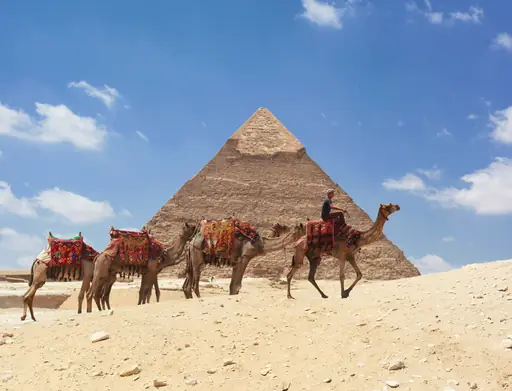
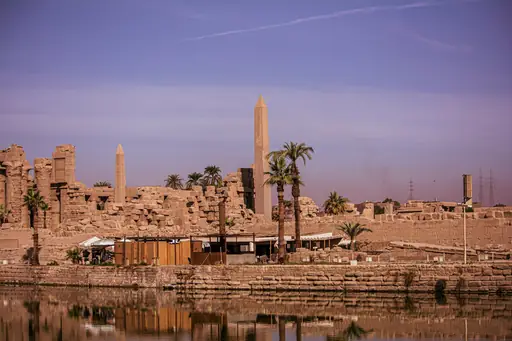
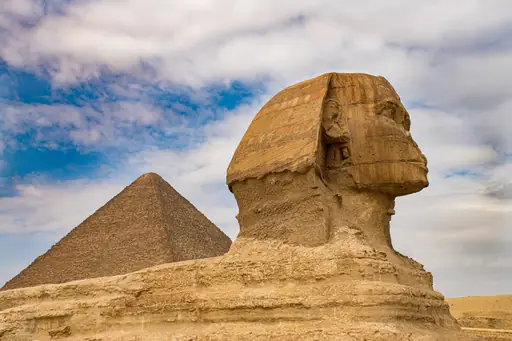
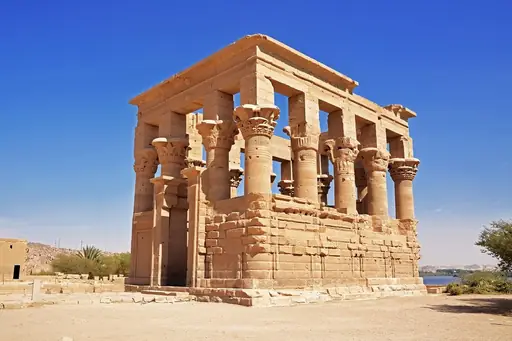
| Other: | Egypt is known for its ancient history, including the Pyramids of Giza, the Sphinx, and numerous archaeological sites. It offers a rich cultural experience combined with desert landscapes and the Nile River. |
The best times to travel section shows how the months compare for a visit, so you can find the time of year that fits what you want to do.
Background colours of the months:
The colour shows the typical temperature: yellow (hot), green (mild) and blue (cold). How strong the colour is shows the travel season: full colour means high season, soft colour means shoulder season and soft-striped means off season.
Weather symbols:
Each month has one symbol showing what the weather is typically like, such as hot and sunny, freezing or a rainy or snowy season. Use them to quickly spot months that match the weather you want, or to avoid the ones that don't.
Crowdedness:
The people icon shows how busy the place usually is. The more people, the more crowded it gets.
Additional notes:
The grey info boxes point out special things worth knowing, like recurring weather issues or seasonal events.
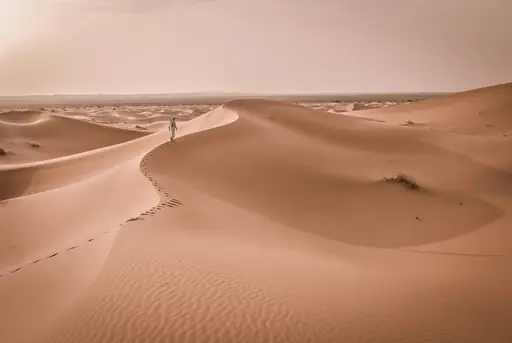
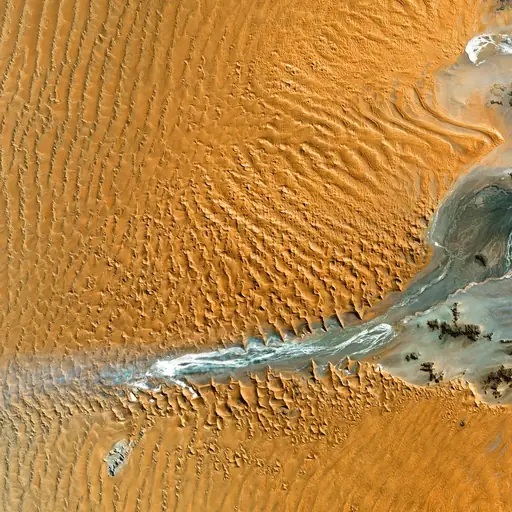
The White Desert in Egypt presents a landscape shaped by wind and time. Its terrain consists mainly of chalky white rock formations that resemble waves frozen mid-motion. These structures rise from the sand creating smooth curves and sharp edges under bright sunlight. The area experiences extreme temperature shifts between day and night which influence how light reflects across the surface.
Visitors encounter a quiet environment where silence feels common. No dense vegetation or tall mountains interrupt views that stretch far beyond the horizon. The ground here is mostly bare allowing travelers to notice subtle changes in texture from one patch of sand to another. Early mornings often bring thin layers of mist which quickly evaporate leaving behind clear skies and sharp shadows.
Wildlife adapts well to these conditions with small mammals and reptiles finding shelter among rocks. Some birds pass through during migration seasons offering brief moments of movement against the stillness. Plants are sparse but resilient showing how life persists even in harsh settings. The absence of heavy human activity means sounds from nature remain prominent without interruption.
Exploring this region requires preparation for changing weather and limited facilities. Guides familiar with local conditions recommend carrying water and sun protection at all times. Camping under clear skies reveals stars more clearly than in urban areas making nighttime observations rewarding. Respecting the environment means leaving no trace behind while appreciating its natural simplicity.
The White Desert in Egypt is accessible primarily by road from major cities like Cairo or Luxor. The nearest major airport is in Bahariya Oasis, approximately 200 km away, reachable via domestic flights from Cairo or Hurghada. From the oasis, travelers can hire a 4x4 vehicle or join a guided tour to navigate the desert’s remote terrain. Public buses and private transfers are available but less common due to limited infrastructure. The area is best visited during cooler months (October–April) when temperatures are moderate. Permits may be required for certain zones, obtainable through local guides or authorities upon arrival.
The White Desert’s remote location means most visitors stay in nearby towns such as Hurghada or El Gouna before heading out on day‑trips. Budget travelers can find modest guesthouses and hostels offering basic rooms with shared bathrooms for around EGP 600 – 1,050 (£8.24 – 14.42) per night, while mid‑range hotels provide private suites, air conditioning and free Wi‑Fi at roughly EGP 1,800 – 2,700 (£24.73 – 37.09). Luxury resorts in El Gouna boast overwater villas, spa services and gourmet dining, with rates starting near EGP 6,000 (£82.43). Many accommodations emphasize eco‑friendly practices, using solar power and recycled materials to minimize desert impact. For those seeking a unique experience, campsites and tented lodges offer rustic stays under the stars, typically priced between EGP 1,200 – 2,100 (£16.49 – 28.85) per night.
Log in to add this place to a travel list and get a summary of all recommended items for your whole trip.
We calculate the average costs when travelling to destinations and compare those with the living costs at your home. With this you can get an estimate of how expensive or cheap the destination is for you.
To customise this, you can set up which location and price level are used for the calculations in your account settings.
The exchange rate price factor shows how expensive or cheap a currency currently is compared to its historical average. It's a quick way to see if a country is currently more or less affordable due to exchange rate changes.
