





Was this page helpful?

The best times to travel section shows how the months compare for a visit, so you can find the time of year that fits what you want to do.
Background colours of the months:
The colour shows the typical temperature: yellow (hot), green (mild) and blue (cold). How strong the colour is shows the travel season: full colour means high season, soft colour means shoulder season and soft-striped means off season.
Weather symbols:
Each month has one symbol showing what the weather is typically like, such as hot and sunny, freezing or a rainy or snowy season. Use them to quickly spot months that match the weather you want, or to avoid the ones that don't.
Crowdedness:
The people icon shows how busy the place usually is. The more people, the more crowded it gets.
Additional notes:
The grey info boxes point out special things worth knowing, like recurring weather issues or seasonal events.
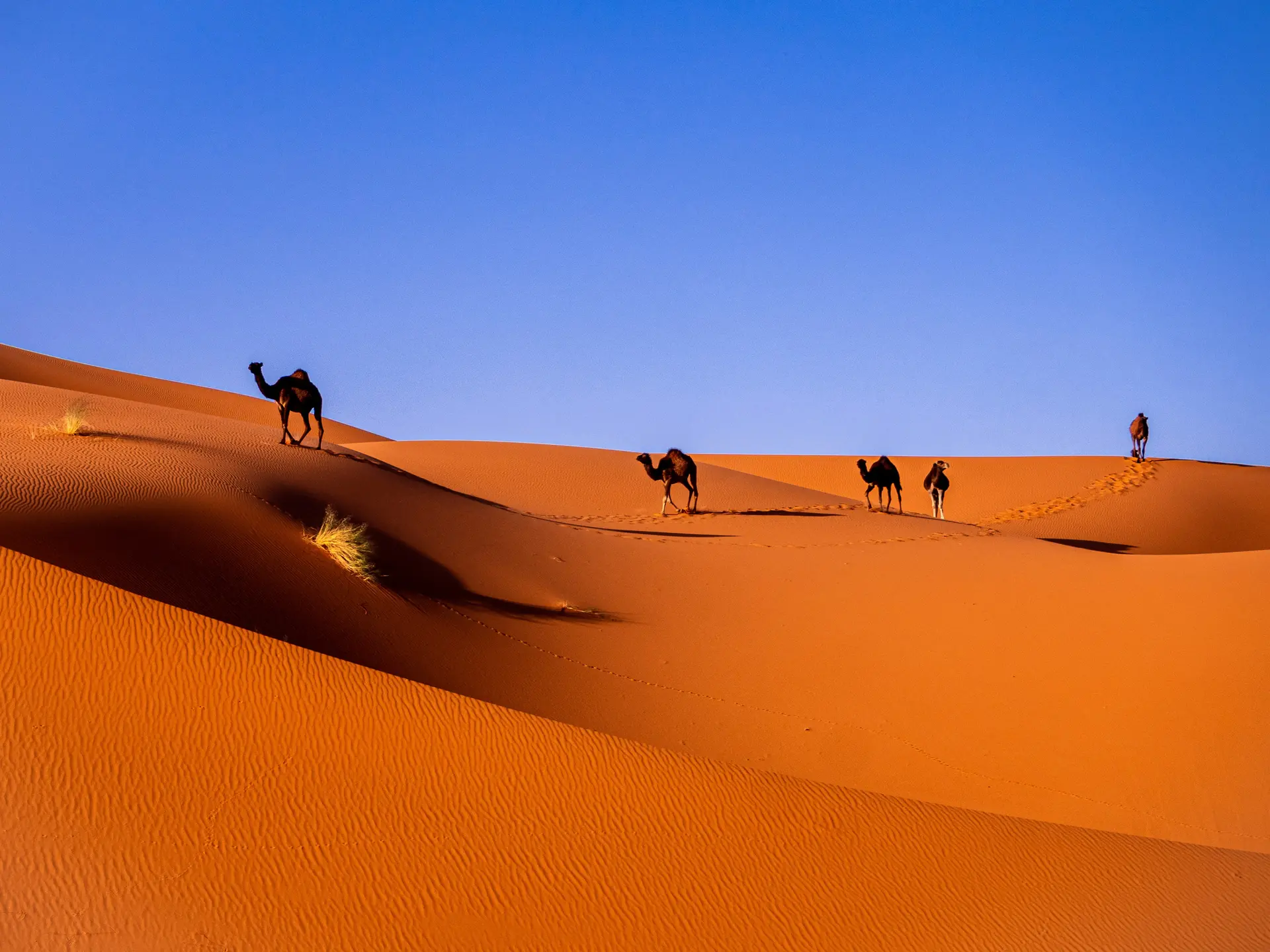
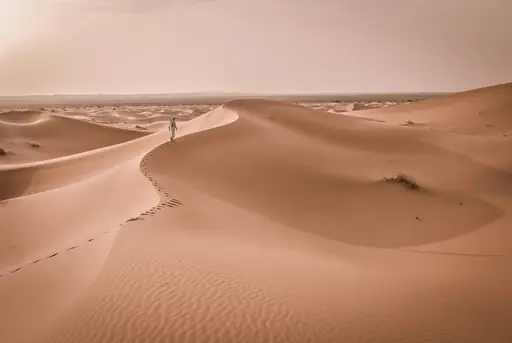
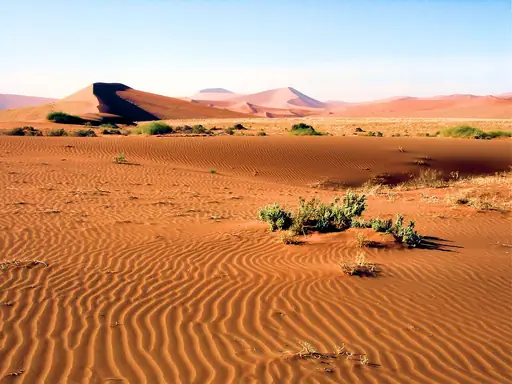
Algeria’s Sahara Desert spans over 2.5 million square kilometers making it one of the largest contiguous deserts in the world. The landscape shifts constantly with towering dunes that rise and fall under strong winds creating patterns that look like frozen waves. In some areas the sand reaches heights of more than 180 meters offering a striking visual experience for those who visit.
The climate here is extreme with daytime temperatures often climbing above 40 degrees Celsius while nights can drop sharply due to minimal humidity. This harsh environment supports hardy plants and animals that have adapted to survive with little water. Camels roam freely across the sands serving as both transportation and a source of milk for local communities.
Human presence in the Sahara dates back thousands of years with ancient rock art and carvings telling stories of early life here. Today small settlements dot the desert edges where families grow dates and vegetables using limited irrigation. Nomadic groups still travel seasonally following water sources and grazing lands maintaining traditions passed down through generations.
Travelers seeking adventure can explore by camel or 4x4 vehicle experiencing silence broken only by wind and distant calls of birds. Stargazing is exceptional because the lack of light pollution reveals a dense canopy of stars making each night feel close enough to touch. The Sahara remains a place where nature’s raw power meets human resilience in ways that shape both memory and perspective.
Access to the Sahara Desert in Algeria is primarily through air and land routes from major cities such as Algiers or Constantine. The nearest international airport is in Tamanrasset, which connects to regional airports like Djanet or Illizi. From these hubs, 4x4 vehicles or guided tours are commonly used to enter the desert, as roads are mostly unpaved and require specialized transport. Seasonal travel is advised between October and April to avoid extreme summer heat. Public transportation options include shared taxis or buses from southern cities, though availability can be limited. Camping access often requires permits in protected areas like the Tassili n’Ajjer National Park.
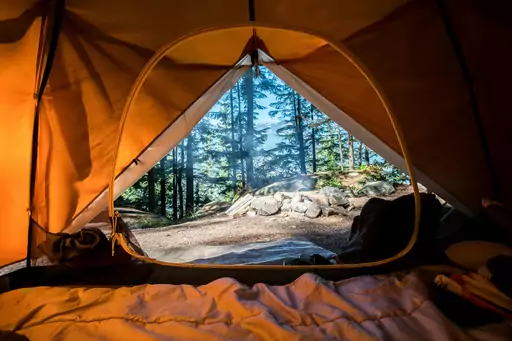
In the Algerian Sahara, accommodation ranges from traditional nomadic tents to high‑end desert camps. Tented stays offer authentic Berber hospitality: hand‑woven blankets, local cuisine and stargazing under a clear sky. Luxury camps provide private suites with air conditioning, indoor bathrooms and gourmet meals, often including guided camel treks or dune bashing. Eco‑lodges built from recycled materials blend sustainability with comfort, featuring solar power and water‑conservation systems. For budget travelers, shared caravan tents are available, offering basic bedding and communal cooking facilities. The region is renowned for its “tented luxury” experience, where guests can enjoy both rustic charm and modern amenities in equal measure.


Log in to add this place to a travel list and get a summary of all recommended items for your whole trip.
We calculate the average costs when travelling to destinations and compare those with the living costs at your home. With this you can get an estimate of how expensive or cheap the destination is for you.
To customise this, you can set up which location and price level are used for the calculations in your account settings.
