South America › Chile › Valparaíso › Climate

Valparaíso climate data

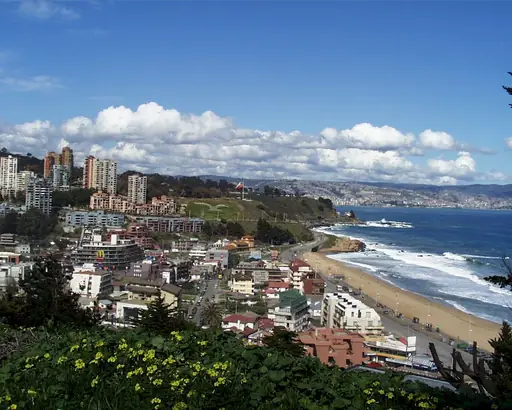
Valparaíso, perched on Chile’s Pacific coast, enjoys a mild Mediterranean climate with warm, dry summers and cool, wetter winters. Thanks to the moderating influence of the ocean, temperatures are stable year-round, with minimal extremes. Frequent sunshine, refreshing sea breezes, and scenic fog make Valparaíso a vibrant destination for travellers in every season.

Best times to travel

The best times to travel section shows how the months compare for a visit, so you can find the time of year that fits what you want to do.

Background colours of the months:
The colour shows the typical temperature: yellow (hot), green (mild) and blue (cold). How strong the colour is shows the travel season: full colour means high season, soft colour means shoulder season and soft-striped means off season.

Weather symbols:
Each month has one symbol showing what the weather is typically like, such as hot and sunny, freezing or a rainy or snowy season. Use them to quickly spot months that match the weather you want, or to avoid the ones that don't.

Crowdedness:
The people icon shows how busy the place usually is. The more people, the more crowded it gets.

Additional notes:
The grey info boxes point out special things worth knowing, like recurring weather issues or seasonal events.

for Valparaíso, Chile
☀️
Jan
☀️
Feb
☀️
Mar
🌤️
Apr
☁️
May
☁️
Jun
☁️
Jul
☁️
Aug
🌥️
Sep
🌤️
Oct
🌤️
Nov
☀️
Dec
High season: Jan. - March, Dec.
Shoulder season: April, Sep. - Nov.
Crowdedness: 7 (Many tourists)
Tap on a month for more info Hover over a month for more info
New Year's Eve fireworks over the bay, December 31: among the largest in South America, book accommodation far ahead
Cruise ships call roughly November to March, making the port area and hills busier on those days

The climate of Valparaíso

Valparaíso’s Mediterranean climate is shaped by its coastal location and the Humboldt Current, resulting in mild temperatures and distinct wet and dry seasons. Summers (December to March) are warm, sunny, and dry, with average daytime highs of 21–23°C and nighttime lows of 12–15°C. Rainfall is minimal, and the city enjoys up to 11 hours of sunshine per day. Sea temperatures peak at 17–18°C, making beach visits popular, though the water remains brisk. The summer air is refreshed by sea breezes, and skies are mostly clear, though morning fog can occur.

Winters (June to August) are cooler and wetter, with highs of 14–16°C and lows of 7–9°C. Rainfall peaks in June and July, with monthly totals reaching 90–120 mm, but even in winter, rainy days are limited and sunshine is frequent between showers. Dense fog, known locally as camanchaca, is common in winter and can make the city feel cooler than the thermometer suggests. Spring (September to November) and autumn (March to May) are transitional, with mild temperatures (16–20°C), moderate rainfall, and fewer crowds. Annual precipitation averages 380–400 mm, and the city enjoys about 2,100 hours of sunshine each year. Winds are generally light to moderate, but can be brisk during storms, especially in winter. The climate supports lush hillsides and vibrant city life, with minimal risk of temperature extremes or snow.

Average climate data for Valparaíso, Chile
Month Jan Feb Mar Apr May Jun Jul Aug Sep Oct Nov Dec Year
Average maximum temperature (°C) 21 21 19 18 17 15 14 15 15 16 18 20 21
Average minimum temperature (°C) 14 13 13 11 11 10 9 9 9 10 12 13 9
Average precipitation (mm) 0 0 4 13 54 83 111 60 27 10 8 1 372
Average rainfall days (days) 0 0 0 1 4 6 6 4 3 2 1 0 27
Average relative humidity (%) 72 75 77 79 79 81 79 80 79 76 71 70 77
Average water temperature (°C) 17 18 17 15 14 14 13 13 13 14 15 16 15
Average daily daylight hours (h) 14 13 12 11 10 10 10 10 11 12 13 14 12
Average daily sunshine hours (h) 9 8 7 5 3 2 3 3 4 5 7 8 5
Average UV index 12 11 9 6 4 3 3 4 6 8 11 12 7

Travel info

  • Summer (December–March): Warm, sunny, and dry, with highs of 21–23°C and lows of 12–15°C. Perfect for beaches, festivals, and outdoor dining. Sea temperatures reach 17–18°C. Pack sun protection and light layers for cool evenings.
  • Autumn (March–May): Mild and pleasant, with highs of 16–20°C. Rainfall increases slightly in May. Great for city walks, street art, and fewer crowds. Bring a jumper for cooler nights and a light rain jacket.
  • Winter (June–August): Cool and wetter, with highs of 14–16°C and lows of 7–9°C. Rain is more frequent, and fog is common. Dress in layers and bring waterproof clothing. Enjoy museums and cosy cafes during rainy spells.
  • Spring (September–November): Mild and increasingly sunny, with highs of 16–20°C. Rainfall decreases, and flowers bloom across the hills. Ideal for sightseeing and outdoor activities – pack layers for variable weather.
  • General tips: Weather is stable and rarely extreme. Dress in layers year-round, and always bring sun protection. Morning fog can be cool, especially in winter. Summer is peak season – book accommodation early if visiting then.

The best time to visit Valparaíso

The best time to visit Valparaíso is from December to March, when the weather is warmest, rainfall is minimal, and sunshine is abundant. This period is ideal for beach activities, festivals, and exploring the city’s colourful streets. Early autumn (March–April) is also pleasant, with fewer crowds and comfortable temperatures.

The worst time to visit Valparaíso

The least favourable time to visit Valparaíso is from June to August, when temperatures are coolest, rainfall is highest, and fog is frequent. While winters remain mild compared to inland Chile, damp and cloudy days can limit beach activities and outdoor sightseeing, though the city’s museums and cafes offer cosy retreats.

Frequently asked questions

What is the climate like in Valparaíso year-round?

Valparaíso has a mild Mediterranean climate with warm, dry summers and cool, wetter winters. Temperatures are stable year-round, and the city enjoys abundant sunshine, frequent sea breezes, and minimal risk of extremes.

When is the best time to visit Valparaíso?

The best time to visit is from December to March, when the weather is warm, dry, and sunny—perfect for beaches, festivals, and sightseeing. Early autumn is also comfortable and less crowded.

Does it rain a lot in Valparaíso?

Rainfall is moderate and concentrated in winter (June–August), with June and July being the wettest months. Summers are very dry, with little to no rain, and annual precipitation averages 380–400 mm.

How hot does it get in Valparaíso during summer?

Summer highs in Valparaíso typically reach 21–23°C, with nights cooling to 12–15°C. Heatwaves are rare due to the ocean’s moderating effect, and sea breezes keep the air comfortable.

Is Valparaíso foggy or windy?

Morning fog, known as camanchaca, is common, especially in winter, and can make the city feel cooler. Winds are usually light to moderate, but can become brisk during storms or frontal systems.

Is the sea warm enough for swimming in Valparaíso?

The Pacific sea is brisk, with temperatures peaking at 17–18°C in summer. Swimming is possible but refreshing, and the beaches are busiest from January to March.

What should I pack for a trip to Valparaíso?

Bring layers for cool mornings and evenings, sun protection for clear days, and a light rain jacket for winter or spring. Comfortable shoes are recommended for exploring the city’s hills and cobbled streets.

Minimum and maximum temperatures in Valparaíso

The warmest month, with the highest average maximum temperature, is January (20.8 °C). The month with the lowest average maximum temperature is July (14.2 °C). Overall, the average maximum temperature over the whole year is 17.5 °C.

The month with the highest average minimum temperature is January (13.6 °C). The coldest month, with the lowest average minimum temperature, is July (9.2 °C). Overall, the average minimum temperature over the whole year is 11.2 °C.

Water temperature in Valparaíso

The month with the highest average water temperature is February (18 °C). The month with the lowest average water temperature is July (13.1 °C). Overall, the average water temperature over the whole year is 15 °C.

Rainfall amount in Valparaíso

The wettest month, with the highest amount of precipitation, is July (110.7 mm). The driest month, with the least amount of precipitation, is February (0 mm). Over the whole year there are 372 mm of rainfall on average.

Rainfall days in Valparaíso

The month with the most days of rain is July (6.3 days). The month with the fewest days of rain is January (0.1 days). Over the whole year there are 26.5 days of rain on average.

Relative humidity in Valparaíso

The month with the highest average relative humidity is June (80.7 %). The month with the lowest average relative humidity is December (69.8 %). The overall average relative humidity over the whole year is 76.5 %.

Daylight hours and sunshine hours in Valparaíso

The month with the longest days, so the most daylight, is December (Average daylight: 14 h). The month with the shortest days, so the least daylight, is June (Average daylight: 10 h). Over the whole year there are 11.7 h of daylight per day on average.

The month with the most sunshine per day is January (Average sunshine: 9.1 h). The month with the least sunshine per day is June (Average sunshine: 2.1 h). Over the whole year there are 5.4 h of sunlight per day on average.

UV index in Valparaíso

The months with the highest average UV index are January and December (UV index: 12). The months with the lowest average UV index are June and July (UV index: 3). Over the whole year the average UV index is 7.4.

Was this page helpful?
Feedback