Zion National Park climate data

Zion National Park features a dramatic desert climate with four distinct seasons. Summers are hot and sunny, with frequent thunderstorms and risk of flash floods, while winters are cold and can be snowy, especially at higher elevations. Spring and autumn offer mild, pleasant weather, making them the most popular times for hiking and sightseeing.

Best times to travel

The best times to travel section shows how the months compare for a visit, so you can find the time of year that fits what you want to do.

Background colours of the months:
The colour shows the typical temperature: yellow (hot), green (mild) and blue (cold). How strong the colour is shows the travel season: full colour means high season, soft colour means shoulder season and soft-striped means off season.

Weather symbols:
Each month has one symbol showing what the weather is typically like, such as hot and sunny, freezing or a rainy or snowy season. Use them to quickly spot months that match the weather you want, or to avoid the ones that don't.

Crowdedness:
The people icon shows how busy the place usually is. The more people, the more crowded it gets.

Additional notes:
The grey info boxes point out special things worth knowing, like recurring weather issues or seasonal events.

for Zion National Park, United States
⛅
Jan
⛅
Feb
⛅
Mar
⛅
Apr
🔥
May
🔥
Jun
🔥
Jul
🔥
Aug
🔥
Sep
⛅
Oct
⛅
Nov
⛅
Dec
High season: April - June, Sep. - Oct.
Shoulder season: March, July - Aug., Nov.
Crowdedness: 8 (Very crowded)
Tap on a month for more info Hover over a month for more info
Zion Canyon Scenic Drive is shuttle-only from about March to November, private cars not allowed
The Narrows often closes during spring snowmelt and during monsoon flash flood risk, roughly July to September
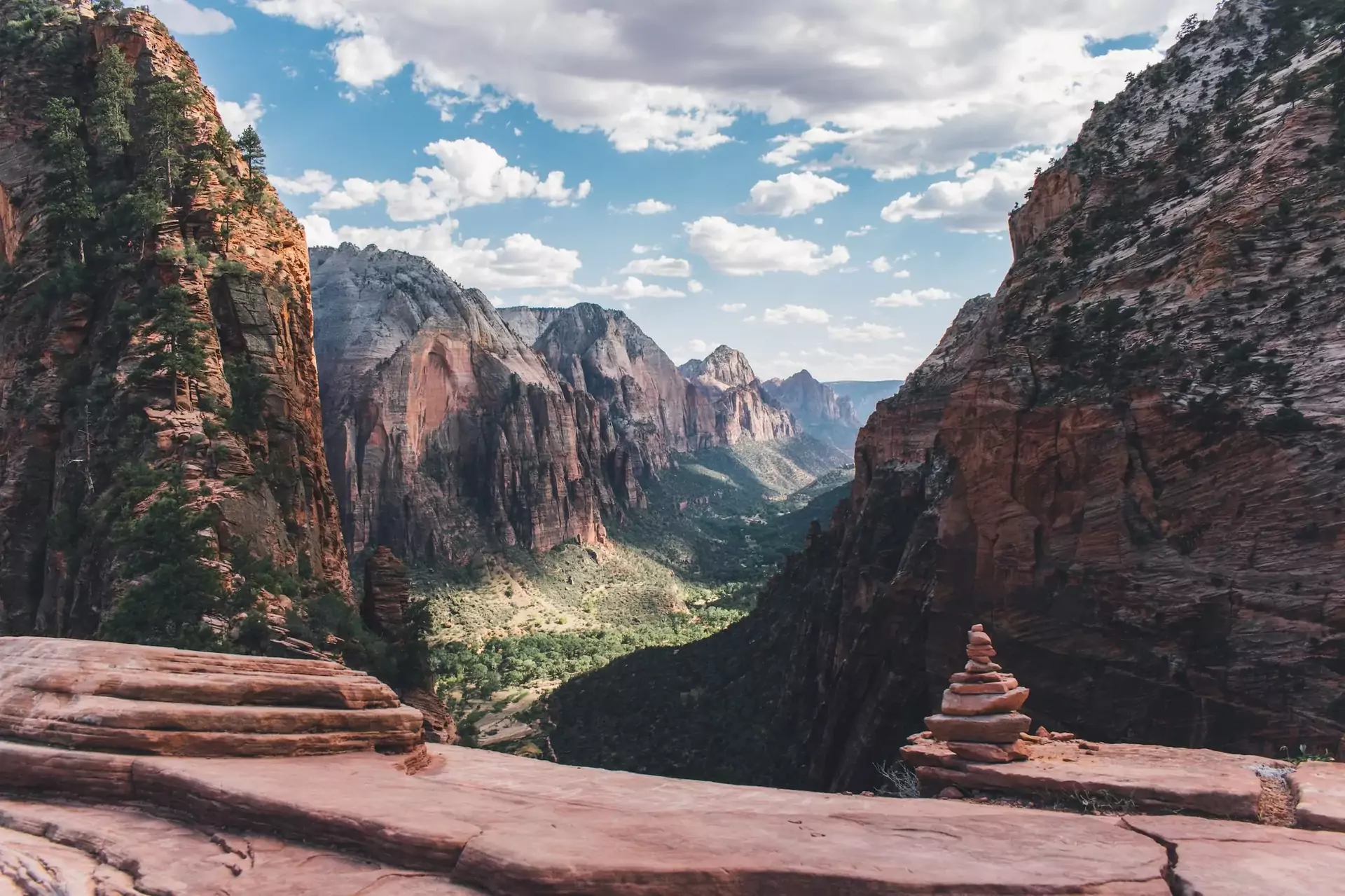
Angels Landing requires a permit year-round, awarded by lottery

The climate of Zion National Park

Zion National Park’s climate is shaped by its high desert setting and varied elevations, resulting in significant seasonal contrasts. Summers (June–August) are hot and dry, with average highs of 36–38°C and lows around 16–20°C. July and August can see temperatures soar above 40°C, and the North American Monsoon brings frequent afternoon thunderstorms, increasing the risk of flash floods, especially in slot canyons. Despite the heat, humidity remains low, and mornings and evenings are more comfortable. Sun exposure is intense, and UV levels are high, so sun protection and hydration are essential.

Winters (December–February) are cold and often wet, with daytime highs of 10–15°C and nighttime lows dipping below freezing. Snow is possible, particularly at higher elevations, though it usually melts quickly in the canyon. Winter brings fewer crowds, and some trails may be icy or closed due to hazardous conditions. Spring (March–May) and fall (September–November) are the most pleasant seasons, with highs ranging from 15–28°C and cooler nights. These periods see blooming wildflowers in spring and vibrant foliage in autumn. Rain is more common in spring, while fall is generally drier and clearer. Zion receives about 400 mm of precipitation annually, with most rain falling in winter and early spring, and the park enjoys over 2,600 hours of sunshine each year. Winds are generally light to moderate but can increase during storms.

Average climate data for Zion National Park, United States
Month Jan Feb Mar Apr May Jun Jul Aug Sep Oct Nov Dec Year
Average maximum temperature (°C) 12 15 19 23 30 35 38 37 33 26 17 12 38
Average minimum temperature (°C) -1 1 3 7 12 17 21 20 16 9 3 -2 -2
Average precipitation (mm) 46 50 52 33 17 8 31 37 26 33 36 42 411
Average rainfall days (days) 6 8 8 6 4 3 5 7 5 5 5 6 68
Average snowfall (mm) 23 25 18 2 0 0 0 0 0 0 13 25 107
Average snowfall days (days) 0 1 0 0 0 0 0 0 0 0 0 1 2
Average daily daylight hours (h) 9 10 12 13 14 14 14 13 12 11 10 9 12

Travel info

  • Spring (March–May): Mild and variable, with highs from 15–28°C. Rain and occasional thunderstorms are common, especially in March. Wildflowers bloom and rivers run high. Dress in layers and pack a rain jacket.
  • Summer (June–August): Hot and dry, with highs of 36–38°C and frequent afternoon thunderstorms. Flash floods are a risk in canyons. Hike early or late, use sun protection, and carry plenty of water and salty snacks.
  • Autumn (September–November): Warm and pleasant, with highs from 18–28°C. Cooler nights and fewer storms. Autumn colours peak in late October. Ideal for hiking and photography – bring layers for cool evenings.
  • Winter (December–February): Cold and sometimes snowy, with highs of 10–15°C and lows below freezing. Some trails may be icy or closed. Fewer crowds and unique snowy canyon views – pack warm, waterproof clothing and check trail conditions.
  • Travel Tips: Weather can change quickly – always check forecasts. Hydration is vital year-round. Flash floods are a real danger in summer; avoid canyons if storms are forecast. Layered clothing is best for temperature swings.

The best time to visit Zion National Park

The best time to visit Zion National Park is in spring (April–May) and fall (late September–October), when temperatures are mild (15–28°C), crowds are thinner, and the park’s wildflowers or autumn foliage are at their peak. These seasons offer comfortable weather for hiking, fewer thunderstorms, and the most vibrant landscapes.

The worst time to visit Zion National Park

The least favourable time is from late June to August, when extreme heat (often above 38°C), frequent thunderstorms, and peak crowds make hiking and sightseeing challenging. Winter (December–February) is also less ideal for hiking due to cold, wet conditions, icy trails, and limited daylight, though it offers solitude and scenic snowy vistas.

Frequently asked questions

What is the climate like in Zion National Park year-round?

Zion has a desert climate with hot, dry summers (36–38°C), mild to cold winters (10–15°C), and variable spring and autumn weather. Rain and thunderstorms are most common in spring and summer; snow is possible in winter.

When is the best time to visit Zion National Park?

The best times to visit are April–May and late September–October, when temperatures are mild, crowds are smaller, and wildflowers or autumn colours are at their best. These seasons offer ideal hiking and sightseeing conditions.

Does it snow in Zion National Park?

Yes, snow can fall in Zion during winter, especially at higher elevations. Snow in the canyon is usually light and melts quickly, but trails can be icy or closed, so check conditions before hiking.

How hot does it get in Zion National Park during summer?

Summer temperatures often reach 36–38°C, with peaks above 40°C. The heat, combined with intense sun and low humidity, makes hydration and sun protection essential for outdoor activities.

Are flash floods a risk in Zion National Park?

Yes, flash floods are a serious risk, especially in summer during afternoon thunderstorms. Always check weather forecasts and avoid slot canyons if storms are predicted.

How much rain does Zion National Park get?

Zion receives about 400 mm of precipitation annually, with most rain falling in winter and spring. Summer storms can bring intense but brief rainfall, often causing flash floods.

What should I pack for Zion National Park?

Pack layers for temperature swings, sun protection, a refillable water bottle, and a rain jacket. In summer, bring salty snacks and avoid midday hikes. In winter, bring warm, waterproof clothing and check trail conditions.

Minimum and maximum temperatures in Zion National Park

The warmest month, with the highest average maximum temperature, is July (38.4 °C). The month with the lowest average maximum temperature is December (11.9 °C). Overall, the average maximum temperature over the whole year is 24.8 °C.

The month with the highest average minimum temperature is July (20.6 °C). The coldest month, with the lowest average minimum temperature, is December (-1.5 °C). Overall, the average minimum temperature over the whole year is 8.7 °C.

Rainfall amount in Zion National Park

The wettest month, with the highest amount of precipitation, is March (52.1 mm). The driest month, with the least amount of precipitation, is June (7.9 mm). Over the whole year there are 411.2 mm of rainfall on average.

Rainfall days in Zion National Park

The month with the most days of rain is March (7.9 days). The month with the fewest days of rain is June (2.6 days). Over the whole year there are 67.8 days of rain on average.

Snowfall amount in Zion National Park

The month with the most snowfall is December (25.5 mm). The months with the least snowfall are May, June, July, August, September and October (0 mm). Over the whole year there are 106.6 mm of snowfall on average.

Snowfall days in Zion National Park

The month with the most days of snowfall is December (0.7 days). The months with the fewest days of snowfall are May, August and October (0 days). Over the whole year there are 2.5 days of snowfall on average.

Daylight hours and sunshine hours in Zion National Park

The month with the longest days, so the most daylight, is June (Average daylight: 14.1 h). The month with the shortest days, so the least daylight, is December (Average daylight: 9.1 h). Over the whole year there are 11.8 h of daylight per day on average.

Was this page helpful?
Feedback