Great Basin National Park climate data

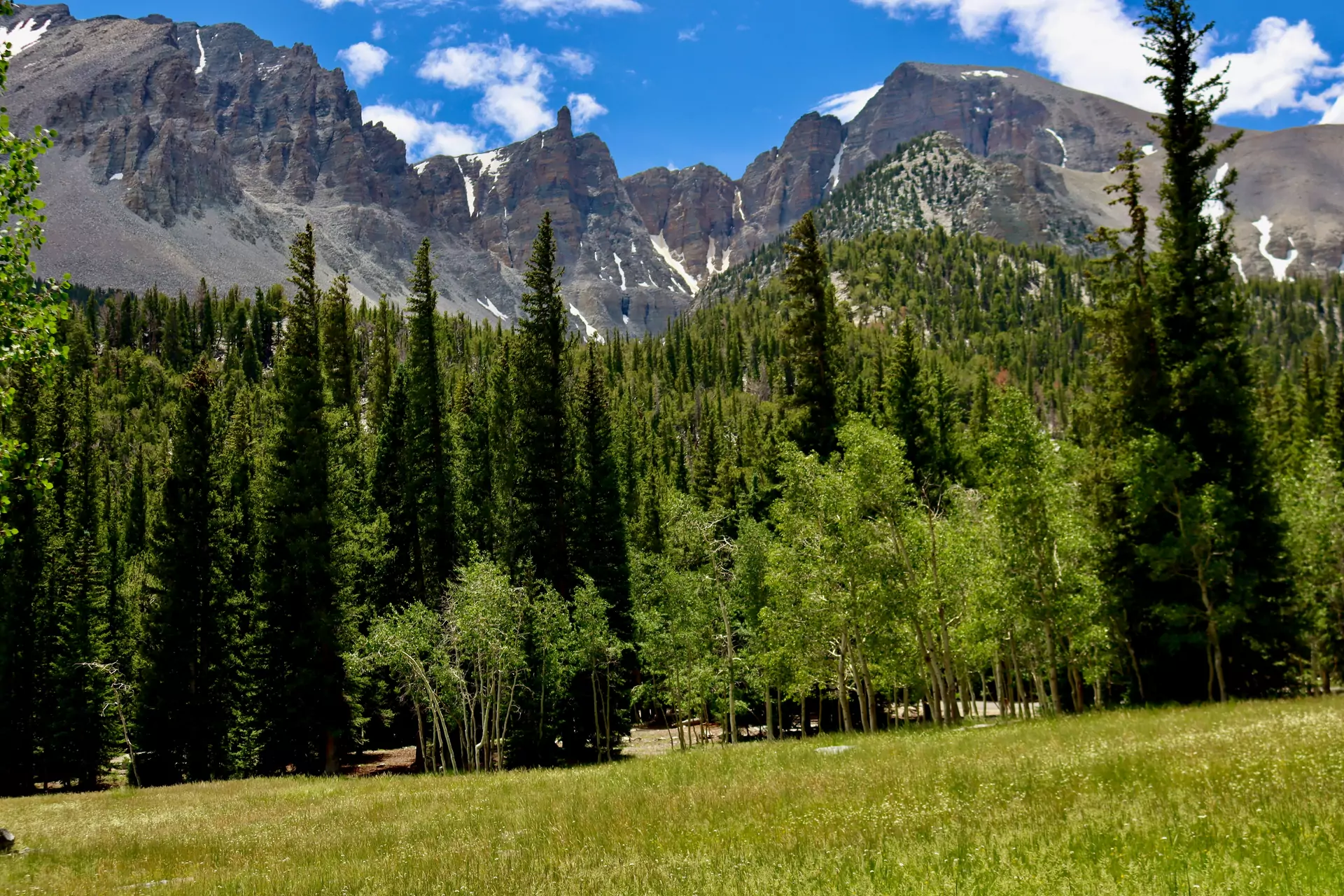
Great Basin National Park, in eastern Nevada, features a high desert climate with dramatic elevation changes. Summers are warm, dry, and sunny, while winters are cold, snowy, and crisp. The park’s sharp day-night temperature swings, low humidity, and varied weather by altitude make it a unique destination for hiking, stargazing, and alpine adventure year-round.

Best times to travel

The best times to travel section shows how the months compare for a visit, so you can find the time of year that fits what you want to do.

Background colours of the months:
The colour shows the typical temperature: yellow (hot), green (mild) and blue (cold). How strong the colour is shows the travel season: full colour means high season, soft colour means shoulder season and soft-striped means off season.

Weather symbols:
Each month has one symbol showing what the weather is typically like, such as hot and sunny, freezing or a rainy or snowy season. Use them to quickly spot months that match the weather you want, or to avoid the ones that don't.

Crowdedness:
The people icon shows how busy the place usually is. The more people, the more crowded it gets.

Additional notes:
The grey info boxes point out special things worth knowing, like recurring weather issues or seasonal events.

for Great Basin National Park, United States
🌨️
Jan
🌨️
Feb
🌨️
Mar
⛅
Apr
⛅
May
⛅
Jun
🔥
Jul
🔥
Aug
⛅
Sep
⛅
Oct
🌨️
Nov
🌨️
Dec
High season: June - Sep.
Shoulder season: May, Oct.
Crowdedness: 3 (Few tourists)
Tap on a month for more info Hover over a month for more info
Wheeler Peak Scenic Drive usually closed by snow November to late May, bristlecone groves and high trails best late June to October
Lehman Cave tours require advance booking and sell out in summer
Remote location: many businesses in nearby Baker close November to March

The climate of Great Basin National Park

Great Basin National Park’s climate is shaped by its high elevation and desert setting, resulting in four distinct seasons and significant weather variation. Summers (June–August) are warm and dry in the valleys, with average highs of 28–33°C and cool nights around 13–15°C. Higher elevations remain much cooler, rarely exceeding 21°C. Afternoon thunderstorms are common, and humidity stays low, making even hot days feel comfortable. The park enjoys abundant sunshine, and wildflowers bloom in alpine meadows, while snow may linger on the highest peaks into July.

Winters (December–February) are cold and snowy, especially above 2,000 metres. Valley highs average 4–7°C, with lows dipping to –6°C or lower. Snowfall is frequent at higher elevations, with up to 170 cm annually, and Wheeler Peak Scenic Drive is typically closed to vehicles due to snow. Spring (March–May) and autumn (September–November) are transitional, with rapidly changing conditions – expect everything from sunny 20°C days to frosty mornings, rain, or snow. Spring brings melting snow, rushing streams, and blooming wildflowers, while fall features crisp air and brilliant foliage. Weather can change quickly, and sharp drops in temperature at night are common throughout the year. Annual precipitation is low, averaging 362 mm, with most falling as winter snow or summer thunderstorms. Winds are generally light to moderate, but can be brisk during storms, especially at higher elevations.

Average climate data for Great Basin National Park, United States
Month Jan Feb Mar Apr May Jun Jul Aug Sep Oct Nov Dec Year
Average maximum temperature (°C) 5 6 9 14 19 25 30 28 24 17 9 5 30
Average minimum temperature (°C) -7 -6 -4 -0 4 9 14 13 8 3 -3 -7 -7
Average precipitation (mm) 27 30 34 31 32 22 24 30 27 32 24 24 338
Average snowfall (mm) 324 349 338 182 54 5 0 0 5 93 220 272 1,841
Average daily daylight hours (h) 9 10 12 13 14 14 14 13 12 11 10 9 12

Travel info

  • Winter (Dec–Feb): Cold and snowy, with valley highs of 4–7°C and lows below –6°C. Heavy snow at higher elevations. Ideal for snowshoeing and solitude, but many roads and trails are closed. Dress in thermal layers and check conditions before visiting.
  • Spring (Mar–May): Cool and variable, with highs from 10–20°C. Melting snow creates muddy trails and rushing streams. Wildflowers bloom, but snow may linger on high trails. Pack layers, waterproof boots, and check for trail closures.
  • Summer (Jun–Aug): Warm and dry in valleys (28–33°C), cool at altitude. Afternoon thunderstorms are common. Best for hiking, stargazing, and scenic drives. Bring sun protection, a jacket for cool nights, and plenty of water.
  • Autumn (Sep–Nov): Crisp and clear, with highs from 21°C in September to 10°C in November. Stunning autumn foliage and fewer crowds. Nights are cold – pack warm layers and be prepared for early snow at elevation.
  • Travel tip: Weather can change rapidly – always check the forecast and dress in layers. Summer and early autumn are best for hiking and camping. At high elevations, snow can fall any time of year.

The best time to visit Great Basin National Park

The best time to visit Great Basin National Park is from June to September, when most trails are snow-free, wildflowers bloom, and stargazing is at its best. Early summer offers snow-capped peaks and rushing streams, while late summer and early autumn bring mild days, cool nights, and brilliant foliage.

The worst time to visit Great Basin National Park

The least favourable time to visit is in winter (December–March), when cold temperatures, heavy snow, and road closures limit access to higher elevations and many trails. Spring can also be challenging, with lingering snow and muddy conditions, though it offers solitude and early wildflowers.

Frequently asked questions

What is the climate like in Great Basin National Park year-round?

Great Basin has a high desert climate with warm, dry summers (28–33°C in valleys), cold, snowy winters (4–7°C highs, lows below –6°C), and sharp temperature swings. Weather varies by elevation, with cooler temperatures and more snow at higher altitudes.

When is the best time to visit Great Basin National Park?

June to September is best for hiking, camping, and stargazing. Most trails are accessible, wildflowers bloom, and days are warm. Early summer features snow-capped peaks, while late summer and autumn bring mild weather and autumn colours.

Does it snow in Great Basin National Park?

Yes, especially at higher elevations. Snow can fall any time of year above 2,000 metres. Winters are snowy, with up to 170 cm annually, and some roads and trails remain closed until late spring.

How hot does it get in Great Basin National Park during summer?

Valley highs in summer reach 28–33°C, but higher elevations remain much cooler, rarely exceeding 21°C. Nights are always cool, and afternoon thunderstorms are common.

How much rain does Great Basin National Park get?

Annual precipitation averages 362 mm, with most falling as winter snow or summer thunderstorms. The park is generally dry, with sharp drops in humidity and temperature at night.

What should I pack for a trip to Great Basin National Park?

Pack layers for large day-night temperature swings, sun protection, and sturdy boots for hiking. In spring and autumn, bring waterproof gear for rain or snow. Even in summer, a jacket is needed for cool nights.

Is Great Basin National Park crowded year-round?

No, the park is one of the least-visited in the U.S. Summer is busiest, but crowds are minimal compared to other national parks. Winter offers solitude, but access is limited by snow.

Minimum and maximum temperatures in Great Basin National Park

The warmest month, with the highest average maximum temperature, is July (29.9 °C). The month with the lowest average maximum temperature is January (4.8 °C). Overall, the average maximum temperature over the whole year is 15.9 °C.

The month with the highest average minimum temperature is July (14 °C). The coldest month, with the lowest average minimum temperature, is January (-7.3 °C). Overall, the average minimum temperature over the whole year is 2.1 °C.

Rainfall amount in Great Basin National Park

The wettest month, with the highest amount of precipitation, is March (34.3 mm). The driest month, with the least amount of precipitation, is June (22.1 mm). Over the whole year there are 337.7 mm of rainfall on average.

Snowfall amount in Great Basin National Park

The month with the most snowfall is February (349.2 mm). The months with the least snowfall are July and August (0 mm). Over the whole year there are 1,841.3 mm of snowfall on average.

Daylight hours and sunshine hours in Great Basin National Park

The month with the longest days, so the most daylight, is June (Average daylight: 14.1 h). The month with the shortest days, so the least daylight, is December (Average daylight: 9 h). Over the whole year there are 11.8 h of daylight per day on average.

Was this page helpful?
Feedback