We use cookies and external services: MapTiler for interactive maps and Google Maps to show route duration/distance. Both may process personal data such as your IP address, including transfers outside the EU/EEA. See our privacy policy for details. By clicking ‘Accept all’, you consent to this.
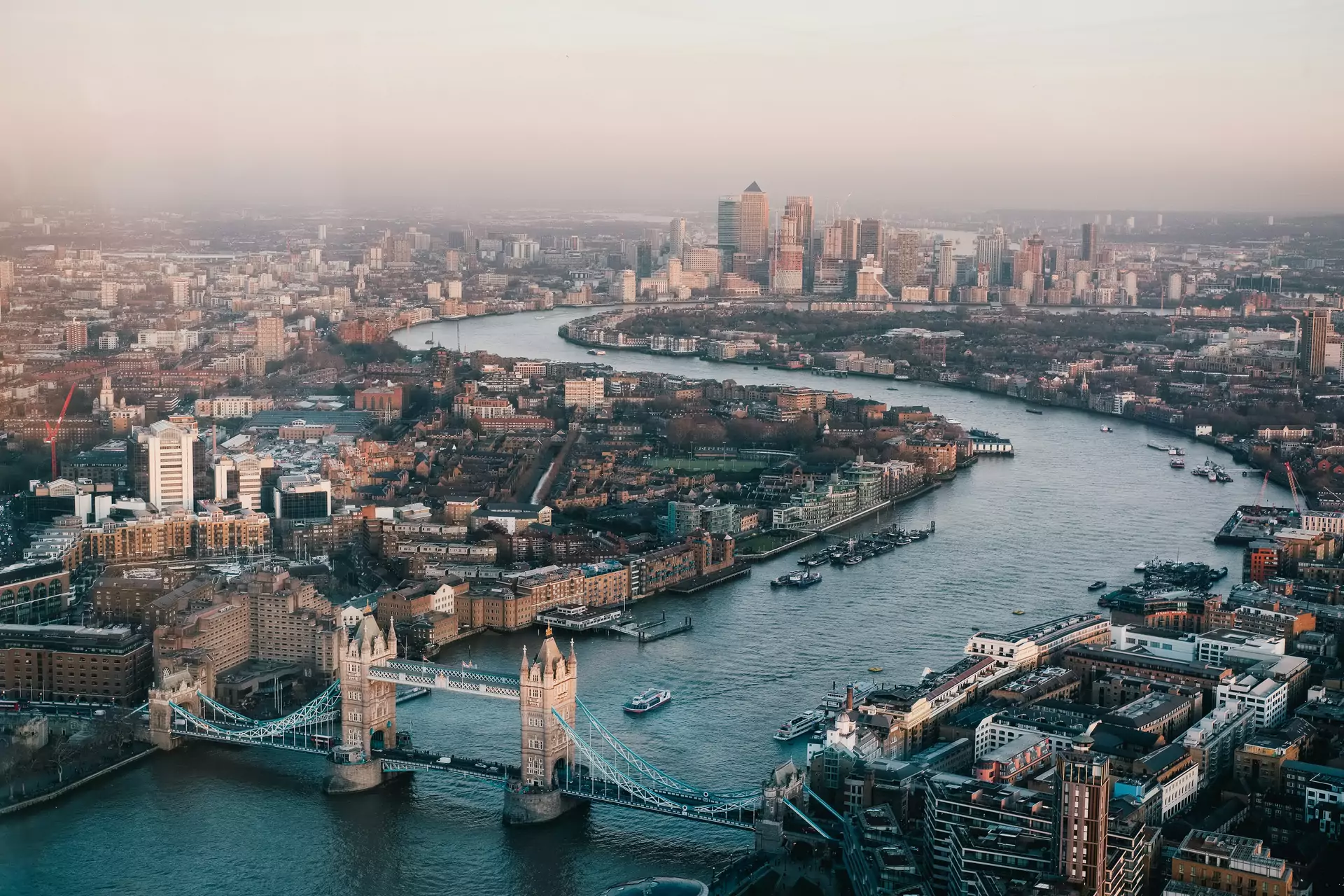
London experiences a temperate maritime climate characterised by mild temperatures year-round, frequent but light rainfall, and moderate seasonal variations. The city enjoys relatively stable weather conditions with average temperatures around 11°C, making it a comfortable destination throughout the year despite its reputation for unpredictable weather patterns.
The best times to travel section shows how the months compare for a visit, so you can find the time of year that fits what you want to do.
Background colours of the months:
The colour shows the typical temperature: yellow (hot), green (mild) and blue (cold). How strong the colour is shows the travel season: full colour means high season, soft colour means shoulder season and soft-striped means off season.
Weather symbols:
Each month has one symbol showing what the weather is typically like, such as hot and sunny, freezing or a rainy or snowy season. Use them to quickly spot months that match the weather you want, or to avoid the ones that don't.
Crowdedness:
The people icon shows how busy the place usually is. The more people, the more crowded it gets.
Additional notes:
The grey info boxes point out special things worth knowing, like recurring weather issues or seasonal events.
The climate of London
London's climate is influenced by its maritime location, resulting in mild winters and temperate summers with minimal temperature extremes. The city experiences four distinct seasons, with winter temperatures averaging around 5°C in January and summer highs reaching approximately 23°C in July. The urban heat island effect makes central London slightly warmer than surrounding rural areas, particularly noticeable during nighttime and winter months.
Precipitation occurs throughout the year, totalling approximately 615mm annually, though London receives less rainfall than many other European cities. Rain typically falls as light drizzle or brief showers rather than heavy downpours, contributing to the city's reputation for frequent but manageable wet weather. London enjoys about 1,675 sunshine hours per year, with the sunniest period from May to August offering 6-7 hours of daily sunshine, while winter months see only 2-3 hours. Prevailing winds come from the west-southwest, and the city benefits from some shelter provided by surrounding hills, reducing overall rainfall compared to nearby regions.
| Average climate data for London, United Kingdom | |||||||||||||
|---|---|---|---|---|---|---|---|---|---|---|---|---|---|
| Month | Jan | Feb | Mar | Apr | May | Jun | Jul | Aug | Sep | Oct | Nov | Dec | Year |
| Average maximum temperature (°C) | 7 | 7 | 10 | 14 | 17 | 20 | 22 | 22 | 19 | 15 | 10 | 8 | 22 |
| Average minimum temperature (°C) | 2 | 3 | 4 | 6 | 8 | 11 | 13 | 14 | 11 | 9 | 6 | 3 | 2 |
| Average precipitation (mm) | 23 | 30 | 24 | 22 | 26 | 45 | 36 | 38 | 26 | 29 | 34 | 37 | 369 |
| Average rainfall days (days) | 11 | 10 | 11 | 13 | 14 | 16 | 16 | 14 | 10 | 12 | 13 | 11 | 152 |
| Average snowfall (mm) | 15 | 16 | 7 | 1 | 0 | 0 | 0 | 0 | 0 | 0 | 2 | 9 | 50 |
| Average snowfall days (days) | 2 | 3 | 1 | 0 | 0 | 0 | 0 | 0 | 0 | 0 | 0 | 1 | 8 |
| Average relative humidity (%) | 87 | 84 | 79 | 76 | 76 | 77 | 73 | 73 | 77 | 81 | 85 | 87 | 80 |
| Average wind speed (km/h) | 17 | 17 | 16 | 13 | 14 | 13 | 13 | 13 | 13 | 14 | 16 | 17 | 15 |
| Average daily daylight hours (h) | 8 | 10 | 11 | 13 | 15 | 16 | 16 | 14 | 12 | 10 | 8 | 7 | 12 |
| Average daily sunshine hours (h) | 4 | 3 | 5 | 7 | 7 | 7 | 7 | 7 | 7 | 4 | 4 | 4 | 6 |
| Average cloud coverage (%) | 57 | 61 | 55 | 51 | 52 | 54 | 50 | 50 | 49 | 56 | 59 | 59 | 54 |
| Average UV index | 2 | 2 | 3 | 3 | 4 | 5 | 5 | 4 | 4 | 3 | 2 | 2 | 3 |
Travel info
- Spring (March-May): Mild temperatures 8-18°C, increasing daylight hours, blooming parks and gardens, occasional rain showers requiring light layers and waterproof clothing
- Summer (June-August): Warmest period with temperatures 15-23°C, longest days with up to 7 hours of sunshine, ideal for outdoor activities and sightseeing, pack light jacket for cool evenings
- Autumn (September-November): Gradually cooling temperatures 10-20°C, beautiful autumn colours in parks, increased rainfall especially in October-November, perfect for indoor attractions
- Winter (December-February): Cool temperatures 5-9°C, shortest days with limited sunshine, frequent rain and occasional snow, excellent time for museums and indoor activities
- General Tips: Always carry an umbrella or waterproof jacket, dress in layers for unpredictable weather changes, comfortable waterproof shoes essential for walking
- Weather Patterns: Rain can occur any time of year, weather changes quickly throughout the day, wind speeds average 12-16 km/h year-round
The best time to visit London
The best time to visit London is from mid-May to mid-September, particularly during summer months (June-August) when temperatures are most comfortable at 15-23°C and daylight extends up to 16 hours. This period offers the warmest weather, most sunshine hours, and ideal conditions for outdoor sightseeing, walking tours, and enjoying London's numerous parks. While occasional rain showers still occur, they are generally brief and manageable, making it perfect for exploring the city's outdoor attractions and experiencing the vibrant summer atmosphere.
The worst time to visit London
Winter months from November to February represent the most challenging time to visit London due to cold temperatures averaging 5-9°C, limited daylight hours (as few as 8 hours in December), and frequent rainfall. The weather is often grey, damp, and windy, with occasional snow that can disrupt transport. However, this period can still be enjoyable for travellers interested in indoor attractions, Christmas markets, and experiencing London's cosy pub culture, though outdoor activities become less appealing due to the harsh weather conditions.
Frequently asked questions
London maintains a mild climate with average temperatures around 11°C annually. Winter temperatures average 5°C in January, while summer peaks reach approximately 23°C in July, creating comfortable conditions year-round.
London receives about 615mm of rainfall annually, distributed fairly evenly throughout the year. Rain typically falls as light drizzle or brief showers rather than heavy downpours, occurring on approximately 112 days per year.
Summer months from June to August offer the most sunshine, with up to 7 hours of daily sunlight. London receives approximately 1,675 sunshine hours annually, with winter months seeing only 2-3 hours daily.
Snow in London is relatively rare and typically light when it occurs. Winter temperatures rarely drop below freezing, and significant snowfall that disrupts the city happens infrequently, usually causing temporary transport delays.
Pack layers including waterproof jacket, umbrella, comfortable walking shoes, and clothing suitable for temperatures ranging 5-23°C depending on season. Weather can change quickly, so versatile clothing options are essential.
Yes, London weather can change rapidly throughout the day due to its maritime climate. It's common to experience sun, clouds, and rain within hours, making layered clothing and waterproof items essential.
Winter and early spring months typically experience the strongest winds, averaging 13-19 km/h. February tends to be windiest, while summer months see calmer conditions with average wind speeds around 11-12 km/h.
Minimum and maximum temperatures in London
The warmest month, with the highest average maximum temperature, is July (22.2 °C). The month with the lowest average maximum temperature is January (6.7 °C). Overall, the average maximum temperature over the whole year is 14.3 °C.
The month with the highest average minimum temperature is August (13.9 °C). The coldest month, with the lowest average minimum temperature, is January (2.2 °C). Overall, the average minimum temperature over the whole year is 7.5 °C.
Rainfall amount in London
The wettest month, with the highest amount of precipitation, is June (44.7 mm). The driest month, with the least amount of precipitation, is April (21.8 mm). Over the whole year there are 369.3 mm of rainfall on average.
Rainfall days in London
The month with the most days of rain is July (16.4 days). The month with the fewest days of rain is September (9.8 days). Over the whole year there are 152.2 days of rain on average.
Snowfall amount in London
The month with the most snowfall is February (15.8 mm). The months with the least snowfall are May, June, July, August, September and October (0 mm). Over the whole year there are 49.9 mm of snowfall on average.
Snowfall days in London
The month with the most days of snowfall is February (2.5 days). The months with the fewest days of snowfall are July and August (0 days). Over the whole year there are 7.7 days of snowfall on average.
Relative humidity in London
The month with the highest average relative humidity is December (87.4 %). The month with the lowest average relative humidity is July (72.6 %). The overall average relative humidity over the whole year is 79.6 %.
Wind speed in London
The windiest month, with the highest average wind speed, is February (17.5 km/h). The calmest month, with the lowest average wind speed, is September (12.7 km/h). The overall average wind speed over the whole year is 14.6 km/h.
Cloud coverage in London
The month with the cloudiest skies, so the highest cloud coverage, is February (60.8 %). The month with the clearest skies, so the lowest cloud coverage, is September (48.8 %). Over the whole year there is an average cloud coverage of 54.3 %.
Daylight hours and sunshine hours in London
The month with the longest days, so the most daylight, is June (Average daylight: 16.1 h). The month with the shortest days, so the least daylight, is December (Average daylight: 7.1 h). Over the whole year there are 11.7 h of daylight per day on average.
The month with the most sunshine per day is July (Average sunshine: 7.2 h). The month with the least sunshine per day is February (Average sunshine: 3.2 h). Over the whole year there are 5.6 h of sunlight per day on average.
UV index in London
The months with the highest average UV index are June and July (UV index: 5). The months with the lowest average UV index are January, February, November and December (UV index: 2). Over the whole year the average UV index is 3.2.
- London climate overview
- Climate table
- Related travel information for London
- The best time to visit London
- The worst time to visit London
- Frequently asked questions
- Temperature summary
- Rainfall amount summary
- Rainfall days summary
- Snowfall amount summary
- Snowfall days summary
- Relative humidity summary
- Wind speed summary
- Cloud coverage summary
- Daylight hours and sunshine hours summary
- UV index summary
- Other recommended travel destinations