Europe › Norway › Longyearbyen › Climate

Longyearbyen climate data

Longyearbyen, the world’s northernmost town, has an Arctic climate defined by long, frigid winters and brief, cool summers. The area experiences dramatic seasonal changes, including months of polar night and midnight sun. Temperatures are cold year-round, with frequent snow, strong winds, and low precipitation, making Longyearbyen a unique and challenging destination for adventurous travellers.

Best times to travel

The best times to travel section shows how the months compare for a visit, so you can find the time of year that fits what you want to do.

Background colours of the months:
The colour shows the typical temperature: yellow (hot), green (mild) and blue (cold). How strong the colour is shows the travel season: full colour means high season, soft colour means shoulder season and soft-striped means off season.

Weather symbols:
Each month has one symbol showing what the weather is typically like, such as hot and sunny, freezing or a rainy or snowy season. Use them to quickly spot months that match the weather you want, or to avoid the ones that don't.

Crowdedness:
The people icon shows how busy the place usually is. The more people, the more crowded it gets.

Additional notes:
The grey info boxes point out special things worth knowing, like recurring weather issues or seasonal events.

for Longyearbyen, Norway
❄️
Jan
❄️
Feb
❄️
Mar
❄️
Apr
❄️
May
❄️
Jun
⛅
Jul
☀️
Aug
❄️
Sep
❄️
Oct
❄️
Nov
❄️
Dec
High season: March - April, June - Aug.
Shoulder season: Feb., May, Sep.
Crowdedness: 4 (Moderate tourist numbers)
Tap on a month for more info Hover over a month for more info
Midnight sun about 19 April to 23 August, polar night about 25 October to 15 February
Leaving town without a rifle or guide is not allowed because of polar bears, so tours are required
Boat trips and kayaking run June to September, snowmobile, dog sledding and ice cave tours February to April

The climate of Longyearbyen

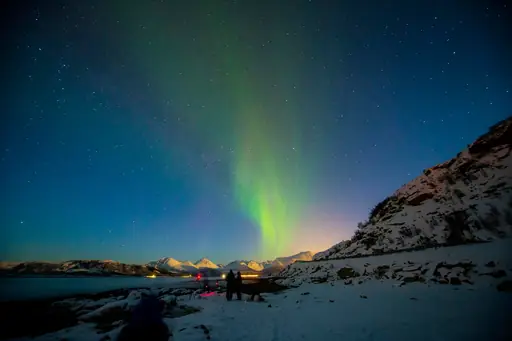
Longyearbyen’s climate is classified as polar, with extreme seasonal contrasts in temperature, daylight, and weather. Winters are long and harsh, stretching from October to May, with average daily highs from -13°C to -9°C and lows often dipping below -20°C. The coldest months are February and March, when temperatures can drop to -25°C or lower. Strong winds are common, increasing the risk of frostbite and making the air feel even colder. Snowfall is frequent, with a permanent snow cover from October to May, while precipitation remains relatively low, averaging 200–300 mm annually. The polar night dominates from mid-November to late January, when the sun never rises and the landscape is bathed in darkness – an ideal time for viewing the Northern Lights.

Spring arrives in late April, bringing the return of sunlight and a gradual warming trend. By June, the midnight sun takes over, offering 24-hour daylight until late August. Summers are short and cool, with average highs of 5–7°C in July and August, though occasional warm spells can push temperatures above 10°C. Rain is more common at sea level from mid-June to mid-August, but snow can still dust the surrounding mountains. Winds are generally lighter in summer, but fog and low clouds can occur. Autumn is brief, with temperatures quickly dropping and the first frosts and snowfalls returning by September. Throughout the year, the weather can change rapidly, and the dramatic shifts in daylight and temperature define life and travel in Longyearbyen.

Average climate data for Longyearbyen, Svalbard and Jan Mayen
Month Jan Feb Mar Apr May Jun Jul Aug Sep Oct Nov Dec Year
Average maximum temperature (°C) -13 -13 -13 -9 -3 3 7 6 1 -4 -8 -11 7
Average minimum temperature (°C) -20 -21 -20 -16 -7 -1 3 2 -3 -9 -14 -18 -21
Average precipitation (mm) 22 28 29 16 13 18 24 30 25 19 22 25 271
Average rainfall days (days) 2 2 2 3 4 13 17 18 14 5 3 3 86
Average snowfall days (days) 21 17 19 17 16 7 1 2 11 21 22 22 176
Average water temperature (°C) 2 1 2 1 2 3 5 6 5 4 3 2 3
Average daily daylight hours (h) 0 2 11 11 0 0 0 4 14 5 0 0 4
Average daily sunshine hours (h) 0 0 2 7 8 5 5 4 2 0 0 0 3
Average UV index 0 0 0 1 2 2 2 1 1 0 0 0 1

Travel info

  • Winter (October–May): Extremely cold, snowy, and windy with average highs from -13°C to -9°C. Polar night from mid-November to late January brings 24-hour darkness and excellent chances to see the Northern Lights. Dress in thermal layers and protect exposed skin from frostbite.
  • Spring (late April–May): Gradual return of sunlight, temperatures still below freezing but rising. Snow cover begins to melt, and outdoor activities increase. Sunglasses are essential due to strong glare from snow and sun.
  • Summer (June–August): Cool, with highs of 5–7°C, 24-hour daylight, and occasional rain or fog. Ideal for hiking, wildlife watching, and boat trips. Bring waterproof clothing and be prepared for rapidly changing weather.
  • Autumn (September): Temperatures drop quickly, first frosts and snowfalls return, and daylight hours decrease. The tundra displays vibrant autumn colours. Warm, windproof clothing is necessary.
  • General tips: Weather is unpredictable – always check the forecast, dress in layers, and carry windproof and waterproof gear. Sun protection is needed in summer, and headlamps are useful during the polar night.

The best time to visit Longyearbyen

The best time to visit Longyearbyen is from late May to August, when the midnight sun provides 24-hour daylight, temperatures are at their mildest (5–7°C), and most outdoor activities – including hiking, wildlife watching, and boat trips – are possible. This period also offers the best opportunities to explore the Arctic landscape and observe unique wildlife.

The worst time to visit Longyearbyen

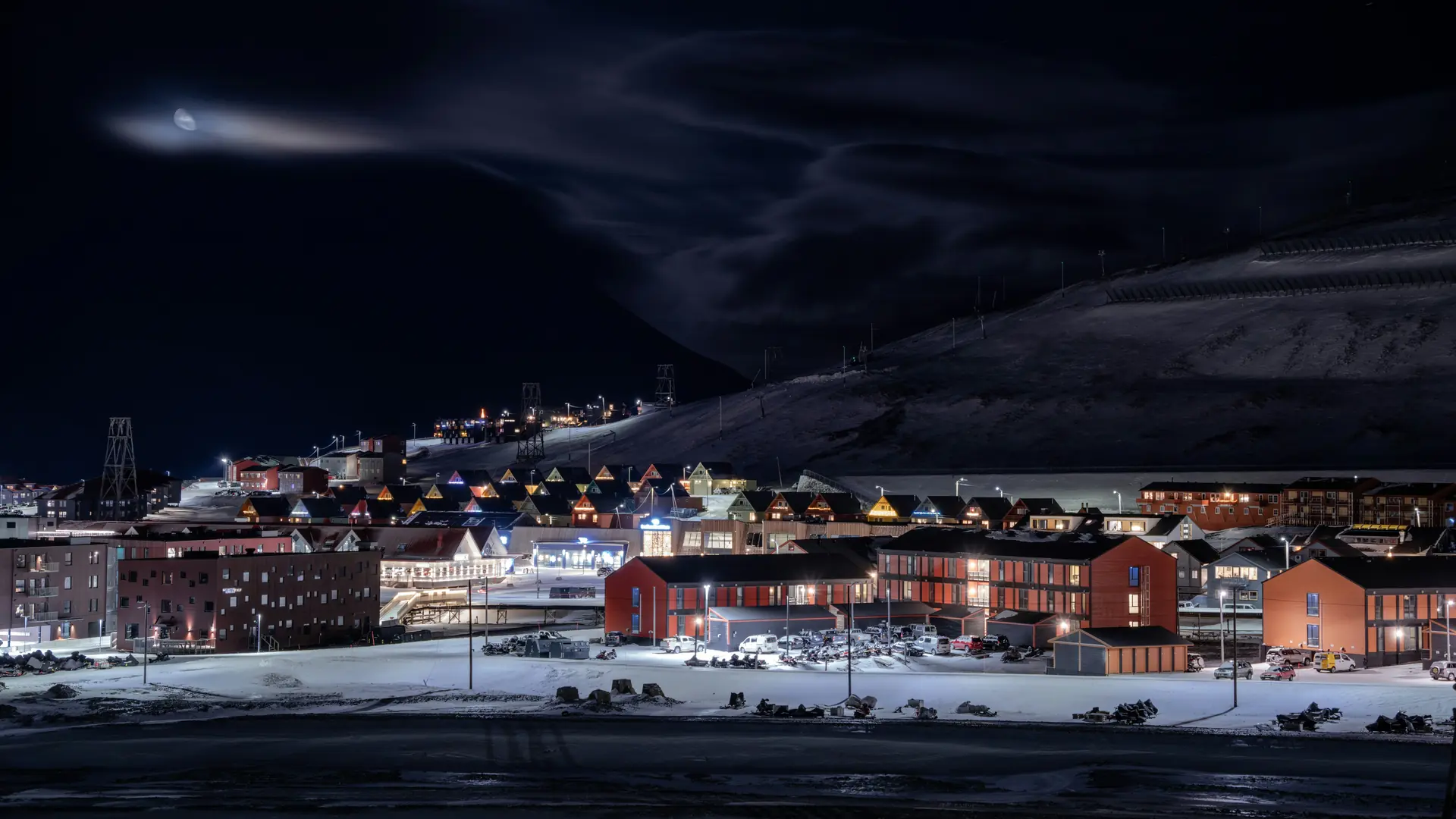
The least favourable time to visit Longyearbyen is during the polar night, from mid-November to late January. During these months, the town experiences 24-hour darkness, extreme cold, and limited outdoor activities. While it’s a special time for Northern Lights, the harsh conditions and lack of daylight can be challenging for many travellers.

Frequently asked questions

What is the climate like in Longyearbyen year-round?

Longyearbyen has an Arctic climate with long, cold winters and short, cool summers. Temperatures range from -20°C in winter to 5–7°C in summer, with frequent snow, strong winds, and dramatic seasonal changes in daylight.

When can I experience the midnight sun in Longyearbyen?

The midnight sun occurs from late April to late August, when the sun remains above the horizon 24 hours a day. This unique phenomenon allows for continuous daylight and extended opportunities for outdoor activities.

Does it snow in Longyearbyen during summer?

Snow can fall at any time of year in Longyearbyen, but it is rare from late June to late August. During summer, rain is more common at sea level, while the surrounding mountains may still receive occasional snow.

What is the polar night in Longyearbyen?

Polar night lasts from mid-November to late January, when the sun does not rise above the horizon. The town is in complete darkness, creating excellent conditions for viewing the Northern Lights but limiting most outdoor activities.

How windy does it get in Longyearbyen?

Longyearbyen often experiences strong winds, especially in winter, which can make already cold temperatures feel much colder. Wind speeds frequently reach 30–40 km/h, so windproof clothing is essential.

What should I pack for a trip to Longyearbyen?

Pack thermal layers, windproof and waterproof outerwear, insulated boots, gloves, and a hat for winter. In summer, bring warm layers, waterproof gear, sunglasses, and sun cream. Weather can change rapidly, so always be prepared.

Is Longyearbyen suitable for outdoor activities year-round?

Outdoor activities are possible year-round, but the best conditions are from late May to August. Winter is ideal for snowmobiling and Northern Lights, while summer offers hiking, wildlife viewing, and boat tours under the midnight sun.

Minimum and maximum temperatures in Longyearbyen

The warmest month, with the highest average maximum temperature, is July (7.1 °C). The month with the lowest average maximum temperature is February (-13 °C). Overall, the average maximum temperature over the whole year is -4.7 °C.

The month with the highest average minimum temperature is July (3 °C). The coldest month, with the lowest average minimum temperature, is February (-21 °C). Overall, the average minimum temperature over the whole year is -10.3 °C.

Water temperature in Longyearbyen

The month with the highest average water temperature is August (5.9 °C). The month with the lowest average water temperature is February (0.9 °C). Overall, the average water temperature over the whole year is 3 °C.

Rainfall amount in Longyearbyen

The wettest month, with the highest amount of precipitation, is August (29.8 mm). The driest month, with the least amount of precipitation, is May (13 mm). Over the whole year there are 270.7 mm of rainfall on average.

Rainfall days in Longyearbyen

The month with the most days of rain is August (17.9 days). The month with the fewest days of rain is January (1.9 days). Over the whole year there are 85.9 days of rain on average.

Snowfall days in Longyearbyen

The month with the most days of snowfall is December (22 days). The month with the fewest days of snowfall is July (0.9 days). Over the whole year there are 176.1 days of snowfall on average.

Daylight hours and sunshine hours in Longyearbyen

The month with the longest days, so the most daylight, is September (Average daylight: 14 h). The months with the shortest days, so the least daylight, are January, May, June, July, November and December (Average daylight: 0 h). Over the whole year there are 3.9 h of daylight per day on average.

The month with the most sunshine per day is May (Average sunshine: 8 h). The months with the least sunshine per day are November and December (Average sunshine: 0 h). Over the whole year there are 2.8 h of sunlight per day on average.

UV index in Longyearbyen

The months with the highest average UV index are May, June and July (UV index: 2). The months with the lowest average UV index are January, February, March, October, November and December (UV index: 0). Over the whole year the average UV index is 0.8.

Was this page helpful?
Feedback