Europe › Norway › Flåm › Climate

Flåm climate data

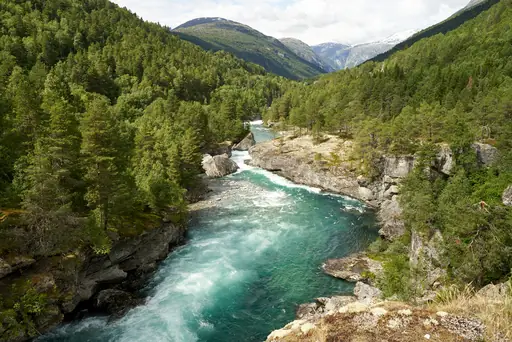
Flåm, nestled deep in Norway’s fjord country, features a cool maritime climate with mild, wet summers and cold, damp winters. The village experiences significant rainfall and snowfall, dramatic seasonal daylight swings, and lush green landscapes. With long summer days and tranquil, snow-dusted winters, Flåm is a scenic destination for outdoor adventure and serene escapes year-round.

Best times to travel

The best times to travel section shows how the months compare for a visit, so you can find the time of year that fits what you want to do.

Background colours of the months:
The colour shows the typical temperature: yellow (hot), green (mild) and blue (cold). How strong the colour is shows the travel season: full colour means high season, soft colour means shoulder season and soft-striped means off season.

Weather symbols:
Each month has one symbol showing what the weather is typically like, such as hot and sunny, freezing or a rainy or snowy season. Use them to quickly spot months that match the weather you want, or to avoid the ones that don't.

Crowdedness:
The people icon shows how busy the place usually is. The more people, the more crowded it gets.

Additional notes:
The grey info boxes point out special things worth knowing, like recurring weather issues or seasonal events.

for Flåm, Norway
❄️
Jan
❄️
Feb
❄️
Mar
❄️
Apr
🌤️
May
🌥️
Jun
🌤️
Jul
🌦️
Aug
⛈️
Sep
⛈️
Oct
🌦️
Nov
🌦️
Dec
High season: June - Aug.
Shoulder season: May, Sep.
Crowdedness: 8 (Very crowded)
Tap on a month for more info Hover over a month for more info
Cruise ships dock almost daily April to September, village is busiest late morning to afternoon
Many hotels, restaurants and shops close November to March, Flåm Railway runs year-round with fewer departures
High mountain hiking trails usually snow-free only from late June to September

The climate of Flåm

Flåm’s climate is shaped by its fjord-side location and proximity to the mountains, resulting in four pronounced seasons and high precipitation. Summers (June–August) are mild and often wet, with average highs of 17°C in July and lows around 10–12°C. July is the warmest and sunniest month, offering up to 19 hours of daylight and 7–8 hours of sunshine daily. Rainfall is frequent, especially in August, and the lush landscape is at its most vibrant. The Baltic influence keeps temperatures moderate, and the fjord remains cool, with water temperatures rarely exceeding 15°C.

Winters (December–February) are cold and damp, with average highs of -2°C to 2°C and lows of -8°C to -2°C. Snow is common but often melts quickly at fjord level, while the surrounding mountains remain snow-capped. Rain and sleet are frequent, and December is the wettest month, with up to 173 mm of precipitation. Days are short, with only 5–6 hours of daylight and 1 hour of sunshine in midwinter. Spring (March–May) and autumn (September–November) are transitional, with rapidly changing weather, cool to mild temperatures (7–16°C), and frequent showers. Winds are generally light to moderate, averaging 10–16 km/h, but can be brisk during storms. Annual precipitation is high, averaging 1,600–1,700 mm, supporting Flåm’s lush valleys and waterfalls. The region’s dramatic weather and shifting light create ever-changing scenery, making it a photographer’s dream.

Average climate data for Flåm, Norway
Month Jan Feb Mar Apr May Jun Jul Aug Sep Oct Nov Dec Year
Average maximum temperature (°C) -5 -5 -2 2 9 13 14 13 9 4 -2 -4 14
Average minimum temperature (°C) -9 -9 -7 -4 1 5 7 6 3 -0 -5 -8 -9
Average precipitation (mm) 124 81 96 45 56 77 89 111 166 168 140 147 1,301
Average rainfall days (days) 22 17 19 14 15 16 19 20 23 23 22 23 233
Average daily daylight hours (h) 6 9 11 14 17 19 18 15 12 10 7 5 12
Average daily sunshine hours (h) 1 2 3 5 7 7 7 6 4 2 1 1 4
Average UV index 0 1 1 3 4 5 5 4 3 1 0 0 2

Travel info

  • Spring (March–May): Cool to mild, with highs from 7–16°C. Frequent rain and occasional late snow. Ideal for hiking and waterfalls – bring layers and a rain jacket.
  • Summer (June–August): Mild and wet, with highs of 15–17°C. Long daylight hours (up to 19 hours in June), frequent showers, and lush scenery. Perfect for fjord cruises, biking, and hiking – pack waterproof gear and sun protection.
  • Autumn (September–November): Cool and colourful, with highs from 7–14°C. Rainfall increases, and days shorten. Early autumn is great for hiking and fewer crowds – bring layers and rain gear.
  • Winter (December–February): Cold and damp, with highs of -2–2°C and lows down to -8°C. Frequent rain, sleet, and occasional snow. Short days (5–6 hours daylight). Enjoy cosy village life, snowshoeing, and the Flåm Railway – dress warmly and in layers.
  • General tips: Weather is changeable – always check the forecast and dress in layers. Summer is peak season; book early for cruises and trains. Winter is tranquil but has limited daylight. Rain gear is essential year-round.

The best time to visit Flåm

The best time to visit Flåm is from June to August, when temperatures are mild (15–17°C), days are longest, and the landscape is lush and vibrant. These months offer ideal conditions for fjord cruises, hiking, and outdoor activities, with extended daylight for exploring and frequent festivals and events.

The worst time to visit Flåm

The least favourable time to visit Flåm is from November to March, when temperatures are coldest, days are shortest, and frequent rain, sleet, or snow can limit outdoor activities. While winter is peaceful and atmospheric, weather can be unpredictable and daylight is limited, though it’s ideal for those seeking tranquillity and hygge.

Frequently asked questions

What is the climate like in Flåm year-round?

Flåm has a cool maritime climate with mild, wet summers and cold, damp winters. Rain and snow are frequent, and the area experiences dramatic shifts in daylight, from long summer days to short winter afternoons.

When is the best time to visit Flåm?

The best time to visit is June to August, when days are longest, temperatures are mild, and the landscape is lush. These months are perfect for fjord cruises, hiking, and outdoor activities.

Does it snow in Flåm?

Snow is common in winter, especially in the surrounding mountains, but at fjord level, snow often melts quickly. Rain, sleet, and occasional snow showers are typical from November to March.

How much does it rain in Flåm?

Flåm receives high annual precipitation, averaging 1,600–1,700 mm. Rain falls year-round, with January, February, August, and December being the wettest months. Showers are frequent, so rain gear is essential.

How hot does it get in Flåm during summer?

Summer highs in Flåm typically reach 15–17°C, with July being the warmest month. Heatwaves are rare, and the climate remains cool and fresh, even in midsummer.

What should I pack for a trip to Flåm?

Bring layers, waterproof clothing, sturdy shoes, and sun protection for summer. In winter, pack warm clothes, a hat, gloves, and waterproof boots. Weather changes quickly, so be prepared for rain or chilly winds.

Is Flåm windy?

Winds in Flåm are generally light to moderate, averaging 10–16 km/h, but can be brisk during storms. The fjord location means breezy conditions are common, especially in autumn and winter.

Minimum and maximum temperatures in Flåm

The warmest month, with the highest average maximum temperature, is July (13.9 °C). The month with the lowest average maximum temperature is January (-5.1 °C). Overall, the average maximum temperature over the whole year is 3.8 °C.

The month with the highest average minimum temperature is July (7 °C). The coldest month, with the lowest average minimum temperature, is January (-9.1 °C). Overall, the average minimum temperature over the whole year is -1.7 °C.

Rainfall amount in Flåm

The wettest month, with the highest amount of precipitation, is October (167.8 mm). The driest month, with the least amount of precipitation, is April (45.4 mm). Over the whole year there are 1,300.8 mm of rainfall on average.

Rainfall days in Flåm

The month with the most days of rain is October (23.1 days). The month with the fewest days of rain is April (13.9 days). Over the whole year there are 232.8 days of rain on average.

Daylight hours and sunshine hours in Flåm

The month with the longest days, so the most daylight, is June (Average daylight: 19 h). The month with the shortest days, so the least daylight, is December (Average daylight: 5.1 h). Over the whole year there are 12 h of daylight per day on average.

The month with the most sunshine per day is July (Average sunshine: 7.1 h). The month with the least sunshine per day is December (Average sunshine: 0.9 h). Over the whole year there are 3.8 h of sunlight per day on average.

UV index in Flåm

The months with the highest average UV index are June and July (UV index: 5). The months with the lowest average UV index are January, November and December (UV index: 0). Over the whole year the average UV index is 2.2.

Was this page helpful?
Feedback