Asia › China › Yunnan › Dali › Climate

Dali climate data

Dali enjoys a subtropical highland monsoon climate with mild temperatures year-round and little seasonal variation. Summer highs reach 25–28°C, while winter lows can dip to 2–5°C. Rain falls mainly from May to October, and sunshine is abundant, especially in spring and autumn. Dali is known for its strong winds and clear, fresh air.

Best times to travel

The best times to travel section shows how the months compare for a visit, so you can find the time of year that fits what you want to do.

Background colours of the months:
The colour shows the typical temperature: yellow (hot), green (mild) and blue (cold). How strong the colour is shows the travel season: full colour means high season, soft colour means shoulder season and soft-striped means off season.

Weather symbols:
Each month has one symbol showing what the weather is typically like, such as hot and sunny, freezing or a rainy or snowy season. Use them to quickly spot months that match the weather you want, or to avoid the ones that don't.

Crowdedness:
The people icon shows how busy the place usually is. The more people, the more crowded it gets.

Additional notes:
The grey info boxes point out special things worth knowing, like recurring weather issues or seasonal events.

for Dali, China
☀️
Jan
☀️
Feb
☀️
Mar
☀️
Apr
🌤️
May
⛈️
Jun
⛈️
Jul
⛈️
Aug
⛈️
Sep
🌦️
Oct
☀️
Nov
☀️
Dec
High season: Jan. - April, Oct. - Dec.
Shoulder season: May, Aug. - Sep.
Crowdedness: 7 (Many tourists)
Tap on a month for more info Hover over a month for more info
Rainy season June to September, mountain views often hidden by cloud, but summer is cool and comfortable
Chinese public holidays are very crowded: Spring Festival, May Day and Golden Week in early October
Third Month Fair (Sanyuejie), usually around late March to April, is Dali's main traditional Bai festival

The climate of Dali

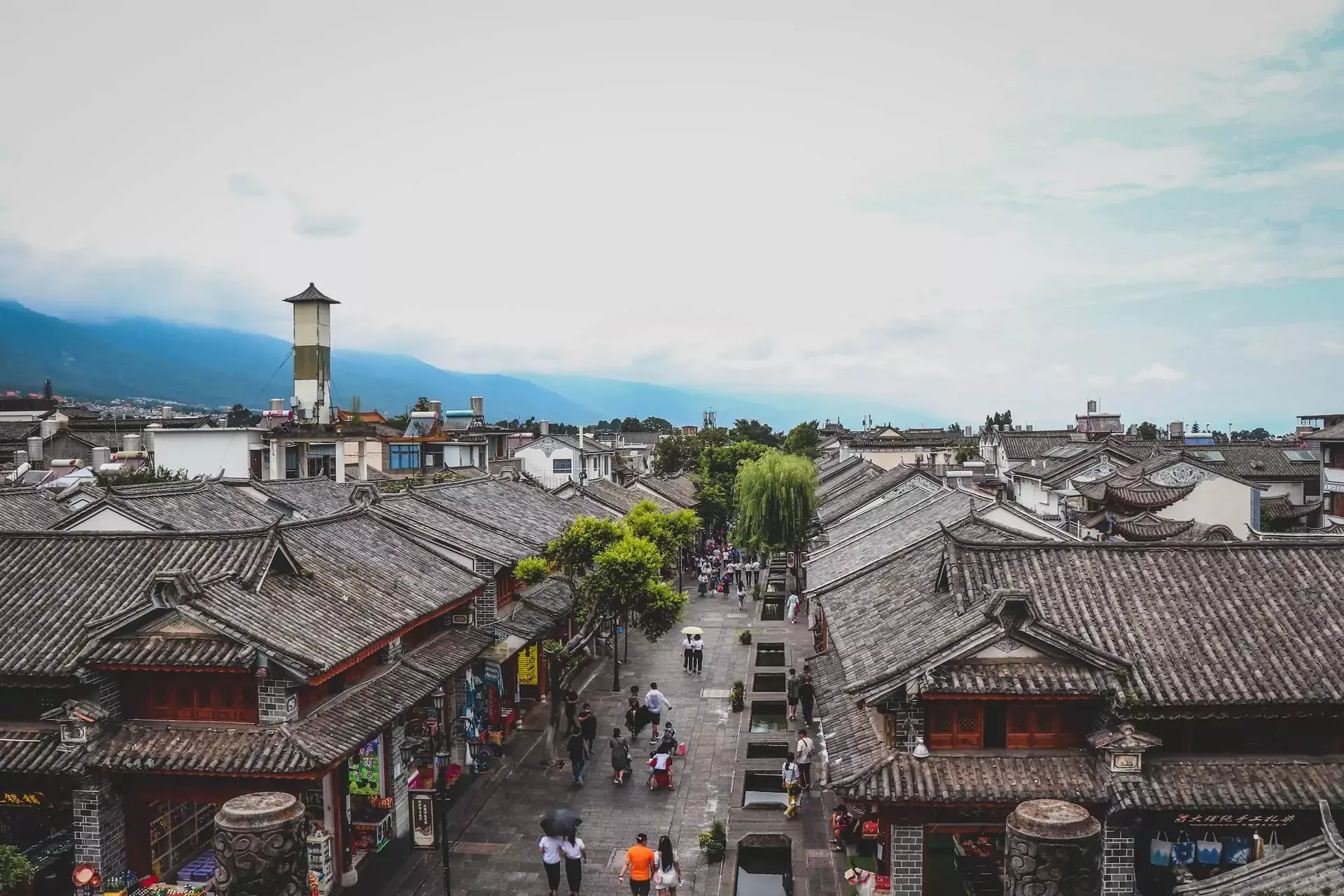
Dali, nestled between Cangshan Mountain and Erhai Lake at around 2,000 metres elevation, experiences a mild subtropical highland climate with four distinct but gentle seasons. Annual average temperatures range from 14°C to 17°C, with summer highs typically between 25–28°C and winter highs around 15–17°C. Nights are much cooler, especially in winter, when lows can fall to 2–5°C. Daily temperature swings are significant, so visitors should be prepared for both warm days and chilly nights. Dali is famous for its strong winds, particularly in winter and spring, earning it the nickname “Windy City.”

The rainy season stretches from late May to September, with July and August being the wettest months, each seeing frequent showers and occasional thunderstorms. Annual rainfall averages 1,050–1,150 mm, with about 85–95% falling during the wet season. Winters (December–February) are dry, cool, and often sunny, with only 1–3 days of rain or snow per month. Sunshine is plentiful, with over 2,200 hours annually, and daylight lasts up to 14 hours in midsummer. Spring (March–May) and autumn (September–November) are the best times for outdoor activities, with clear skies, blooming flowers, and colourful foliage. Dali’s altitude and geography mean UV radiation is strong, so sun protection is recommended year-round.

Average climate data for Dali, China
Month Jan Feb Mar Apr May Jun Jul Aug Sep Oct Nov Dec Year
Average maximum temperature (°C) 14 16 19 21 24 24 24 23 22 20 17 15 24
Average minimum temperature (°C) 1 2 5 8 12 15 16 15 13 10 5 2 1
Average precipitation (mm) 14 23 28 24 66 178 184 216 160 104 33 15 1,045
Average rainfall days (days) 4 4 6 9 13 22 25 24 20 14 8 6 155
Average daily daylight hours (h) 10 11 12 12 13 13 13 13 12 11 10 10 12
Average daily sunshine hours (h) 8 8 8 7 6 4 4 5 4 5 7 7 6
Average UV index 6 8 11 12 12 12 12 12 12 10 7 6 10

Travel info

  • Spring (March–May): Mild and sunny, with highs of 17–24°C. Occasional rain and significant day-night temperature swings – bring layers and sun protection. Ideal for festivals and blooming flowers.
  • Summer (June–August): Warm and rainy, highs of 25–28°C. Frequent showers, especially in July and August – pack a rain jacket, umbrella, and quick-dry clothing. Evenings are cool.
  • Autumn (September–November): Mild and clear, highs of 18–23°C. Rain tapers off, and days are sunny – perfect for hiking and photography. Bring layers for cooler nights and mornings.
  • Winter (December–February): Cool and dry, highs of 15–17°C, lows of 2–5°C. Strong winds and big temperature swings – pack warm clothes, especially for evenings. Days are often sunny.
  • General Tips: Dali weather is changeable – always check the forecast and pack for wind, rain, and sun. Sunblock and sunglasses are essential due to strong UV. The city is windy year-round, especially in winter and spring.

The best time to visit Dali

The best times to visit Dali are from March to May and September to November, when temperatures are mild, skies are clear, and rainfall is minimal. These seasons are perfect for exploring ancient towns, hiking, and enjoying local festivals, with blooming flowers in spring and colourful landscapes in autumn.

The worst time to visit Dali

The least favourable time to visit is from July to August, when the rainy season peaks and frequent showers can disrupt outdoor plans. While temperatures remain pleasant, heavy rain and occasional thunderstorms make it less ideal for hiking or sightseeing. Winter nights can also be chilly, though days are often sunny.

Frequently asked questions

What is the weather like in Dali year-round?

Dali has mild, spring-like weather year-round, with summer highs of 25–28°C and winter lows of 2–5°C. Rain falls mainly from May to October, and the city enjoys abundant sunshine and strong winds.

Does it snow in Dali?

Snow is rare in Dali city itself, but light snow can fall in the surrounding mountains during winter. Most winter precipitation is rain, and frosts are possible on clear nights.

When is Dali rainiest?

The rainy season runs from late May to September, with July and August being the wettest months. Rain falls as frequent showers and thunderstorms, often in the afternoon or evening.

How windy is Dali?

Dali is known as the 'Windy City' due to strong winds, especially in winter and spring. Winds can be brisk, so pack windproof clothing and be prepared for sudden gusts, particularly near Erhai Lake.

What should I pack for Dali’s weather?

Pack layers for day-night temperature swings, sunblock, sunglasses, and a hat for strong UV. Bring a rain jacket and quick-dry clothes for summer, and warm jackets for cool winter evenings.

Is Dali good for outdoor activities?

Yes, especially in spring and autumn when weather is mild and rainfall is low. Summer is lush but rainy, while winter is cool, dry, and sunny—ideal for sightseeing if you dress warmly.

When are Dali’s crowds the smallest?

Dali is less crowded in winter (December–February) and late autumn. These periods offer quieter attractions and lower prices, but nights can be chilly and winds strong.

Minimum and maximum temperatures in Dali

The warmest month, with the highest average maximum temperature, is July (24 °C). The month with the lowest average maximum temperature is January (13.9 °C). Overall, the average maximum temperature over the whole year is 19.9 °C.

The month with the highest average minimum temperature is July (16 °C). The coldest month, with the lowest average minimum temperature, is January (1 °C). Overall, the average minimum temperature over the whole year is 8.6 °C.

Rainfall amount in Dali

The wettest month, with the highest amount of precipitation, is August (216.3 mm). The driest month, with the least amount of precipitation, is January (14 mm). Over the whole year there are 1,045.4 mm of rainfall on average.

Rainfall days in Dali

The month with the most days of rain is July (25.1 days). The month with the fewest days of rain is February (3.9 days). Over the whole year there are 154.9 days of rain on average.

Daylight hours and sunshine hours in Dali

The months with the longest days, so the most daylight, are June and July (Average daylight: 13.1 h). The months with the shortest days, so the least daylight, are January and December (Average daylight: 10.1 h). Over the whole year there are 11.7 h of daylight per day on average.

The month with the most sunshine per day is February (Average sunshine: 8.1 h). The month with the least sunshine per day is June (Average sunshine: 4 h). Over the whole year there are 6.1 h of sunlight per day on average.

UV index in Dali

The months with the highest average UV index are April, May, June, July, August and September (UV index: 12). The months with the lowest average UV index are January and December (UV index: 6). Over the whole year the average UV index is 10.

Was this page helpful?
Feedback