Back to grid

Most famous theater destinations in Asia

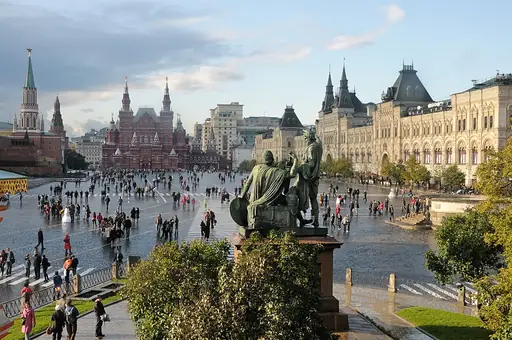
Moscow
A grand city of history and power
8.2
Catherine II granted Prince Peter Urusov a license for theatrical performances in 1776. The current Bolshoi building opened on January 18, 1825. A renovation from 2005 to 2011 left it with 1,740 seats. The Bolshoi Ballet has more than 200 dancers. The Moscow Art Theatre staged Chekhov's The Seagull in 1898.
Highlights:
  • 🪆 See Lenin’s Mausoleum and explore Soviet history
  • 🕍 Tour the Kremlin and its impressive cathedrals
  • 🏰 Admire St. Basil’s Cathedral on Red Square
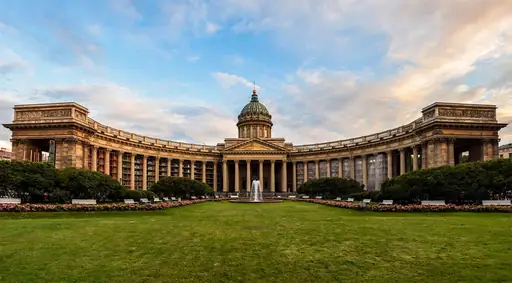
Saint Petersburg
Where history and elegance meet
8.4
The Mariinsky Theatre opened on October 2, 1860 and was named for Empress Maria Alexandrovna. Its official name was Kirov from 1935 to 1992. Mariinsky II was completed in May 2013 at a cost of 500 million euros. Alexandrinsky Theatre opened in 1832 and was designed by Carlo Rossi.
Highlights:
  • ⛪ Visit the Church of the Savior on Spilled Blood
  • ⛴️ Cruise the canals and admire St. Petersburg’s pastel architecture
  • 🖼️ Marvel at the grand art collections inside the Hermitage Museum
Beijing
Ancient history meets modern dynamism
8.9
The National Centre for the Performing Arts is ringed by an artificial lake. Visitors enter through an 80 metre underwater passage. The building opened in December 2007 under a dome of more than 18,000 titanium plates. Its Opera Hall seats 2,207. Peking opera began in Beijing in 1790 with four Anhui troupes.
Highlights:
  • 🌸 Explore the Summer Palace’s gardens and lakeside pavilions
  • 🧱 Climb the Great Wall of China at Mutianyu
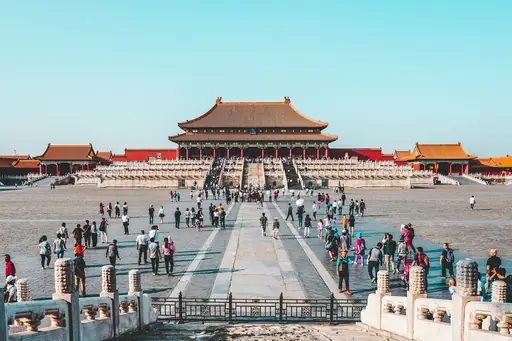
  • 🏯 Walk across Tiananmen Square and visit the Forbidden City
Tokyo
Japan's capital of temples, towers and food
9.7
Kabukiza opened in Ginza on November 21, 1889 as a wooden building. Fires, an earthquake and wartime bombing destroyed earlier buildings. The current building by Kengo Kuma opened on 28 March 2013. It seats 1,964. Tickets can be bought for individual acts and programmes change monthly.
Highlights:
  • 🖼️ Visit the teamLab digital art museum
  • 🌆 Enjoy panoramic city views from observation decks
  • 🍣 Savour sushi at a local eatery
Seoul
Where Tradition Meets High-Tech Marvels
8.6
Daehangno became Seoul's second cultural district in 2004 after Insadong. The street took its name from the Seoul National University campus beside it. The campus began moving to Sillim in January 1975. Marronnier Park was created in 1975 on the former campus site. It has an outdoor performance hall.
Highlights:
  • 🌇 Admire Seoul’s skyline from N Seoul Tower at sunset
  • 🛍️ Shop and eat street food in bustling Myeongdong
  • 🏯 Explore Gyeongbokgung Palace and watch the royal guard ceremony
Kyoto
Temples, geisha districts and kaiseki dining
9.2
Minamiza was founded in 1610 as Shijo Minamiza. It is one of the earliest of seven officially licensed kabuki theatres. The current building dates to 1929 and seats 1,086. Its interior was refurbished in 1991. It was registered as a Tangible Cultural Property in 1996. It stands in Gion beside the Shijo Bridge.
Highlights:
  • ⛩️ Climb the vermillion torii gates at Fushimi Inari Shrine
  • 🍱 Experience Japan’s beautifully presented Kaiseki dining at a traditional restaurant
  • 🎋 Stroll through the magical Arashiyama bamboo forest early in the morning
Shanghai
A dazzling mix of modernity and tradition
9.0
The Grand Theatre opened on 27 August 1998 at the north end of People's Square. Its main auditorium seats 1,631 across three tiers. The Buick Theater seats 575 and the Studio Theater has 220 fixed seats. In 2002 it hosted a staging of Les Misérables.
Highlights:
  • 🌸 Wander through Yu Garden and explore its traditional pavilions
  • 🏙️ Take the world’s fastest elevator to Shanghai Tower’s observation deck
  • 🌃 Admire Shanghai’s skyline from The Bund promenade at night
Feedback