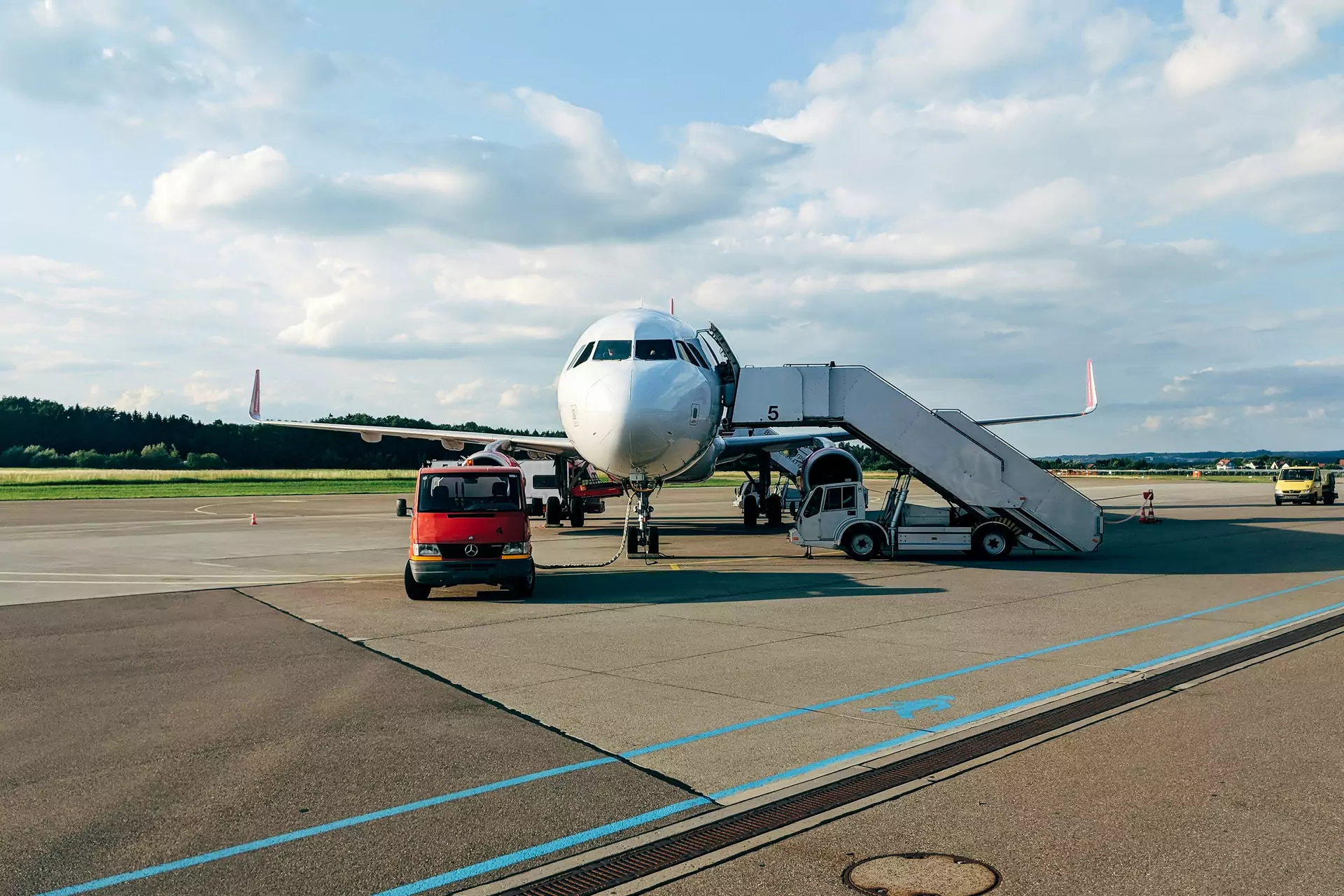
Nuuk Airport is Greenland's primary airport, located just northeast of the capital city Nuuk. Following a major reconstruction completed in 2024, the airport now boasts an extended runway and a new terminal, enabling larger jet aircraft to operate direct flights to several international destinations. It serves as the hub and technical base for Air Greenland, the country's flag carrier, which offers frequent scheduled services to Copenhagen, Iceland and domestic destinations such as Ilulissat and Sisimiut. Icelandair and SAS also provide seasonal flights. Nuuk Airport’s modern facilities position it as Greenland’s new international gateway, replacing the longer transfer routes formerly centered around Kangerlussuaq.
Kangerlussuaq Airport, located inland near the Greenland ice sheet, was traditionally Greenland's main international airport and is still operational with seasonal international connections to Copenhagen and Billund. It offers a strategic stopover location and remains important for cargo, charter flights and occasional military use. Kangerlussuaq has a passenger terminal with amenities including a hotel and tourist office, serving a small settlement population and maintains flights to domestic destinations such as Nuuk and Ilulissat.
Narsarsuaq Airport in southern Greenland is a smaller but important airport providing access to this sparsely populated region. It historically served as a gateway for Viking heritage tourism and currently connects to Nuuk, Copenhagen (seasonally) and other local towns. This airport is scheduled for closure in 2026 when a new airport is expected to open in nearby Qaqortoq, improving access to southern settlements.
Greenland’s air connectivity is further augmented by smaller airports and numerous heliports such as Ilulissat Airport, Aasiaat Airport and Neerlerit Inaat Airport which facilitate frequent internal links crucial for travel within the country and support for isolated communities. Air Greenland dominates airline services, operating a mix of fixed-wing aircraft and helicopter routes adapted to Greenland's unique geographic challenges. Due to Greenland’s remote and rugged nature, air travel operates with a focus on reliability and connections rather than budget carrier competition prevalent in more densely populated regions.