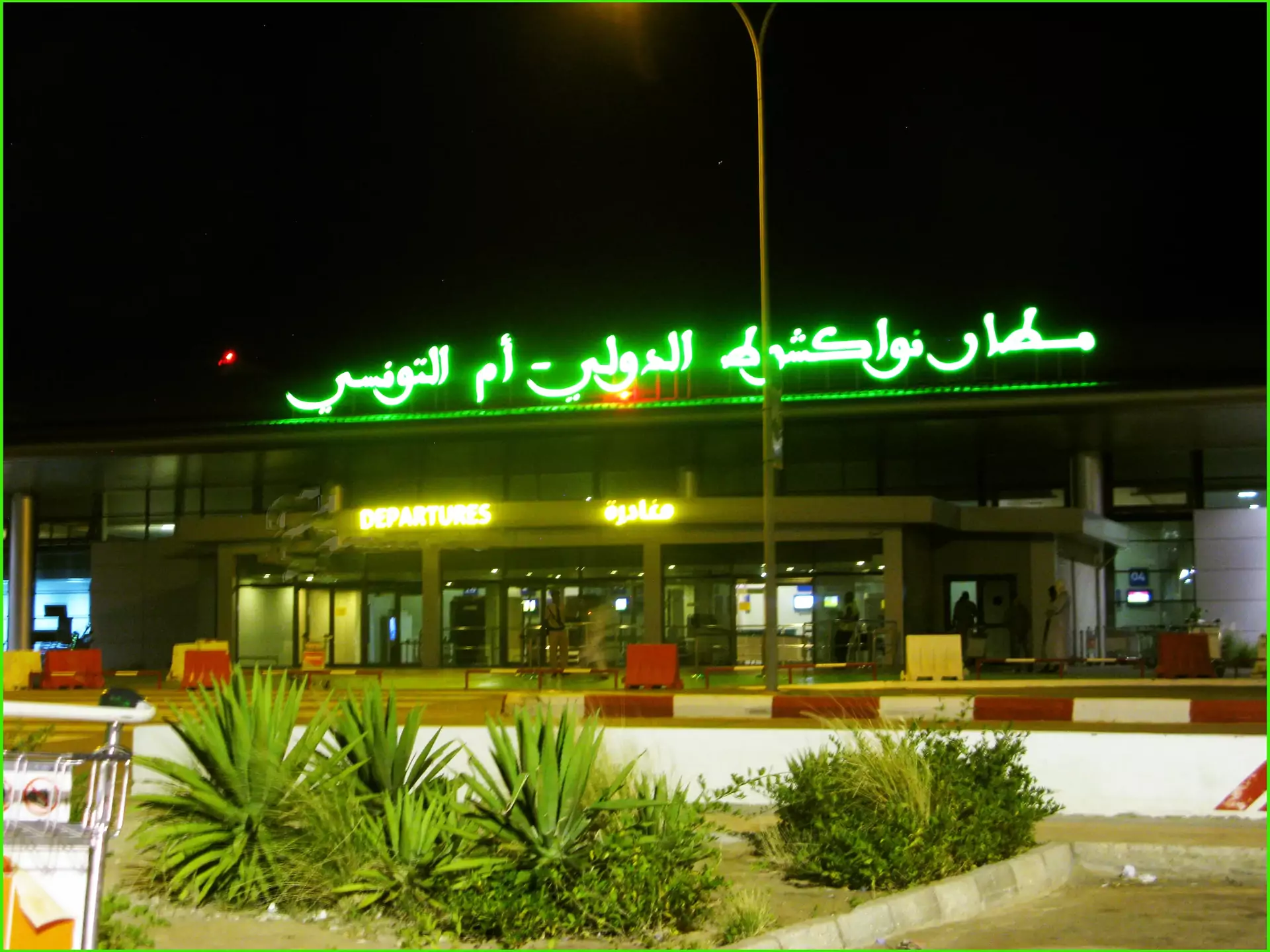
Nouakchott–Oumtounsy International Airport is Mauritania’s principal and busiest airport, located near Nouakchott, the capital city. Opened in 2016, this modern facility replaced the old Nouakchott International Airport and features a large passenger terminal with six jet bridges accommodating up to 2 million passengers annually. It boasts two runways, including one over 3,400 meters long, capable of handling large international aircraft. This airport acts as the main hub for Mauritania Airlines, the national flag carrier, which operates both domestic flights and international routes to cities such as Paris, Casablanca, Istanbul, Tunis, Abidjan, Dakar and Bamako.
Regular international airlines flying to Nouakchott include Air France, Turkish Airlines, Royal Air Maroc, Air Senegal, Binter Canarias, Tunisair and Air Algerie, linking Mauritania to North Africa, Europe and West Africa. Cargo operations are supported to facilitate import-export activities vital to Mauritania’s economy.
Nouadhibou International Airport serves the country’s second-largest city and is vital for regional connectivity in the northwest. It provides domestic and limited international services and supports fishing and port activities that are significant to the local economy. The airport is connected by Mauritania Airlines to Nouakchott and other regional airports.
Other important airports include Zouerate Airport, serving the mining city of Zouérate with domestic flights primarily used by mining companies and regional travelers. Atar Airport supports tourism and access to desert regions, while Néma Airport and Kaedi Airport provide essential services in the eastern and southern parts of Mauritania, respectively.
Mauritania Airlines remains the dominant airline for domestic and international travel within the country, maintaining a growing fleet that includes Boeing 737 and Embraer E175 aircraft. While low-cost carriers are not prominent, Mauritania’s national carrier offers competitive fares domestically. Infrastructure improvements and route expansions aim to increase accessibility and facilitate growth in air travel demand.