
Asia › Japan › Fuji

Fuji

Scroll
Mountain views, paper mills and fresh shirasu

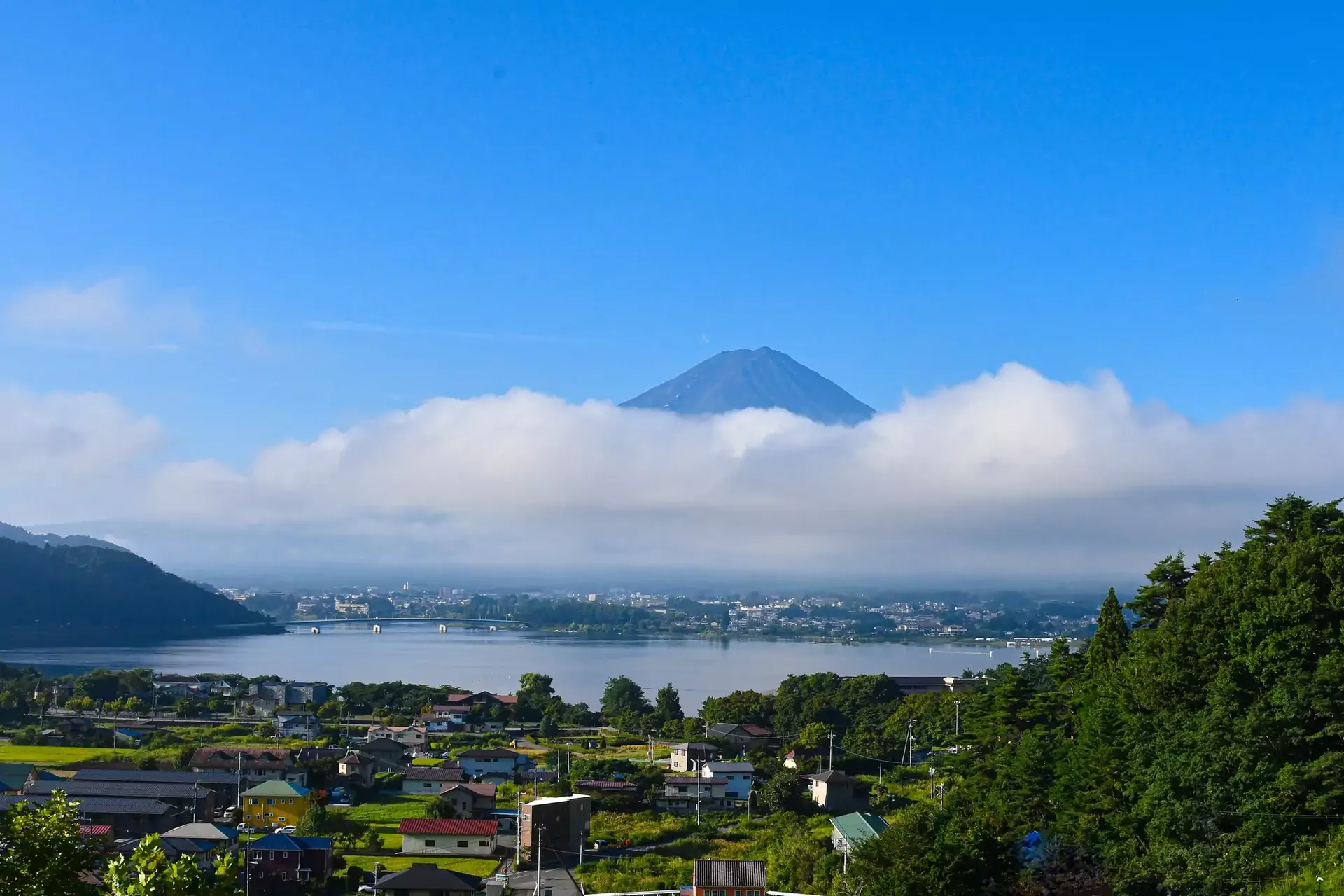
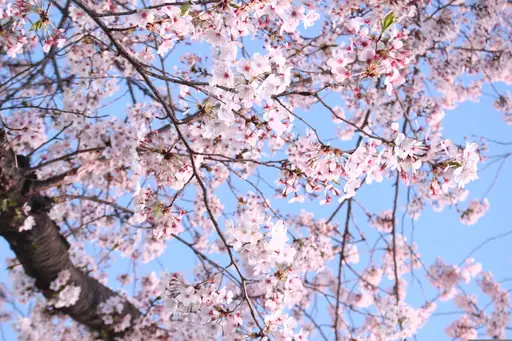
Fuji is in the eastern part of Shizuoka Prefecture, set between Mt. Fuji to the north and Suruga Bay to the south. Groundwater filtered through the mountain has long supported a paper industry. It's also known for tea fields and fresh shirasu. Visitors can photograph Mt. Fuji from Tagonoura's coast, from the Obuchi Sasaba tea fields or from local train stations. Odana Falls and the cherry-lined Ryuganbuchi add nature in spring. The sights are spread out so a car helps and a day here pairs well with a stop on the Tokaido line between Tokyo and Nagoya.

City in Japan
Climate zone: Humid subtropical

Humid subtropical: Warm temperate climates with hot, humid summers, mild winters and evenly distributed rainfall, common on eastern continental margins.

See climate table
Price level: $$$
$Cheap
$$Medium
$$$Expensive, upscale
$$$+Very expensive, luxury
See price details
Safety: 8.6
General Safety:9
Health & medical:8
Accessibility:7
Tap water:9
Read details
Tourist English: 3/5
English signage is limited outside the Shin-Fuji Shinkansen station and major tourist spots like the tea plantations. As a working industrial city rather than a tourist hub, a translation app is genuinely useful here.
Last update: Oct 19, 2026
* We earn a commission from some links on this page.
Fuji Summary

These place ratings give you a quick overview of how well a destination matches different types of trips.

"Best for" scores:
The specific interest scores show where this place really shines – whether it's ideal for hiking, food & drink experiences, museums or other activities. These highlights help you understand what makes the destination special at a glance.

"Your personal" scores:
This reflects how well a place matches your personal preferences. You can adjust the importances of travel topics or other personal requirements categories in your account settings.

"Suited for" badges:
These give you a quick overview of how well a destination suits specific types of travelers, to help you find the places that match your lifestyle, preferences or travel situation.

Read how our scores work
An industrial and tea-producing city on Suruga Bay, known for green tea plantations photographed against Mount Fuji and a working fishing port.
Place score
7.7
Best at:
Tea
9
Less touristy
8
Spotless
8
Mountains
7
Natural sites
7
Personal score
?
Log in to see how this place matches your personal travel interests.
Suited for
👶 7
Families
🧓 8
Seniors
👩 8
Solo
🛡️ 7
Travel Beginners
Japan – Quick facts
Power Grid: 100 V, 50 Hz
Plug: Type A
Type A:
Diagram of a Type A power plug

Read about power adapters
Currency: Japanese Yen (JPY)
$1 ≈ ¥158
Cashless info: Rating 4/5
Cashless payments are becoming more common, especially in cities, with some shops still preferring cash. Be prepared for occasional cash-only situations in rural areas.

Save with a travel credit card
eSIM providers: Best value: Saily
Flexibility: Airalo
Read our in-depth comparison
Tipping: Tipping is not customary in Japan and can be considered rude. Excellent service is the norm, and tipping is unnecessary in most places.
Public drinking: Public drinking is legal and commonly accepted, particularly during festivals and events.
Public smoking: Smoking is prohibited in indoor public places but allowed in designated outdoor areas. Some restaurants may have smoking sections.
New Year
(January)
One of the most important holidays, expect crowded temples and high prices. Plan ahead.
Golden Week
(April-May)
The busiest travel time, expect high demand for accommodation and transportation.
Obon
(August)
A time to honor ancestors, many businesses close, and transportation can be crowded.
Emergency contact: Emergency Number: 110 (Police), 119 (Fire & Ambulance)
Taxi apps: Uber, JapanTaxi, DiDi
Other: Japan is a country of respect, so understanding local customs and etiquette is important. Public transportation is efficient, but can be crowded during peak hours.
Best times to travel

The best times to travel section shows how the months compare for a visit, so you can find the time of year that fits what you want to do.

Background colors of the months:
The color shows the typical temperature: yellow (hot), green (mild) and blue (cold). How strong the color is shows the travel season: full color means high season, soft color means shoulder season and soft-striped means off season.

Weather symbols:
Each month has one symbol showing what the weather is typically like, such as hot and sunny, freezing or a rainy or snowy season. Use them to quickly spot months that match the weather you want, or to avoid the ones that don't.

Crowdedness:
The people icon shows how busy the place usually is. The more people, the more crowded it gets.

Additional notes:
The gray info boxes point out special things worth knowing, like recurring weather issues or seasonal events.

for Fuji, Japan
☀️
Jan
☀️
Feb
🌦️
Mar
🌦️
Apr
🌦️
May
🌦️
Jun
⛈️
Jul
🌦️
Aug
🌦️
Sep
⛈️
Oct
☀️
Nov
☀️
Dec
High season: April, July - Aug.
Shoulder season: Jan. - March, May, Oct. - Dec.
Crowdedness: 2 (Few tourists)
Tap on a month for more info Hover over a month for more info
Mt. Fuji climbing season runs early July to early September; trails and huts are closed and dangerous outside it
Mt. Fuji is most often hidden by clouds in summer; the clearest views are November to February, especially mornings
Rainy season mid June to mid July; typhoon risk August to September

Why travel to Fuji?

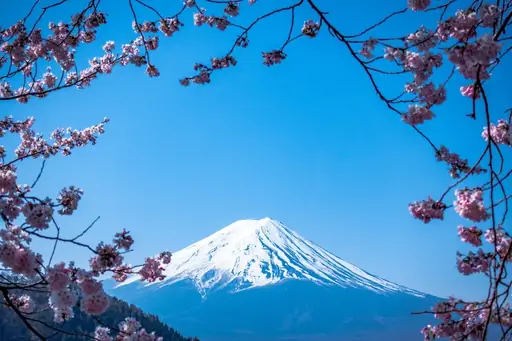
Mt. Fuji looks best here from the south, where the mountain is behind tea fields at Obuchi Sasaba, behind cherry trees and rapeseed flowers along the Urui River at Ryuganbuchi and above the sea at Tagonoura. Fujinokuni Tagonoura Minato Park has a tower with a 360-degree view. The Shinkansen bridge over the Fuji River is a favorite photo spot. The climbing trails start in other towns, so Fuji City is for looking at the mountain. There's more here than the mountain. Water from the mountain has long fed local paper mills while spring water parks like Yoroigafuchi show where it surfaces. Odana Falls is a 70 ft waterfall in the Sudo River valley. The Gakunan Railway has a slow local line with factory lights visible from the train at night. Myoho-ji's Bishamonten temple hosts a well-known Daruma doll festival in early January. A half day or a full day is enough, though a night here lets you catch the mountain at dawn. It makes sense for photographers and for people on a Tokaido line trip who want a quieter side of the Mt. Fuji area than the crowded lakes.

🏯Places worth seeing
  • 1 Fujisan Hongu Sengen Taisha Shrine
  • 2 Kitaguchi Hongū Fuji Sengen Shrine
  • 3 Oshino Hakkai
🎡Places for activities
  • 1 Aokigahara Forest
  • 2 Fuji-Q Highland
  • 3 Fujiten Snow Resort
  • 4 Lake Kawaguchi
🏞️Natural landmarks
  • 1 Lake Sai
  • 2 Lake Yamanaka
  • 3 Lake Motosu
  • 4 Mt. Fuji
  • 5 Shiraito Falls
🛍️Shopping
  • 1 Gotemba Premium Outlets
🍽️Eat & Drink
  • 1 Hoto Fudo Kawaguchiko Ekimae
    Hoto Fudo specializes in hōtō, Yamanashi’s broad wheat noodles simmered with pumpkin and vegetables in a rich miso broth. It is beside Kawaguchiko Station in Funatsu, an easy base for the Fuji Five Lakes.
  • 2 Kozaku Kawaguchiko Store
    Kozaku serves hearty hōtō in a traditional-style setting, with variations including pumpkin, pork, duck and wild-boar versions. It is at 1638-1 Funatsu, a short bus or taxi ride from Kawaguchiko Station.
  • 3 Fuji Tempura Idaten
    Fuji Tempura Idaten serves tempura rice bowls, including a Mt. Fuji-shaped tendon, with seasonal vegetables, seafood and local ingredients. It is at 3486-4 Funatsu, roughly five minutes on foot from Kawaguchiko Station.
  • 4 Miyaki Udon
    Miyaki Udon serves Yoshida udon, Fujiyoshida’s unusually thick and chewy wheat noodles in a soy-and-miso broth with cabbage and horse meat. It is in Fujiyoshida, near the northern approach to the Fuji Subaru Line and accessible by car or taxi.
  • 5 Shirasu Udon
    Shirasu Udon is a long-running Yoshida udon restaurant serving hand-kneaded noodles with cabbage, horse meat and spicy suridane chilli seasoning. It is in Fujiyoshida, a short taxi ride from Gekkoji Station.
  • 6 Hoto Fudou Higashi Koiji
    This Hoto Fudo branch serves the same signature vegetable hōtō in its distinctive cloud-shaped building. It is at 2458 Funatsu, near Lake Kawaguchi’s southern shore.
  • 7 Omiya Yokocho
    Omiya Yokocho is a casual food court near Fujisan Hongu Sengen Taisha Shrine where visitors can eat Fujinomiya yakisoba, gelato and other local snacks. It is at 4-23 Miyacho in Fujinomiya, between the shrine and the Mt. Fuji World Heritage Centre.
  • 8 Fujinomiya Yakisoba Antenna Shop
    This stand serves Fujinomiya yakisoba, a local stir-fried noodle dish distinguished by firm, chewy noodles and savoury meat dregs. It is inside Omiya Yokocho in central Fujinomiya.
  • 9 Sengen Chaya
    Sengen Chaya serves Fujinomiya yakisoba and okonomiyaki near the approach to Fujisan Hongu Sengen Taisha. It is in Miyacho, a short walk from the shrine and central Fujinomiya.
  • 10 Mt. Fuji 5th Station Restaurant Fujisan View
    This Fifth Station restaurant serves hot meals, snacks and Fuji-themed menu items at an elevation of about 2,305 metres. It is on the Fuji Subaru Line’s Yoshida Trail Fifth Station, reachable by road or seasonal bus from Kawaguchiko.
🎈Events
  • Yoshida Fire Festival
  • Fujisan Marathon
  • Shibazakura Festival

Knowledge before you go

  • Only Kodama trains stop at Shin-Fuji, so check your train before booking.
  • The Mt. Fuji summit trails start in towns like Fujinomiya and Fujiyoshida, not in Fuji City.
  • Raw Tagonoura shirasu is a regional specialty but fishing pauses in winter, so ask what's in season.
  • Ride the Gakunan Railway after dark to see the factories along the line lit up against the night sky.

How to travel to Fuji

Shin-Fuji Station on the Tokaido Shinkansen is the main arrival point. Only slower Kodama trains stop there and the ride from Tokyo takes roughly 70 minutes. Faster Hikari trains stop at nearby Shizuoka and Mishima, from where a local train reaches Fuji Station in about 20 to 30 minutes. From Nagoya, Kyoto and Osaka, a change at those stations is often quicker. The JR Tokaido Main Line links Fuji Station with Shizuoka, Numazu and Tokyo, though the journey to Tokyo takes around 2 hours by local train. Tokyo's airports are the nearest major gateways, about 2 to 3 hours away by rail. By car, the Shin-Tomei and Tomei expressways pass the city. Tokyo is roughly 2 hours away in light traffic, though weekend congestion near Hakone and Gotemba can add time. Highway buses also connect the area with Tokyo and Nagoya.

Access summary

  • From Shin-Fuji Airport (FJX): Bus to Fuji City center, 30 min.
  • From Shizuoka Station: Local train, 45 min; from Hamamatsu, 1h 15min.
  • From Tokyo Haneda (HND): JR Tokaido line + local, 2h.

Where to stay in Fuji

Business hotels and small inns are mainly near Shin-Fuji Station and Fuji Station. These suit stops on the Tokaido line and are practical rather than scenic. Hotels near Shin-Fuji have the best chance of a view of Mt. Fuji and tourist information is close by. Choices are limited and ryokan or resort hotels are few in the city itself, so many visitors stay elsewhere and come for the day. Mishima, Numazu and Shizuoka have more hotels and good rail links. Fujinomiya and the lakes around Fujiyoshida have more traditional lodging and hot springs with Mt. Fuji views. They make better bases if you plan to climb or stay close to the mountain. Rooms in the region fill during cherry blossom season, Golden Week and the summer climbing season, so book early then.

How to get around Fuji

The city is spread out, with the main sights separated by several kilometers.

Trains and buses:
The JR Tokaido Main Line serves Fuji Station and the Shinkansen stops at Shin-Fuji Station a few kilometers away, so allow a short bus or taxi ride between them.
Local buses link the stations with the center but run less often in the countryside. Taxis wait at both stations.

Gakunan Railway:
This small local line serves the northern part of the city and gives views of Mt.
Fuji from several stops.

Cars and bikes:
For Obuchi Sasaba, Odana Falls and the coast around Tagonoura, a rental car or taxi is much easier than public transport.
Cycling is possible on the flat coastal roads but distances add up. You don't need a car for a simple stop near the stations, but a car lets you reach the viewpoints in a single day.

Food in Fuji

Eating in Fuji centers on seafood from Suruga Bay, noodles and green tea. The Fujikawa Rakuza roadside station has restaurants and shops selling local products and convenience stores cover quick meals. Vegetarians may find the choices limited, since most local dishes use fish or meat.

Shirasu:
These tiny young sardines are caught in Suruga Bay and sold at restaurants and shops near Tagonoura.
They're served raw as nama-shirasu when the catch is fresh, boiled as kamaage-shirasu or fried, usually over rice. Tagonoura shirasu is protected by a geographical indication.

Fuji yakisoba:
This local fried noodle dish is topped with pork cracklings and fish powder, so it isn't one for vegetarians to try.

Shizuoka green tea:
The tea is grown on the slopes near Obuchi Sasaba and appears in sweets, ice cream and soft serve around the region.

Shizuoka-style oden:
This simmered dish has a dark broth, usually with fish cakes and skewered ingredients.
It's common across the region.

Budget snapshot
Costs compared to home

We calculate the average costs when traveling to destinations and compare those with the living costs at your home. With this you can get an estimate of how expensive or cheap the destination is for you.

To customize this, you can set up which location and price level are used for the calculations in your account settings.

-45 %
Daily expenses in Fuji are around 45% lower than the average across United States. That means you'll spend a lot less on meals and getting around.
Exchange rate trend

The exchange rate price factor shows how expensive or cheap a currency currently is compared to its historical average. It's a quick way to see if a country is currently more or less affordable due to exchange rate changes.

-17 %
Your exchange rate (USD to JPY) is 17% better than in recent years. That means traveling now is considerably cheaper compared to the past.

Travel costs

To help you plan your trip, we provide estimated daily costs per person (when traveling as a pair) for different travel styles. These numbers give you an idea of what you might spend each day at this destination, including accommodation, food, transport and activities.

Additionally, we also provide average hotel costs for different travel styles to give you an estimate for the accommodation only.

Please note that these are only estimates. The real costs depend on booking times, season and other factors.

Daily cost summary

Travel style categories explained:

Backpacker:
Staying in hostels or budget hotels, cooking your own meals or eating cheap and choosing low-cost activities.

Mid-range:
Staying in mid-range hotels, eating at a mix of restaurants and casual spots and enjoying a variety of activities.

Luxury:
Staying in luxury hotels, dining out at high-end restaurants and enjoying premium experiences without worrying about the price.

Backpacker Mid-range Luxury
💵 Total costs per day, including accommodation
$50
$104
$360
🏨 Accommodation per night, per person
$20
$51
$180
🍝 Food per day
$22
$43
$131
🚕 Transportation per day
$7
$10
$49
Food & Drink
🍽️ Restaurant Dinner, per person
$16
🍛 Lunch Set, per person
$6.50
🍟 Fast food combo
$4.80
🍝 Preparing your own food, per day
$9
☕ Cappuccino
$3
🍺 Beer in a restaurant, 0.5 l / 16 oz
$3
Transportation
🚌 Public transport ticket
$1.80
🚕 Taxi Ride, 10 km / 6 mi
$31
⛽ Gas, 1 l / ¼ gal
$1.10
Other
🎞️ Movie ticket
$12.50
👩‍⚕️ Doctor's consult
$40
🤧 Cold medication
$10.50
💇 Basic haircut
$12

Safety information overview

General safety
9
Fuji City is very safe, with low crime and quiet streets. The main risks are natural. Late summer typhoon rain can cause flooding and landslides. The coast along Suruga Bay lies in an earthquake and tsunami zone, so know your evacuation route.
Health & Medical
8
Fuji City has general hospitals, clinics and pharmacies, though English is limited outside larger facilities. Larger hospitals are in Shizuoka and Mishima, so travel insurance is worth having. Summers are hot and humid, which makes heatstroke the main risk.
Accessi­bility
7
The city center around the stations is flat and mostly step-free, with elevators at the main stations. Sights are far apart and some viewpoints, waterfalls and parks have steps or uneven paths. Buses are infrequent, so a taxi or car is the practical choice.
Tap water
9
Tap water in Fuji City is safe to drink, as in the rest of Japan. The city draws on clean groundwater from Mt. Fuji. Vending machines and convenience stores sell bottled water and tea near the stations and along main roads.

Looking for inspiration?

Discover
Best cherry blossom destinations in Asia
Cherry blossom season turns parts of Asia into a completely different place for a few short weeks each year, drawing travelers who plan their entire trip around a single bloom.…
Read more
Discover
Top adventure destinations and outdoor activities
Adventure travel covers an enormous range of activities and risk tolerances, from multi-day wilderness trekking and white water rafting to technical climbing, polar expeditions and…
Read more
Discover
Best couple vacation destinations in Asia
Asia is perfect for couples who want their holiday to feel like a shared adventure rather than just a change of scenery. Few continents offer so many ways to be amazed together.…
Read more
Discover
Top cherry blossom destinations and spring blooms
Cherry blossom season is brief and weather-dependent almost everywhere it happens, which is part of why it draws so much dedicated travel. The bloom typically lasts only a week or…
Read more
Discover
Best natural wonder destinations in Asia
Asia contains some of the most extraordinary natural wonders on earth, shaped by the collision of tectonic plates, vast river systems, volcanic activity and climatic extremes that…
Read more
Discover
Best wellness destinations in Asia
Asia's wellness offer is rooted in some of the world's most ancient and sophisticated therapeutic traditions, with Ayurvedic medicine, traditional Chinese medicine, Thai massage,…
Read more
Discover
Top photography destinations and scenic landscapes
A genuinely photogenic destination offers more than one good shot: it has the light, the composition and enough variety of conditions to reward repeat visits at different times of…
Read more
Discover
Best destinations for first-time travelers in Asia
Asia has one of the best established beginner travel routes anywhere, largely because so many first time travelers have worn the path before you. Southeast Asia in particular…
Read more
Discover
Best photography destinations in Asia
High-altitude desert landscapes in northern South Asia sit under some of the clearest skies on the continent, while terraced rice fields elsewhere create an entirely different,…
Read more
Discover
Top hiking destinations and famous trails
Hiking at its best is one of the most direct ways to engage with a landscape. The pace forces a relationship with terrain, weather and distance that faster forms of travel rarely…
Read more
Discover
Best rural retreat destinations in Asia
Rural retreat travel is defined by the deliberate removal from urban pace and density, with landscape immersion, slower rhythms and direct engagement with food, nature and local…
Read more
Discover
Best solo travel destinations in Asia
Asia is where most solo travelers figure out they can actually do this. The backpacker trails through Southeast Asia have been running for decades, and the infrastructure along…
Read more
Discover
Top solo travel destinations and safe hubs
Traveling alone sounds like a bigger deal than it is. The first day feels strange – eating dinner by yourself, navigating without someone to double-check the map with, making every…
Read more
Discover
Best couple vacation destinations
Travelling as a couple sounds simple enough, yet the best couple vacation destinations mean something different to almost every pair. What feels romantic to one couple can feel…
Read more
Discover
Best destinations for first-time travelers
A first trip abroad works best somewhere that eases you in, rather than throwing every possible culture shock and logistical headache at you at once. Some first-time travelers…
Read more
Feedback
