


Asia › Japan › Nikko

Nikko

Scroll
Tokugawa shrines, waterfalls and hot springs

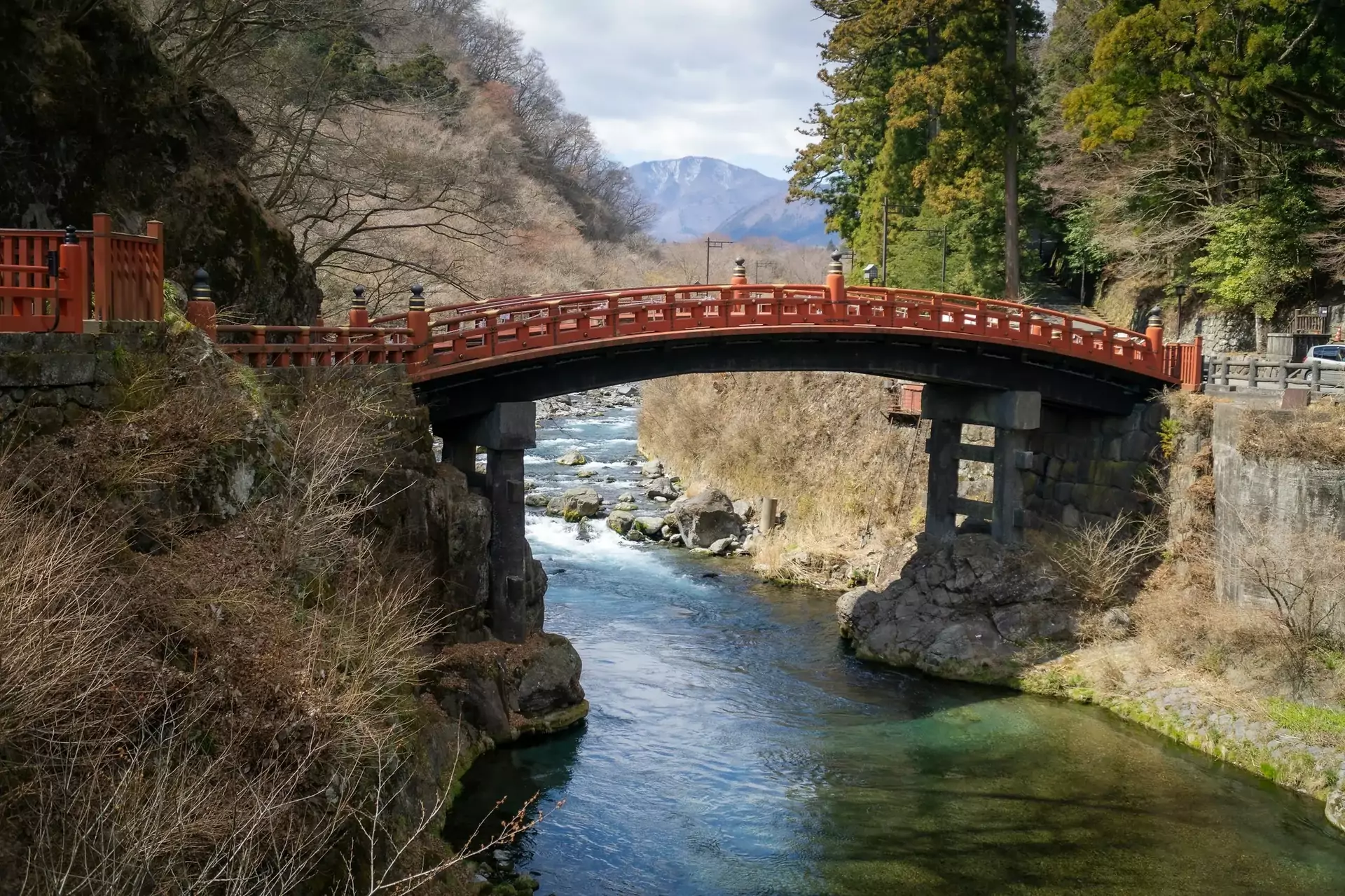
Nikko is a mountain city in Tochigi Prefecture, about two hours from Tokyo by train, with shrines and temples that became a UNESCO World Heritage Site in 1999. They include Toshogu, where the first Tokugawa shogun, Ieyasu, is enshrined. Visitors can walk the shrine grounds in a few hours, then go up to Lake Chuzenji at 4,200 ft and Kegon Falls, which drop 320 ft. Central Nikko is easy to cover on foot or by bus and the lake and hot springs are farther out. If you'd rather soak in an onsen town than stay in the center, Kinugawa Onsen is 35 to 45 minutes away by train.

Town in Japan
Climate zone: Humid subtropical

Humid subtropical: Warm temperate climates with hot, humid summers, mild winters and evenly distributed rainfall, common on eastern continental margins.

See climate table
Price level: $$$
$Cheap
$$Medium
$$$Expensive, upscale
$$$+Very expensive, luxury
See price details
Safety: 8.2
General Safety:9
Health & medical:7
Accessibility:5
Tap water:9
Read details
Tourist English: 3/5
While not everyone speaks English fluently, major tourist sites, hotels, and some restaurants offer English information. Helpful signage and pamphlets are often available in English.
Last update: Oct 18, 2026
* We earn a commission from some links on this page.
Nikko Summary

These place ratings give you a quick overview of how well a destination matches different types of trips.

"Best for" scores:
The specific interest scores show where this place really shines – whether it's ideal for hiking, food & drink experiences, museums or other activities. These highlights help you understand what makes the destination special at a glance.

"Your personal" scores:
This reflects how well a place matches your personal preferences. You can adjust the importances of travel topics or other personal requirements categories in your account settings.

"Suited for" badges:
These give you a quick overview of how well a destination suits specific types of travelers, to help you find the places that match your lifestyle, preferences or travel situation.

Read how our scores work
Outstanding for temples and mountain nature. Visit ornate shrines, walk forest trails, admire waterfalls and lakes and explore scenic national park landscapes.
Place score
8.6
Best at:
Fall foliage
10
Spotless
9
Historic sites
9
Religious sites
9
Natural sites
9
Personal score
?
Log in to see how this place matches your personal travel interests.
Suited for
👶 8
Families
🧓 6
Seniors
🛡️ 7
Travel Beginners
👩 7
Solo
Japan – Quick facts
Power Grid: 100 V, 50 Hz
Plug: Type A
Type A:
Diagram of a Type A power plug

Read about power adapters
Currency: Japanese Yen (JPY)
$1 ≈ ¥158
Cashless info: Rating 4/5
Cashless payments are becoming more common, especially in cities, with some shops still preferring cash. Be prepared for occasional cash-only situations in rural areas.

Save with a travel credit card
eSIM providers: Best value: Saily
Flexibility: Airalo
Read our in-depth comparison
Tipping: Tipping is not customary in Japan and can be considered rude. Excellent service is the norm, and tipping is unnecessary in most places.
Public drinking: Public drinking is legal and commonly accepted, particularly during festivals and events.
Public smoking: Smoking is prohibited in indoor public places but allowed in designated outdoor areas. Some restaurants may have smoking sections.
New Year
(January)
One of the most important holidays, expect crowded temples and high prices. Plan ahead.
Golden Week
(April-May)
The busiest travel time, expect high demand for accommodation and transportation.
Obon
(August)
A time to honor ancestors, many businesses close, and transportation can be crowded.
Emergency contact: Emergency Number: 110 (Police), 119 (Fire & Ambulance)
Taxi apps: Uber, JapanTaxi, DiDi
Other: Japan is a country of respect, so understanding local customs and etiquette is important. Public transportation is efficient, but can be crowded during peak hours.
Best times to travel

The best times to travel section shows how the months compare for a visit, so you can find the time of year that fits what you want to do.

Background colors of the months:
The color shows the typical temperature: yellow (hot), green (mild) and blue (cold). How strong the color is shows the travel season: full color means high season, soft color means shoulder season and soft-striped means off season.

Weather symbols:
Each month has one symbol showing what the weather is typically like, such as hot and sunny, freezing or a rainy or snowy season. Use them to quickly spot months that match the weather you want, or to avoid the ones that don't.

Crowdedness:
The people icon shows how busy the place usually is. The more people, the more crowded it gets.

Additional notes:
The gray info boxes point out special things worth knowing, like recurring weather issues or seasonal events.

for Nikko, Japan
🌨️
Jan
🌨️
Feb
🌨️
Mar
🌦️
Apr
🌦️
May
🌦️
Jun
⛈️
Jul
🌦️
Aug
🌦️
Sep
⛈️
Oct
☀️
Nov
🌨️
Dec
High season: May, Aug., Oct. - Nov.
Shoulder season: April, July, Sep.
Crowdedness: 7 (Many tourists)
Tap on a month for more info Hover over a month for more info
Autumn leaves peak early to mid October on Lake Chuzenji and the Irohazaka road, late October to early November in town
Okuni-Nikko (Oku-Nikko) and the high plateau have snow and some road closures from December to March
Weekends in late October and early November bring traffic jams on the Irohazaka road; go on weekdays or arrive by train

Why travel to Nikko?

The shrines and temples at Toshogu, Futarasan-jinja and Rinnoji are a World Heritage property of 103 buildings that includes nine National Treasures. Many were built in the 17th century on forested mountain slopes. At Toshogu the Yomeimon gate is covered in carved wood, paintings and gold leaf. The smaller carvings include a sleeping cat and the three monkeys in their see no evil, hear no evil, speak no evil poses. Rinnoji's Sanbutsudo Hall has three gold Buddha statues that are each 26 ft tall. The mountains are the second half of the trip. The Irohazaka road goes up through 48 sharp curves into Okunikko, the heart of Nikko National Park, where Lake Chuzenji is Japan's highest natural lake and a 16 mi trail goes around its shore. Kegon Falls drops 320 ft from the lake and freezes solid in winter. The nearby Senjogahara marshland is a wetland registered under the Ramsar Convention. There are hot springs across almost the whole area. Chuzenji Onsen is on the lake and Yumoto Onsen is farther up on a plateau, while Kinugawa Onsen is a larger resort town with over 80 hotels and ryokan. Autumn is the busiest season, with the best foliage from late September to late October around the lake and from late October to mid-November in the center. The core shrines take a few hours. The lake, the falls and a night in an onsen town don't fit into one rushed day from Tokyo, so two days suits Nikko better.

🏯Places worth seeing
  • 1 Edo Wonderland Nikko Edomura
  • 2 Tamozawa Imperial Villa Memorial Park
  • 3 Shinkyo Bridge
  • 4 Futarasan Shrine
  • 5 Kanman Abyss
  • 6 Nikkosan Rinnoji Temple Historical Monzeki Graveyard
  • 7 Tamozawa Imperial Villa
🎡Places for activities
  • 1 TOBU WORLD SQUARE
  • 2 Kinugawa-Onsen
🏞️Natural landmarks
  • 1 Kegon Falls
  • 2 Lake Chūzenji
  • 3 Yutaki
  • 4 Ryūzu Falls
  • 5 Kirifuri no taki Waterfall
  • 6 Fujihara sports park
  • 7 Mount Nantai
🍽️Eat & Drink
  • 1 Ganso Nikko Yuba Ryori Ebisuya
    Ebisuya specializes in multi-course Nikko yuba meals, showcasing tofu skin as sashimi, simmered dishes, rolls and tempura. It is on Nikko’s main approach to the World Heritage shrines, about a 15-minute walk from Tobu Nikko Station.
  • 2 Yuba Gozen San Field
    San Field serves yuba-centered set meals with several preparations of Nikko tofu skin, including fresh yuba and fried yuba dishes. It is in the Sannai shrine-and-temple district, close to Toshogu Shrine.
  • 3 Nikko Yuba-tei Masudaya
    Masudaya serves yuba cuisine and local set meals in a traditional dining room, including yuba soba and fresh tofu skin dishes. It is in the central Nikko area along the route between Tobu Nikko Station and Toshogu Shrine.
  • 4 Nikko Yuba Maki ZEN
    ZEN gives yuba a contemporary treatment, notably wrapping Tochigi wagyu in yuba for its signature yuba-maki set. It is on the main street leading from Tobu Nikko Station toward the World Heritage area.
  • 5 Santate Soba Nagahataan
    Nagahataan serves handmade soba under the ‘three freshly’ approach: freshly milled, made and boiled, using clean local water. It is in the countryside south of central Nikko, best reached by car or taxi.
  • 6 Meiji no Yakata
    Meiji no Yakata serves Western-influenced Japanese dishes, including steak and its celebrated cheesecake, in a former early-20th-century stone residence. It is near Toshogu Shrine in the Sannai district.
  • 7 Yama no Restaurant
    Yama no Restaurant serves Tochigi wagyu steak and other Western-style meals with views toward Kirifuri Falls. It is in the Kirifuri Highlands northeast of central Nikko, accessible by bus or taxi.
  • 8 Sakaeya
    Sakaeya is known for age-yuba manju, a fried bun with sweet bean paste and yuba-infused dough, ideal as a warm walking snack. It is directly outside Tobu Nikko Station.
  • 9 Fudaraku Honpo
    Fudaraku Honpo makes yuba musubi: seasoned glutinous rice wrapped in semi-dried yuba, sold as a convenient takeaway specialty. It is on Nikko’s main street near the World Heritage shrine entrance.
  • 10 Matsuki Ice
    Matsuki Ice serves kakigori shaved from natural ice, paired with fruit, milk and seasonal syrups. It is in the Imai area near Shimo-Imaichi Station, southwest of the central shrine district.
🎈Events
  • Nikko Toshogu Grand Spring Festival
  • Nikko Autumn Festival
  • Yunishigawa Onsen Kamakura Festival
  • Senjogahara Plateau Winter Trekking
  • Chuzenji Temple Ukai (Cormorant Fishing)
  • Nikko Soba Festival
  • Nikko Winter Festival
  • Nikko Candle Pageant
  • Shunki Reitaisai (Grand Spring Festival)

Knowledge before you go

  • Arrive early to see the shrines before the tour buses.
  • Toshogu's ticket counter takes cash only. Exchange online vouchers at Tobu-Nikko Station, not at the shrine.
  • Luggage handed in at Tobu-Nikko Station by early afternoon can usually reach your lodging by 5:00 PM.
  • Foliage season starts around Lake Chuzenji in late September and reaches the shrines in late October.

How to travel to Nikko

Trains from Tokyo are the easiest way to reach Nikko. Tobu Railway runs direct limited express trains from Asakusa Station to Tobu-Nikko Station. The ride takes about two hours and some limited express trains also run through from Shinjuku. Limited express trains need a separate ticket on top of the fare, while local trains from Asakusa add about an hour for roughly half the price. The JR route takes the Tohoku Shinkansen from Tokyo or Ueno to Utsunomiya and changes to the JR Nikko Line. It costs more but the Japan Rail Pass covers it. Nikko Station and Tobu-Nikko Station are twin stations in the same part of town. Highway buses also run from Narita Airport, Haneda Airport, Tokyo Station and Yokohama Station. From Haneda (HND) the Keikyu Line reaches Asakusa in about 40 minutes for the Tobu train. Narita (NRT) has no direct train, so most people go via Tokyo. A bus to Utsunomiya Station takes close to three hours before the JR Nikko Line.

Access summary

  • From Narita Airport (NRT): Trains via Tokyo/Utsunomiya, typically around 3 hours.
  • From Tokyo (Asakusa/Shinjuku): Tobu or JR limited express about 1.75–2.25 hours.
  • Popular day trip; many loop temples then return to Tokyo same evening.

Where to stay in Nikko

Visitors can stay in central Nikko near the shrines and temples or in the hot spring areas around it. Lodging covers every budget from pensions and guesthouses to ryokan and Western-style hotels. Standard hotels are most common in central Nikko while traditional ryokan and minshuku are the norm in outlying areas. Pensions are found near the World Heritage sites and in Yumoto Onsen. Most ryokan include hot spring baths. A minshuku is a family-run inn that costs less than a ryokan. Kinugawa Onsen has more than 80 hotels and ryokan and is 35 to 45 minutes from Tobu-Nikko Station by train. It makes a handy base if an onsen resort matters more than being near the shrines. Okukinu Onsen is car-free and reachable only by ryokan shuttle bus or a 90-minute walk. Reserve ahead since only some places take same-day bookings and autumn is the busiest season. If you arrive without a booking, the tourist information centers at the stations can help find a room.

How to get around Nikko

Central Nikko is compact enough to cover on foot or by bus, while the lake, Kegon Falls and the hot spring areas are farther out. Buses are the main way to get around and Tobu Bus runs the main network.

Buses:
The World Heritage Sightseeing Bus loops from Tobu-Nikko and JR Nikko stations past the shrines and temples.
Regular buses to the main sites can run as often as every 15 minutes. Buses to Kegon Falls and Lake Chuzenji take about 40 to 50 minutes and run less often.

Trains and passes:
Tobu's visitor passes include buses.
The World Heritage Area pass covers the core shrine area while the All Area pass also reaches the lake and Okunikko. Imaichi is about 10 minutes away by train and Kinugawa Onsen takes 35 to 45 minutes.

Car and taxis:
A car pays off only for outer areas such as Kirifuri Highland, which has infrequent buses.
From mid-October to mid-November traffic can turn the usual 45-minute drive from Nikko Station to Lake Chuzenji into over four hours. Taxis wait at the larger stations and can be called with the Japan Taxi app.

Food in Nikko

Food in Nikko is based on mountain-town cooking, with soba and yuba as the two most representative dishes. Imaichi brews sake and menus also feature local pork, beef and freshwater fish.

Yuba:
Yuba is the skin lifted from simmering soy milk and it's eaten fresh like sashimi or fried and folded into dishes such as yuba udon.

Soba:
Local soba comes from buckwheat and clear mountain water.
The city has a soba festival each autumn when the harvest arrives.

Kakigori:
In summer you can try kakigori shaved ice made from natural ice stored in one of Japan's five icehouses.

Restaurants are near Nikko and Tobu-Nikko stations and the World Heritage sites. Many are open only during the day, so convenience stores around the stations cover the basics. Many ryokan sell plans with dinner included. Halal-certified meat isn't available, though some places can leave out pork on request.

Budget snapshot
Costs compared to home

We calculate the average costs when traveling to destinations and compare those with the living costs at your home. With this you can get an estimate of how expensive or cheap the destination is for you.

To customize this, you can set up which location and price level are used for the calculations in your account settings.

-43 %
Daily expenses in Nikko are around 43% lower than the average across United States. That means you'll spend a lot less on meals and getting around.
Exchange rate trend

The exchange rate price factor shows how expensive or cheap a currency currently is compared to its historical average. It's a quick way to see if a country is currently more or less affordable due to exchange rate changes.

-17 %
Your exchange rate (USD to JPY) is 17% better than in recent years. That means traveling now is considerably cheaper compared to the past.

Travel costs

To help you plan your trip, we provide estimated daily costs per person (when traveling as a pair) for different travel styles. These numbers give you an idea of what you might spend each day at this destination, including accommodation, food, transport and activities.

Additionally, we also provide average hotel costs for different travel styles to give you an estimate for the accommodation only.

Please note that these are only estimates. The real costs depend on booking times, season and other factors.

Daily cost summary

Travel style categories explained:

Backpacker:
Staying in hostels or budget hotels, cooking your own meals or eating cheap and choosing low-cost activities.

Mid-range:
Staying in mid-range hotels, eating at a mix of restaurants and casual spots and enjoying a variety of activities.

Luxury:
Staying in luxury hotels, dining out at high-end restaurants and enjoying premium experiences without worrying about the price.

Backpacker Mid-range Luxury
💵 Total costs per day, including accommodation
$67
$102
$255
🏨 Accommodation per night, per person
$36
$47
$69
🍝 Food per day
$23
$44
$135
🚕 Transportation per day
$8
$11
$51
Food & Drink
🍽️ Restaurant Dinner, per person
$16
🍛 Lunch Set, per person
$6.50
🍟 Fast food combo
$5
🍝 Preparing your own food, per day
$9
☕ Cappuccino
$3.30
🍺 Beer in a restaurant, 0.5 l / 16 oz
$3.20
Transportation
🚌 Public transport ticket
$1.90
🚕 Taxi Ride, 10 km / 6 mi
$32
⛽ Gas, 1 l / ¼ gal
$1.15
Other
🎞️ Movie ticket
$12.50
👩‍⚕️ Doctor's consult
$37
🤧 Cold medication
$8.50
💇 Basic haircut
$18

Safety information overview

General safety
9
Nikko is a low-crime destination and the real hazards come from the mountains. The Irohazaka road has 48 sharp curves and jams in foliage season, while snow and ice make footing slippery in winter.
Health & Medical
7
Clinics usually take cash only and only some can treat patients in English, so cashless travel insurance helps. Lake Chuzenji is at 1,269 meters and can be 5°C or more colder than central Nikko.
Accessi­bility
5
The shrines and temples are laid out on forested mountain slopes, so expect inclines between buildings rather than level ground. Buses from both stations reach the area in about 13 minutes. Station staff can help wheelchair users board trains and winter ice makes paths slippery.
Tap water
9
Tap water in Nikko is safe to drink. The city waterworks tests it against national drinking water standards and checks color, cloudiness and chlorine at taps every day. Convenience stores near stations and along main roads are an easy place to buy bottled water.

Looking for inspiration?

Discover
Best forest destinations in Asia
Asia's forest environments range from the ancient temperate rainforests of the far north and the cedar and beech forests of the eastern mountain zones to the cloud forests of the…
Read more
Discover
Best destinations to visit in October in Asia
October counts among the best months of the year across much of Asia, as the wet season eases and clearer skies take over. India's monsoon has typically fully retreated by…
Read more
Discover
Best couple vacation destinations in Asia
Asia is perfect for couples who want their holiday to feel like a shared adventure rather than just a change of scenery. Few continents offer so many ways to be amazed together.…
Read more
Discover
Best fall foliage destinations in Asia
Asia's autumn foliage season spans a wide geographic range, with the most celebrated displays concentrated in the temperate forests of East Asia where a rich mix of deciduous…
Read more
Discover
Top fall foliage destinations and autumn colors
Few natural spectacles are as season-specific and location-dependent as autumn foliage, where the combination of tree species composition, temperature drop and daylight reduction…
Read more
Discover
Best natural wonder destinations in Asia
Asia contains some of the most extraordinary natural wonders on earth, shaped by the collision of tectonic plates, vast river systems, volcanic activity and climatic extremes that…
Read more
Discover
Best winter illumination destinations in Asia
East Asian cities turn entire districts into large-scale lighting installations each winter, drawing crowds specifically for the display rather than any single landmark. A northern…
Read more
Discover
Best destinations for first-time travelers in Asia
Asia has one of the best established beginner travel routes anywhere, largely because so many first time travelers have worn the path before you. Southeast Asia in particular…
Read more
Discover
Pilgrimage destinations and sacred sites
Pilgrimage travel is among the oldest forms of purposeful journey, with sacred routes, shrine destinations and holy cities drawing millions of travellers annually across every…
Read more
Discover
Top architecture destinations and iconic landmarks
Architecture travel spans everything from ancient ceremonial complexes and medieval urban cores to the grands projets of the twentieth century and contemporary buildings that draw…
Read more
Discover
Top forest destinations and woodland landscapes
Forest travel encompasses some of the world's most biodiverse and ecologically significant environments, with the great tropical rainforests, temperate old growth systems and…
Read more
Discover
Top traditional destinations and cultural heritage sites
Traditional destinations are those where cultural practices, craftsmanship, ceremony and ways of life that predate industrialisation and mass tourism remain visible and active…
Read more
Discover
Best rural retreat destinations in Asia
Rural retreat travel is defined by the deliberate removal from urban pace and density, with landscape immersion, slower rhythms and direct engagement with food, nature and local…
Read more
Discover
Most famous religious destinations in Asia
Most of the world's big religions started in Asia, so it is no surprise that the continent has a huge number of temples, shrines and mosques worth traveling for, whatever you…
Read more
Discover
Best solo travel destinations in Asia
Asia is where most solo travelers figure out they can actually do this. The backpacker trails through Southeast Asia have been running for decades, and the infrastructure along…
Read more
Feedback
