


Asia › Japan › Fuji-Hakone-Izu National Park › Mount Fuji

Mount Fuji

Scroll
Japan's highest peak and sacred volcano

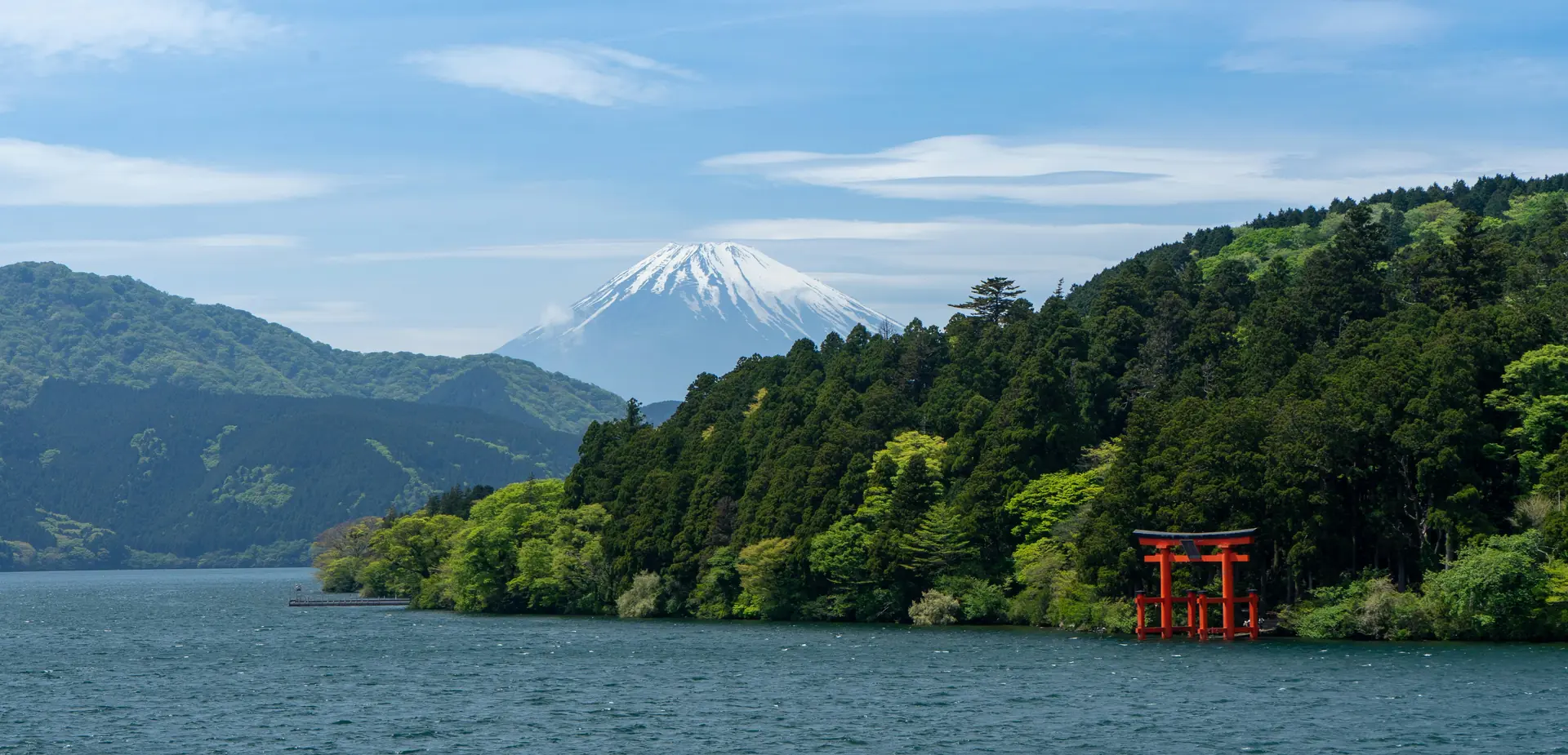
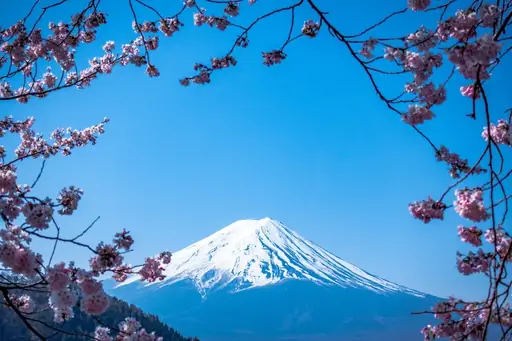
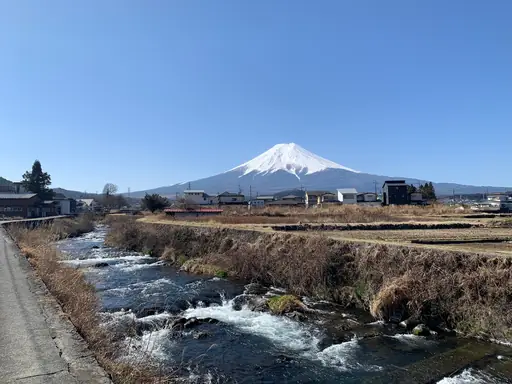
Mount Fuji is the highest summit in Japan and a UNESCO World Heritage site, on the border of Yamanashi and Shizuoka prefectures. The Yoshida trail starts about two and a half hours from Tokyo by bus. The official climbing season is from early July to early September, when four trails open from their fifth stations. Outside those weeks the summit is closed to hikers but the mountain is still worth a visit for the view. The Fuji Five Lakes area and the Shiraito Falls give views of the cone from different angles on a clear morning. It suits a summer climb or a day of views.

Mountain in Japan
Climate zone: Tundra

Tundra: Polar climates where warmest month remains cool, allowing only low-growing vegetation above permafrost or seasonally frozen ground.

See climate table
Ticket price: $$$
$Cheap
$$Medium
$$$Expensive, upscale
$$$+Very expensive, luxury
Safety: 8.4
General Safety:9
Accessibility:6
Read details
Tourist English: 3/5
English is spoken at major hotels, tourist centers, and some shops, but less so in rural areas and mountain huts. Signage is often bilingual. Translation apps are helpful for communication.
Last update: Oct 18, 2026
* We earn a commission from some links on this page.
Mount Fuji Summary
World-class for mountain scenery and hiking. Climb Japan’s most famous volcano, photograph perfect cone views, visit lakeside viewpoints and explore surrounding trails.
Public website: www.fujisan-climb.jp
Japan – Quick facts
Power Grid: 100 V, 50 Hz
Plug: Type A
Type A:
Diagram of a Type A power plug

Read about power adapters
Currency: Japanese Yen (JPY)
$1 ≈ ¥158
Cashless info: Rating 4/5
Cashless payments are becoming more common, especially in cities, with some shops still preferring cash. Be prepared for occasional cash-only situations in rural areas.

Save with a travel credit card
eSIM providers: Best value: Saily
Flexibility: Airalo
Read our in-depth comparison
Tipping: Tipping is not customary in Japan and can be considered rude. Excellent service is the norm, and tipping is unnecessary in most places.
Public drinking: Public drinking is legal and commonly accepted, particularly during festivals and events.
Public smoking: Smoking is prohibited in indoor public places but allowed in designated outdoor areas. Some restaurants may have smoking sections.
New Year
(January)
One of the most important holidays, expect crowded temples and high prices. Plan ahead.
Golden Week
(April-May)
The busiest travel time, expect high demand for accommodation and transportation.
Obon
(August)
A time to honor ancestors, many businesses close, and transportation can be crowded.
Emergency contact: Emergency Number: 110 (Police), 119 (Fire & Ambulance)
Taxi apps: Uber, JapanTaxi, DiDi
Other: Japan is a country of respect, so understanding local customs and etiquette is important. Public transportation is efficient, but can be crowded during peak hours.
Best times to travel

The best times to travel section shows how the months compare for a visit, so you can find the time of year that fits what you want to do.

Background colors of the months:
The color shows the typical temperature: yellow (hot), green (mild) and blue (cold). How strong the color is shows the travel season: full color means high season, soft color means shoulder season and soft-striped means off season.

Weather symbols:
Each month has one symbol showing what the weather is typically like, such as hot and sunny, freezing or a rainy or snowy season. Use them to quickly spot months that match the weather you want, or to avoid the ones that don't.

Crowdedness:
The people icon shows how busy the place usually is. The more people, the more crowded it gets.

Additional notes:
The gray info boxes point out special things worth knowing, like recurring weather issues or seasonal events.

for Mount Fuji, Japan
❄️
Jan
❄️
Feb
❄️
Mar
❄️
Apr
❄️
May
❄️
Jun
⛅
Jul
⛅
Aug
⛅
Sep
❄️
Oct
❄️
Nov
❄️
Dec
High season: April, July - Aug., Nov.
Shoulder season: Jan. - Feb., May, Sep. - Oct., Dec.
Tap on a month for more info Hover over a month for more info
Official climbing season runs early July to early September; trails are closed and dangerous with snow and ice outside it
Yoshida Trail requires a fee and advance reservation, with a daily climber limit

Mount Fuji is Japan's highest mountain at 12,500 ft and has UNESCO World Heritage status. Its near-perfect cone is visible from Tokyo on clear days and has long been a sacred mountain. Its slopes are shared by Yamanashi on the north side and Shizuoka on the south. You don't need to climb it to see a lot of it, because the lakes, foothills and fifth-station viewpoints give good views without the effort.

Four official trails go to the summit and each starts from its own fifth station. The Yoshida trail is the most popular and the best equipped, with many huts and a separate descent route. It's often crowded. Fujinomiya is the shortest and steepest and uses the same path up and down. Subashiri is quieter and joins the Yoshida trail near the top. Gotemba is the longest and least developed and begins at a lower elevation, so it suits experienced hikers.

The Yoshida trail season is from July 1 to September 10 while the other trails usually open slightly later. Climbers without a hut booking may pass the fifth station gate only from 3:00 AM – 2:00 PM and a hiking fee of ¥4,000 ($25.28) applies. Spending a night in a hut and reaching the summit for sunrise is the usual plan, since a day trip is hard on the body. Huts fill quickly, have no running water and sell water and snacks. Altitude sickness is common and the weather changes fast.

If you're not climbing, the Subaru Line fifth station has shops, restaurants, coin lockers and Komitake Shrine, with an observation area that has views over Fujiyoshida and Lake Yamanaka. The Fuji Five Lakes area and Shiraito Falls are good places for photos. Clear mornings give the best views and summer haze often hides the cone by midday.

Why travel to Mount Fuji?

🏯Places worth seeing
  • 1 Fujisan Hongu Sengen Taisha Shrine
  • 2 Oshino Hakkai
  • 3 Yamanashi Prefectural Fujisan World Heritage Center
  • 4 Kitaguchi Hongū Fuji Sengen Shrine
  • 5 Kawaguchiko Museum of Art
  • 6 Komitake Shrine
  • 7 Hinode Observatory Deck
🎡Places for activities
  • 1 Fuji-Q Highland
  • 2 Fujiten Snow Resort
  • 3 Yoshida Trail (Ascent)
  • 4 Fujinomiya Trail
  • 5 Subashiri Trail
  • 6 Gotemba Trail
🏞️Natural landmarks
  • 1 Lake Shōji
  • 2 Lake Motosu
  • 3 Lake Kawaguchi
  • 4 Shiraito Falls
  • 5 Lake Sai
  • 6 Aokigahara Forest
  • 7 Lake Yamanaka
  • 8 Oshino Hakkai Springs
  • 9 Roadside Station Asagiri Highland
🛍️Shopping
  • 1 Gotemba Premium Outlets
  • 2 Kawaguchiko Herb Hall (5)
🎈Events
  • Fuji Shiba-zakura Festival
  • Mount Fuji Opening Festival
  • Fujikawaguchiko Fireworks Festival
  • Fuji Omuro Sengen Shrine Autumn Festival
  • Lake Kawaguchi Autumn Leaves Festival
  • Fujisan Marathon
  • Yoshida Fire Festival
  • Fujisan Snow Festival
  • Fujiyoshida Summer Festival

Knowledge before you go

  • Night climbs without a hut booking aren't allowed on the Yoshida trail.
  • Non-hut climbers can pass the Yoshida gate only between 3:00 AM – 2:00 PM during the climbing season.
  • Mid-afternoon thunderstorms are common, so start early and carry rain gear and a headlamp.
  • Summit temperatures in midsummer are usually between 41°F and 46°F, so pack a warm jacket, gloves and a hat.

How to travel to Mount Fuji

For the Yoshida trail the usual base is Kawaguchiko Station, reached by train or highway bus from Tokyo. From Kawaguchiko Station or Fujisan Station a bus runs to the Fuji Subaru Line 5th Station. A direct bus from the Shinjuku Expressway Bus Terminal to the fifth station takes just under two and a half hours but runs in summer only. For the trails on the Shizuoka side the easiest rail stop is Shin-Fuji Station and you continue by bus to the fifth station of your trail. The Subaru Line road is open most of the year. Private cars aren't allowed during the climbing season, so plan on a bus then. Outside climbing season the fifth stations may still be reachable. Snow can close the upper roads and trails, so check current conditions on the official climbing website.

Access summary

  • From Haneda Airport (HND): Airport bus or trains via Tokyo, about 2.5–3 hours.
  • From Tokyo (Shinjuku/Shibuya): Highway buses or Fuji Excursion train, roughly 2–2.5 hours.
  • From Narita Airport (NRT): Airport bus via Shinjuku to Fuji area, usually 3.5–4.5 hours.

Where to stay near Mount Fuji

Most hikers stay around Lake Kawaguchi or Fujiyoshida, which are close to the Yoshida trail and have the widest choice of hotels, guesthouses and Japanese inns. Lakeside rooms often have a view of the mountain, which is worth requesting. Gotemba, Fujinomiya and Shin-Fuji are the base towns for the Shizuoka side. For the climb itself most people sleep in a mountain hut to rest before the summit sunrise. Huts have basic beds and fill quickly, so book early. Rooms in the lake towns are also busy in July and August and during autumn foliage, so booking ahead helps. If you only want views, staying in Tokyo and visiting for the day is possible, though a night near the lakes gives you the calm morning light.

Hotel recommendations

*by rating and popularity. Commissions have no influence on the rankings.
We couldn't find any nearby hotels for now.

Food around Mount Fuji

Food on the mountain is simple. The fifth stations have restaurants and shops selling snacks and drinks, while huts along the trail sell water, simple meals and snacks at higher prices the higher you go. It's wise to carry your own food and at least two liters of water if you're climbing, since huts have no running water.

In the lake towns you'll find a wider range, from casual noodle shops to Japanese inns serving set dinners. Hoto, a hearty noodle stew with vegetables, is a Yamanashi specialty and fits cool days well. Cafes near the lakes serve coffee with views of the cone. Convenience stores in Kawaguchiko and Fujiyoshida are handy for last-minute supplies before you head up.

Budget snapshot
Costs compared to home

We calculate the average costs when traveling to destinations and compare those with the living costs at your home. With this you can get an estimate of how expensive or cheap the destination is for you.

To customize this, you can set up which location and price level are used for the calculations in your account settings.

-44 %
Daily expenses in the region are around 44% lower than the average across United States. That means you'll spend a lot less on meals and getting around.
Exchange rate trend

The exchange rate price factor shows how expensive or cheap a currency currently is compared to its historical average. It's a quick way to see if a country is currently more or less affordable due to exchange rate changes.

-17 %
Your exchange rate (USD to JPY) is 17% better than in recent years. That means traveling now is considerably cheaper compared to the past.

Safety information overview

General safety
9
The main risks come on the climb. Altitude sickness is common, weather changes fast and thunderstorms occur in mid-afternoon. Beginners are advised to go with a guide. Fuji is a volcano, so check official information before you go. Lakeside viewing areas are safe.
Accessi­bility
6
The summit trails are steep and rocky with no step-free route. The fifth station on the Subaru Line has parking, lockers, restaurants and an observation area, though step-free access isn't documented. Lakeside viewpoints in the Five Lakes area are easier.

Looking for inspiration?

Discover
Volcano destinations and volcanic landscapes
Volcanic destinations offer a category of landscape experience unavailable anywhere else, with the combination of raw geological drama, active crater environments and the…
Read more
Discover
Best natural wonder destinations in Asia
Asia contains some of the most extraordinary natural wonders on earth, shaped by the collision of tectonic plates, vast river systems, volcanic activity and climatic extremes that…
Read more
Discover
Top photography destinations and scenic landscapes
A genuinely photogenic destination offers more than one good shot: it has the light, the composition and enough variety of conditions to reward repeat visits at different times of…
Read more
Discover
Best photography destinations in Asia
High-altitude desert landscapes in northern South Asia sit under some of the clearest skies on the continent, while terraced rice fields elsewhere create an entirely different,…
Read more
Discover
Pilgrimage destinations and sacred sites
Pilgrimage travel is among the oldest forms of purposeful journey, with sacred routes, shrine destinations and holy cities drawing millions of travellers annually across every…
Read more
Discover
Top hiking destinations and famous trails
Hiking at its best is one of the most direct ways to engage with a landscape. The pace forces a relationship with terrain, weather and distance that faster forms of travel rarely…
Read more
Discover
Best hiking destinations in Asia
Asia offers some of the most varied and rewarding hiking terrain on earth, ranging from high altitude Himalayan trails and volcanic crater routes to ancient pilgrimage paths,…
Read more
Discover
Best mountain destinations in Asia
Asia contains the world's highest and most extensive mountain systems, with the Himalayas, Karakoram and Hindu Kush forming a vast elevated arc across the continent that includes…
Read more
Discover
Extraordinary natural wonders and scenic landscapes
Natural wonders occupy a different category from other travel destinations. They are places where the scale, the geology, the light or the sheer improbability of what exists there…
Read more
Discover
Top mountain destinations and famous peaks
Mountain travel spans an enormous range of experience, from high-altitude expeditions and multi-day trekking circuits to accessible alpine day walks and scenic drives through…
Read more
Discover
Best volcano destinations in Asia
Asia sits at the heart of the Pacific Ring of Fire, with the volcanic island chains of Southeast Asia, Japan and the Pacific rim containing some of the world's most accessible and…
Read more
Discover
Most famous pilgrimage destinations in Asia
Asia is the birthplace of the world's major religious traditions and contains the most significant concentration of sacred destinations, pilgrimage routes and holy cities anywhere…
Read more
Discover
Most beautiful beaches and coastal escapes
For a lot of people, a beach is the whole point of a holiday, but what makes a beach day perfect really depends on personal taste. Some travellers want isolation and the feeling…
Read more
Discover
Stunning national parks and wilderness areas
National parks exist because someone decided that certain landscapes were too important to lose. The best of them protect ecosystems, wildlife and natural processes that would…
Read more
Discover
Intimate escapes and romantic getaways
The most memorable trips for couples tend to have less to do with luxury and more to do with the quality of shared experience. A place that slows you down, removes the usual…
Read more
Feedback
