






Was this page helpful?

These place ratings give you a quick overview of how well a destination matches different types of trips.
"Best for" scores:
The specific interest scores show where this place really shines – whether it's ideal for hiking, food & drink experiences, museums or other activities. These highlights help you understand what makes the destination special at a glance.
"Your personal" scores:
This reflects how well a place matches your personal preferences. You can adjust the importances of travel topics or other personal requirements categories in your account settings.
"Suited for" badges:
These give you a quick overview of how well a destination suits specific types of travelers, to help you find the places that match your lifestyle, preferences or travel situation.
| Power Grid: |
100 V, 50 Hz Plug: Type A
Type A:
 Read about power adapters |
|---|---|
| Currency: |
Japanese Yen (JPY) $1 ≈ ¥158 |
| Cashless info: |
Rating 4/5
Cashless payments are becoming more common, especially in cities, with some shops still preferring cash. Be prepared for occasional cash-only situations in rural areas.
Save with a travel credit card |
| eSIM providers: |
Best value: Saily Flexibility: Airalo Read our in-depth comparison |
| Tipping: | Tipping is not customary in Japan and can be considered rude. Excellent service is the norm, and tipping is unnecessary in most places. |
|---|---|
| Public drinking: | Public drinking is legal and commonly accepted, particularly during festivals and events. |
| Public smoking: | Smoking is prohibited in indoor public places but allowed in designated outdoor areas. Some restaurants may have smoking sections. |
| New Year (January) |
One of the most important holidays, expect crowded temples and high prices. Plan ahead. |
|---|---|
| Golden Week (April-May) |
The busiest travel time, expect high demand for accommodation and transportation. |
| Obon (August) |
A time to honor ancestors, many businesses close, and transportation can be crowded. |
| Emergency contact: | Emergency Number: 110 (Police), 119 (Fire & Ambulance) |
|---|---|
| Taxi apps: | Uber, JapanTaxi, DiDi |
| Other: | Japan is a country of respect, so understanding local customs and etiquette is important. Public transportation is efficient, but can be crowded during peak hours. |
The best times to travel section shows how the months compare for a visit, so you can find the time of year that fits what you want to do.
Background colors of the months:
The color shows the typical temperature: yellow (hot), green (mild) and blue (cold). How strong the color is shows the travel season: full color means high season, soft color means shoulder season and soft-striped means off season.
Weather symbols:
Each month has one symbol showing what the weather is typically like, such as hot and sunny, freezing or a rainy or snowy season. Use them to quickly spot months that match the weather you want, or to avoid the ones that don't.
Crowdedness:
The people icon shows how busy the place usually is. The more people, the more crowded it gets.
Additional notes:
The gray info boxes point out special things worth knowing, like recurring weather issues or seasonal events.
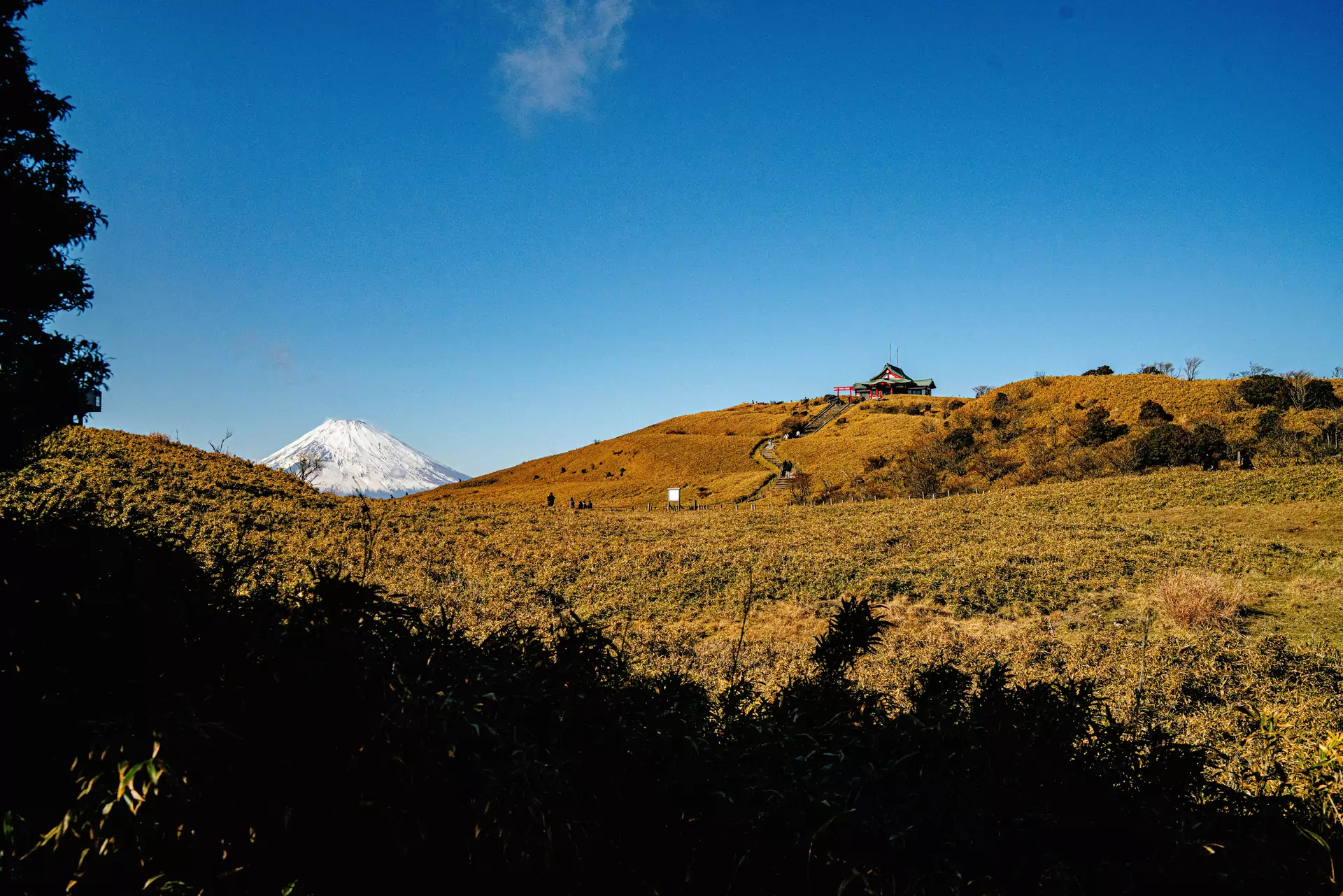
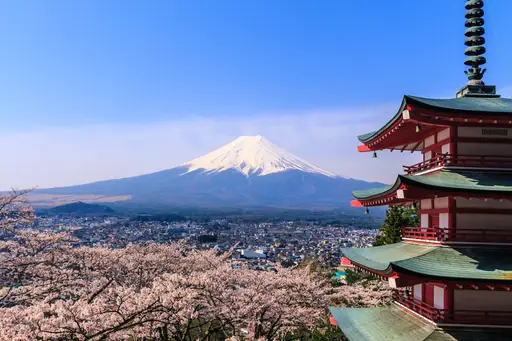
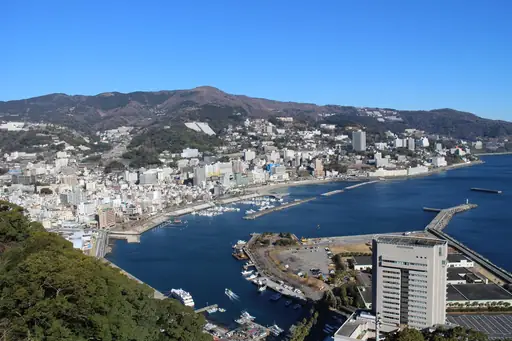
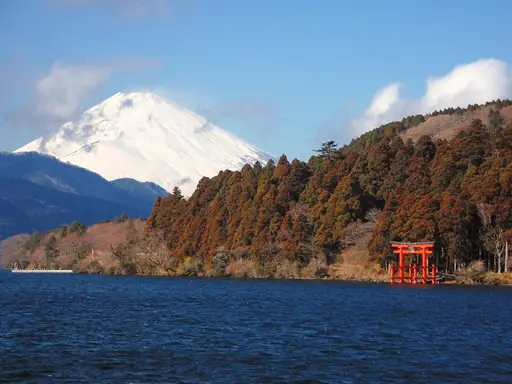
The park's appeal is variety. Mount Fuji, at 12,500 ft, is Japan's highest peak and the centerpiece, with the Fuji Five Lakes, the Aokigahara forest and lava tunnels around its base. The official climbing season on the Yamanashi side runs from July 1 to September 10 and a hiking fee of ¥4,000 ($25.28) applies on the Yoshida Trail. Outside that window conditions on the upper mountain are dangerous. Fuji looks its best from the lakes in clear winter air. Hakone, the smallest area, is often called a volcano museum. Lake Ashi formed after a mountain collapsed and Owakudani is full of steaming vents. Sengokuhara has a pampas grass plateau and the old Tokaido road has a former post town. A loop of railway, cable car, ropeway and boat links the highlights in a day. The Izu Peninsula has a different feel. Hot springs, a varied coastline and the Amagi mountain range are beside Suruga Bay, Japan's deepest bay. Further out the Izu Islands are 75 mi to 180 mi south of Tokyo. Oshima and Miyakejima have active volcanoes. Other islands have white sand beaches and dolphins swim off Mikurajima. A weekend suits Hakone or the Fuji lakes while the islands need more time.
Tokyo is the main entry point for all four areas through Haneda and Narita airports. Hakone is about 90 minutes from Shinjuku on the Odakyu line. The Fuji lakes take around two hours from Shinjuku by limited express or about 2 hours 20 minutes by highway bus. For Izu the Shinkansen reaches Atami from Tokyo in 40 to 50 minutes. The Odoriko limited express runs from Tokyo to Atami in about 80 minutes and to Shimoda in around 160. The Izu Islands start at Takeshiba Pier where the jetfoil reaches Oshima in about 1 hour 45 minutes. Flights from Chofu Airport take roughly 25 minutes and overnight ferries serve the farther islands, though weather can cancel sailings.
Base yourself by area. Kawaguchiko and Fujiyoshida suit Fuji with hotels and ryokan near the lakes and the station. Hakone-Yumoto, Gora and the Lake Ashi shore suit Hakone, with Hakone-Yumoto the easiest for trains. Atami, Ito, Shuzenji and Shimoda are the main bases for Izu. Each has hot spring hotels and a fish market or a seafront. Many ryokan include dinner and breakfast and some have private baths. Many public baths restrict visible tattoos so ask before booking. Weekends, cherry blossom time, autumn foliage and Golden Week fill rooms early. Yoshida Trail huts can sell out in July and August. The islands have small inns and campsites that book out in summer.


The park has no single transport network because its four areas are far apart.
Fuji and Hakone:
Around Fuji the Fujikyuko Line and sightseeing buses link the lakes. In Hakone a railway, cable car, ropeway, boat and buses make a loop that one pass covers.
Izu Peninsula:
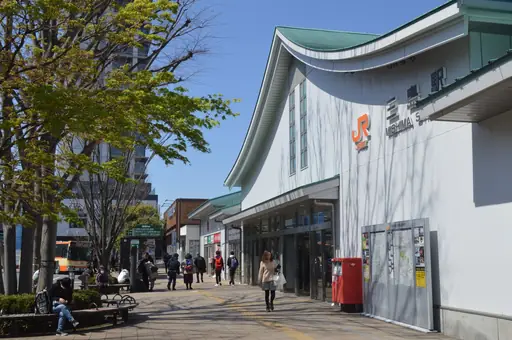
The JR Ito Line goes from Atami to Ito and the Izukyu Line continues to Shimoda. Atami to Shimoda takes about 70 minutes by limited express. The Izuhakone Line links Mishima and Shuzenji in 35 minutes and Tokai Bus covers the rest. Two-day bus passes exist for Ito and for Irozaki and Shimoda.
Cars and islands:
A car adds freedom but east coast traffic is heavy at weekends. Some neighboring islands are linked by short ferry hops.
Each area of the park has its own food, from noodle dishes around Fuji to seafood on the Izu Peninsula. Convenience stores and supermarkets cover breakfast and snacks. Vegetarians should ask about fish or pork stock, since it's common in local dishes.
Around Fuji:
The local noodle dish is houtou, flat noodles simmered in miso broth with pumpkin and vegetables. Fujiyoshida has firm chewy udon topped with cabbage and sweet simmered meat.
Hakone:
Look for kuro-tamago, the black eggs boiled in sulfur springs at Owakudani. Soba and yuba made with local spring water are also worth trying here.
Izu:
The peninsula is about seafood. Shimoda has the nation's largest catch of kinmedai, a red fish served grilled or simmered. Suruga Bay supplies shirasu whitebait and sakura shrimp while wasabi is another Izu specialty.
We calculate the average costs when traveling to destinations and compare those with the living costs at your home. With this you can get an estimate of how expensive or cheap the destination is for you.
To customize this, you can set up which location and price level are used for the calculations in your account settings.
The exchange rate price factor shows how expensive or cheap a currency currently is compared to its historical average. It's a quick way to see if a country is currently more or less affordable due to exchange rate changes.
To help you plan your trip, we provide estimated daily costs per person (when traveling as a pair) for different travel styles. These numbers give you an idea of what you might spend each day at this destination, including accommodation, food, transport and activities.
Additionally, we also provide average hotel costs for different travel styles to give you an estimate for the accommodation only.
Please note that these are only estimates. The real costs depend on booking times, season and other factors.
Travel style categories explained:
Backpacker:
Staying in hostels or budget hotels, cooking your own meals or eating cheap and choosing low-cost activities.
Mid-range:
Staying in mid-range hotels, eating at a mix of restaurants and casual spots and enjoying a variety of activities.
Luxury:
Staying in luxury hotels, dining out at high-end restaurants and enjoying premium experiences without worrying about the price.
| Backpacker | Mid-range | Luxury | |
|---|---|---|---|
| 💵 Total costs per day, including accommodation | |||
| 🏨 Accommodation per night, per person | |||
| 🍝 Food per day | |||
| 🚕 Transportation per day |
| 🍽️ Restaurant Dinner, per person | |
|---|---|
| 🍛 Lunch Set, per person | |
| 🍟 Fast food combo | |
| 🍝 Preparing your own food, per day | |
| ☕ Cappuccino | |
| 🍺 Beer in a restaurant, 0.5 l / 16 oz |
| 🚌 Public transport ticket | |
|---|---|
| 🚕 Taxi Ride, 10 km / 6 mi | |
| ⛽ Gas, 1 l / ¼ gal |
| 🎞️ Movie ticket | |
|---|---|
| 👩⚕️ Doctor's consult | |
| 🤧 Cold medication | |
| 💇 Basic haircut |
Log in to add this place to a travel list and get a summary of all recommended items for your whole trip.
