

Asia › Japan › Kusatsu-Onsen

Kusatsu-Onsen

Scroll
Steaming hot water field and bath hopping

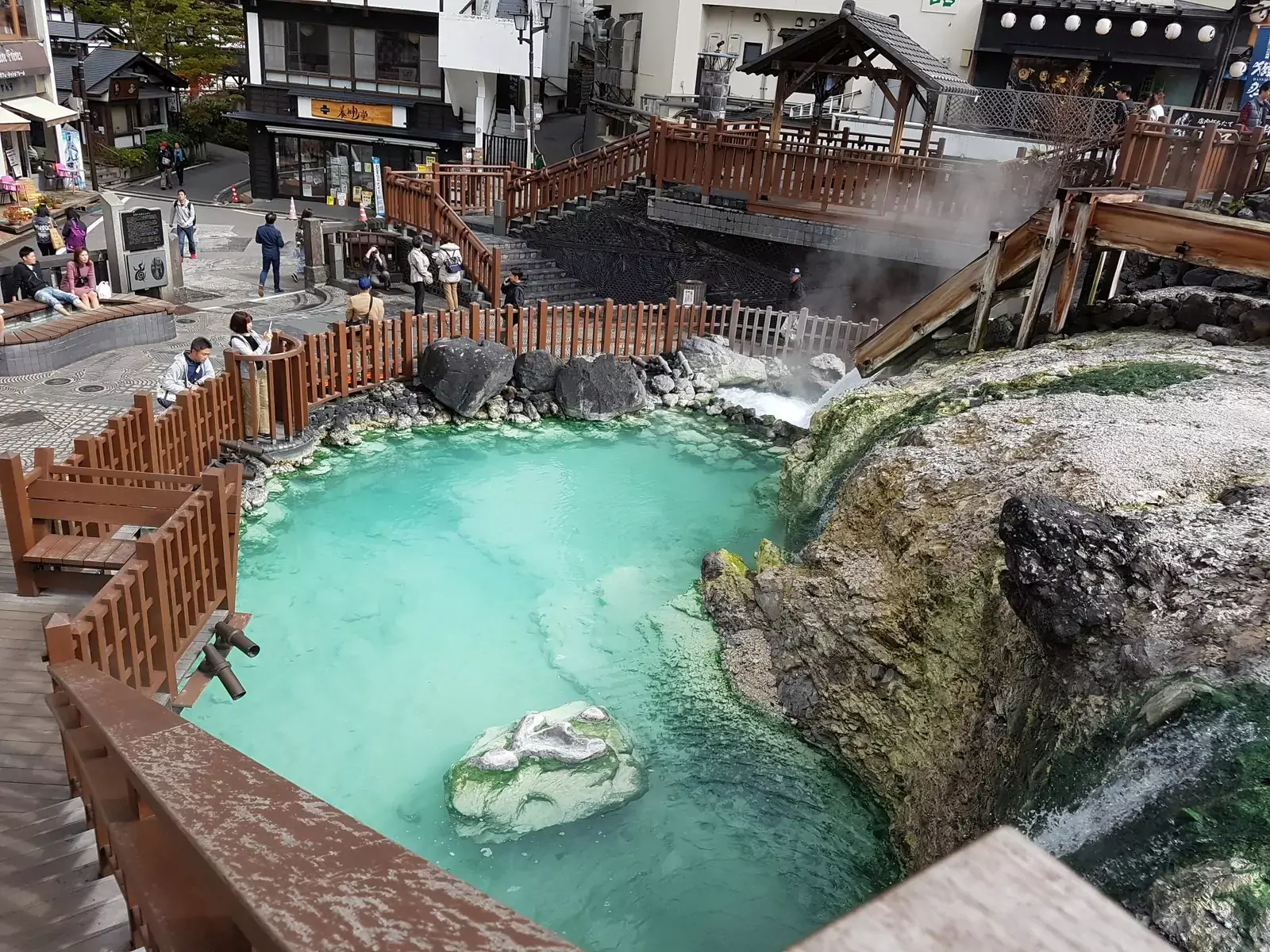
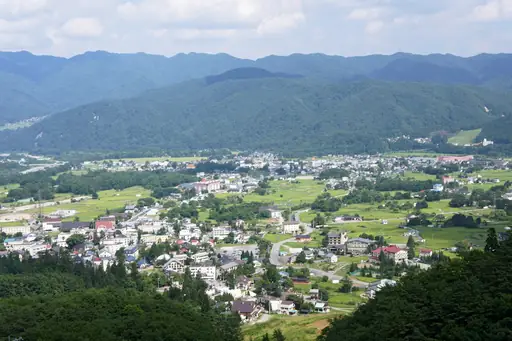
Kusatsu Onsen is a hot spring town about 3,900 ft up in the mountains of Gunma Prefecture. Its center is the Yubatake, a steaming hot water field where the main spring flows through wooden channels that cool it before it reaches the baths. Yumomi, a ceremonial water-stirring performance with long wooden boards, takes place close by. Visitors wander between public baths and inns in yukata. Tokyo is roughly three to four hours away by train and bus or by highway bus. A small ski resort and Manza Onsen are higher up the slopes.

Town in Japan
Climate zone: Warm continental

Warm continental: Humid continental climates with warm summers, cold winters and evenly distributed precipitation, typical of northern interior mid-latitudes.

See climate table
Price level: $$$
$Cheap
$$Medium
$$$Expensive, upscale
$$$+Very expensive, luxury
See price details
Safety: 8.2
General Safety:9
Health & medical:7
Accessibility:5
Tap water:9
Read details
Tourist English: 2/5
English is spoken at major hotels, tourist centers, and some restaurants, but less so in small shops or local bathhouses. Most signage at attractions is bilingual. A translation app is useful for deeper exploration.
Last update: Oct 20, 2026
* We earn a commission from some links on this page.
Kusatsu-Onsen Summary

These place ratings give you a quick overview of how well a destination matches different types of trips.

"Best for" scores:
The specific interest scores show where this place really shines – whether it's ideal for hiking, food & drink experiences, museums or other activities. These highlights help you understand what makes the destination special at a glance.

"Your personal" scores:
This reflects how well a place matches your personal preferences. You can adjust the importances of travel topics or other personal requirements categories in your account settings.

"Suited for" badges:
These give you a quick overview of how well a destination suits specific types of travelers, to help you find the places that match your lifestyle, preferences or travel situation.

Read how our scores work
Famous for hot springs and mountain relaxation. Soak in traditional onsen baths, walk steaming spa streets and hike forested mountain trails.
Place score
8.1
Best at:
Geothermal
10
Hot springs
10
Spotless
9
Cozy towns
8
Walkable
8
Personal score
?
Log in to see how this place matches your personal travel interests.
Suited for
👶 7
Families
🧓 7
Seniors
❤️ 8
Couples
🛡️ 7
Travel Beginners
Japan – Quick facts
Power Grid: 100 V, 50 Hz
Plug: Type A
Type A:
Diagram of a Type A power plug

Read about power adapters
Currency: Japanese Yen (JPY)
$1 ≈ ¥158
Cashless info: Rating 4/5
Cashless payments are becoming more common, especially in cities, with some shops still preferring cash. Be prepared for occasional cash-only situations in rural areas.

Save with a travel credit card
eSIM providers: Best value: Saily
Flexibility: Airalo
Read our in-depth comparison
Tipping: Tipping is not customary in Japan and can be considered rude. Excellent service is the norm, and tipping is unnecessary in most places.
Public drinking: Public drinking is legal and commonly accepted, particularly during festivals and events.
Public smoking: Smoking is prohibited in indoor public places but allowed in designated outdoor areas. Some restaurants may have smoking sections.
New Year
(January)
One of the most important holidays, expect crowded temples and high prices. Plan ahead.
Golden Week
(April-May)
The busiest travel time, expect high demand for accommodation and transportation.
Obon
(August)
A time to honor ancestors, many businesses close, and transportation can be crowded.
Emergency contact: Emergency Number: 110 (Police), 119 (Fire & Ambulance)
Taxi apps: Uber, JapanTaxi, DiDi
Other: Japan is a country of respect, so understanding local customs and etiquette is important. Public transportation is efficient, but can be crowded during peak hours.
Best times to travel

The best times to travel section shows how the months compare for a visit, so you can find the time of year that fits what you want to do.

Background colors of the months:
The color shows the typical temperature: yellow (hot), green (mild) and blue (cold). How strong the color is shows the travel season: full color means high season, soft color means shoulder season and soft-striped means off season.

Weather symbols:
Each month has one symbol showing what the weather is typically like, such as hot and sunny, freezing or a rainy or snowy season. Use them to quickly spot months that match the weather you want, or to avoid the ones that don't.

Crowdedness:
The people icon shows how busy the place usually is. The more people, the more crowded it gets.

Additional notes:
The gray info boxes point out special things worth knowing, like recurring weather issues or seasonal events.

for Kusatsu-Onsen, Japan
🌨️
Jan
🌨️
Feb
🌨️
Mar
🌤️
Apr
🌤️
May
🌧️
Jun
⛈️
Jul
⛈️
Aug
🌧️
Sep
🌦️
Oct
🌤️
Nov
🌨️
Dec
High season: Jan. - Feb., July - Aug., Oct., Dec.
Shoulder season: March, May, Sep.
Crowdedness: 7 (Many tourists)
Tap on a month for more info Hover over a month for more info
Ski season runs late November to early April, depending on snowfall
The Shirane Rokko mountain road is usually closed from about late November to late April due to snow
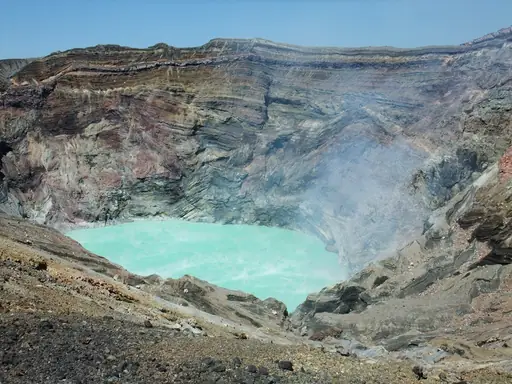
Access to the Yugama crater lake on Mt. Kusatsu-Shirane is restricted when volcanic activity rises, check current alert level

Why travel to Kusatsu-Onsen?

The Yubatake is a hot water field at the heart of town. Spring water gushes from the main source and flows through long wooden channels that cool it a few degrees before it reaches the inns and baths. Steam hangs over the field all day and lights show it off after dark. Close by, Netsu-no-Yu hosts the Yumomi, a ceremonial stirring of the hot water with long wooden boards. Visitors can watch the show or take part themselves. The town is built for bath hopping, with visitors walking between public baths and ryokan in yukata. Gozanoyu and Otakinoyu are traditional baths and the Sai-no-Kawara outdoor bath is in a park a short walk uphill from the center. A free footbath near the Yubatake is a good place to start. The water is strongly acidic so it can sting on cuts and sensitive skin. Winter brings a snowy townscape and a small ski resort that usually runs from late December to late March. Summer highs near 77°F give a break from Tokyo's heat. Autumn color shows in the hills around Manza Onsen, higher up. Most visitors stay one or two nights.

🏯Places worth seeing
  • 1 Yubatake
  • 2 Netsu-no-yu
  • 3 Sainokawara Open-air Bath
  • 4 Kusatsu Onsen Ski Resort
  • 5 Shirane Shrine
🏞️Natural landmarks
  • 1 Yubatake
  • 2 Sainokawara Park
  • 3 Mt. Shirane
  • 4 Mount Kusatsu-Shirane
  • 5 Hot Water Stream
🍽️Eat & Drink
  • 1 Mikuniya
    Mikuniya stone-grinds buckwheat and makes soba with water from Mt. Kusatsu-Shirane, serving maitake tempura, curry soba and large sharing platters. It is near Yubatake, Kusatsu Onsen’s steaming central hot-spring field, on the walk toward Sainokawara Park.
  • 2 Sobadokoro Wahei
    Wahei serves handmade soba, particularly cold zaru soba with freshly sourced maitake-mushroom tempura. It is on Nishi-no-Kawara-dori, close to Yubatake and the route toward Sainokawara Park in the centre of Kusatsu Onsen.
  • 3 Joshu Mendokoro Hiranoya
    Hiranoya serves Gunma-style noodles and soba with tempura made from locally grown 100-day maitake mushrooms. It faces Yubatake in the centre of Kusatsu Onsen, a few steps from the wooden walkways around the hot-spring source.
  • 4 Kashikotei
    Founded in 1895, Kashikotei is a long-running soba restaurant serving buckwheat noodles and maitake tempura. It is on Yutaki-dori in Kusatsu Onsen, about five minutes on foot from Kusatsu Bus Terminal and near Yubatake.
  • 5 Soba Kanai
    Soba Kanai serves handmade nihachi soba, including duck-dipping and mushroom-daikon preparations. It is on Nishi-no-Kawara-dori, a short walk west of Yubatake along the route between Kusatsu Onsen’s central streets and Sainokawara Park.
  • 6 Matsumura Manju
    Matsumura Manju makes onsen manju, brown-sugar steamed buns filled with red-bean paste, using the town’s thermal steam in its production. It is near Yubatake, at 389 Kusatsu, in the heart of the onsen town.
  • 7 Honke Chichiya Yubatake Store
    Honke Chichiya makes two-layer chestnut manju, with chestnut paste inside white-bean paste, as well as classic brown-sugar onsen manju. Its Yubatake shop is directly beside Kusatsu’s central hot-spring field.
  • 8 Yamabiko Onsen Manju
    Yamabiko sells steamed and fried onsen manju, including brown-sugar red-bean, chestnut and sweet-potato versions. It is roughly a two-minute walk from Yubatake, along the compact shopping streets of central Kusatsu Onsen.
  • 9 Iiyamatei
    Iiyamatei specializes in kamameshi, rice cooked individually in an iron pot, including versions with maitake mushrooms and seasonal ingredients. It is on Yutaki-dori, just off Nishi-no-Kawara-dori in central Kusatsu Onsen.
  • 10 Cafe Spa Neuf
    Cafe Spa Neuf serves coffee, cakes and light meals in a renovated former bathhouse. It is near Yubatake in the centre of Kusatsu Onsen, offering a quiet café stop among the town’s hot-spring streets.
🎈Events
  • Autumn Foliage Festival
  • Traditional Mochi-Pounding (January)
  • Kusatsu Marathon
  • Kusatsu Onsen Festival (August)
  • Winter Illumination (Dec–Feb)
  • Kusatsu Ski Festival (January)
  • Yubatake Night Light-up
  • Shirane Shrine Spring Festival
  • Sainokawara Park Autumn Leaves
  • Kusatsu Jazz Festival

Knowledge before you go

  • Try the free footbath near Yubatake before committing to a bath.
  • Arrive about 10 minutes early for the Yumomi show, since seats can fill up quickly.
  • Wear sturdy non-slip shoes and pack light, since the town has many slopes and steps.
  • Choose a four-wheel drive car if you rent in winter, since mountain driving can be tricky.

How to travel to Kusatsu-Onsen

The most common route from Tokyo is a limited express train from Ueno Station to Naganohara-Kusatsuguchi Station, which takes roughly 2.5 hours. A local bus then covers the last stretch to Kusatsu Onsen in about 25 minutes. Highway buses run from Shinjuku and other Tokyo stations in about four hours. You can also take the Hokuriku Shinkansen to Karuizawa and a direct bus from there. By car it's about 80 minutes from Shibukawa-Ikaho IC on the Kan-Etsu Expressway. Winter roads can be snowy and icy, so four-wheel drive is recommended. The Tokyo Wide Pass and the JR East Pass for Nagano and Niigata both cover travel in Gunma.

Access summary

  • From Kansai Airport (KIX): Train via Kyoto to Kusatsu, about 1.5–2 hours.
  • From Kyoto: JR Biwako Line trains, roughly 20–25 minutes to Kusatsu.
  • From Osaka: 45–60 minutes by JR Special Rapid/rapid trains via Kyoto.

Where to stay in Kusatsu-Onsen

Traditional ryokan with hot spring baths cluster around the Yubatake, so staying there lets you walk to the baths in yukata. Western-style hotels and guesthouses are also available for travelers who prefer beds to futons. Manza Onsen has milky sulfuric water and quieter surroundings but fewer services. It has no ATMs, so bring cash if you stay there. Winter weekends and the autumn foliage season fill up early, so book ahead. Staying overnight is worth it because the Yubatake looks its best after dark once the day visitors have gone. Rooms close to the bus terminal suit anyone arriving without a car.

How to get around Kusatsu-Onsen

The center is compact and most sights are within walking distance.

Walking and cash:
The Yubatake is a few minutes from the bus terminal, where coin lockers are available.
The town has many slopes, so sturdy non-slip shoes and light luggage are recommended. The Sai-no-Kawara park is about 12 minutes on foot from the center. ATMs are scattered around town and in convenience stores, so carrying cash is easy to manage.

Buses:
Buses can fill up so queue early at the stop, especially in winter and on weekends.
Reaching Manza Onsen takes a bus or a car. A bus pass for the Kusatsu Kogen line can ease local travel.

Food in Kusatsu-Onsen

Food here is simple and fits easily around bath hopping. Onsen manju, steamed buns with sweet filling, are the classic souvenir and a good snack between baths. Soba noodles and yakitori are other local snacks you'll find around the center. Ryokan dinners focus on local mountain ingredients and seasonal dishes. Many restaurants are near the Yubatake and the bus terminal, which makes a quick lunch easy. Carry some cash for smaller shops. If you plan a dinner out instead of eating at your inn, book early and check closing times because shops in small mountain towns tend to quiet down in the evening.

Budget snapshot
Costs compared to home

We calculate the average costs when traveling to destinations and compare those with the living costs at your home. With this you can get an estimate of how expensive or cheap the destination is for you.

To customize this, you can set up which location and price level are used for the calculations in your account settings.

-44 %
Daily expenses in the region are around 44% lower than the average across United States. That means you'll spend a lot less on meals and getting around.
Exchange rate trend

The exchange rate price factor shows how expensive or cheap a currency currently is compared to its historical average. It's a quick way to see if a country is currently more or less affordable due to exchange rate changes.

-17 %
Your exchange rate (USD to JPY) is 17% better than in recent years. That means traveling now is considerably cheaper compared to the past.

Travel costs (Data for Nakano, Japan - 15 miles away)

To help you plan your trip, we provide estimated daily costs per person (when traveling as a pair) for different travel styles. These numbers give you an idea of what you might spend each day at this destination, including accommodation, food, transport and activities.

Additionally, we also provide average hotel costs for different travel styles to give you an estimate for the accommodation only.

Please note that these are only estimates. The real costs depend on booking times, season and other factors.

Daily cost summary

Travel style categories explained:

Backpacker:
Staying in hostels or budget hotels, cooking your own meals or eating cheap and choosing low-cost activities.

Mid-range:
Staying in mid-range hotels, eating at a mix of restaurants and casual spots and enjoying a variety of activities.

Luxury:
Staying in luxury hotels, dining out at high-end restaurants and enjoying premium experiences without worrying about the price.

Backpacker Mid-range Luxury
💵 Total costs per day, including accommodation
$80
$184
$432
🏨 Accommodation per night, per person
$50
$130
$250
🍝 Food per day
$23
$44
$131
🚕 Transportation per day
$7
$10
$51
Food & Drink
🍽️ Restaurant Dinner, per person
$16
🍛 Lunch Set, per person
$7
🍟 Fast food combo
$5
🍝 Preparing your own food, per day
$9.50
☕ Cappuccino
$3.10
🍺 Beer in a restaurant, 0.5 l / 16 oz
$3
Transportation
🚌 Public transport ticket
$1.60
🚕 Taxi Ride, 10 km / 6 mi
$32
⛽ Gas, 1 l / ¼ gal
$1.10
Other
🎞️ Movie ticket
$12
👩‍⚕️ Doctor's consult
$25
🤧 Cold medication
$8.50
💇 Basic haircut
$17

Safety information overview

General safety
9
Kusatsu Onsen is a safe town with low crime. The main risks are the very hot, strongly acidic water, slippery stone and wooden surfaces near the baths and snowy mountain roads in winter. Enter hot baths slowly and don't touch the Yubatake water.
Health & Medical
7
The town has limited medical facilities so larger hospitals are elsewhere in Gunma. English-speaking care is limited. Strongly acidic, very hot water can irritate skin and strain older travelers and people with heart or blood pressure problems. Rinse well after bathing.
Accessi­bility
5
The center is compact but the town is full of slopes and steps. Many bath buildings have stairs and thresholds, which is hard for wheelchair users. Getting from the bus terminal to the main spring takes only a few minutes. A taxi helps with hills.
Tap water
9
Tap water is safe to drink here, as across Japan, so there's no need to buy bottled water. A refillable bottle helps on walks around the slopes and after long baths. Vending machines and shops near the bus terminal also sell drinks.

Packing recommendations for Kusatsu-Onsen

Log in to add this place to a travel list and get a summary of all recommended items for your whole trip.

Looking for inspiration?

Discover
Best cozy town destinations in Asia
A lantern-lit old town in Vietnam has preserved its heritage remarkably well, with tailors, lanterns and riverside cafés creating an atmosphere that's hard to find elsewhere in the…
Read more
Discover
Top cozy towns and quaint villages
Some towns have an atmosphere that's hard to manufacture deliberately: scale, architecture and a pace of life that makes a short visit feel unusually restorative. The best of them…
Read more
Discover
Best couple vacation destinations in Asia
Asia is perfect for couples who want their holiday to feel like a shared adventure rather than just a change of scenery. Few continents offer so many ways to be amazed together.…
Read more
Discover
Best natural wonder destinations in Asia
Asia contains some of the most extraordinary natural wonders on earth, shaped by the collision of tectonic plates, vast river systems, volcanic activity and climatic extremes that…
Read more
Discover
Best wellness destinations in Asia
Asia's wellness offer is rooted in some of the world's most ancient and sophisticated therapeutic traditions, with Ayurvedic medicine, traditional Chinese medicine, Thai massage,…
Read more
Discover
Best destinations for first-time travelers in Asia
Asia has one of the best established beginner travel routes anywhere, largely because so many first time travelers have worn the path before you. Southeast Asia in particular…
Read more
Discover
Top hot springs destinations and thermal resorts
Hot spring travel sits at the intersection of natural landscape, geological spectacle and bathing culture, with the world's most rewarding destinations combining accessible thermal…
Read more
Discover
Best solo travel destinations in Asia
Asia is where most solo travelers figure out they can actually do this. The backpacker trails through Southeast Asia have been running for decades, and the infrastructure along…
Read more
Discover
Top solo travel destinations and safe hubs
Traveling alone sounds like a bigger deal than it is. The first day feels strange – eating dinner by yourself, navigating without someone to double-check the map with, making every…
Read more
Discover
Best hot springs destinations in Asia
Asia's hot spring offer is defined by Japan's onsen culture, one of the world's most sophisticated and deeply embedded bathing traditions, where thousands of facilities ranging…
Read more
Discover
Best couple vacation destinations
Travelling as a couple sounds simple enough, yet the best couple vacation destinations mean something different to almost every pair. What feels romantic to one couple can feel…
Read more
Discover
Best travel destinations for seniors in Asia
Asia offers some of the most senior friendly infrastructure anywhere, alongside destinations that still call for a bit more independence and stamina. Japan in particular stands…
Read more
Discover
Traditional Japanese onsen towns and hot springs
Japan has a relationship with hot spring bathing that goes back more than a thousand years, and the culture that has grown up around it is unlike anything found elsewhere. An onsen…
Read more
Discover
Best destinations for first-time travelers
A first trip abroad works best somewhere that eases you in, rather than throwing every possible culture shock and logistical headache at you at once. Some first-time travelers…
Read more
Discover
Best geothermal destinations in Asia
Asia's geothermal offer is anchored by Japan's onsen culture, one of the world's most deeply embedded bathing traditions, where thousands of hot spring facilities ranging from…
Read more
Feedback
